
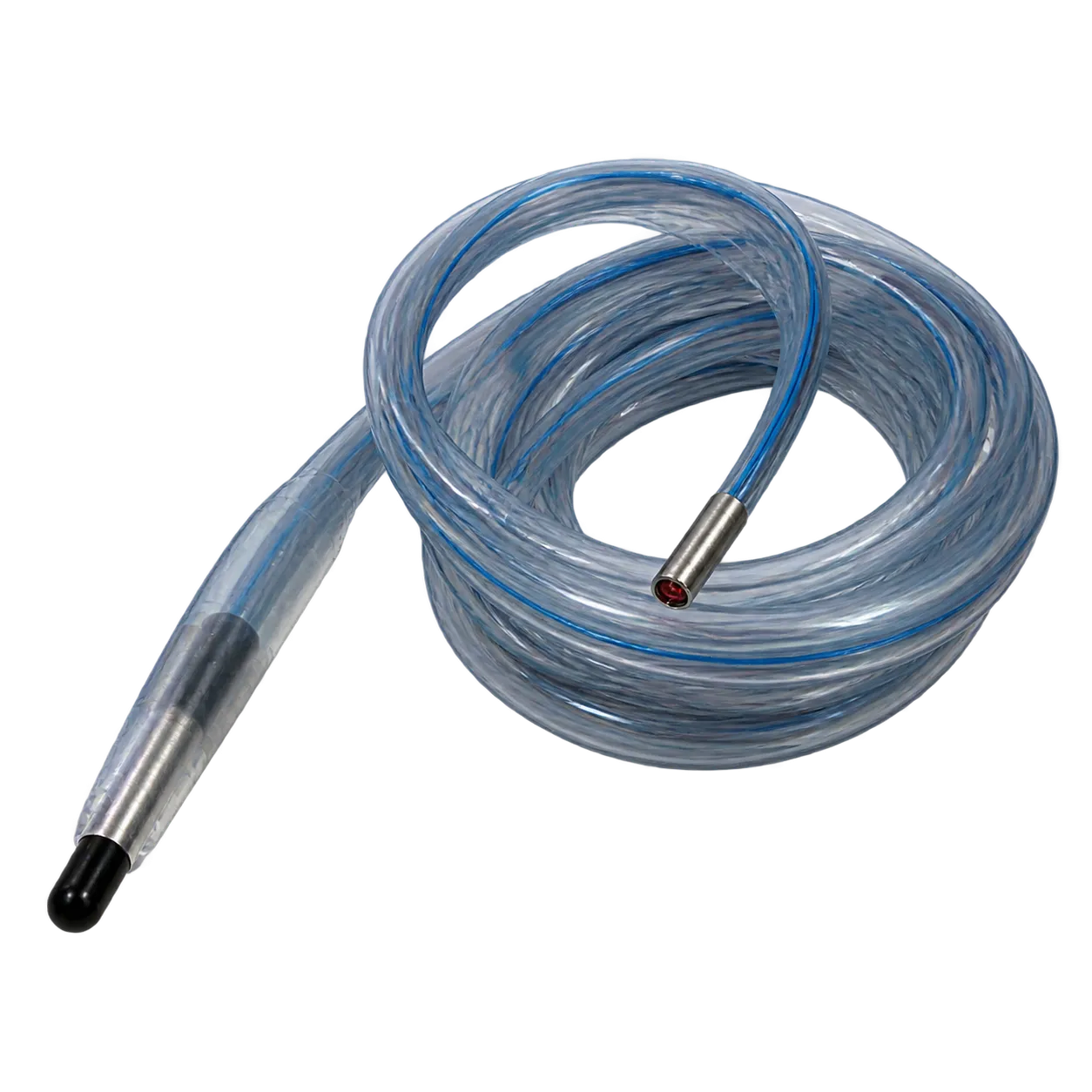
The cable is the part of an illumination chain that nobody thinks about at all until the picture goes dim during a case. Light is lost at every junction and along the run itself. A three metre cable therefore delivers less to the scope than a shorter one would, everything else being equal. Three metres suits a stack standing back from the operating table, and the trade is worth knowing when the source sits closer than that.
Fibre cables fail gradually rather than suddenly, which is why they benefit from a scheduled check rather than waiting for someone to complain about the view. Holding one up to a window shows the broken strands as dark specks across the face. A cable that has lost a third of its fibres still works, just dimly enough that staff turn the source up instead of replacing it. Building that check into a maintenance routine saves a good deal of squinting at a dark field later on.
Decontamination decides the rest of it. The cable goes into the sterile field alongside the scope. Whether it autoclaves, soaks, or needs some other route governs how many a department has to buy, and how quickly each one turns around between cases. Connector seals are usually where cables give up after repeated cycles, rather than the core material itself. None of that appears anywhere on the page.
Medigear.uk is therefore obtaining the core type, the bundle diameter, the fittings at either end,d and the decontamination instructions.