
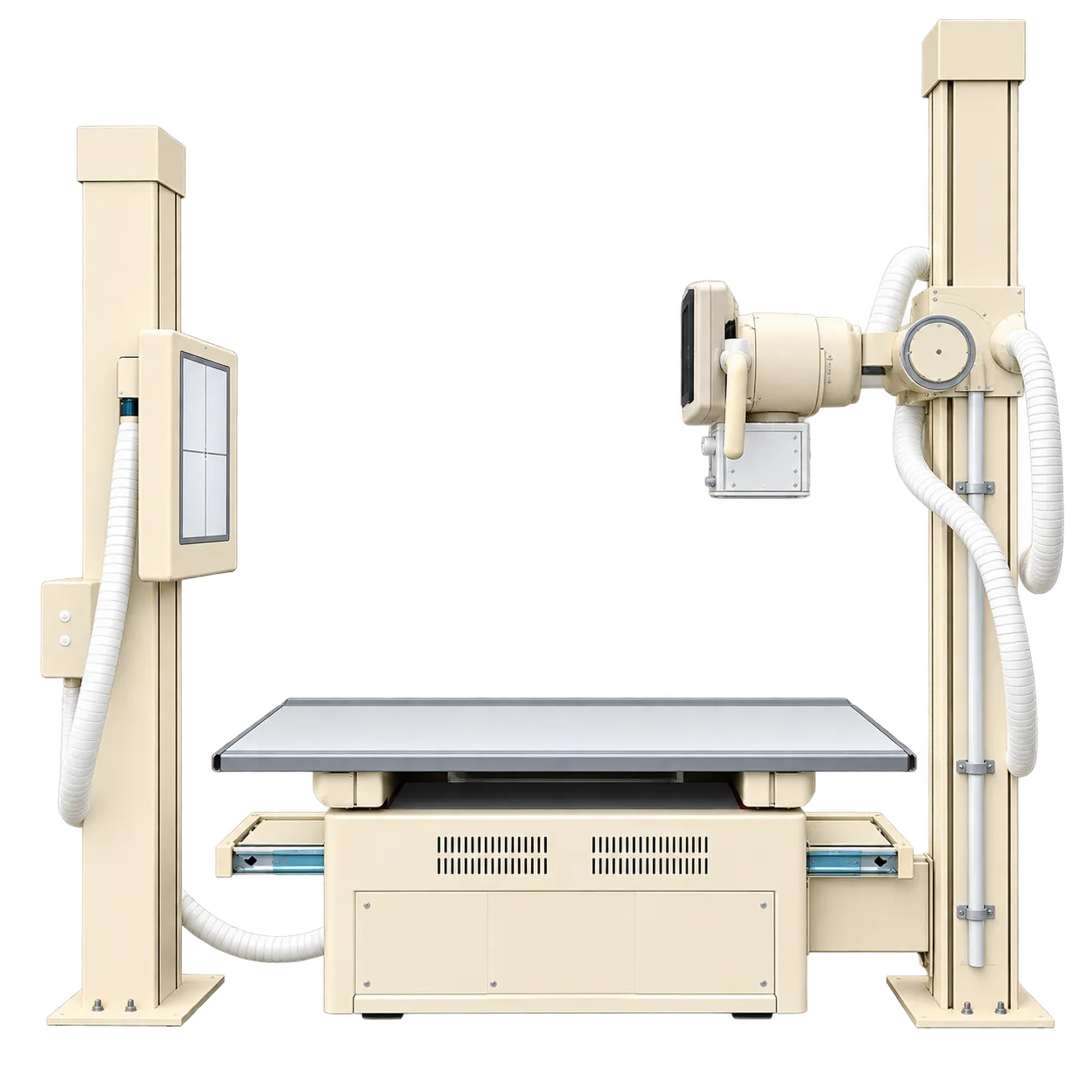
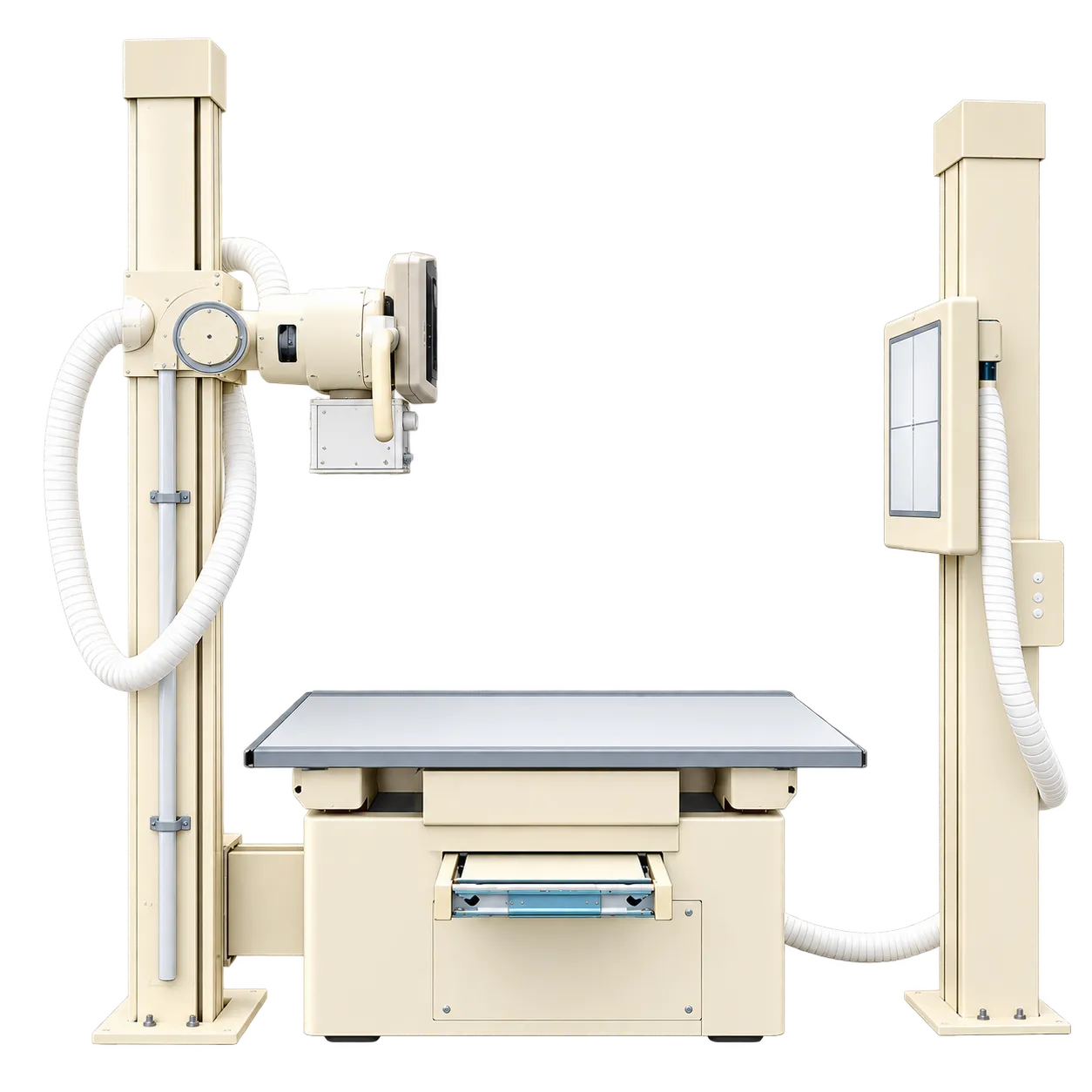
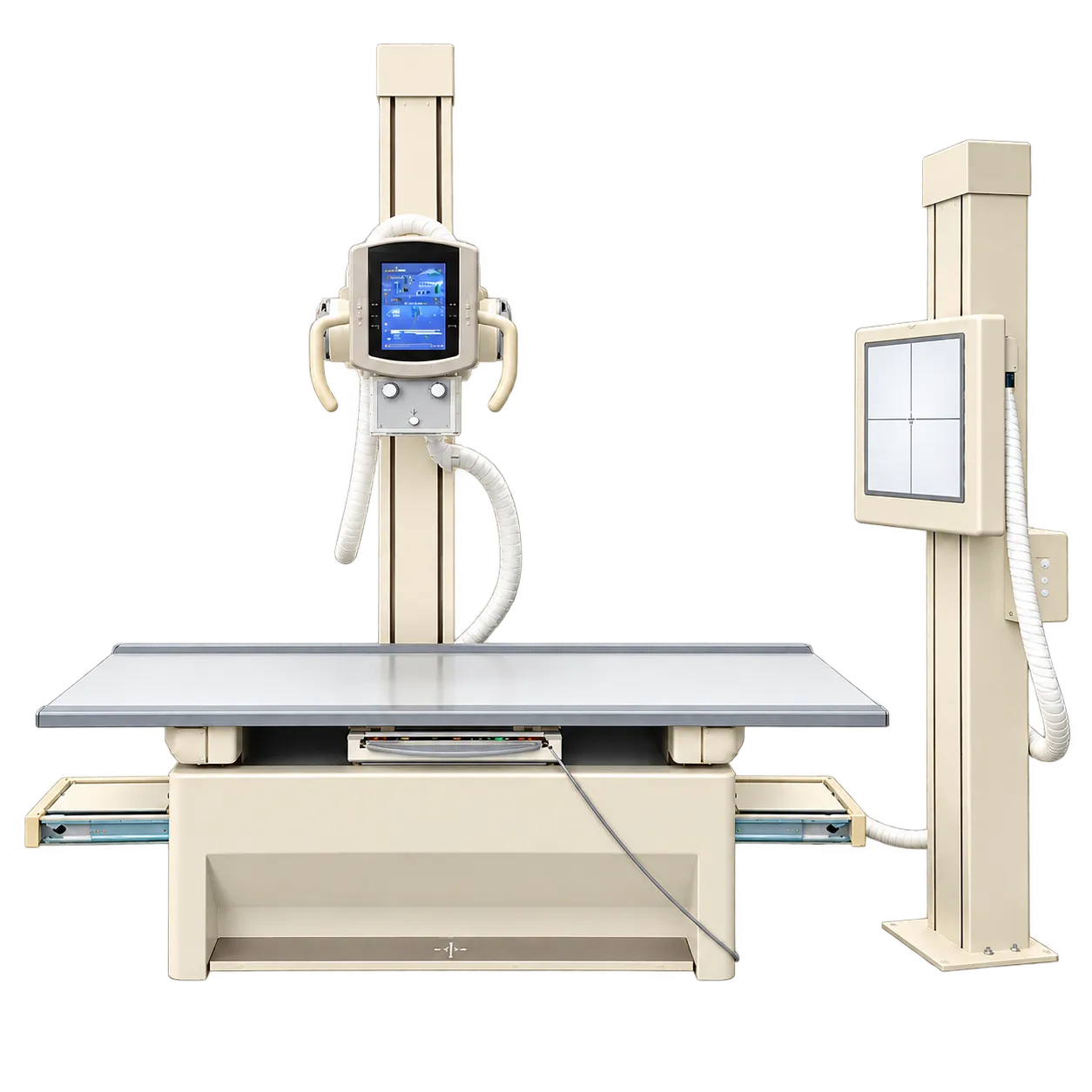
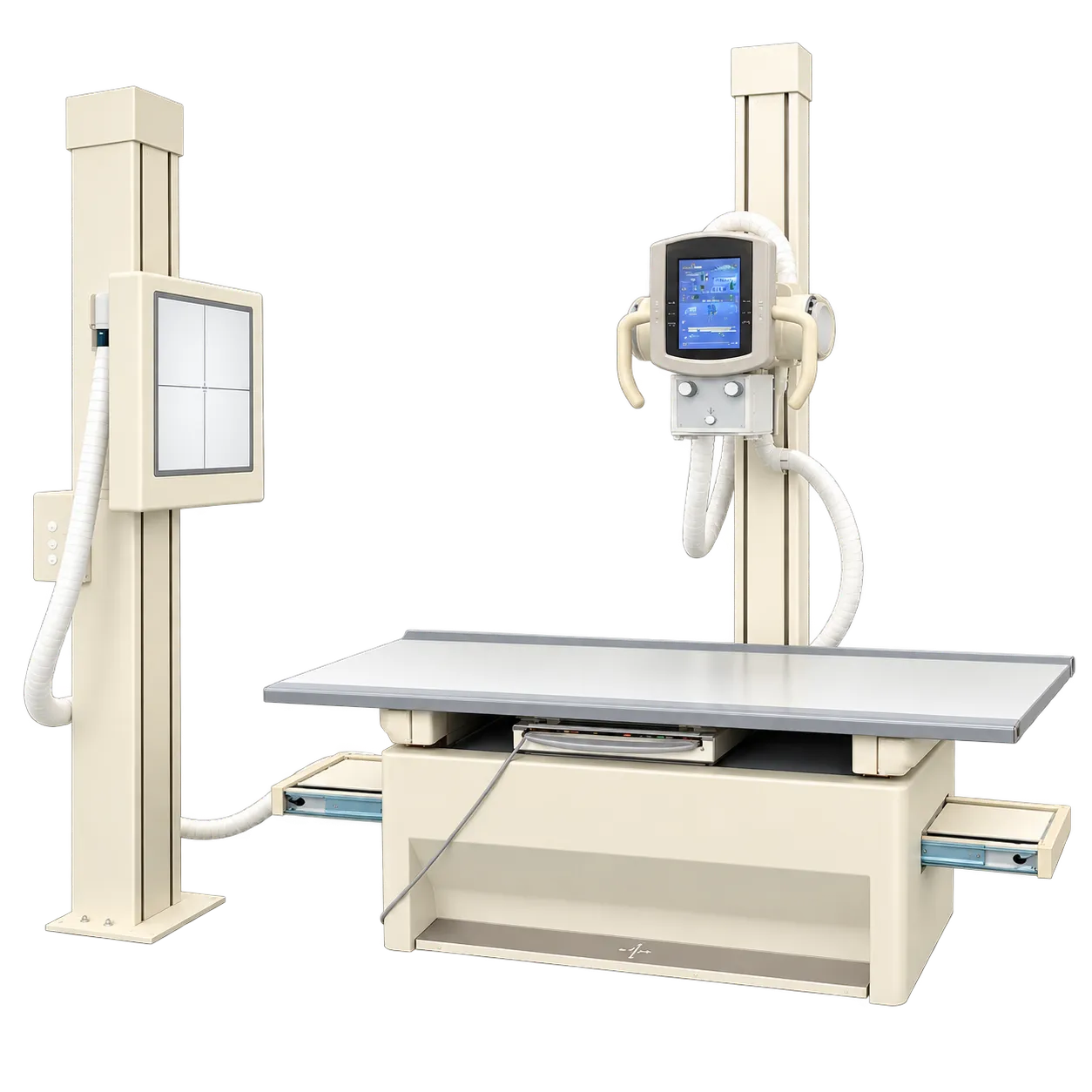
65 kW and 800 mA provide the headroom busy general departments value. Exposure times can stay very short even for bariatric patients and lateral lumbar spines. That reduces motion blur and repeat rates. The 150 kV ceiling supports high-kV chest technique. The extra current also means fast exposures for children and for trauma patients who cannot keep still, which spares them repeat images and extra dose.
The grid matters as much as the generator. Thick body parts scatter much of the beam, and an anti-scatter grid restores image contrast, though it requires higher exposure. With a flat panel, a stationary grid's line frequency must suit the pixel pitch, or moiré patterns can appear. The sheet names a grid but none of these details. The ratio, frequency, focal distance and any moving mechanism therefore need confirming alongside the panel's own specification. Grids also need careful handling, since a dropped grid can be damaged and produce artefacts.
Image processing software shapes how every DR image looks, so its presets for each body part, and its DICOM conformance statement deserve scrutiny before purchase. In the UK, a fixed room of this power also needs a dedicated three-phase supply within tight impedance limits. Shielding has to be designed with the adviser, and the installer then carries out a critical examination, as the 2017 radiation regulations require.
Medigear.uk collects software, detector, grid, and installation data from Blackstone for the imaging and estates teams so the room can be planned properly and commissioned on schedule.