
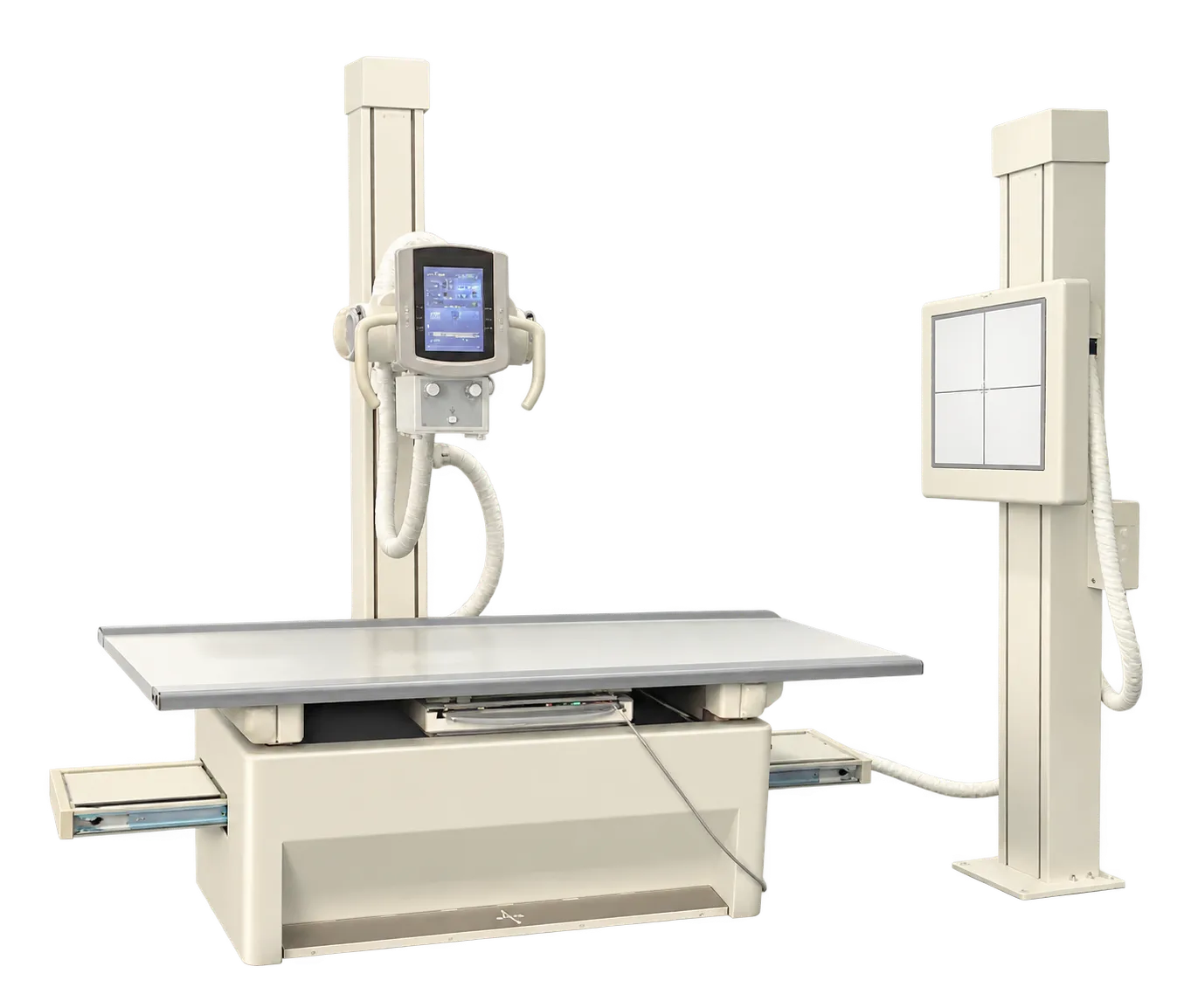
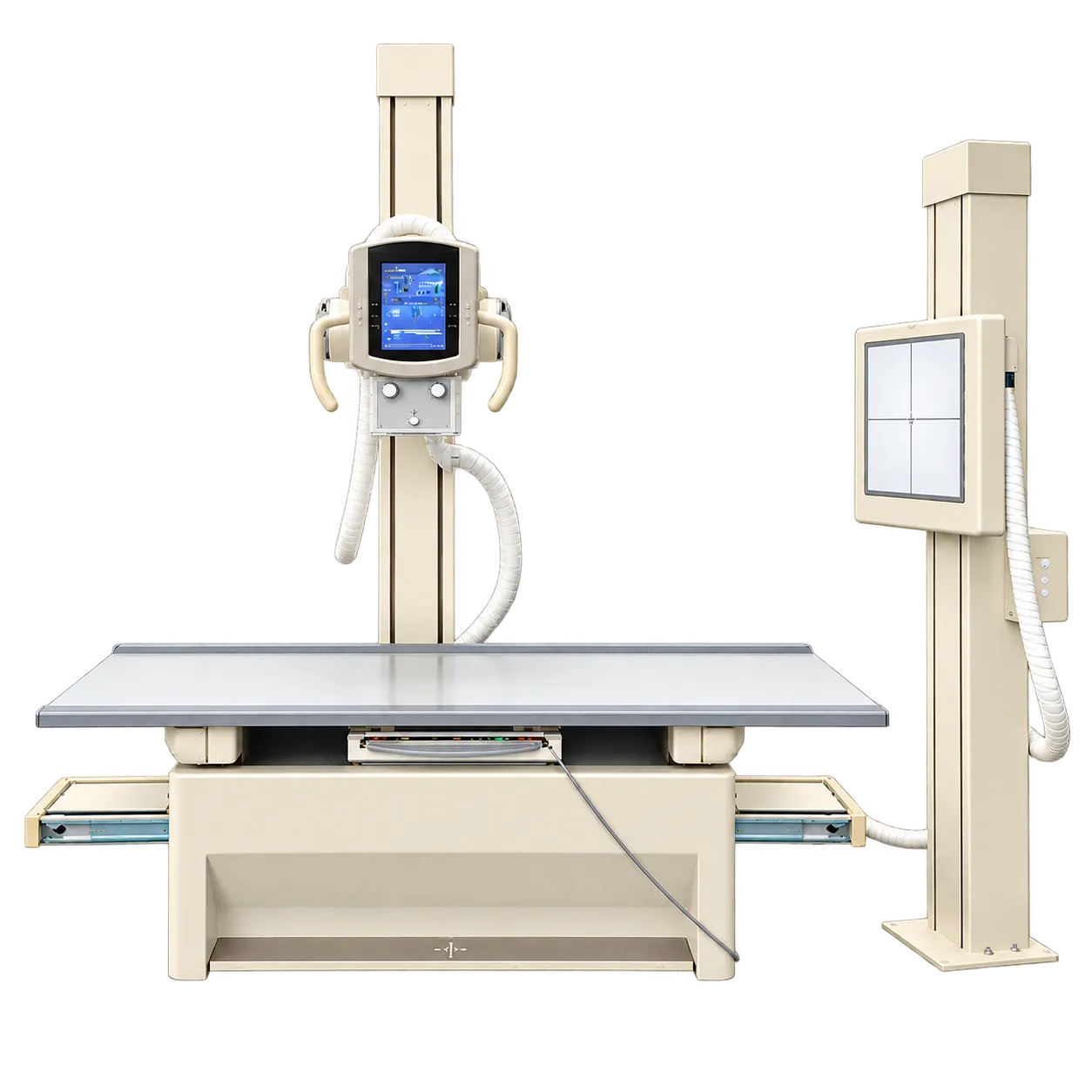
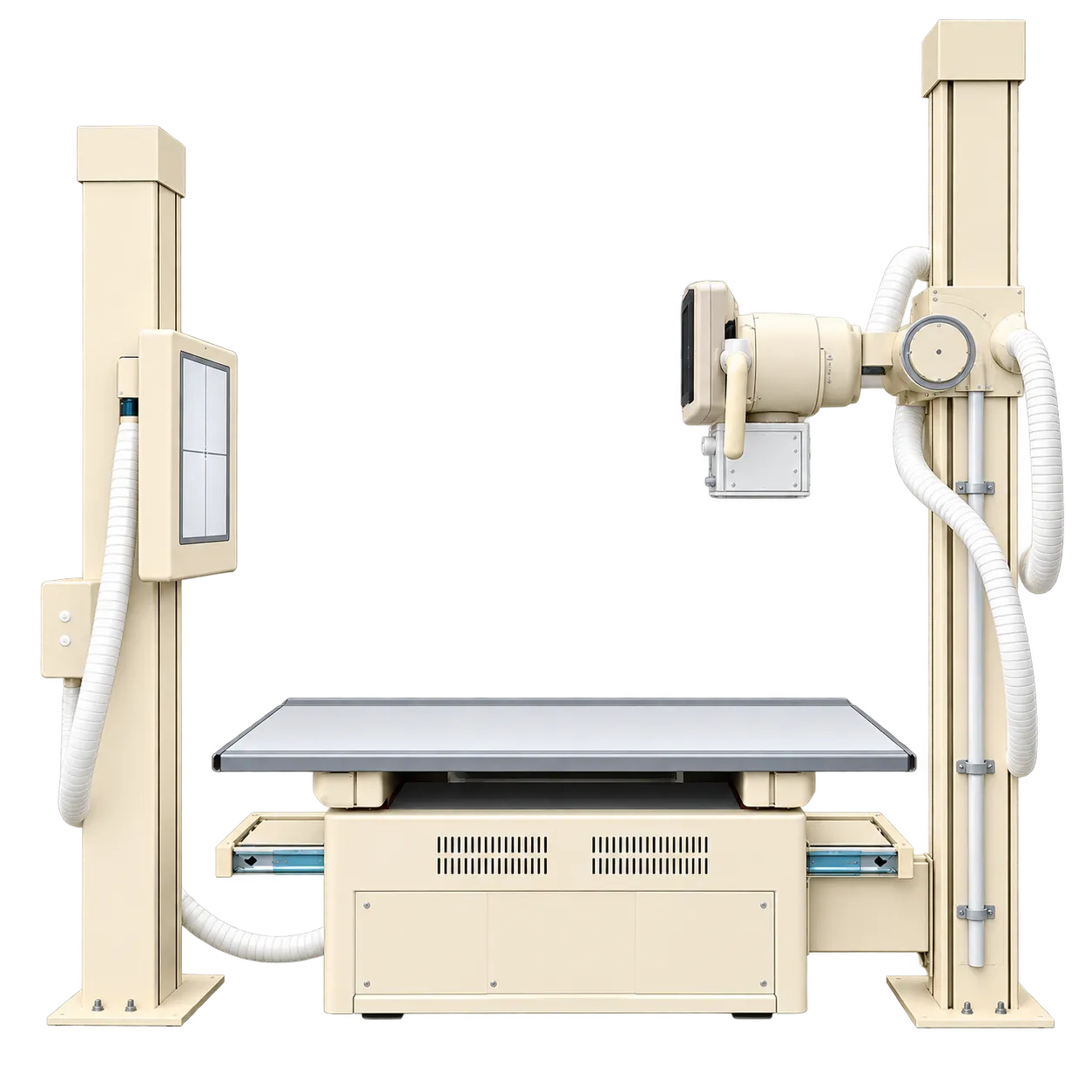
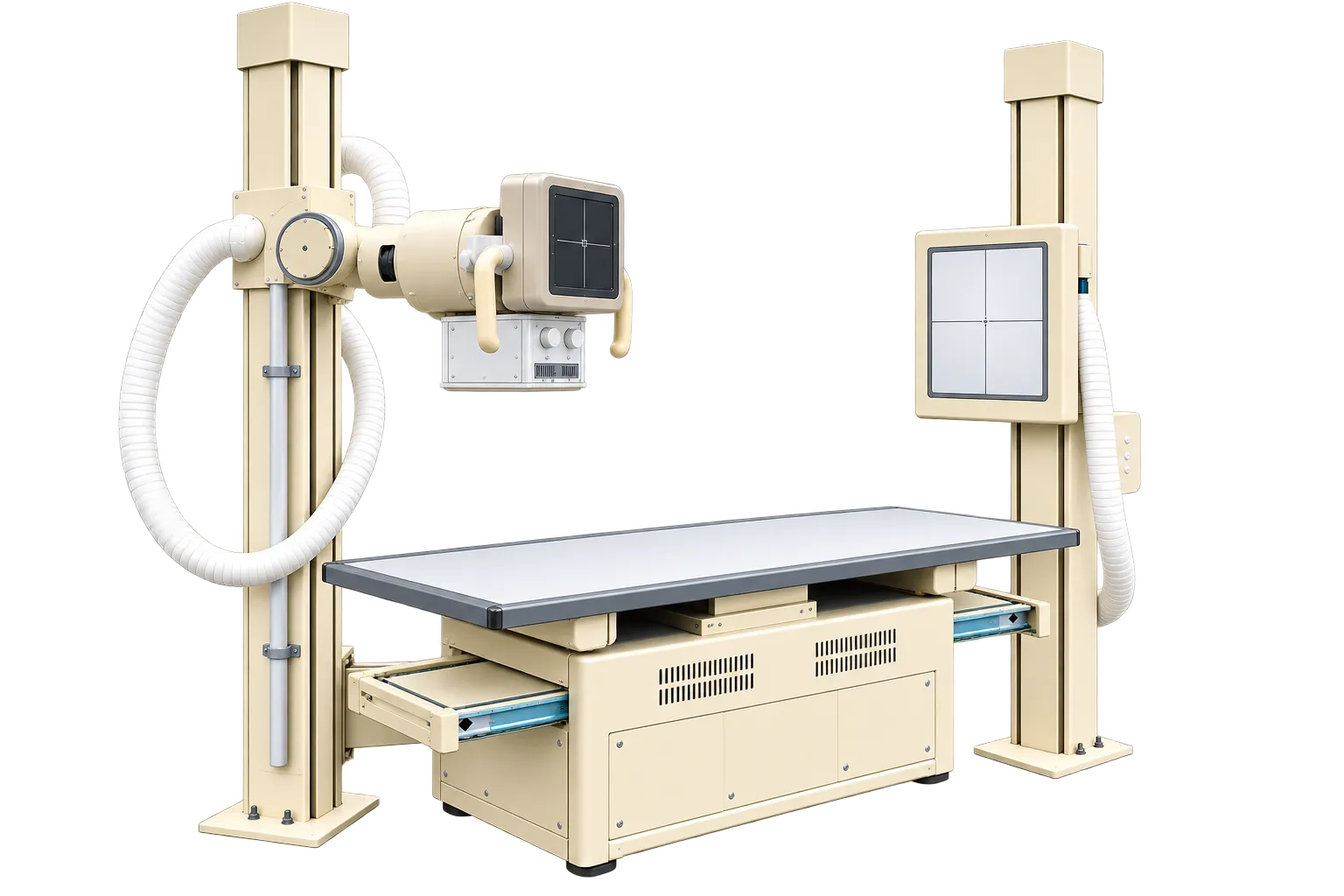
A floor-mounted X-ray system suits general radiography departments, urgent care centres, orthopaedic clinics and smaller hospitals. With a table and a vertical stand, one room can handle chests, abdomens, spines, pelvises and limbs, whether the patient lies down or stands. A 32 kW generator with up to 400 mA covers most adult examinations. It is modest for a fixed room, however, where 50 kW or more is common. Very large patients and long spine views may therefore need longer exposures, with more risk of movement blur.
Floor mounting has practical advantages. The tube column stands on the floor rather than hanging from the ceiling, so the ceiling does not need strengthening. That helps in older buildings and converted spaces. The trade-off is that the column and its rails take up floor space and can limit how freely the tube moves around the room. Digital or cassette-based systems may suit clinics moving from film or computed radiography to flat panel detectors.
A fixed X-ray room in the UK needs more planning than a mobile unit. The radiation protection adviser designs the shielding and controlled areas, and the installer fits warning lights and signs and carries out a critical examination under the Ionising Radiations Regulations 2017. Estates teams also need the mains supply details, including the maximum impedance the generator allows.
Medigear.uk obtains the missing specifications and installation data from Blackstone for the radiology manager, the radiation protection adviser and the estates team, who plan the room together.