
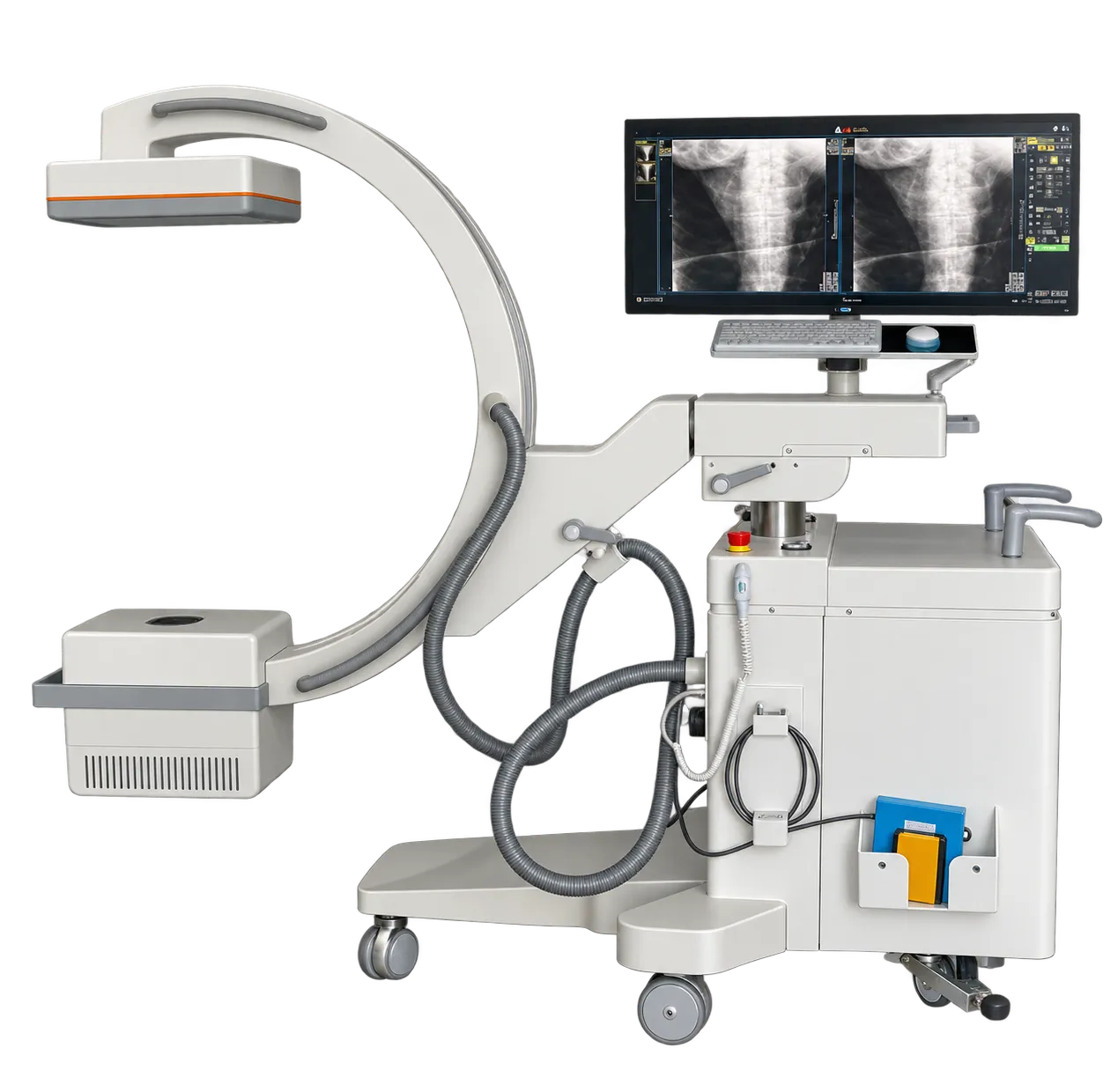
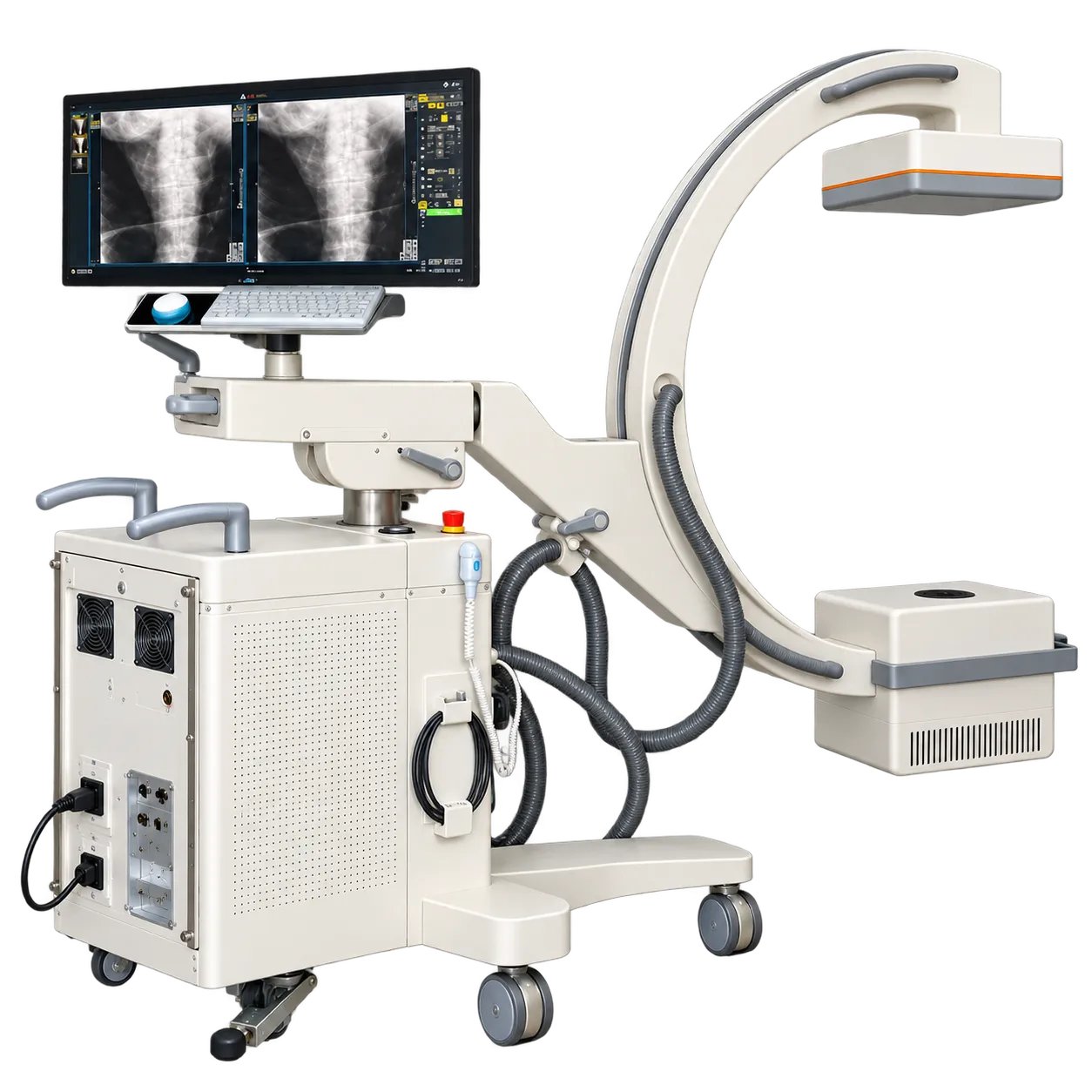
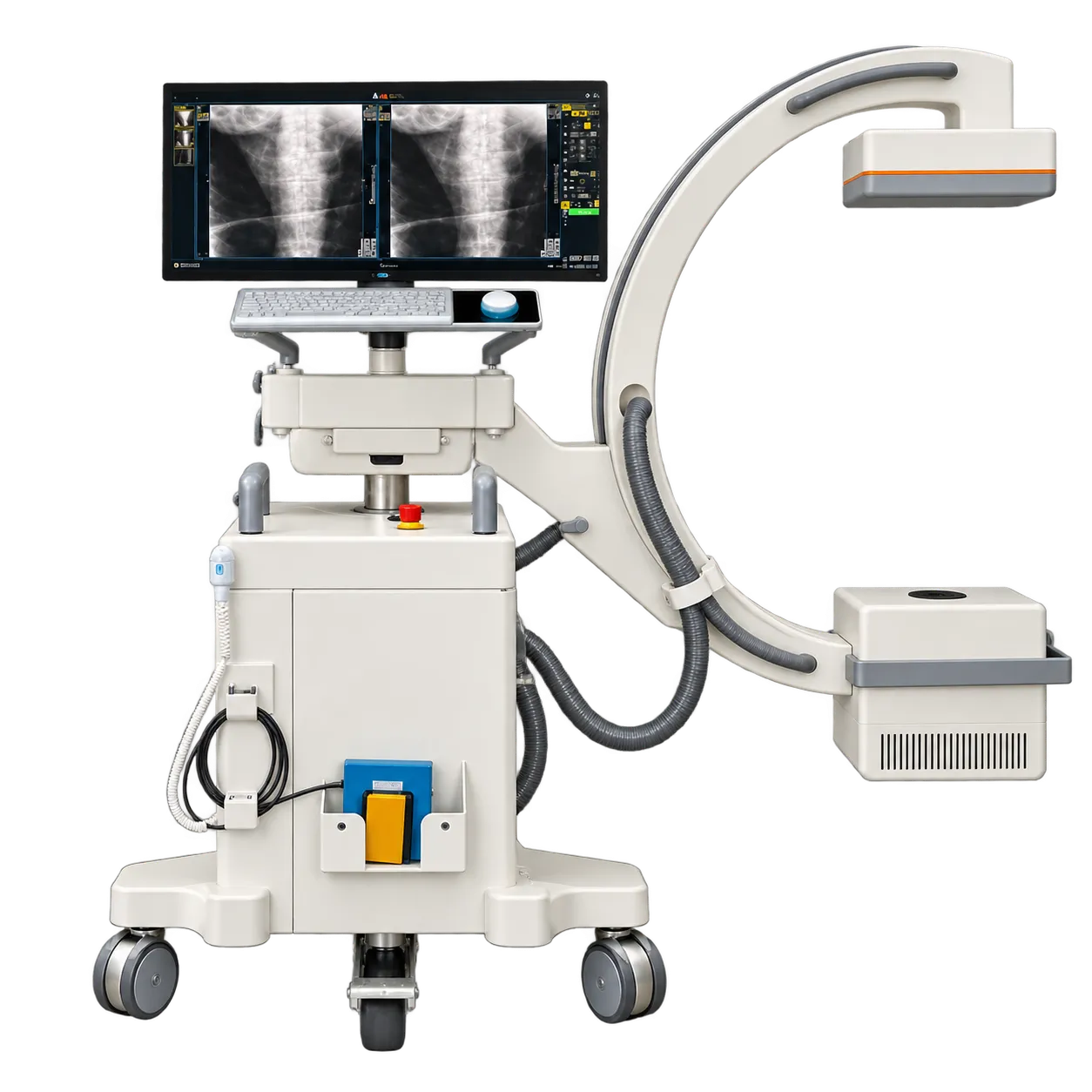
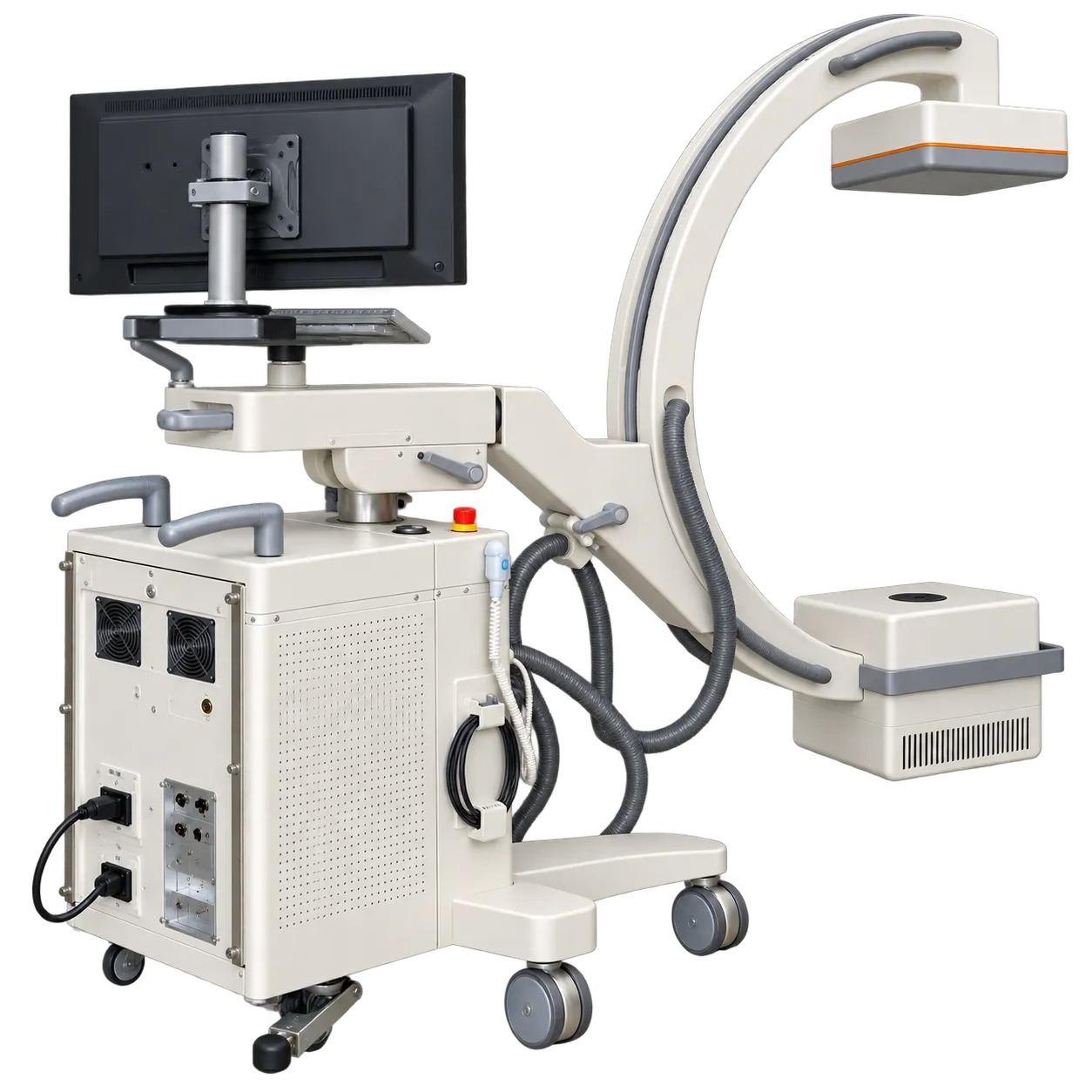
The practical gain from 15 kW is speed rather than reach. Higher current shortens each exposure at a given mAs, which sharpens images of moving anatomy and helps with thicker patients, where more of the beam is absorbed. In trauma and orthopaedic theatres, that means cleaner images during reduction and fixation. It also means less waiting between screening runs on a busy list, provided the tube's heat capacity keeps pace with the generator, which the sheet does not confirm.
Fluoroscopy is where the difference is felt most. A 10 mA ceiling gives brighter live images through larger body parts, which suits pain procedures, urology,y and longer guided work. Higher current also raises dose; however, pulsed modes, last-image hold,ld and dose alerts become important. Blackstone describes none of them. Nor does it mention digital subtraction, which some vascular work relies on, so a 15 kW C-arm bought for that purpose needs checking with the manufacturer first.
UK theatres will treat this like any other screening system. Local rules cover who stays in the controlled area, lead protection is worn, and patient dose has to be recorded, normally from a dose-area product meter. A radiation protection adviser signs off the arrangements, and the installer completes a critical examination. Training matters too, since the difference between continuous and pulsed screening can change a patient's dose several times over.
Medigear.uk collects the dose, mode, and supply details from Blackstone so the theatre team can judge the unit on more than its generator rating alone.