
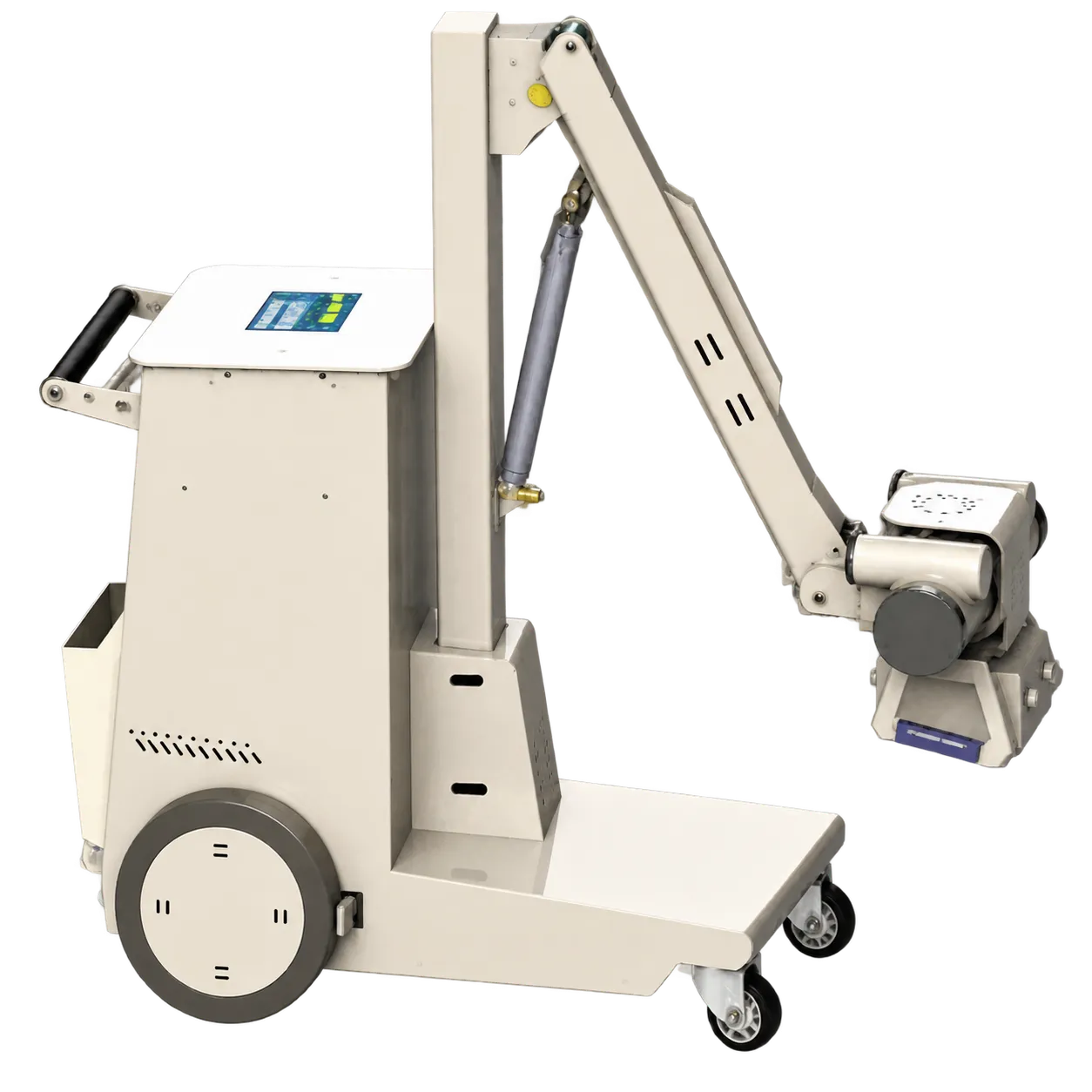
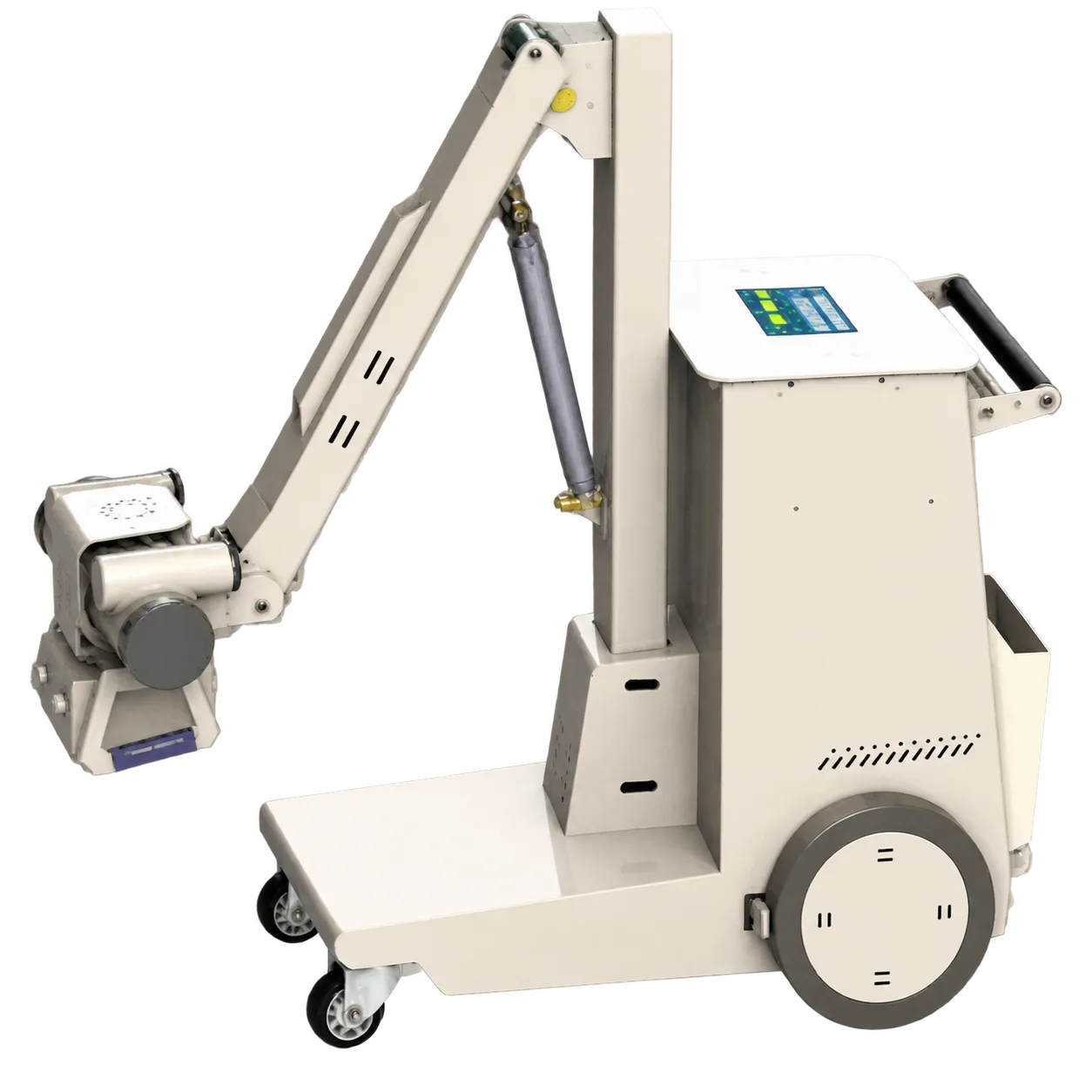
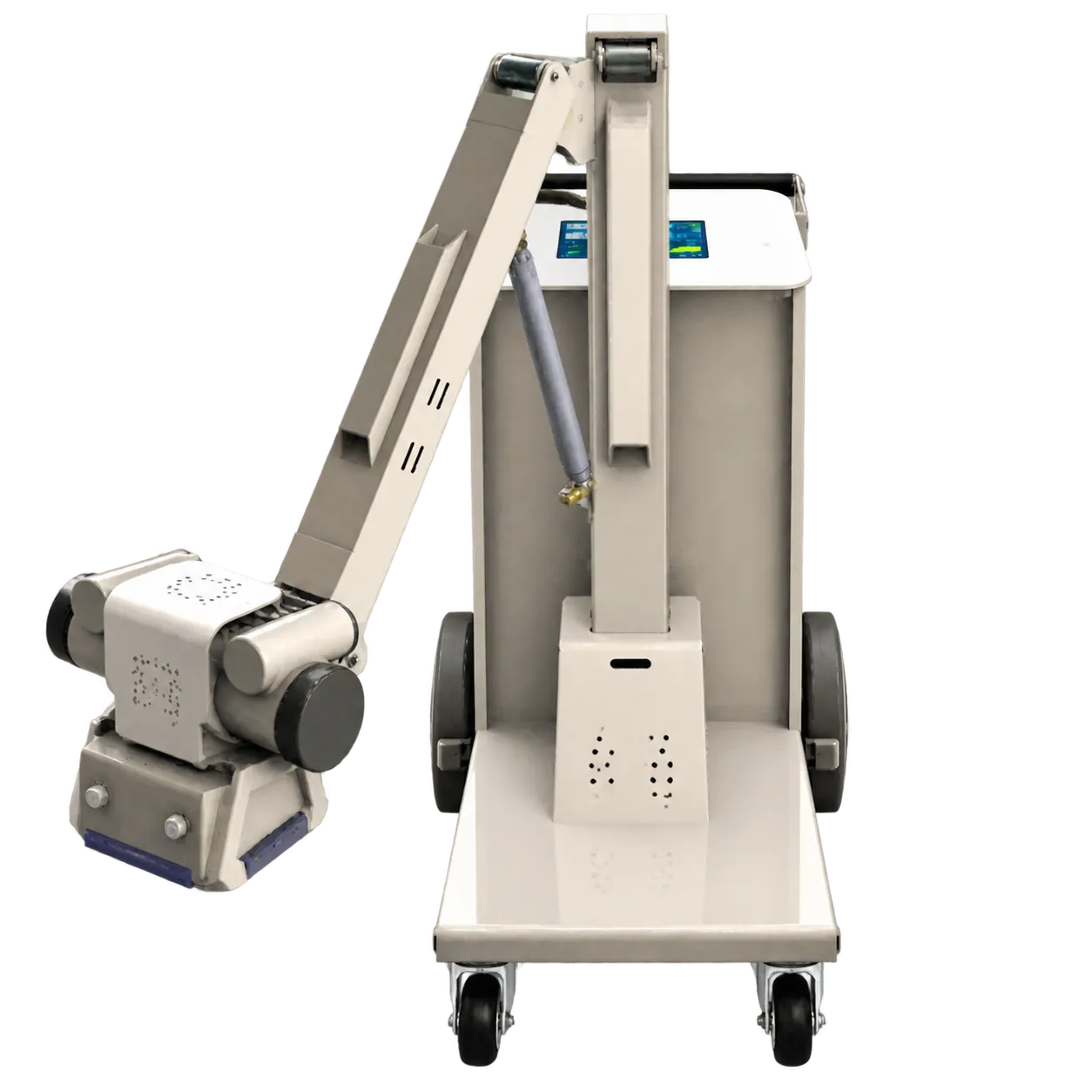
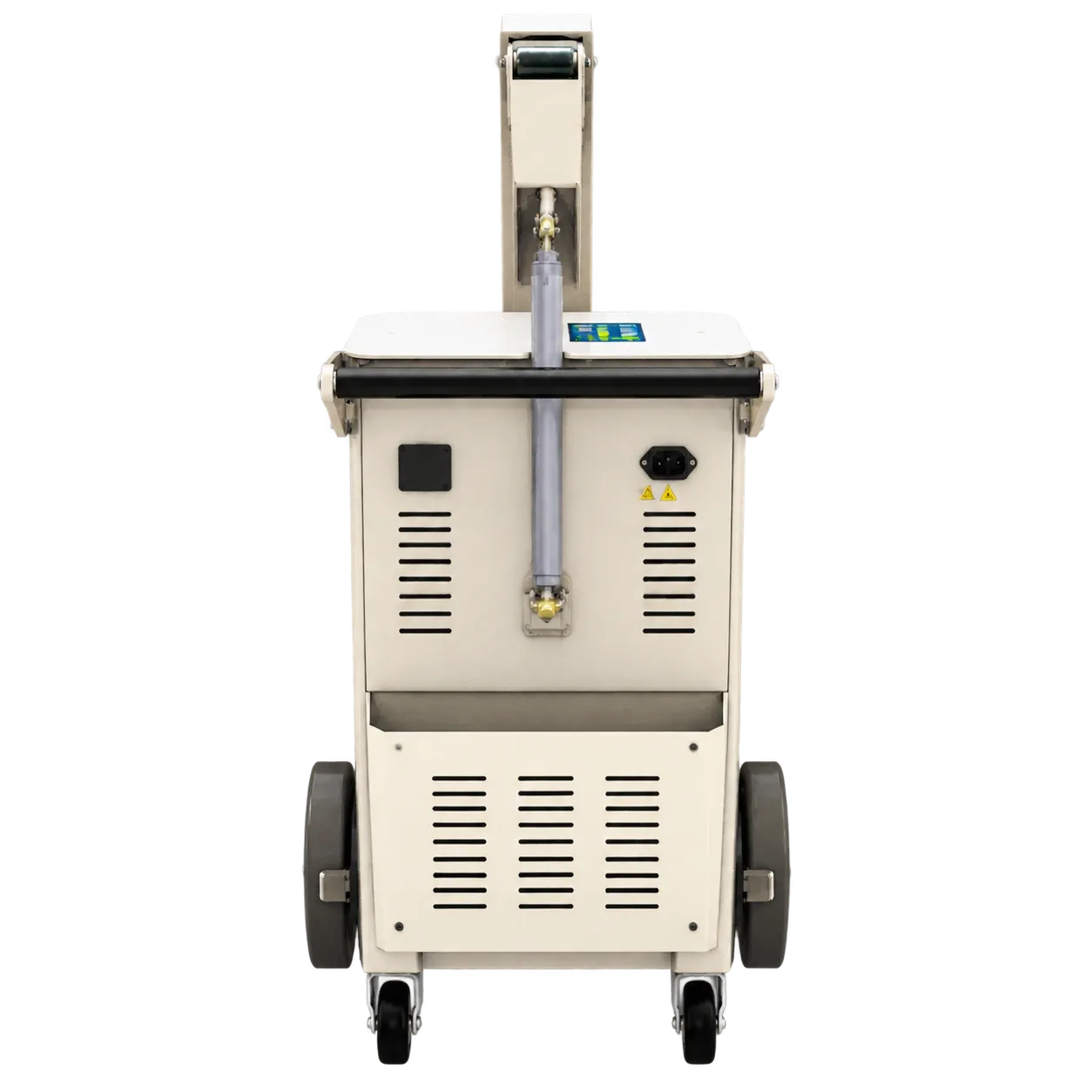
A 20 kW mobile radiography unit can cover most general radiography at the bedside. Chests in intensive care and abdomens on surgical wards are within its range. So are pelvises and spines in patients who cannot be moved. Exposure times as short as 2 milliseconds help freeze breathing and cardiac motion. That matters for chest films in patients who cannot hold their breath, such as those on ventilators or with severe breathlessness. Paediatric wards benefit too, since short exposures reduce the need for repeats.
The remote control is the feature most likely to interest radiation protection advisers. Standing well back reduces operator dose. However, local rules for mobile radiography usually require the operator to keep the patient and the controlled area in view throughout the exposure. The remote's ten-metre range is therefore useful only within line of sight, and its use should be written into those rules. Outside hospitals, the optional stand and table let a clinic or field hospital build a simple X-ray room around the unit.
For UK wards, the power supply is a practical question. Mobile units of this power usually either store energy internally or need a dedicated high-current supply. Blackstone does not say which applies here, and the answer affects where the unit can be used. The detector, tube heat capacity, and leakage figures are also needed before commissioning under the Ionising Radiations Regulations 2017.
Medigear.uk obtains them from Blackstone for the radiology manager, the estates team and the radiation protection adviser, who can then plan commissioning together.