
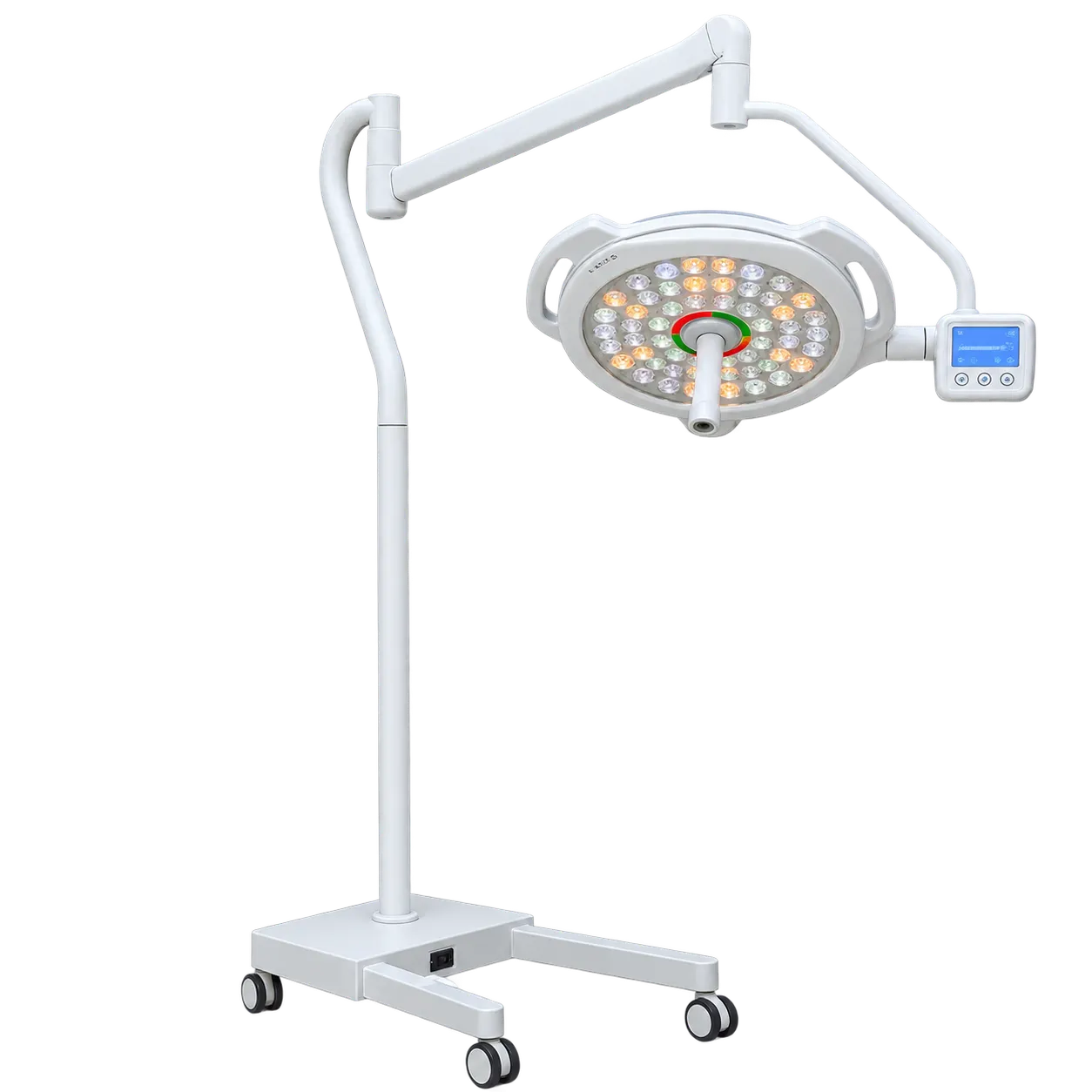
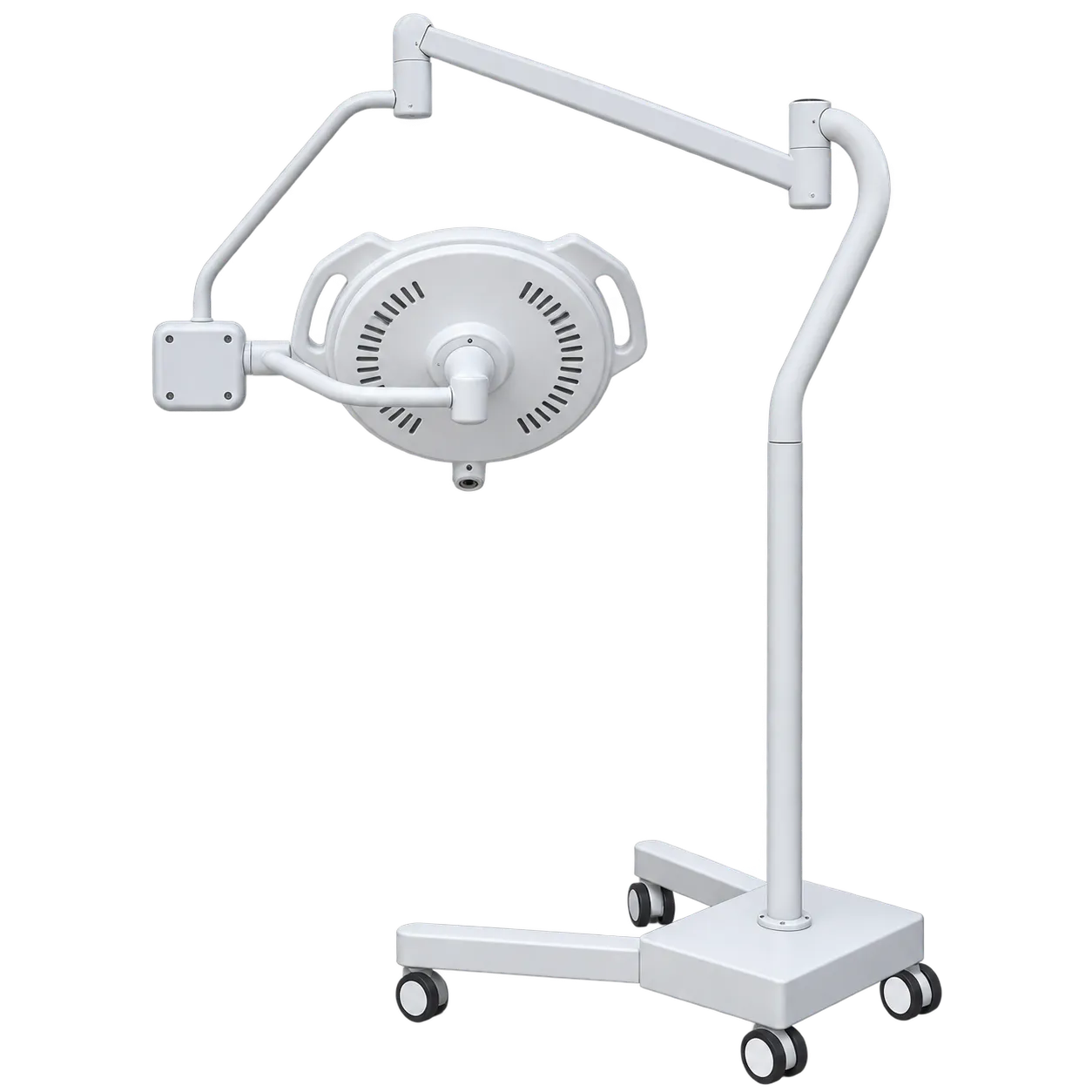
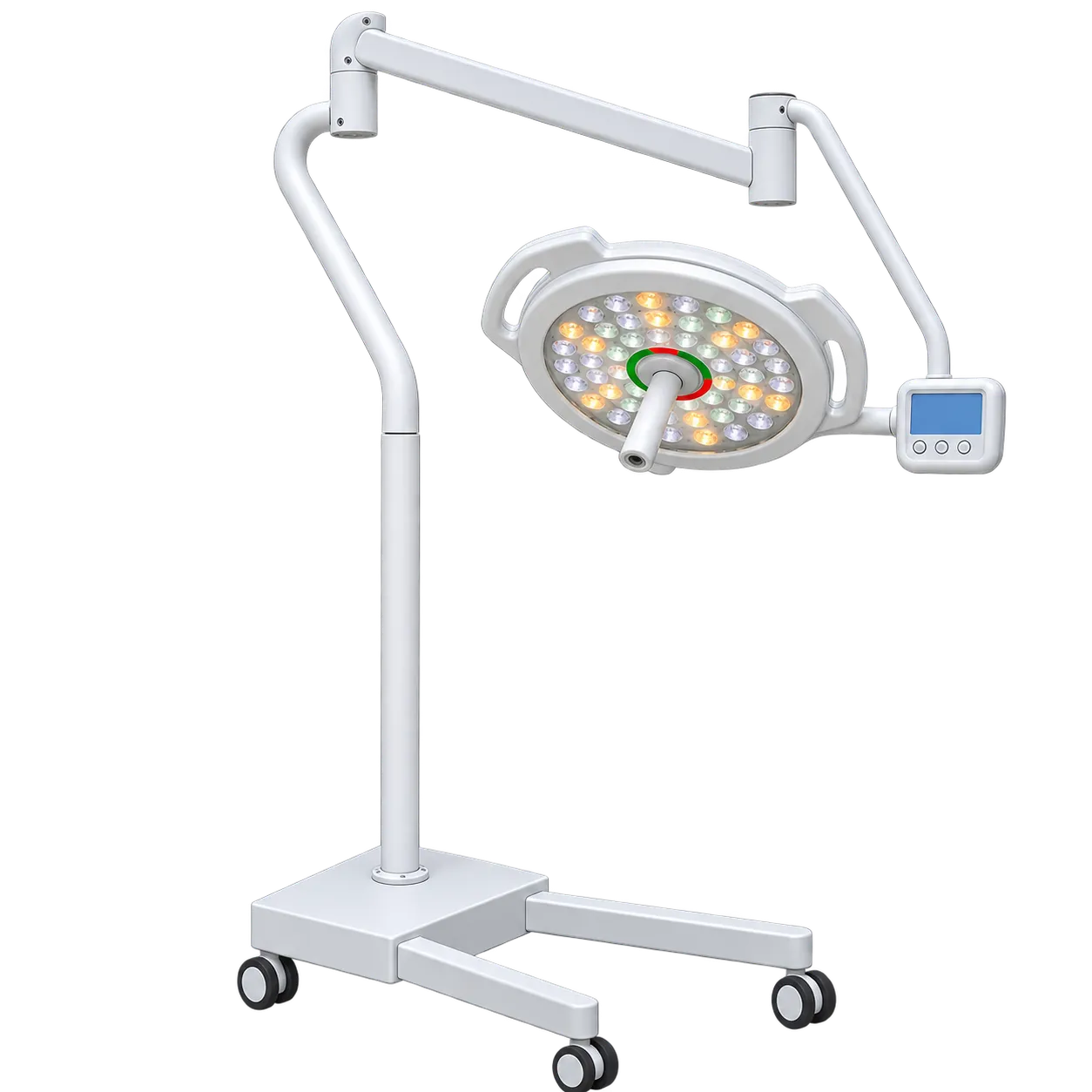
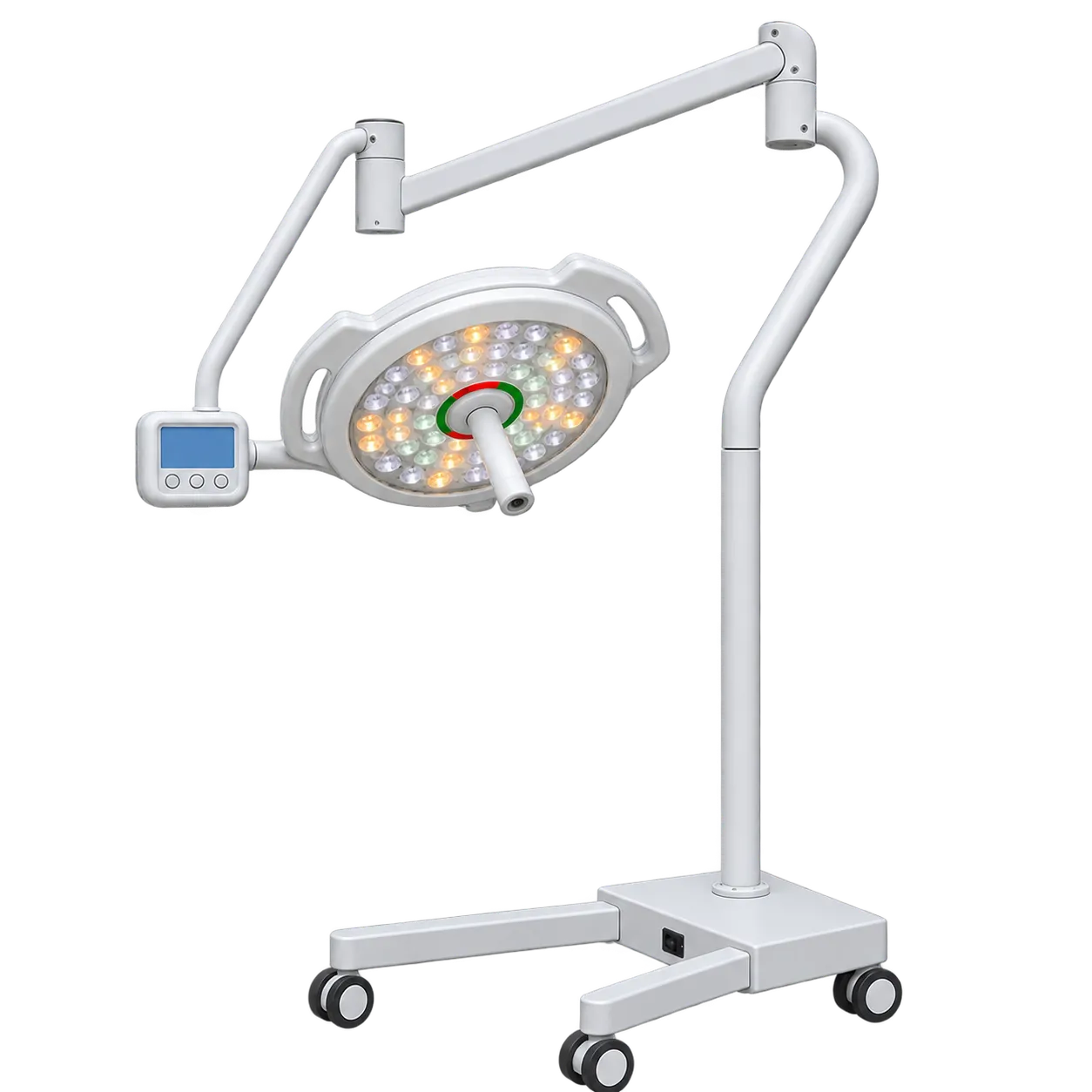
The options earn their place when one small light carries the work alone. In a birth room during perineal repair, or an emergency cubicle during wound closure, the clinician leans over the site, and a single head is easily blocked. Compensation helps hold light on the field through those moments. Outpatient procedure rooms and minor surgery suites see the same pattern whenever a room has only one light. Focus lets the assistant tighten the field onto a small wound or open it out for a larger area, all without anyone handling the head.
In theatre, the HS-015E works best as a mobile satellite light alongside a fixed ceiling head. You can bring it to the side opposite the main head, focus it to match its field, and leave it to fill shadows while the ceiling light does the main work. Lists that mix laparoscopic and open cases can use the endoscope mode on the same unit. Ten brightness steps reduce glare for patients who stay awake during minor procedures, and ten colour temperature settings let staff choose a warmer or cooler white.
Colour-critical work gets the same support as on the larger Blackstone lamps, with Ra 95 or better and an R9 mode. The question to ask before choosing between this model and the HS-014E is simple: will the light often work alone, over a small field, with staff leaning in? If so, the options are worth specifying.
Medigear.uk confirms how each option behaves, obtains the missing optical figures and passes them to the clinical lead together with the stand information.