
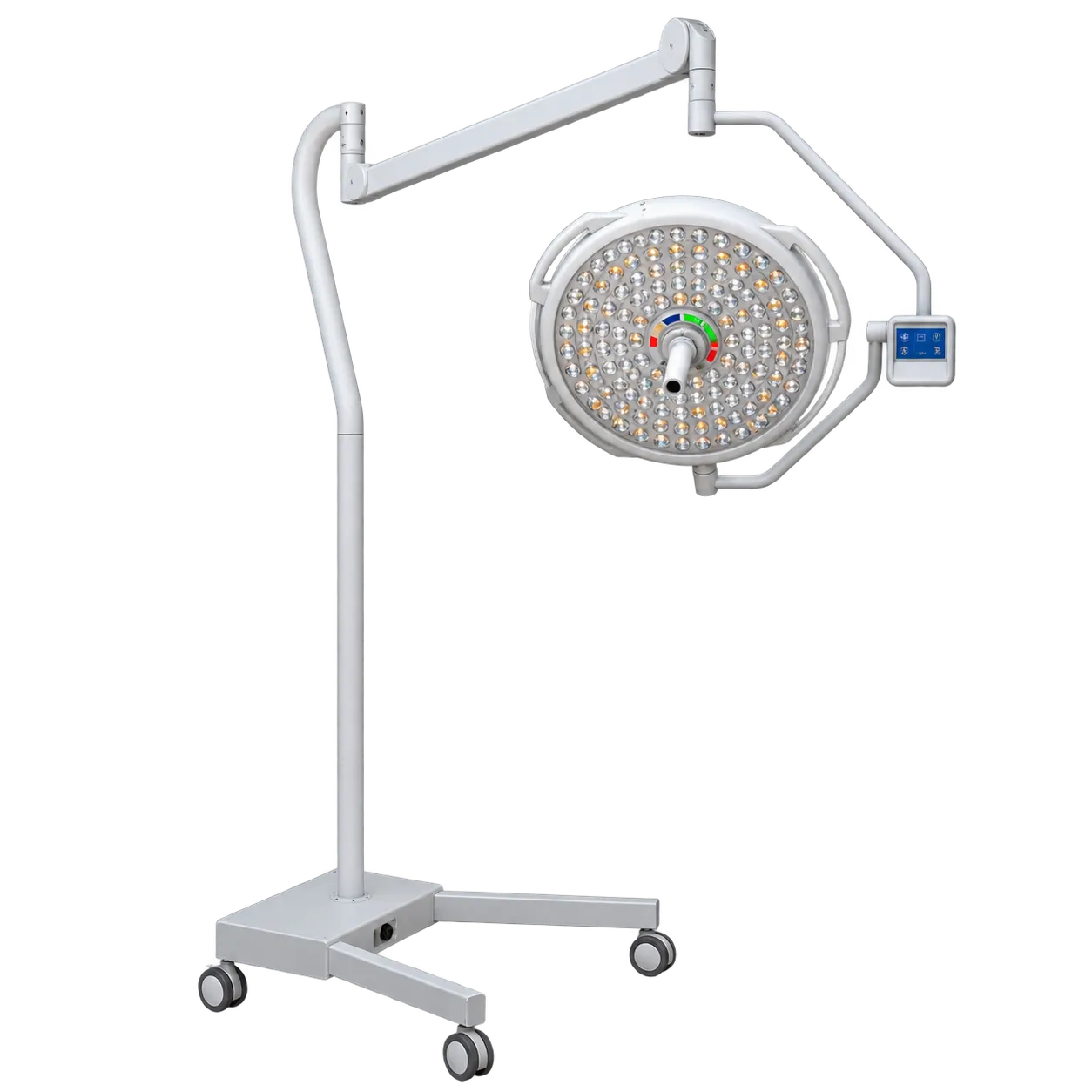
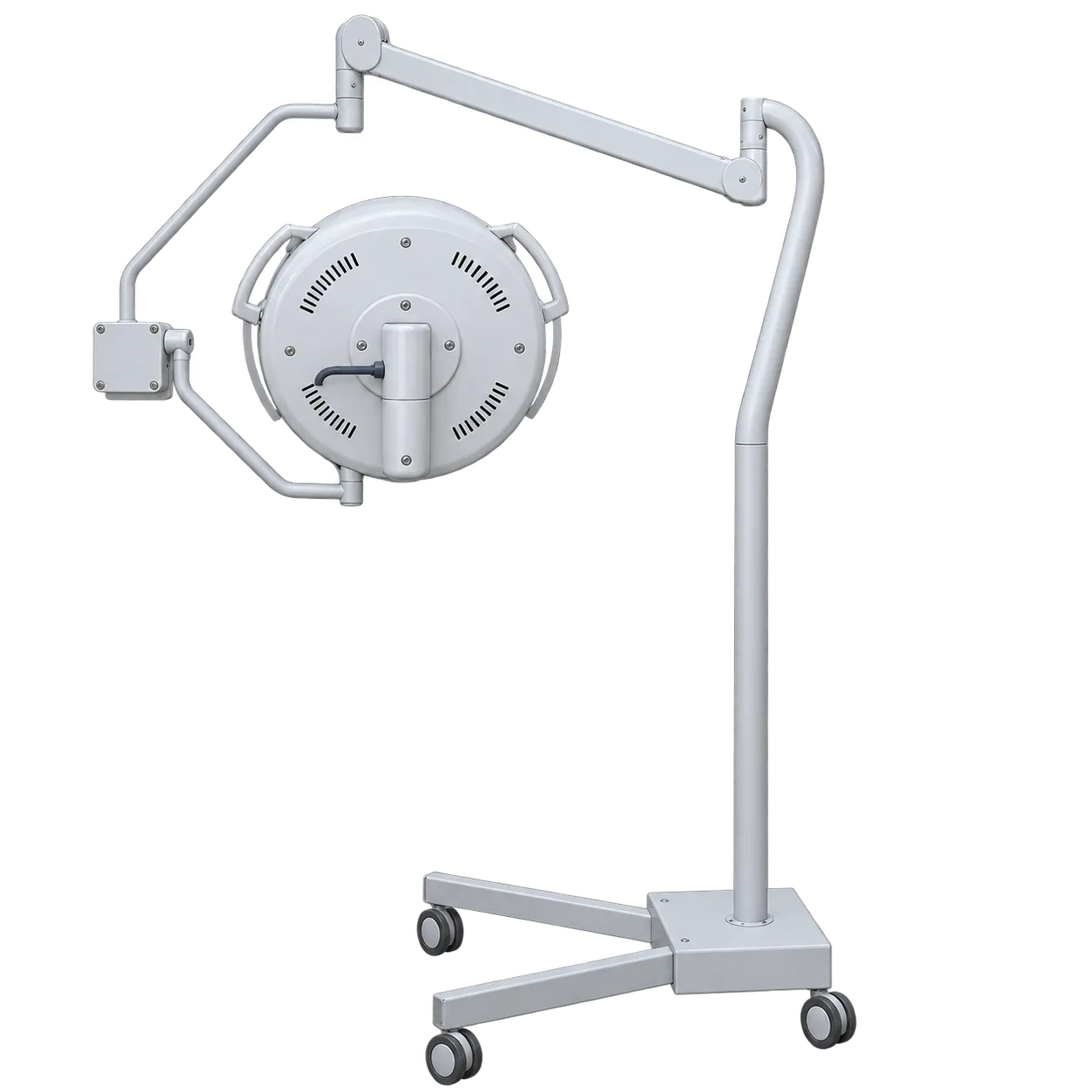
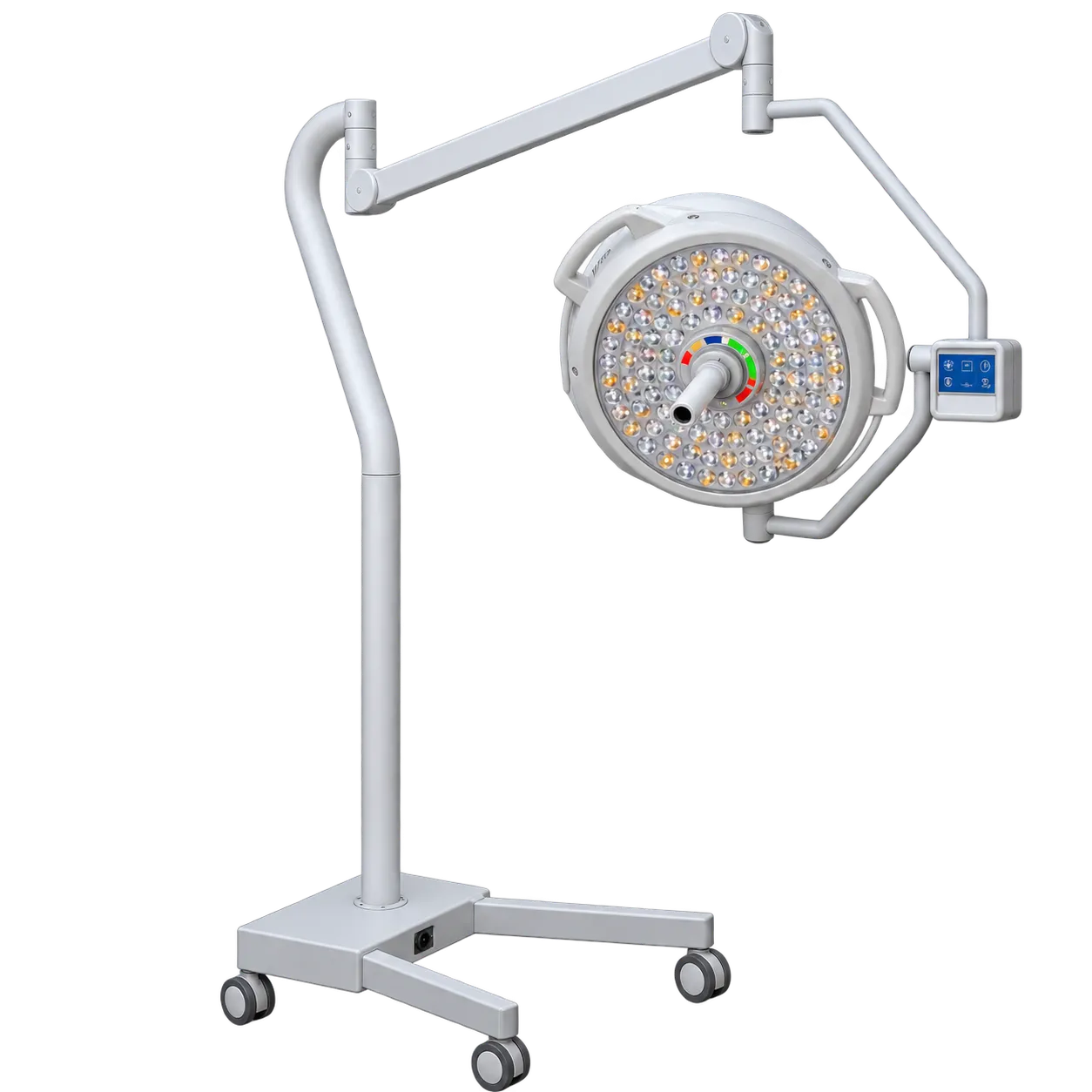
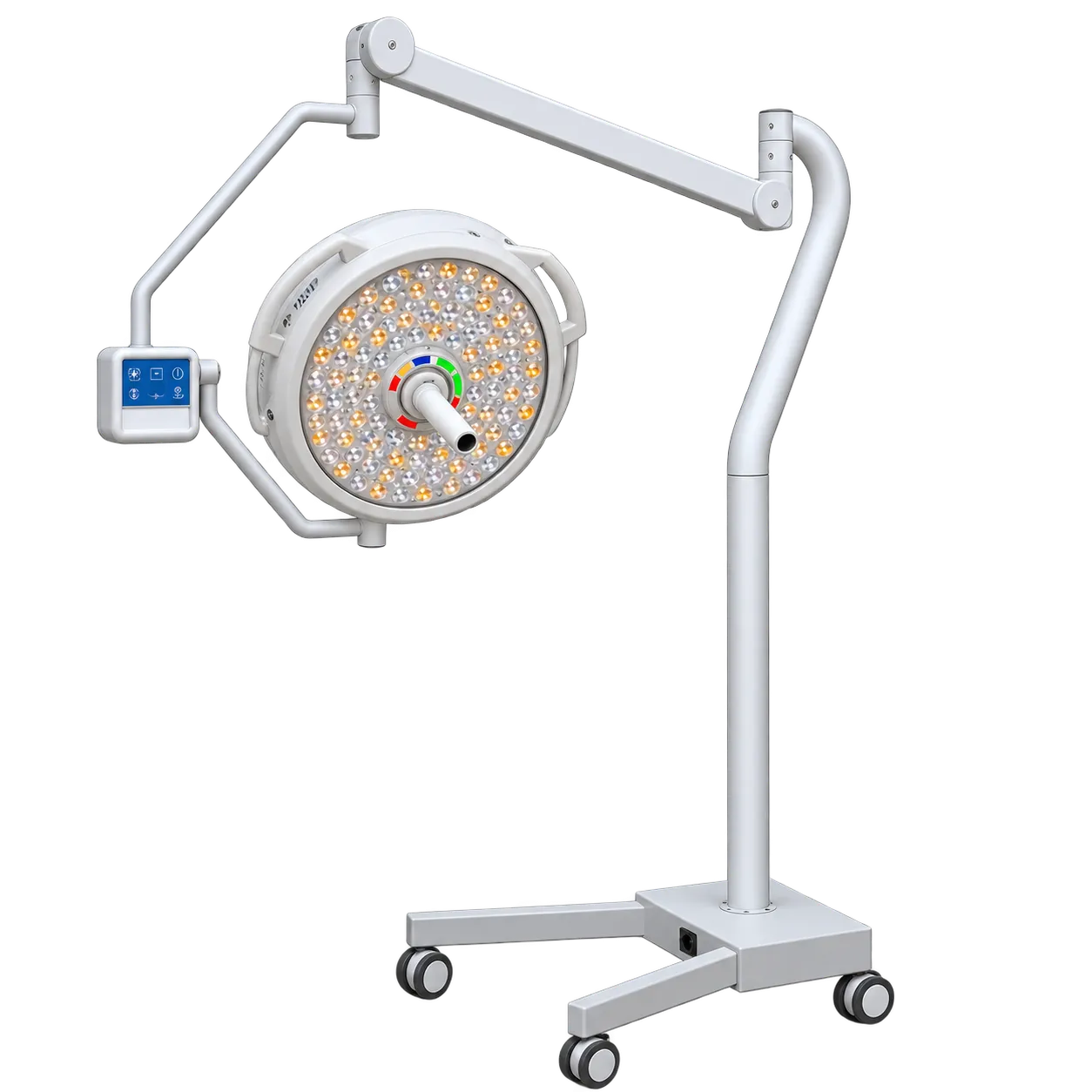
A mobile surgical light earns its keep where a ceiling unit cannot go or cannot justify itself. Maternity units use one for perineal repair and instrumental deliveries in rooms fitted for birth rather than surgery. Emergency departments wheel them into resus for chest drains, central lines and wound exploration. Minor operations rooms, day surgery units and outpatient treatment areas use them where the ceiling will not take a fixing. Some theatres keep one on standby in case a ceiling light fails.
The 700 mm head matters here. It is the same head and output as Blackstone's ceiling theatre light. That lets the HS-013E support larger procedures in a temporary or overflow theatre, not just bedside work. The endoscope mode suits a laparoscopic case in a room without fixed theatre lighting. Ten output steps let staff dim the light for an awake patient. With only one head, the optional shielding compensation offers more than it would on a dual system, because there is no second beam to fill a shadow.
Practical checks decide whether it works in a given unit. A mains lead trailing across a delivery room or resus bay is a trip hazard, so the power arrangement and any battery need confirming. The base has to clear door frames and fit beside beds and tables, and the brakes have to hold on a sloping or uneven floor.
Medigear.uk collects the base dimensions, weight, height range, battery details and stability results from Blackstone, then passes them to the ward manager or theatre lead before any order.