
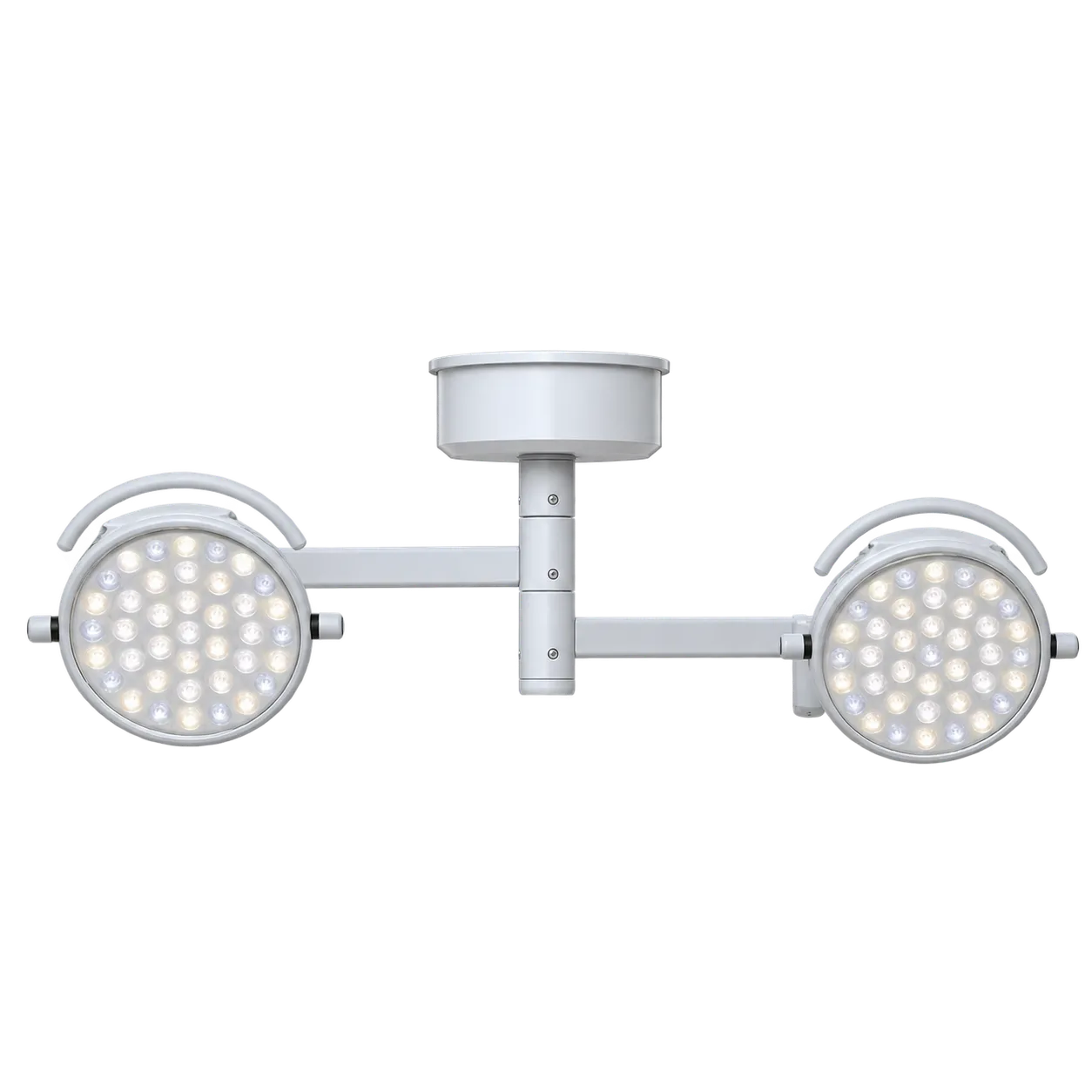
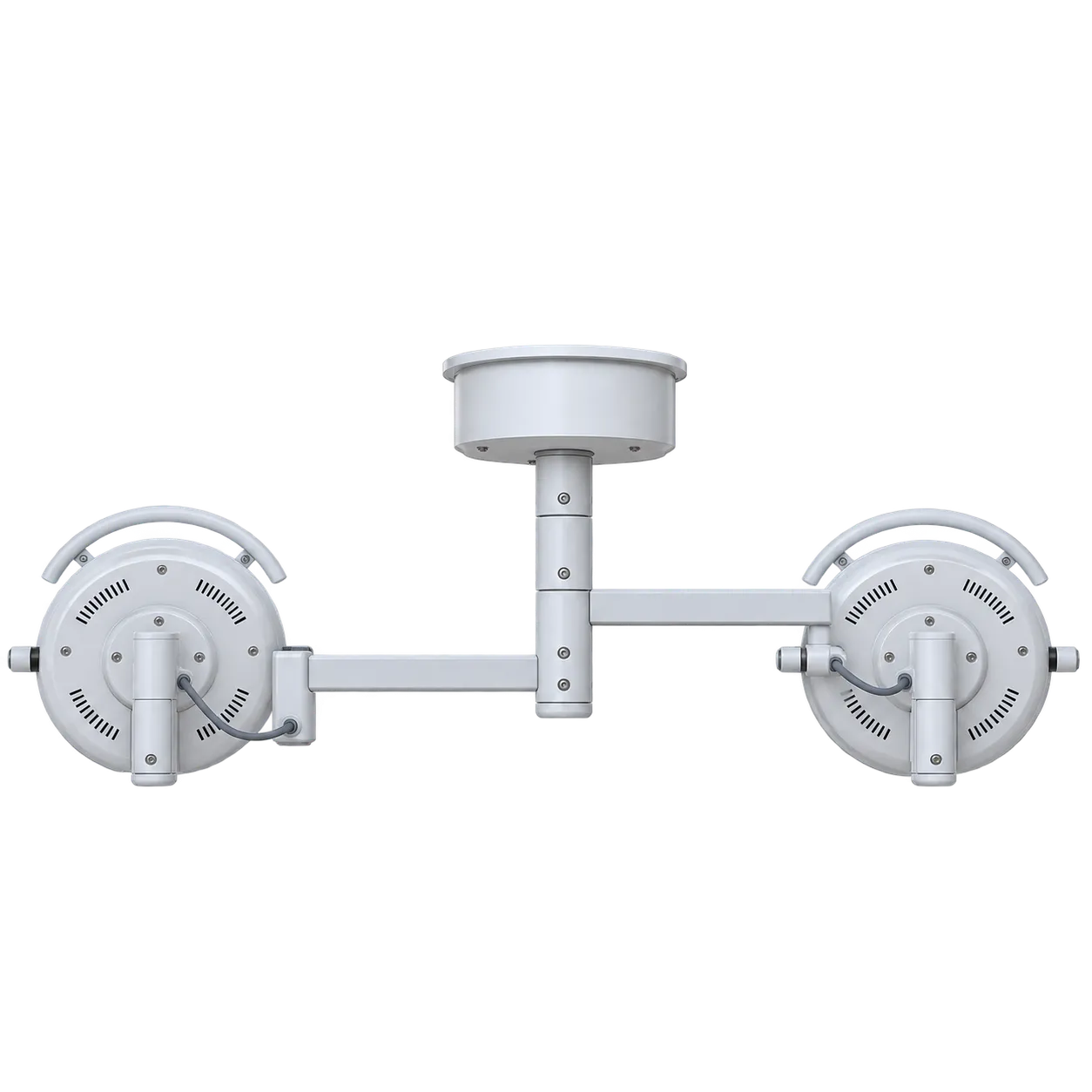
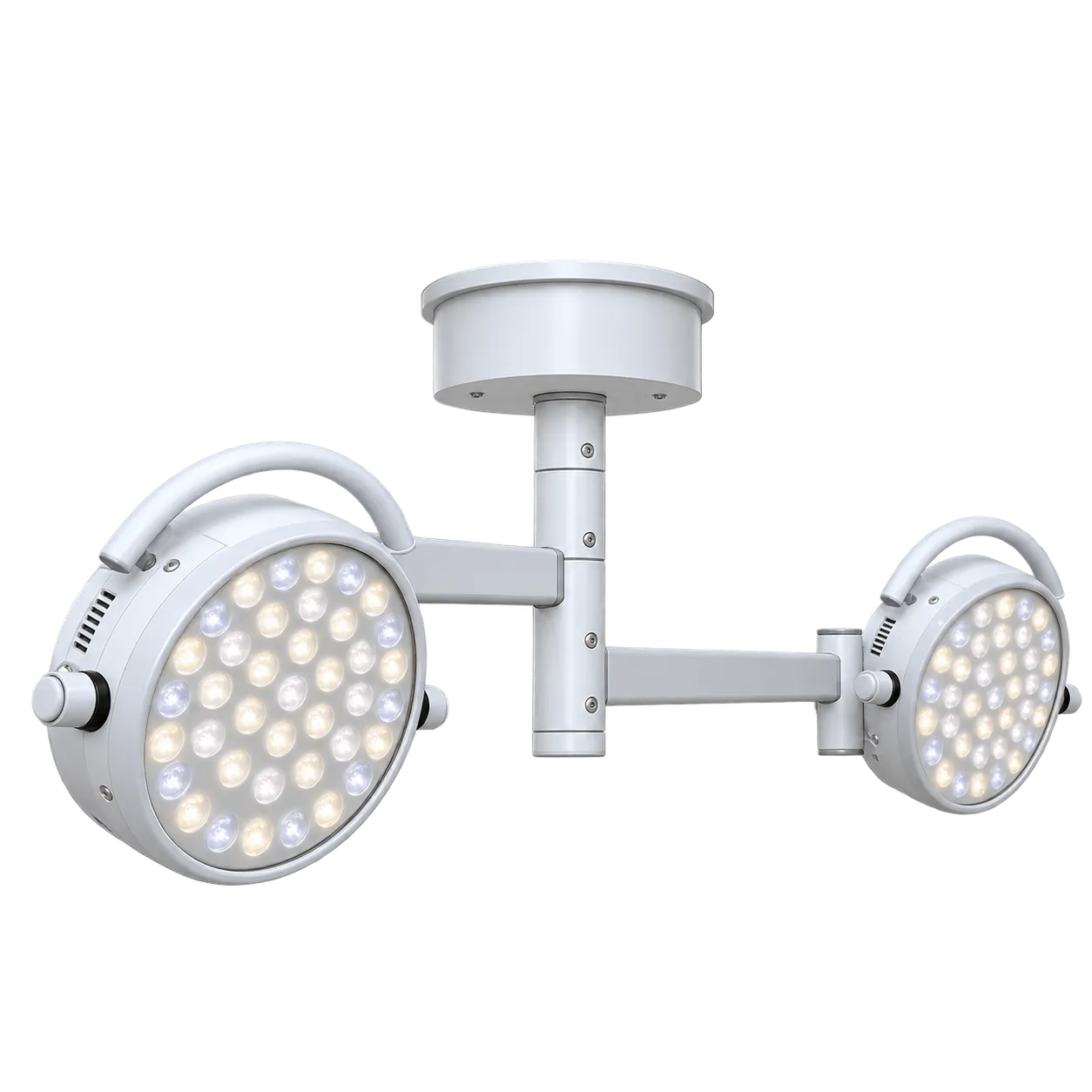
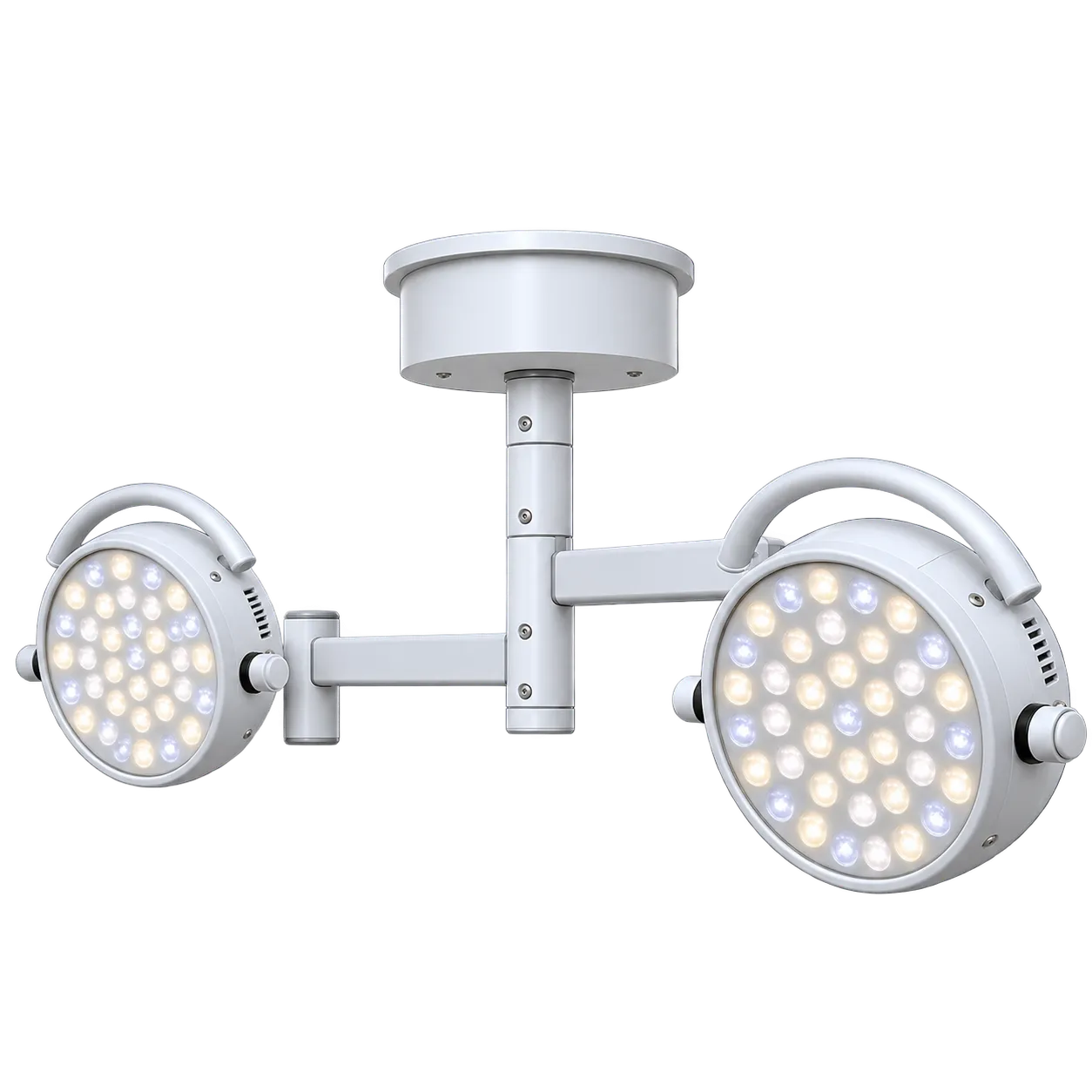
The published geometry points to treatment rooms rather than main theatres. A field no wider than 125 mm, lit from 800 to 1000 mm away, suits skin excisions, laceration repair, abscess drainage, nail surgery and similar work in minor operations rooms, urgent treatment centres, and dermatology or plastics clinics. The clinician in these rooms often works close to the site with an assistant opposite. Two small heads coming in from different directions stop either pair of hands from darkening the field.
How the heads are used depends on the wound. For a long laceration, the two spots can sit side by side, while a small, deep wound benefits from both converging on one point. Blackstone publishes a ceiling range of 2800 to 3200 mm so that a room survey can check fit early. What the sheet omits is how far the heads hang below the ceiling, which determines whether a particular room falls within the working distance. A twin head procedure light that hangs too low or too high loses the spot size and depth the sheet describes.
Colour matters here as much as in theatre, because wound margins, skin lesions and tissue viability are all judged by eye. That is why the Ra band needs settling before purchase. Most of these patients are awake under local anaesthetic, so glare matters too, and the sheet lists no way to turn either head down.
Medigear.uk confirms the measured Ra, the switching and dimming arrangement and the handle options with Blackstone, then shares them with the clinical lead and the estates team.