
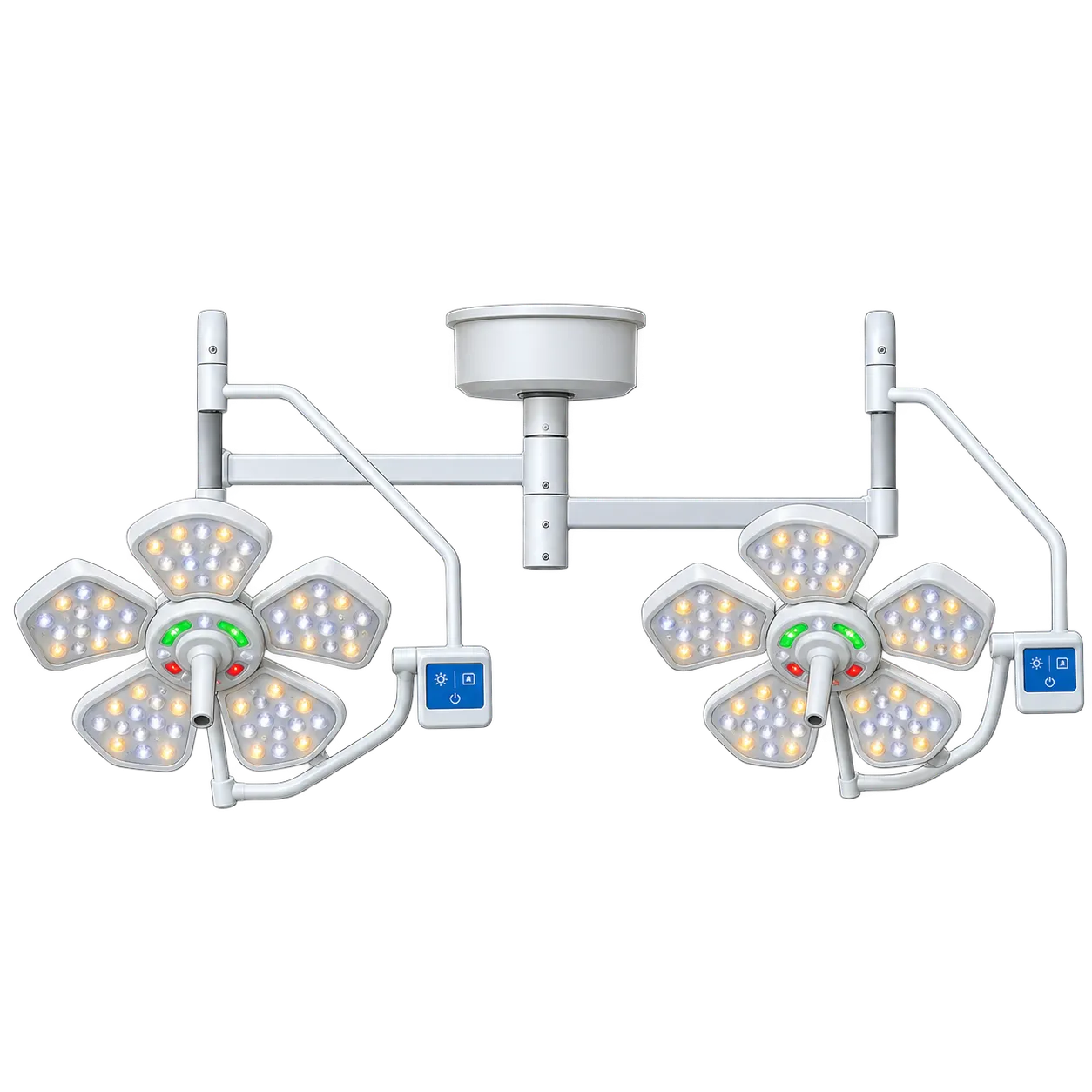
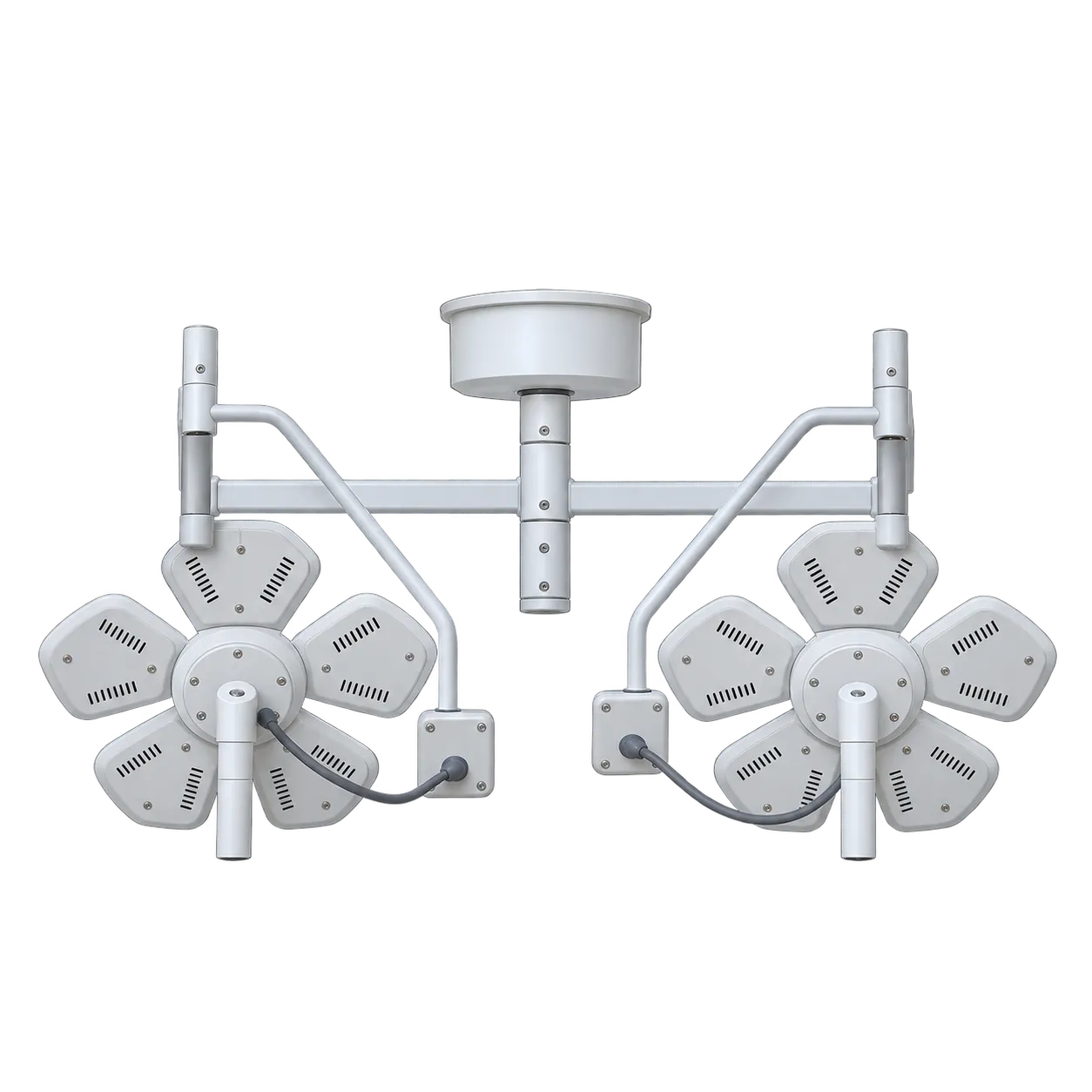
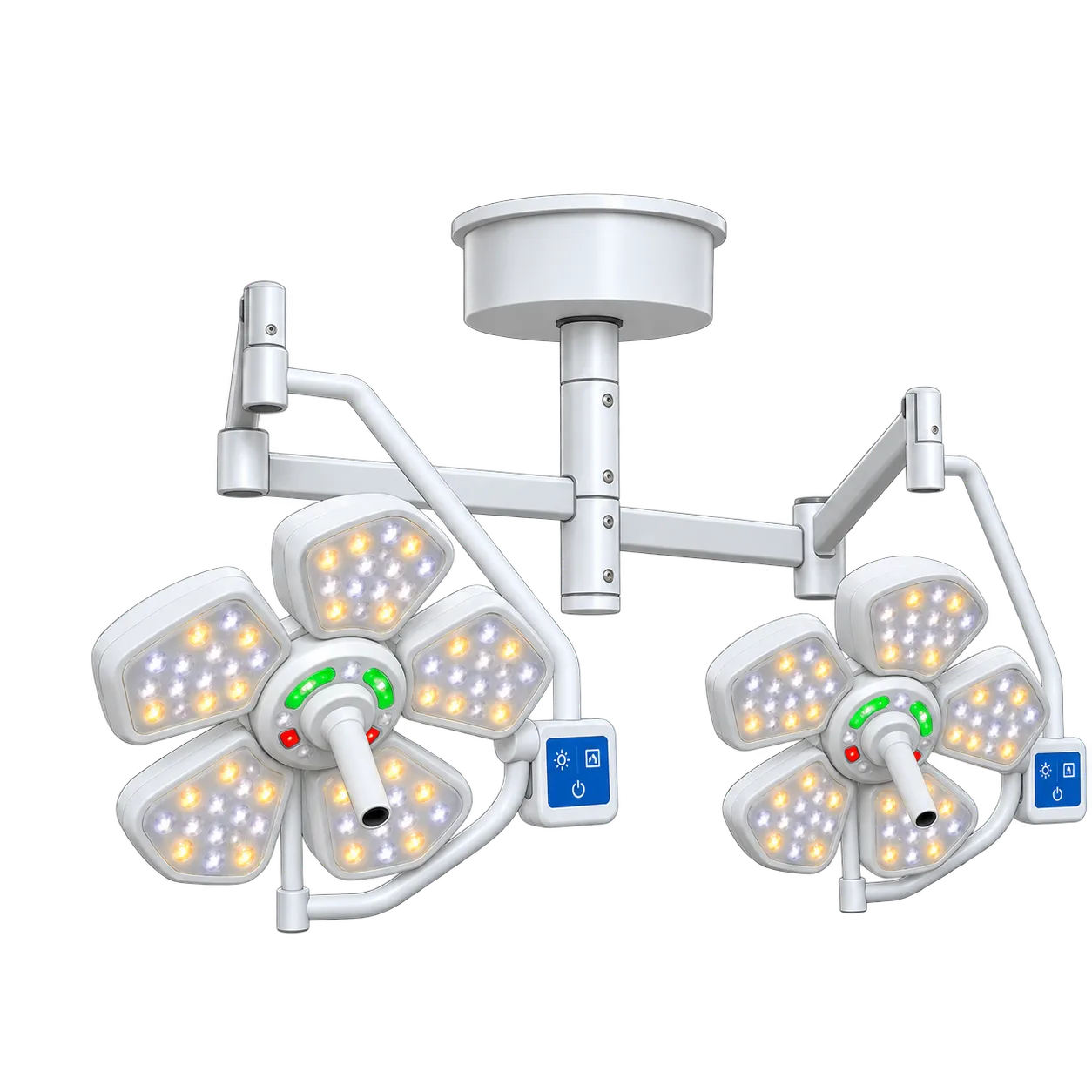
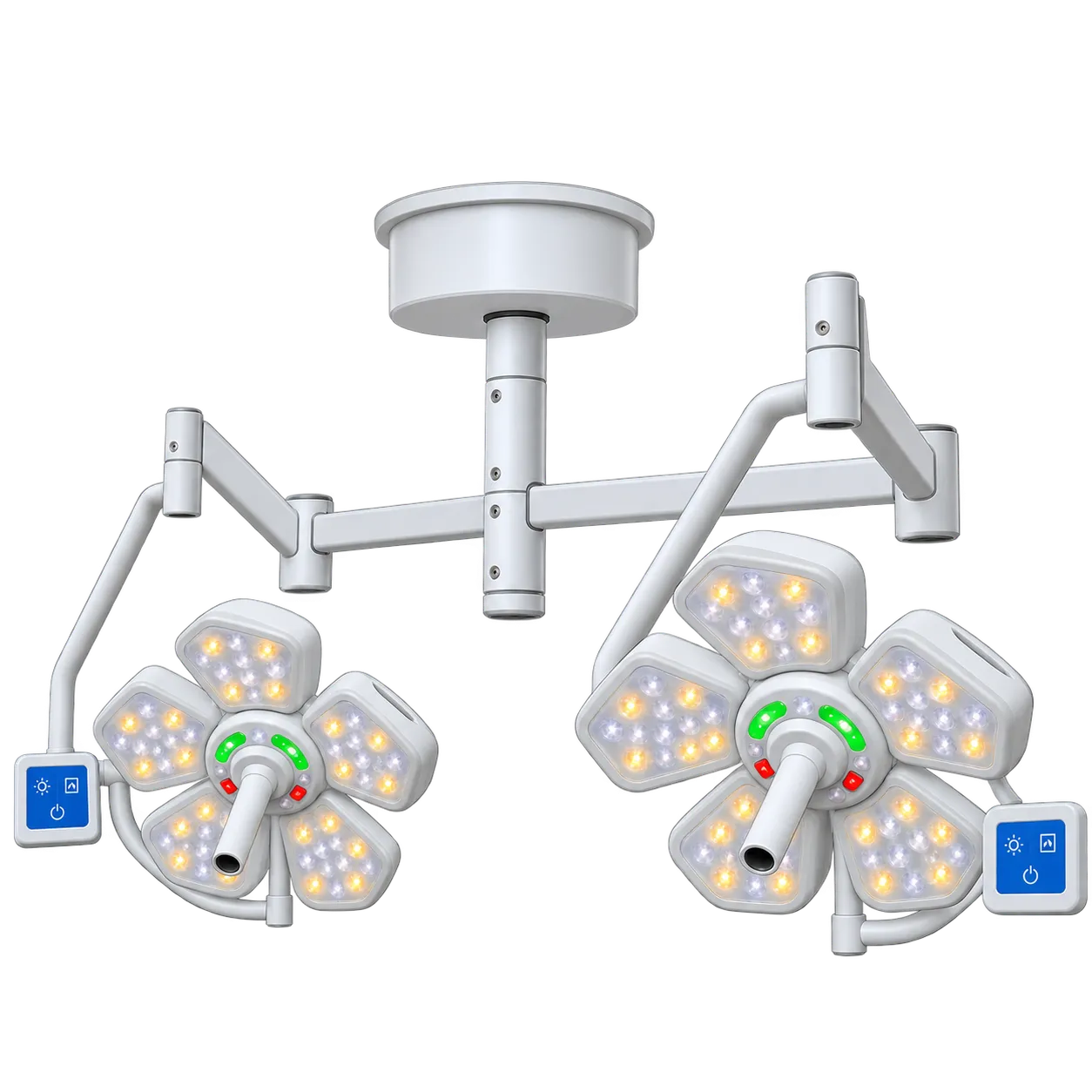
Joint replacement is where the petal design will be judged. In the UK, hip and knee replacements are commonly done in theatres with ultra-clean ventilation. Filtered air falls over the table and carries particles away from the open implant site. A lamp hangs directly in that stream, so its shape counts. Any theatre considering a petal surgical light for implant work should ask for airflow test results rather than rely on the shape alone.
Matched heads also suit operations with surgeons on both sides of the table, since each can pull a head across at the same output. General, gynaecological, urological and trauma lists work well with that arrangement. So does any case with a second field, such as bone graft taken from the iliac crest during spinal surgery. The endoscope mode covers laparoscopic cases on the same list. Ten illumination steps let the team drop the light for superficial closure and raise it again when the work goes deep.
Colour guides judgement at several points in an operation. Surgeons rely on it to check the blood supply to a bowel anastomosis or to spot a bleeding vessel in a joint, and the R9 mode is meant to help with exactly that. No R9 value accompanies it, and depth of illumination is not given, which matters in deep pelvic and hip work. Medigear.uk obtains both from Blackstone, along with airflow data for the petal heads.
The answers go to the clinical team and to the estates engineers who look after the ventilation canopy.