
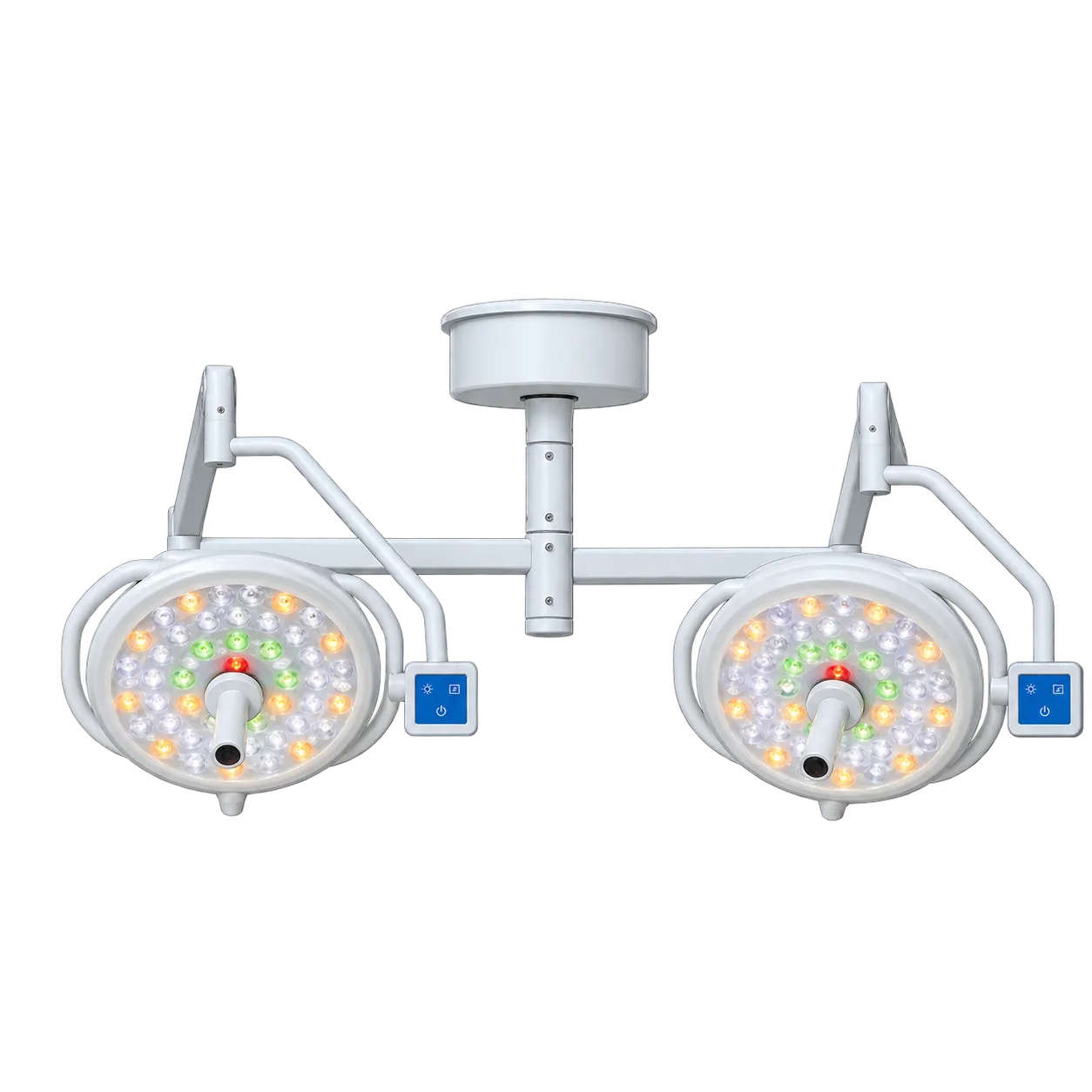
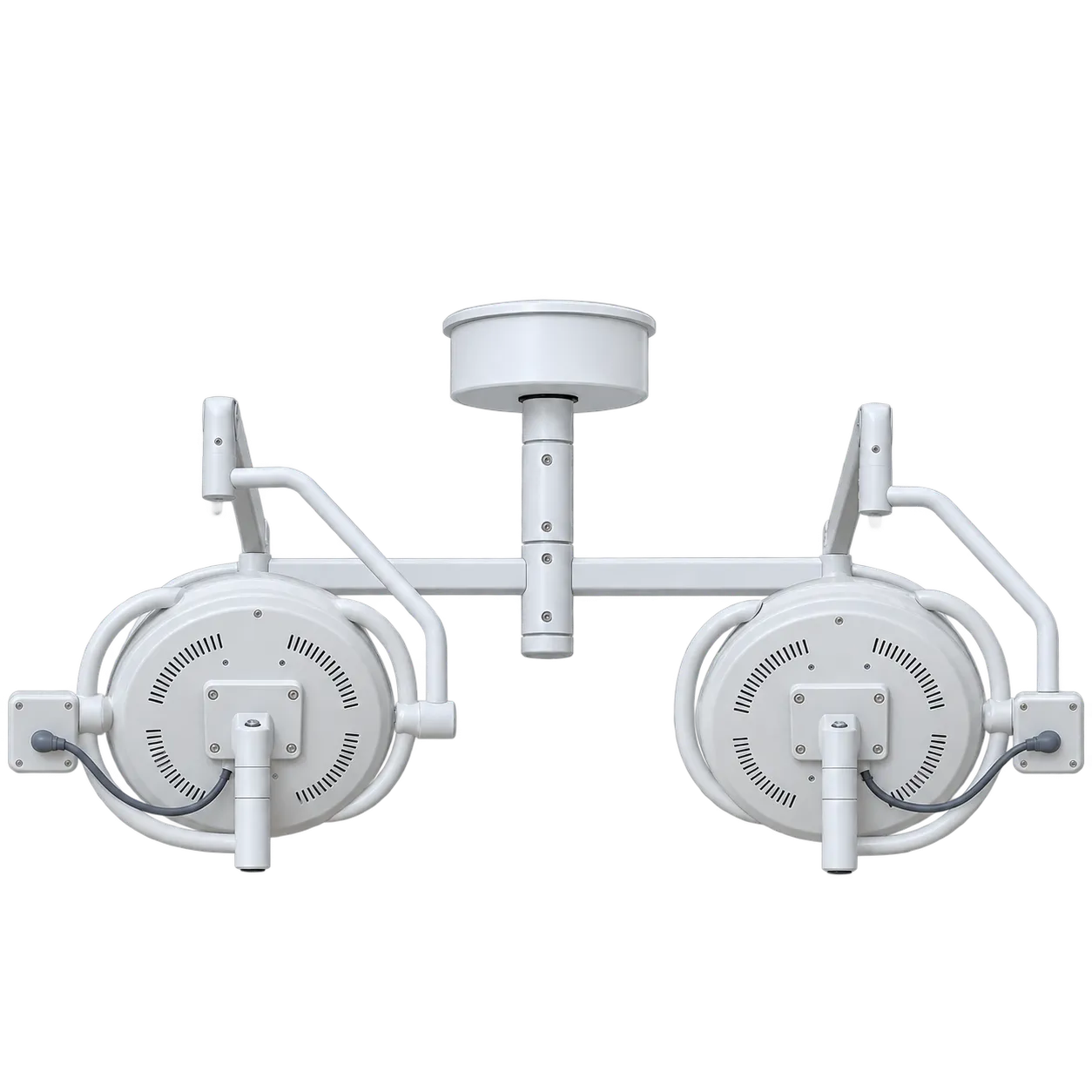
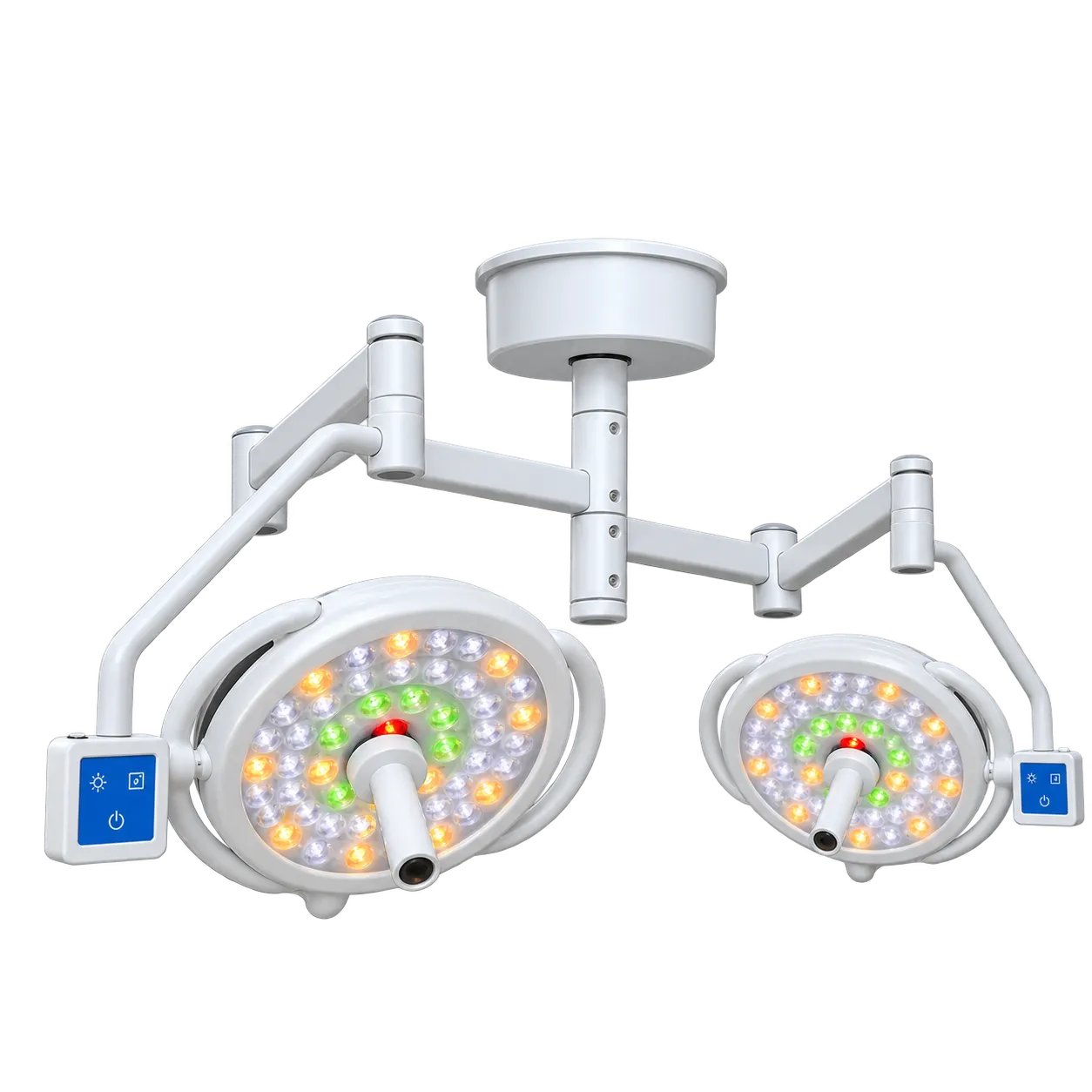
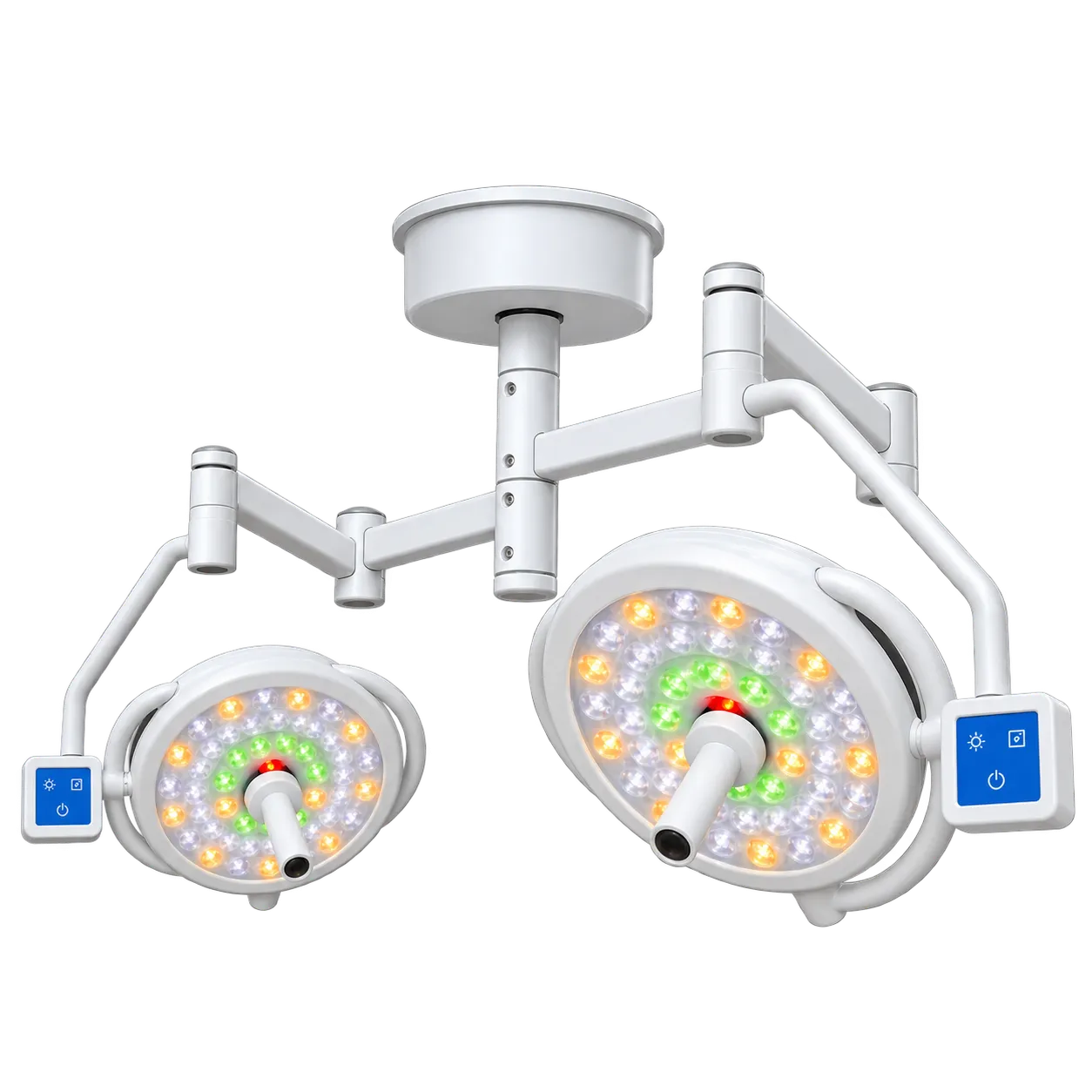
A second head earns its place in a main theatre, where the field is deep, the team is large, and heads and shoulders crowd the light. General, orthopaedic, gynaecological and trauma lists all bring those conditions together. The usual set-up puts the 700 mm head over the incision and brings the 500 mm head in at an angle to fill what the first one loses. Cardiac surgery shows the other use. The chest is open while a vein is taken from the leg so that each head can light its own site.
Endoscope mode suits lists that mix laparoscopic and open cases. Blackstone doesn't say what the mode does, though modes like this usually lower the light so the monitor keeps its contrast. What matters on a dual head operating light is conversion. When a laparoscopic case turns open, both heads can come up to working level over the incision without anyone wheeling in extra light. If each head adjusts on its own, as the two panels in the photograph suggest, the team can also run a bright main field beside a softer fill and keep glare off the drapes over a long operation.
Colour work is where the R9 mode comes in, whether that means judging how well tissue is perfused or finding a bleeding point in a pooled field. No R9 value is published, so the benefit cannot be judged from the sheet. Depth of illumination is missing too, and deep pelvic or thoracic work relies on it.
Medigear.UK puts these questions to Blackstone and passes the answers to both the theatre team and the estates engineers who will plan the ceiling fixing.