
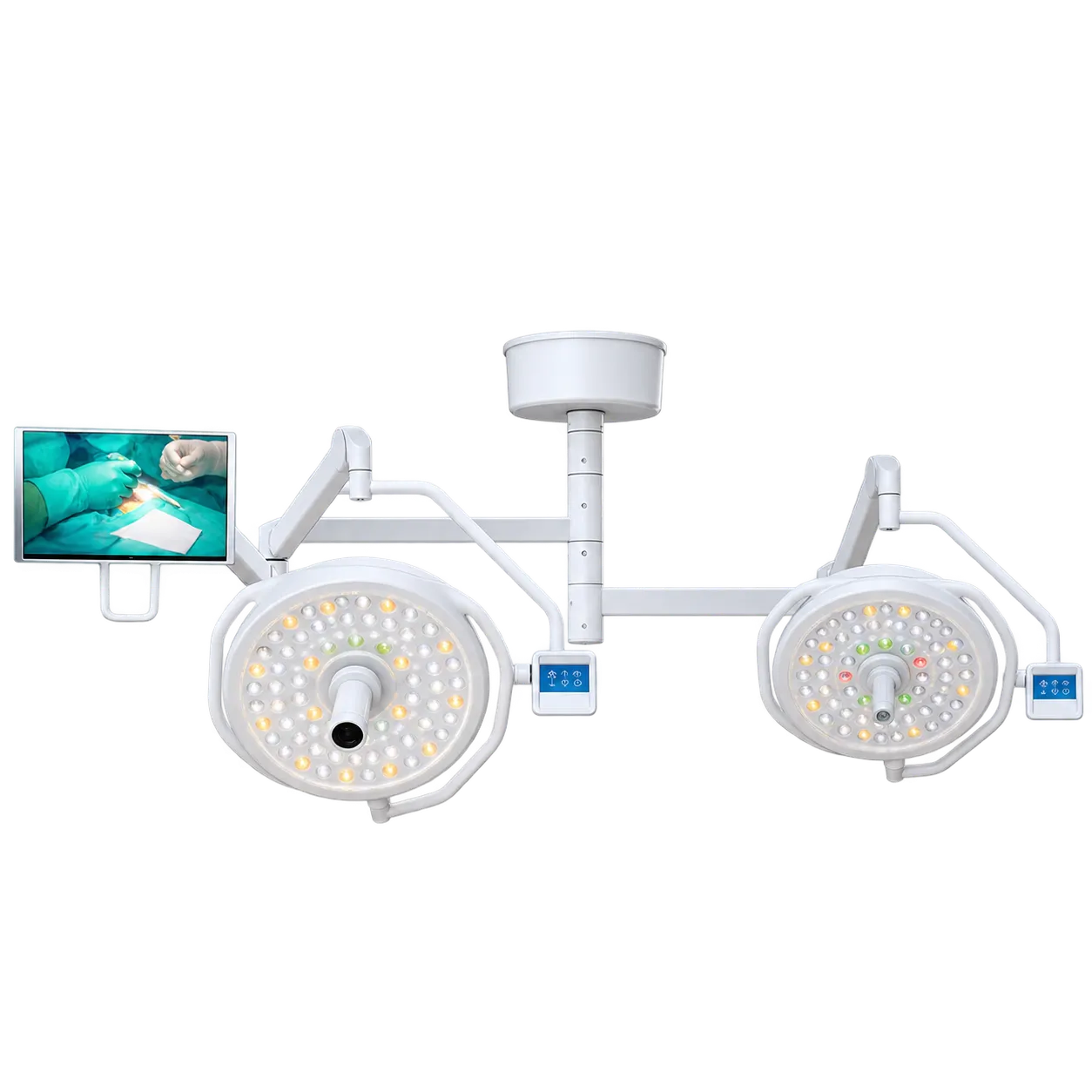
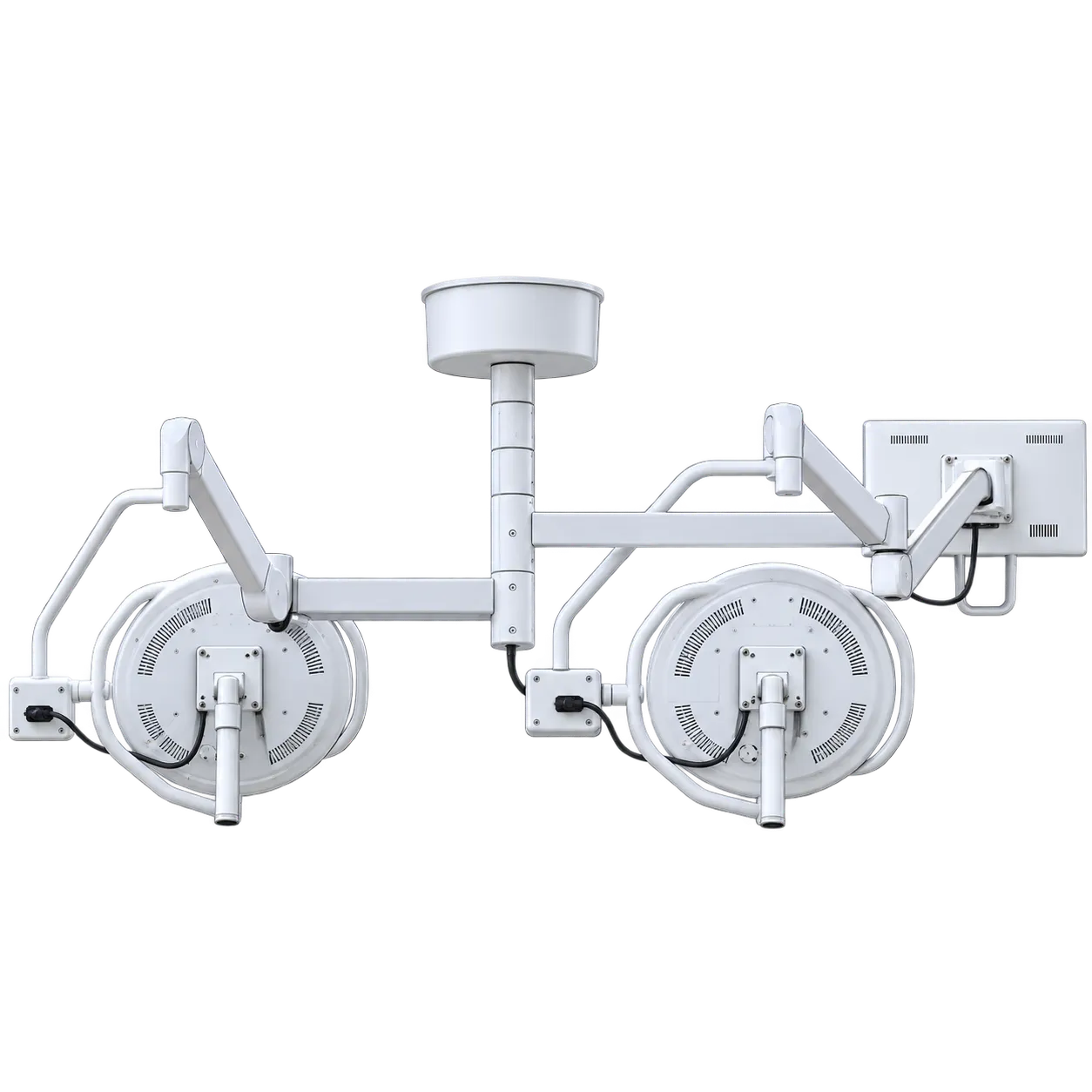
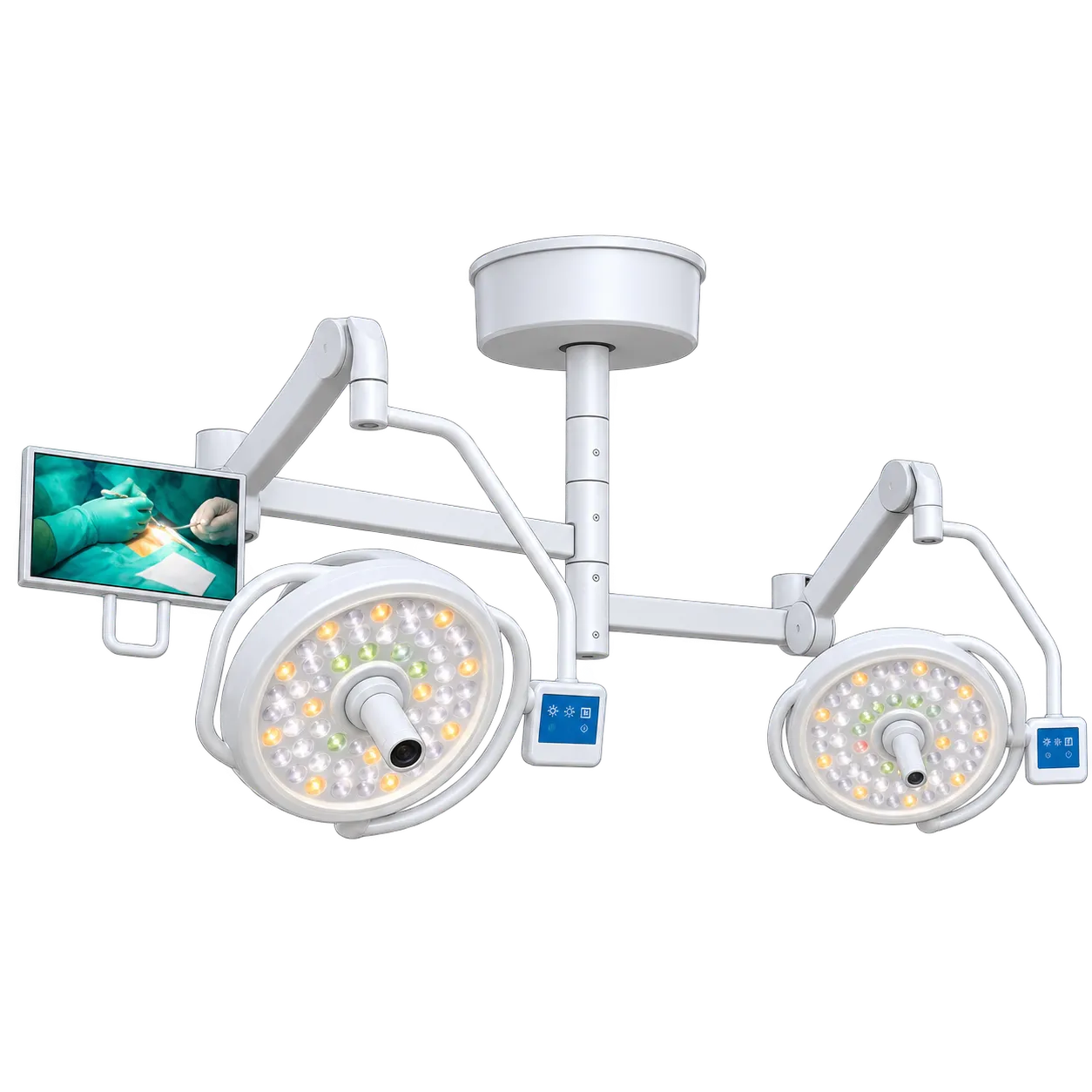
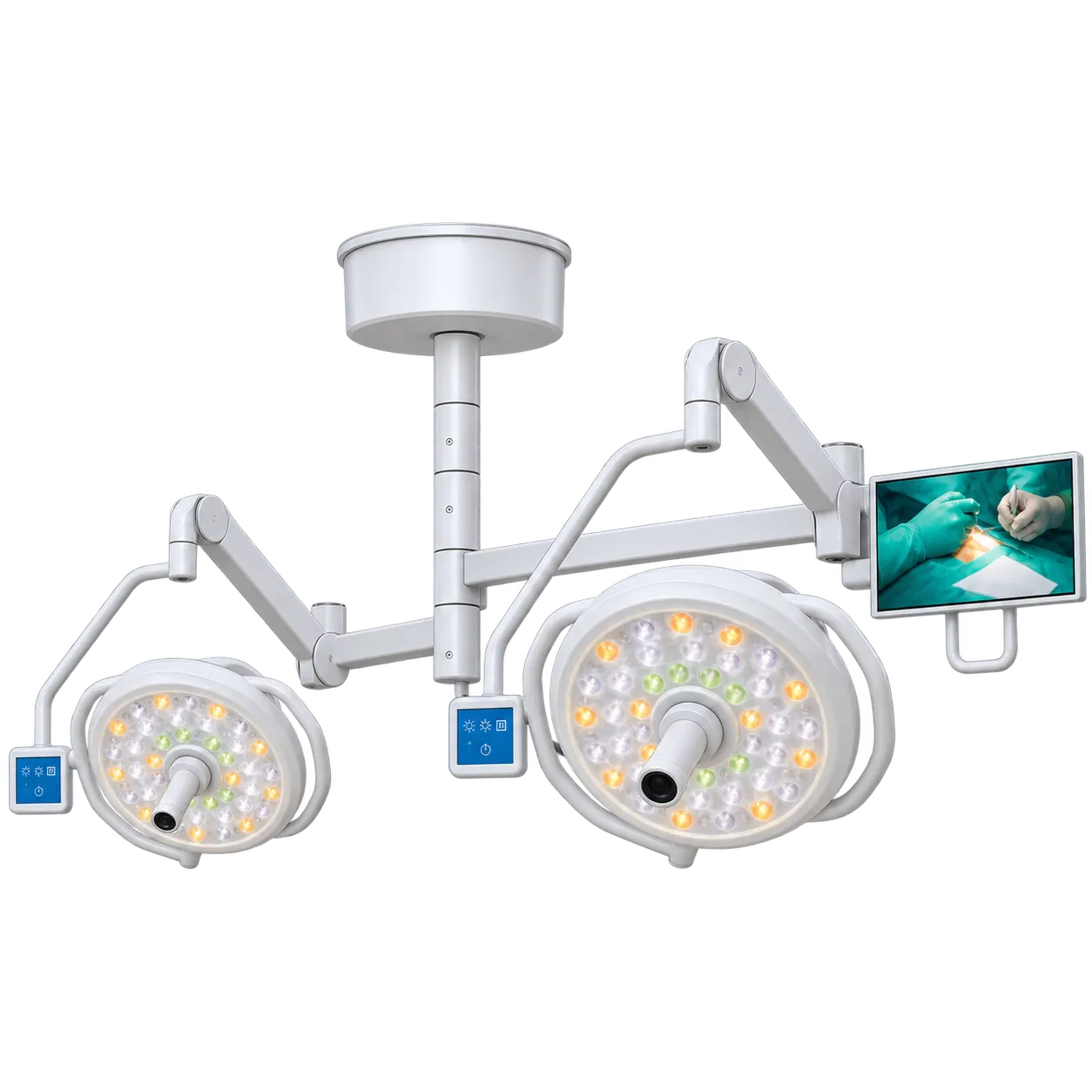
A twin-head operating lamp is already Blackstone's strongest shadow management option, and that changes how you should judge the compensation option. A single head fitted with compensation is improving on a geometry it cannot otherwise escape at all. Two heads hung apart genuinely approach the field from different directions. A surgeon leaning over one is therefore unlikely to interrupt the other. Adding compensation on top of that is worthwhile chiefly if it operates between the two heads rather than inside each one separately.
Independent focus matters for a similar practical reason. A common way to work a twin installation is a wide field from the larger head for general orientation, with a tighter spot from the smaller one directed into a cavity. That requires setting the two heads differently, which means focusing them separately. It is an easy thing to confirm at the order stage, and a distinctly awkward one to discover after the mount is already in the ceiling.
Everything else follows the HS-007E, including what is missing. Warmth still moves in five increments, while every single headlamp provides ten. The camera is still given as sensor pixels alone, lacking any recording format, any outputs, and a recorder whose stated capacity is a phrase. And surgical video still identifies patients, so governance questions come well before the technical ones.
Medigear.uk establishes the compensation behaviour, the focus independence, the arm separation and the camera arrangements before this lamp reaches a theatre.