
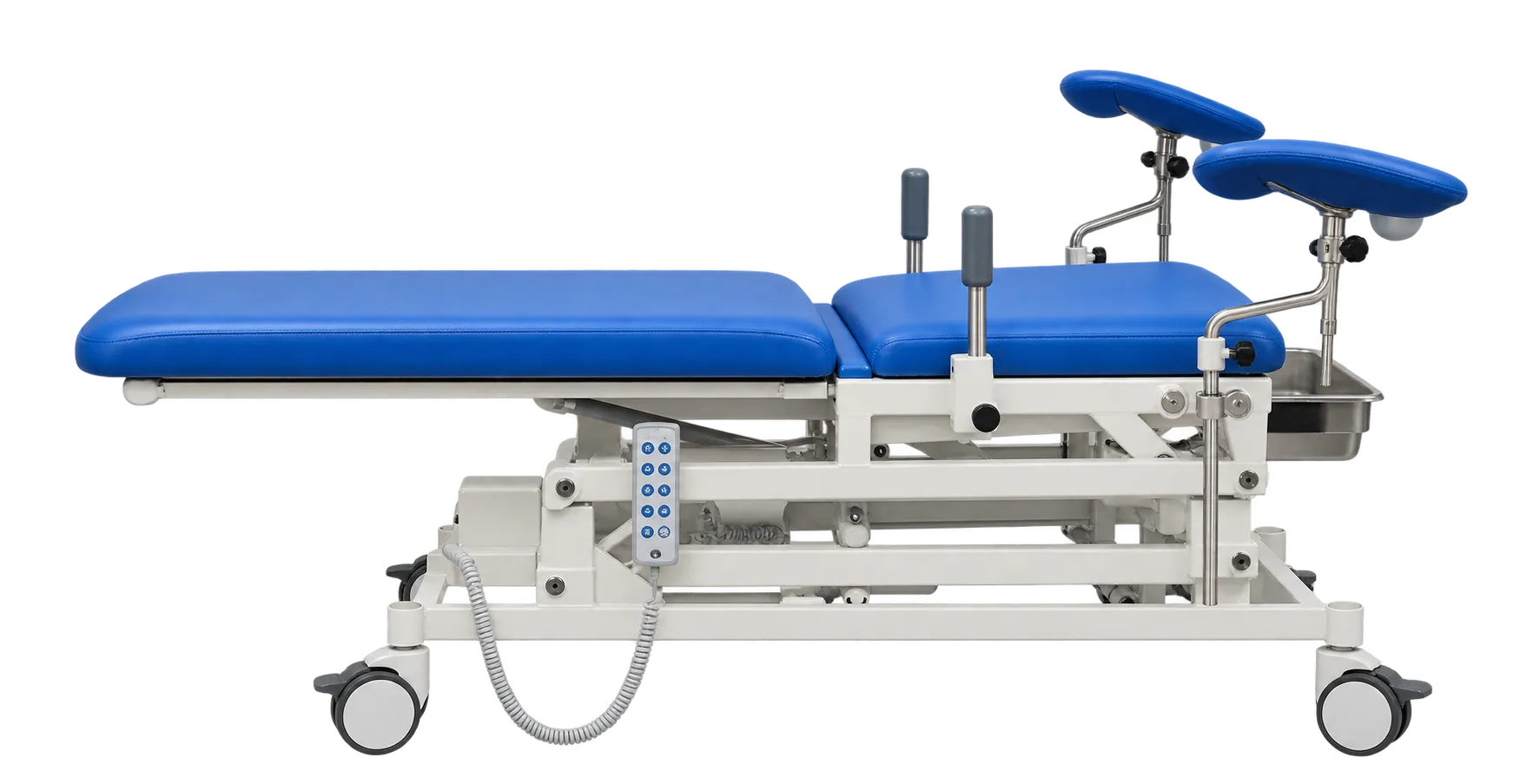
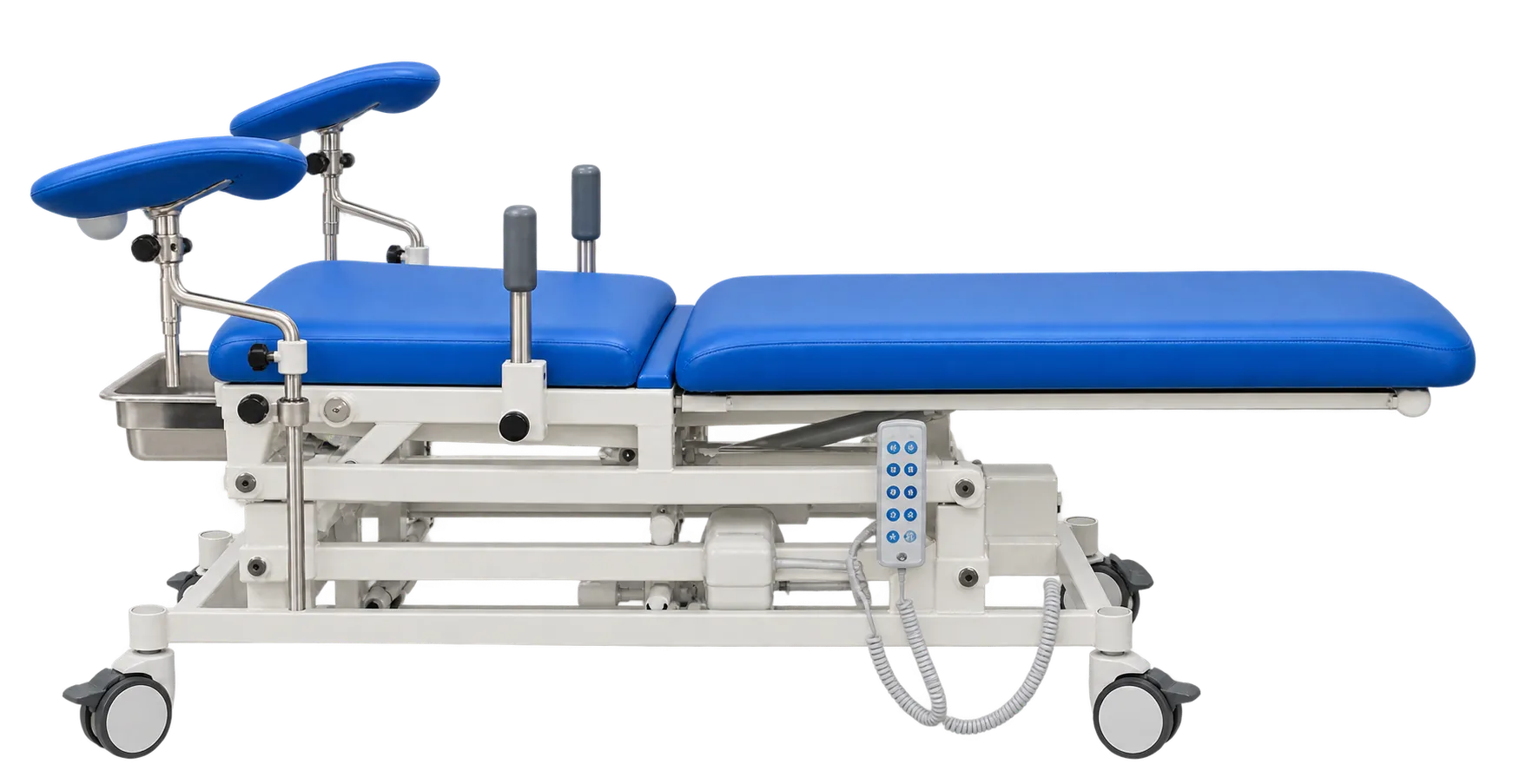
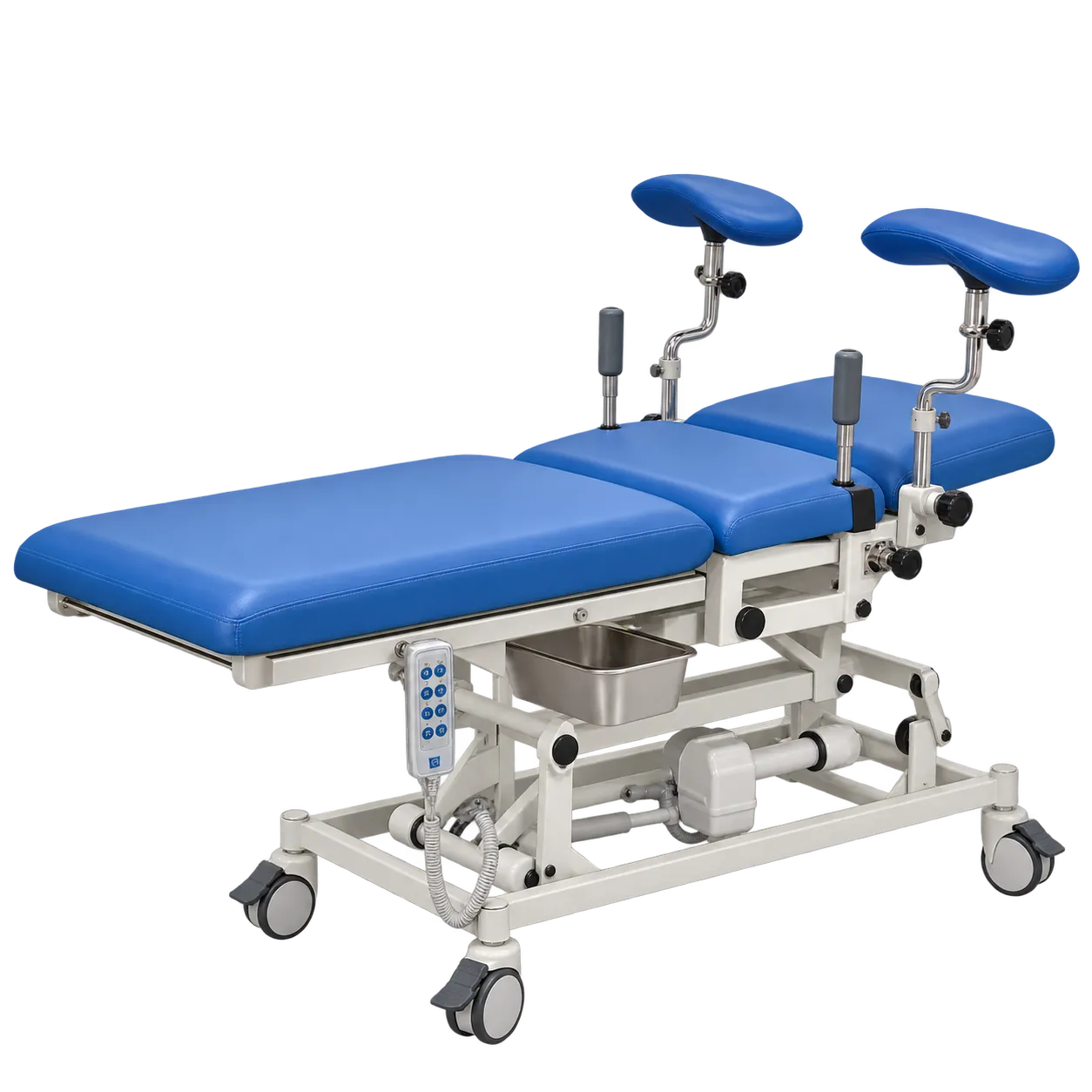
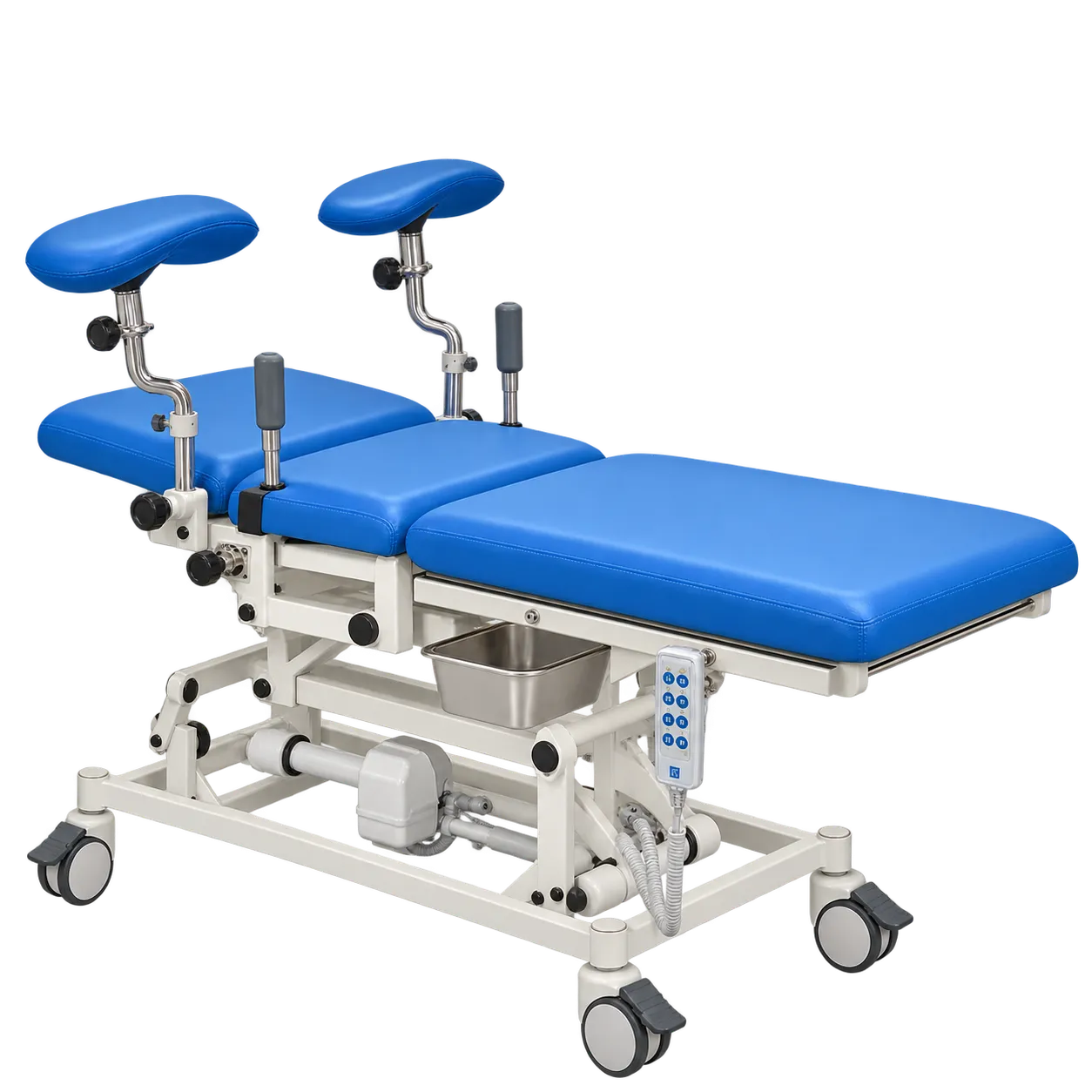
Castors change how an obstetric bed can be used. This one can be wheeled from a labour room to a treatment area, pushed aside for cleaning, or shared between rooms in a smaller unit. Where recovery happens in a separate area, a mobile obstetric bed can travel with the mother and spare her an extra transfer. Firm braking matters just as much. A bed that rolls during delivery or perineal repair is a real hazard, and Blackstone has not explained how the castors lock or whether all four brake together.
The low 570 mm setting makes climbing on and off easier, including for women with limited mobility or those late in pregnancy. At the other end, 900 mm gives clinicians a reasonable working height for examination and repair. With the legs in the holders and the tray beneath the perineum, the bed suits gynaecological examination, minor procedures and delivery. The hand grips give the mother something firm to hold while she pushes.
The missing leg section is the main practical question. Without one, a woman resting between examinations or labouring on the bed has nowhere to support her legs, unless an extension can be fitted. The painted frame also needs a cleaning specification, since blood and fluids will reach it during births. A finish that chips could harbour contamination, so its durability matters too.
Medigear.uk asks Blackstone about the leg section, castor brakes, powered functions, backup power, rated load, and approved cleaning agents. The answers go to the maternity lead before any order is placed.