
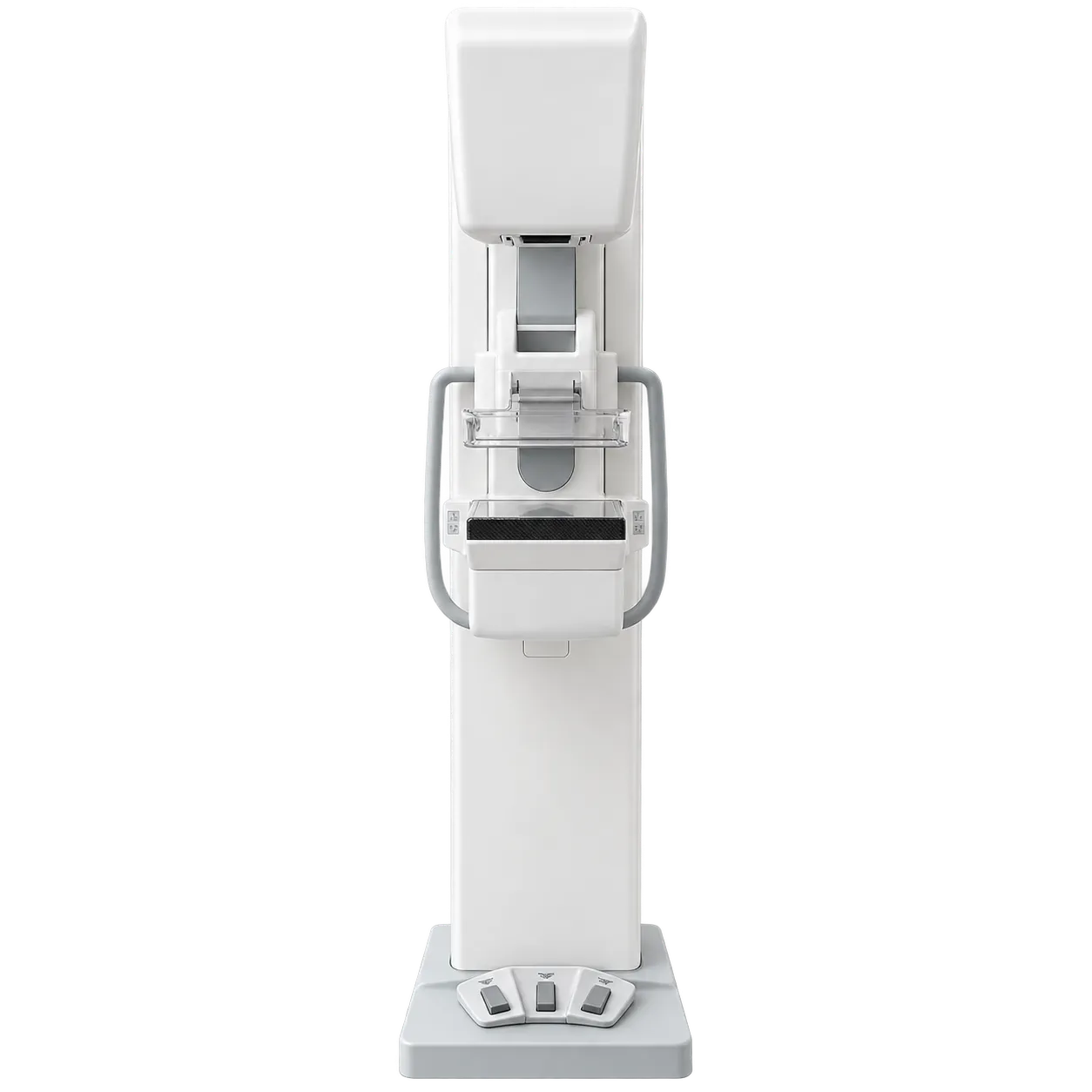
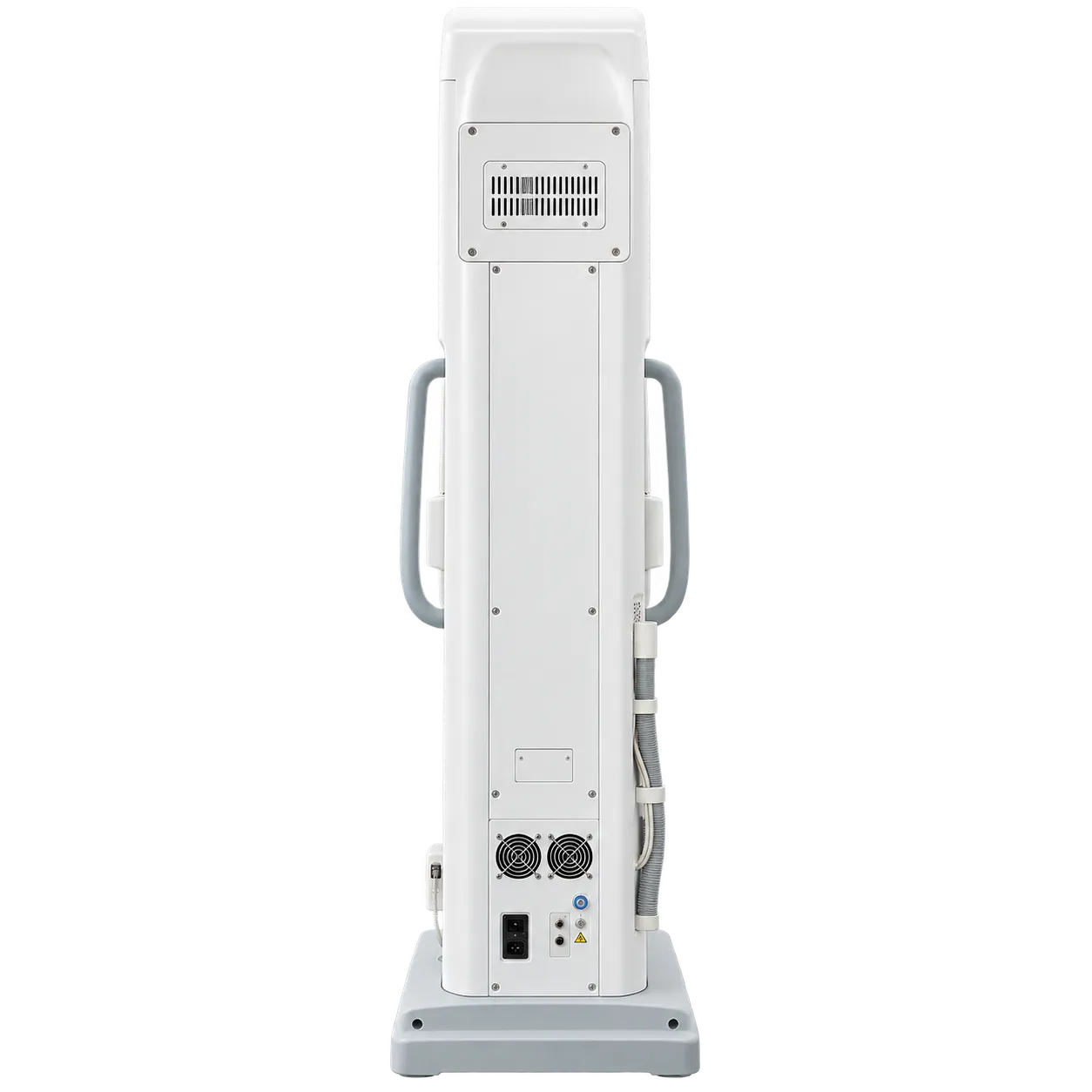
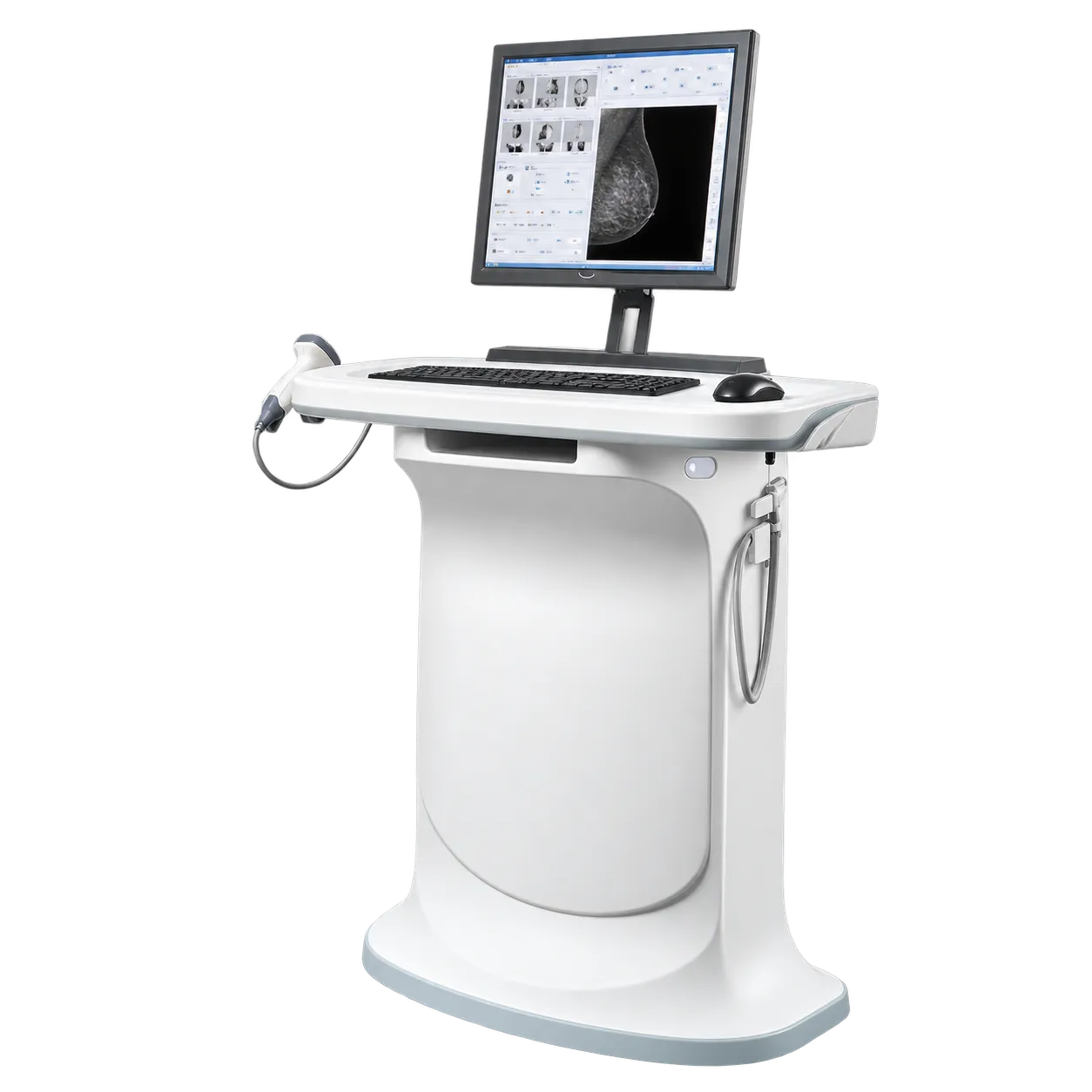
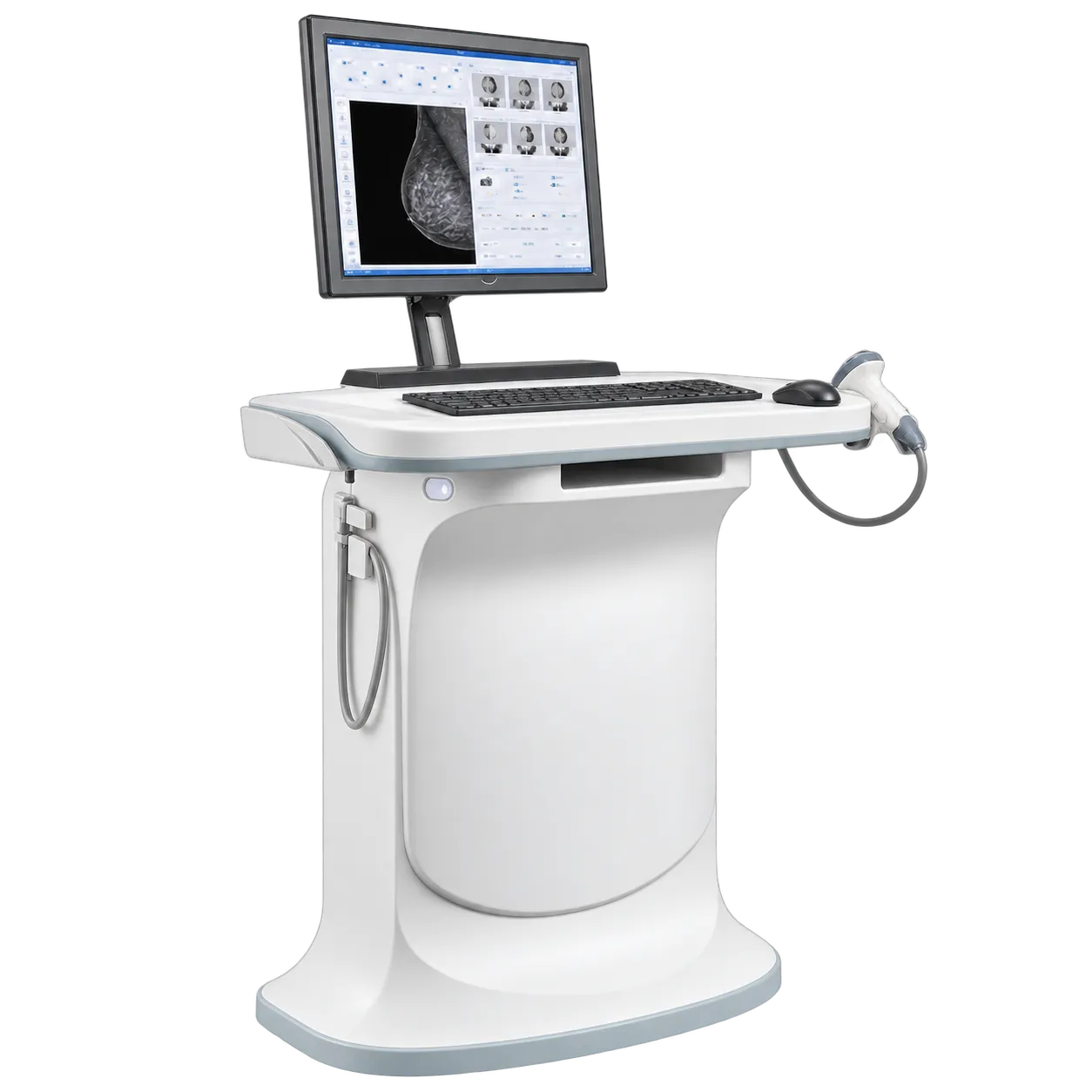
Digital working is what UK breast services expect, and a digital mammography system fits that pattern. Images go straight to a workstation, where they can be windowed and magnified on screen, then move to PACS for reporting and archiving. That removes the film handling, processing and storage a cassette unit brings with it, and it makes double reading practical. The photograph shows a monitor and control desk built into the unit, although the sheet describes neither. Turnaround between patients also improves, since there is no cassette to carry or process.
The exposure specification supports real mammographic technique. Twenty to forty kilovolts with two focal spots covers contact and magnification views, and a 560 mAs ceiling gives room for dense or thick breasts. Long exposure times are available, up to ten seconds, which matters because mammography runs longer exposures than general radiography at these low energies. Compression holds the breast still through that time, so the paddle and its force settings affect image quality as much as comfort. Technique charts are built around those limits.
Several things still need to be established before a service could commit. The target and filter combination sets beam quality and dose, and neither is named. Automatic exposure control and an anti-scatter grid go unmentioned, though both are routine in contact mammography. Compression force, paddle sizes, and mean glandular dose figures are missing too, and UK physics teams test all of them regularly.
Medigear.uk collects that documentation from Blackstone for the breast imaging lead and the medical physics expert.