
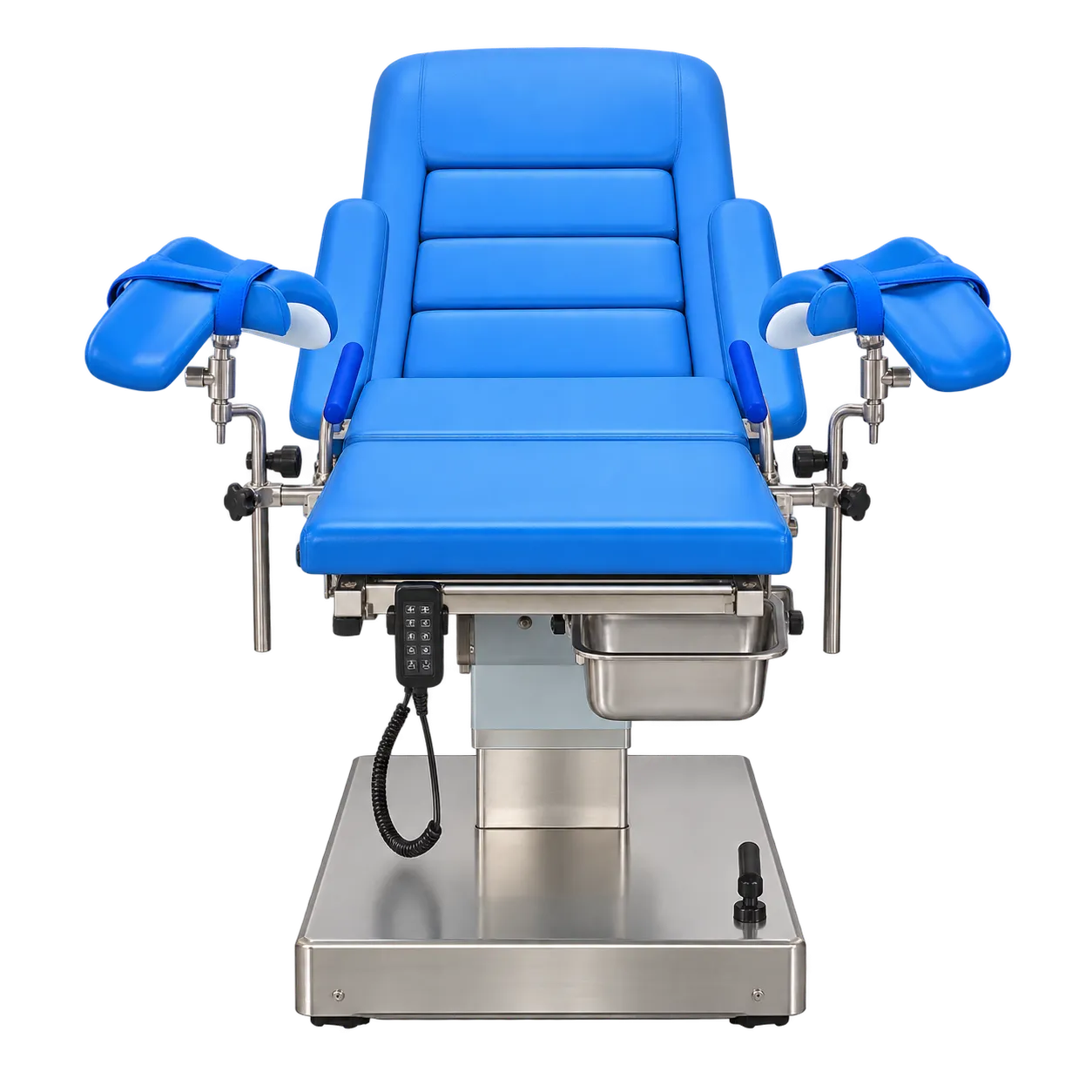
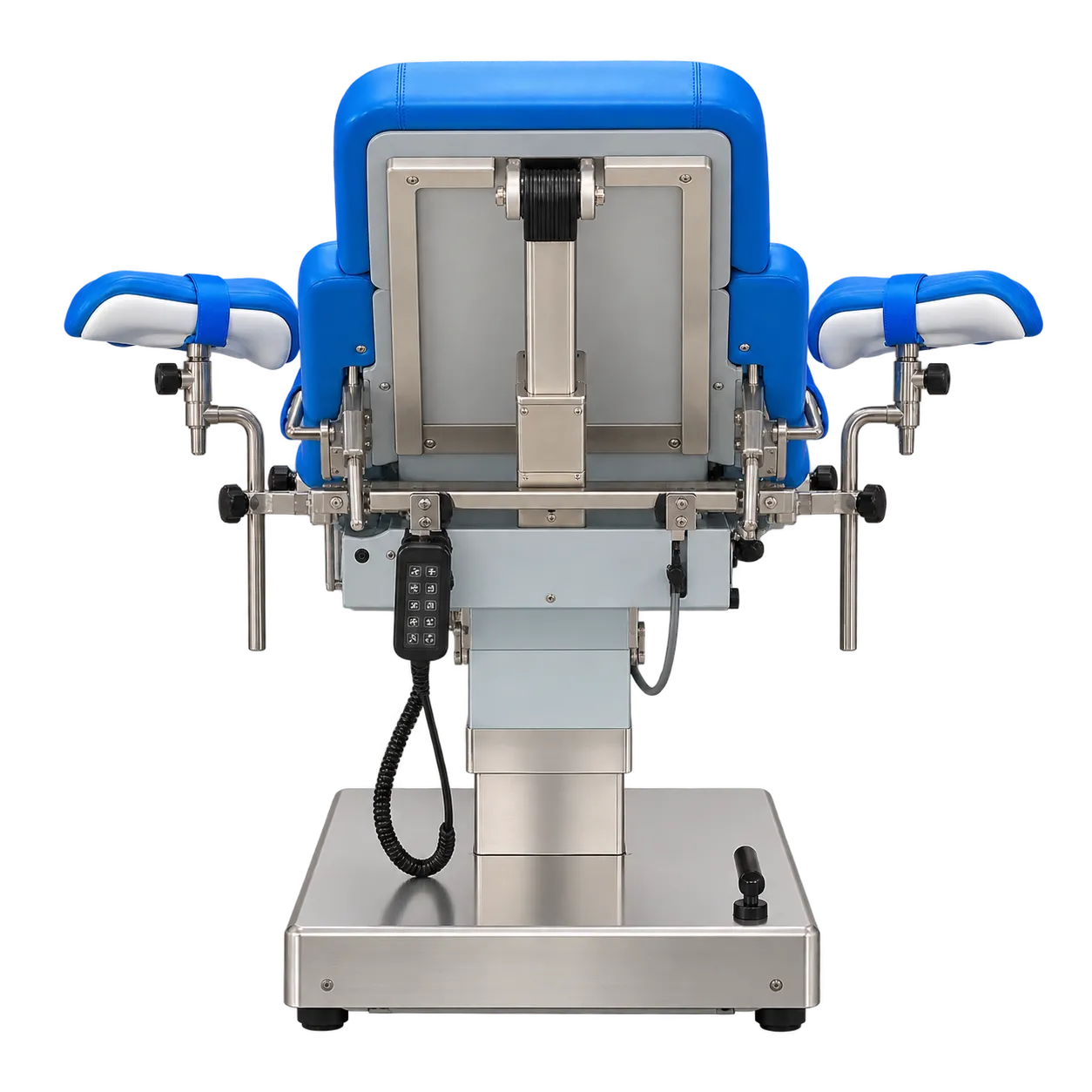
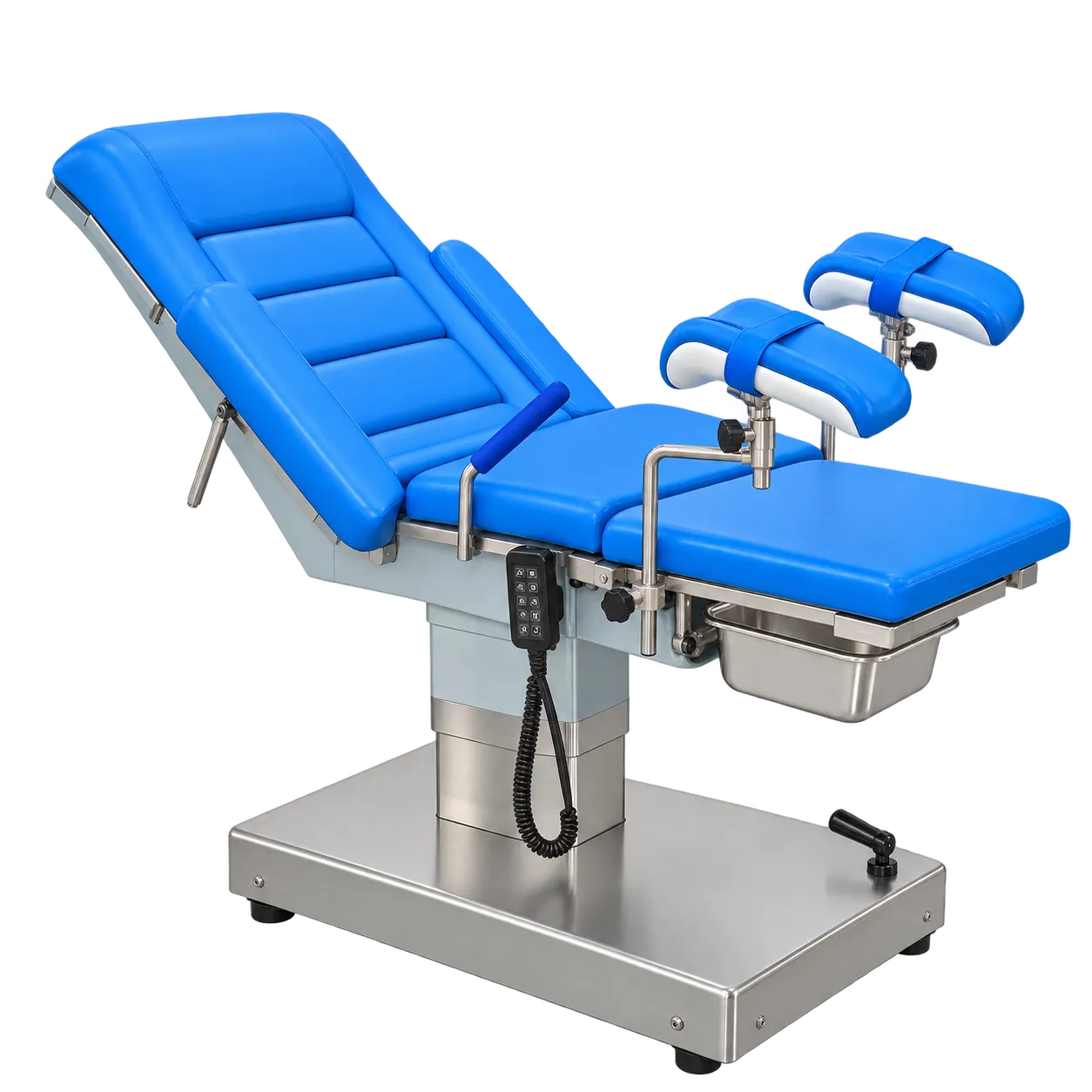
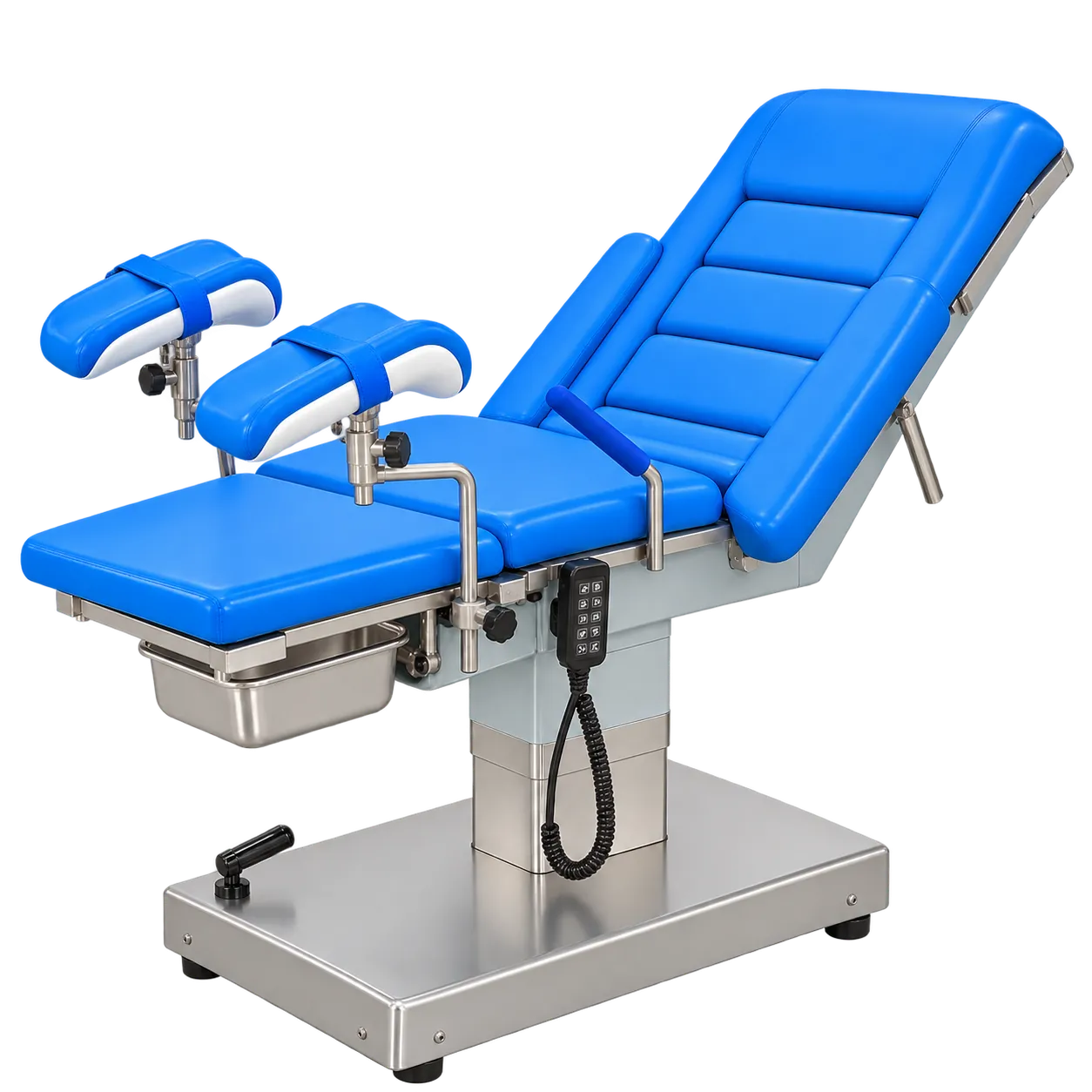
An obstetric delivery table like this serves labour wards, birth centres and gynaecology clinics. The raised back section supports the mother in a semi-sitting position during labour, and the hand grips give her something to pull on while pushing. The leg holders take her legs for delivery, instrumental birth or perineal repair, and the padded armrests give her somewhere to rest between contractions. With the corded handset, a midwife can adjust the bed without leaving the bedside, although the functions it controls are not listed.
Infection prevention is where the one-piece mattress earns its place. Delivery rooms see heavy contamination, and a pad without seams can be wiped down more quickly and with more confidence between women. Combined with stainless covers and a stainless basin, the bed is built for fast turnaround in a busy unit. The chlorine-releasing products common in UK maternity units should still be rinsed from the steel to avoid pitting. The pad's compatibility with those products needs confirming too, since some foams degrade under repeated exposure.
Long labours bring pressure care into focus, particularly for women with epidurals who cannot shift position easily. The pad's pressure-redistributing performance is not stated, so it cannot yet be judged against the unit's own standards. Emergencies such as shoulder dystocia also depend on rapid repositioning, so the powered functions and any backup must be known in advance.
Medigear.uk gathers the mattress data, the function list, the backup arrangements, and the load rating from Blackstone, and shares them with the maternity and infection prevention leads before an order.