
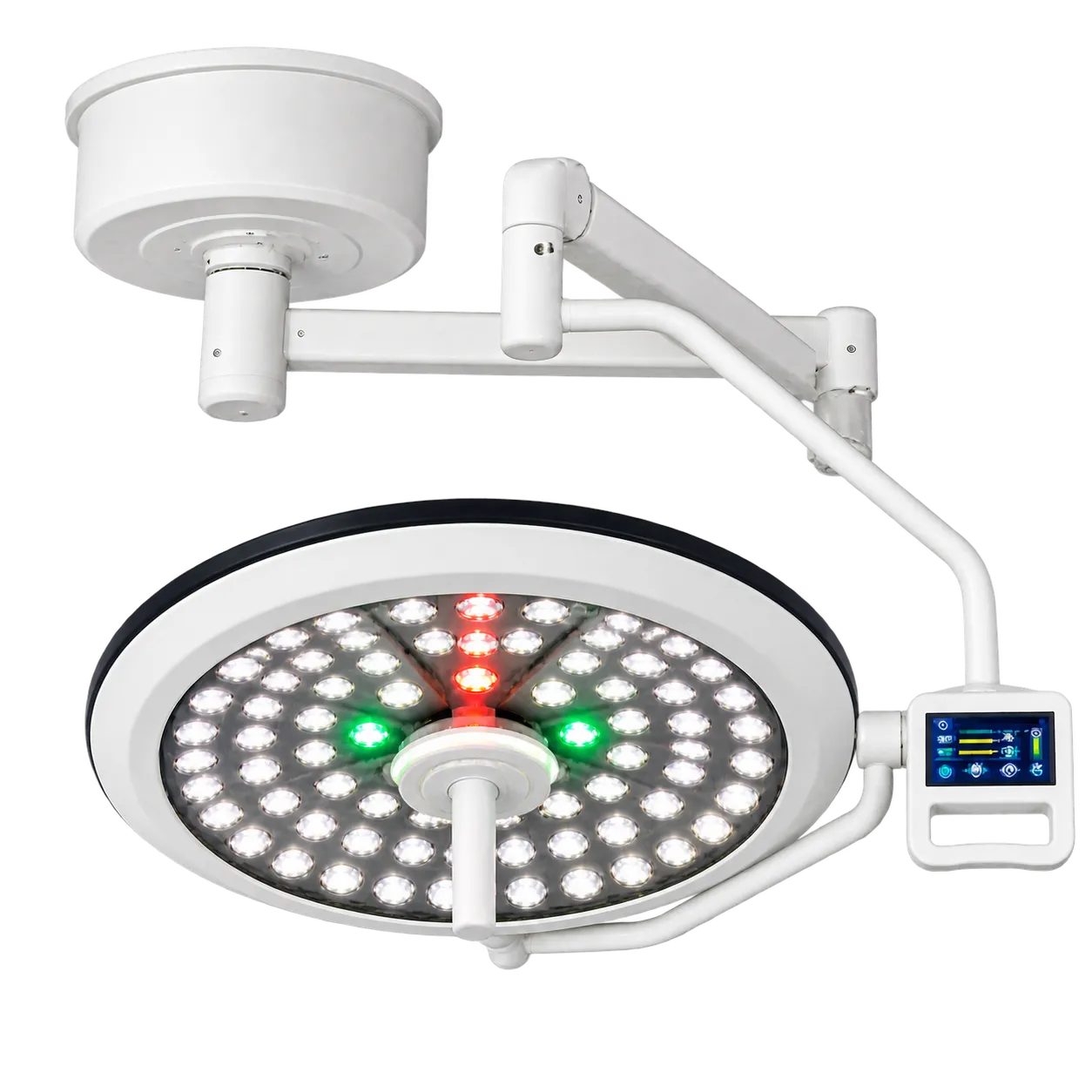
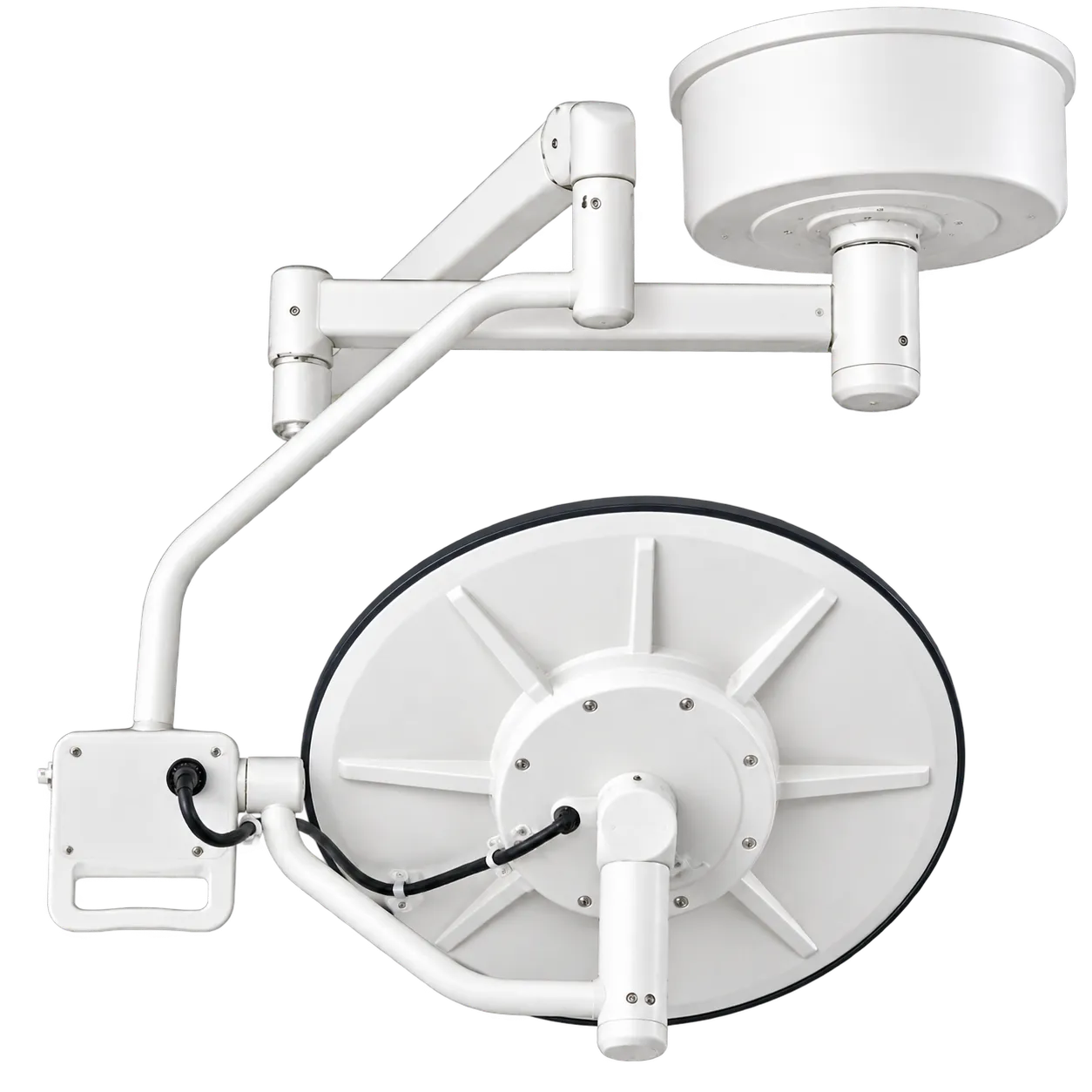
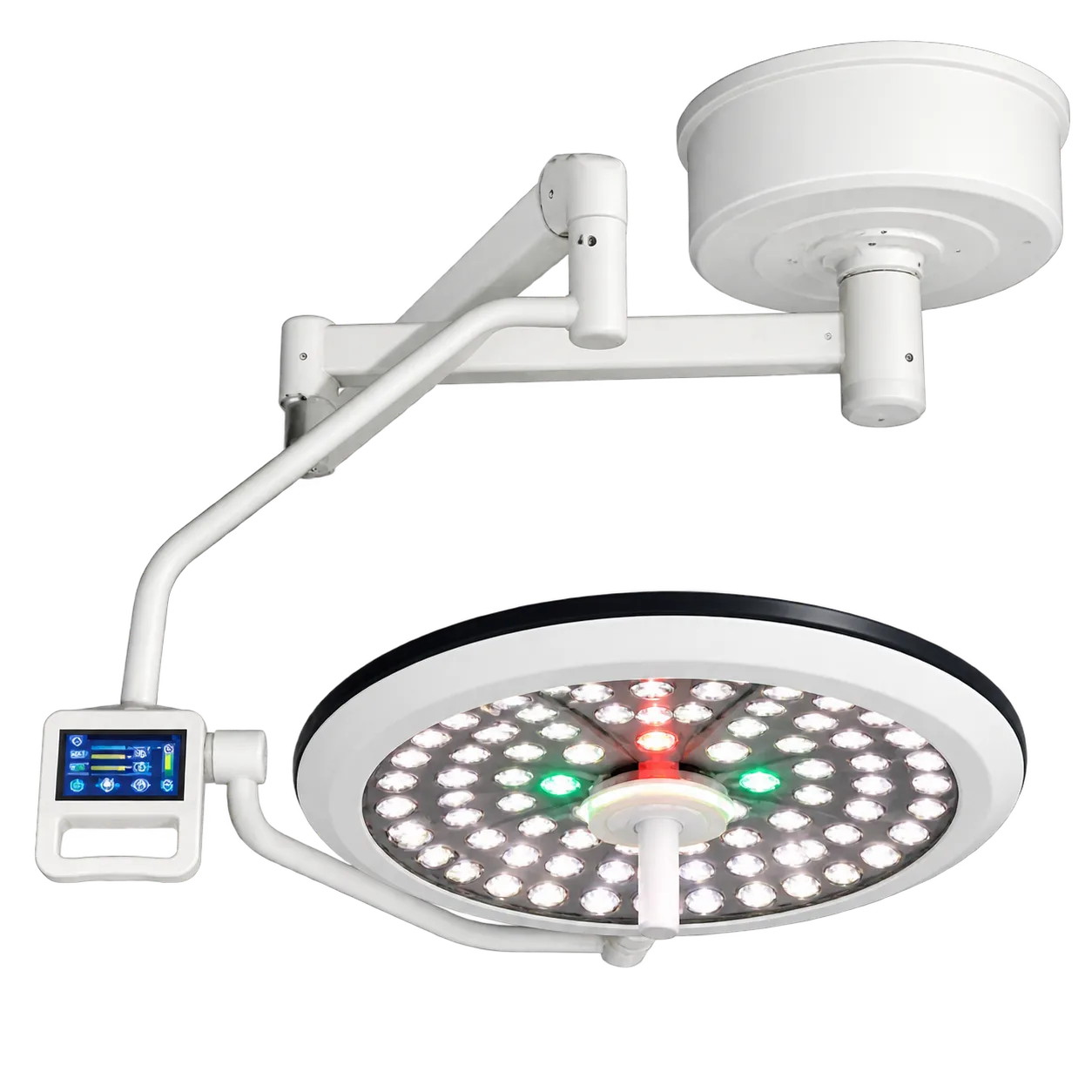
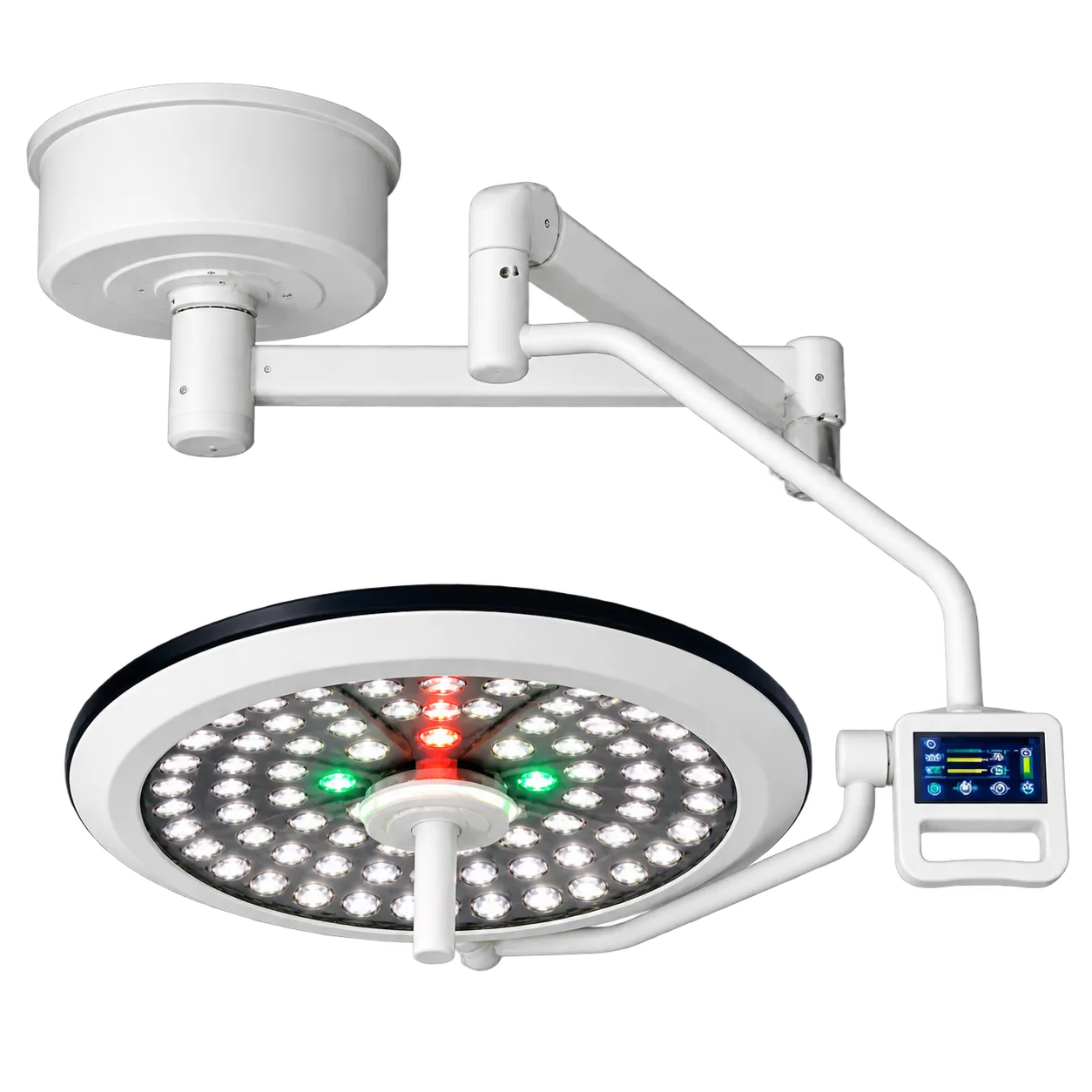
Colour is how a surgeon tells tissue apart under a shadowless surgical lamp. Oxygenated blood from deoxygenated, viable bowel from ischaemic, nerve from surrounding fat: those judgements are made by eye and by colour, under whatever light the theatre provides. A luminaire rendering poorly never announces itself. It simply makes those distinctions marginally harder all day long, which is why colour rendering belongs near the top of a specification rather than buried somewhere within it.
That is what makes the R9 provision worth noting. Ra above 95 is a strong figure, and it still says nothing about deep red, since the index excludes it. A lamp addressing red separately is addressing the colour a surgical field is made of. What a department cannot tell from this sheet is how well it does so, because no R9 value accompanies the mode itself.
Endoscope mode covers the other situation that arises regularly. During laparoscopic work,k the surgeon is watching a monitor, and ordinary theatre lighting washes the screen out, while turning the lamp off leaves the room too dark for anyone else to work safely. A defined low setting resolves both problems at once, without anyone improvising. Beyond that, the practical gaps remain. No light field diameter. No depth of illumination. No irradiance figure for the radiant heat reaching exposed tissue, and no mention anywhere of battery backup, which a luminaire losing supply partway through a procedure would badly want.
Medigear.uk establishes those before this shadowless surgical lamp reaches a theatre.