
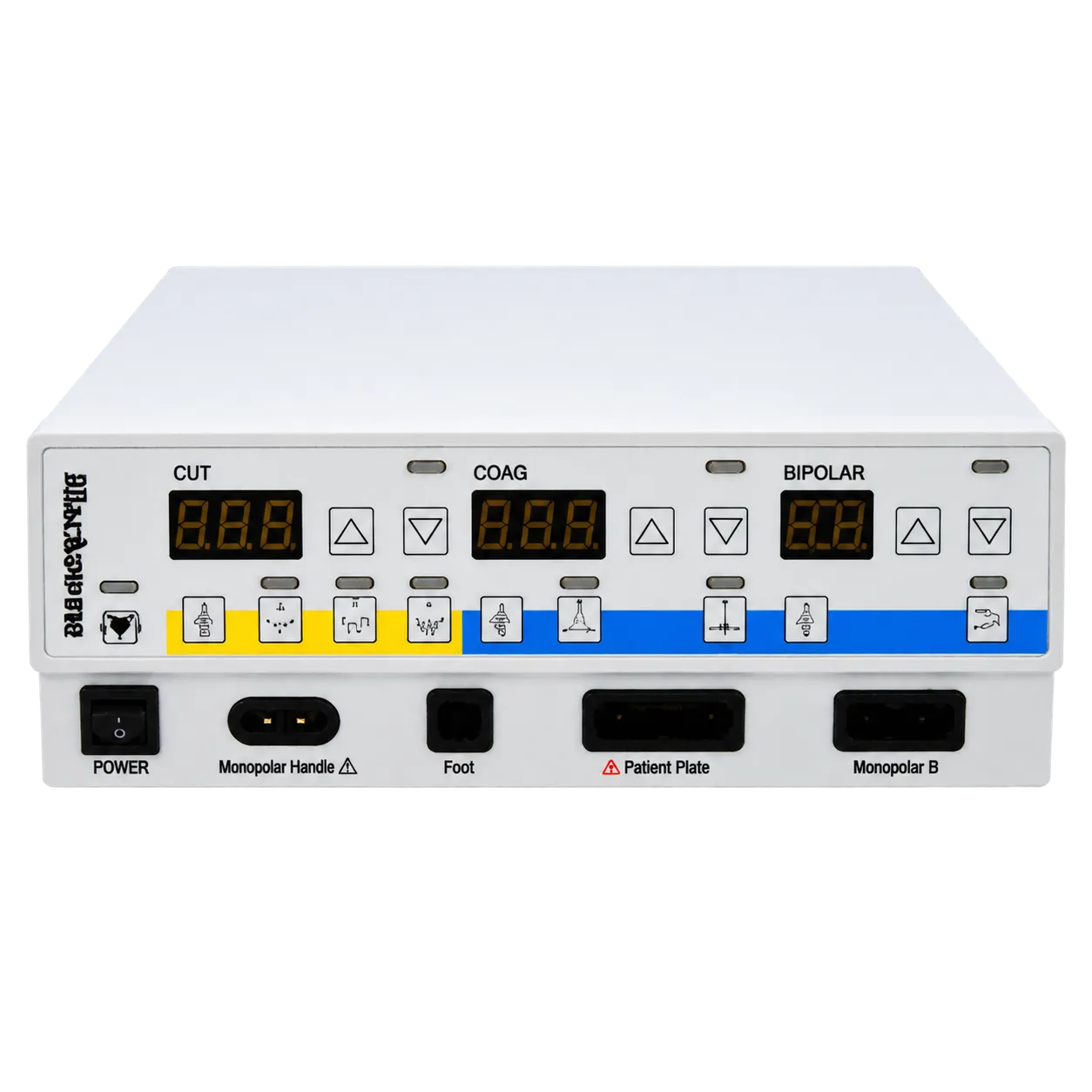
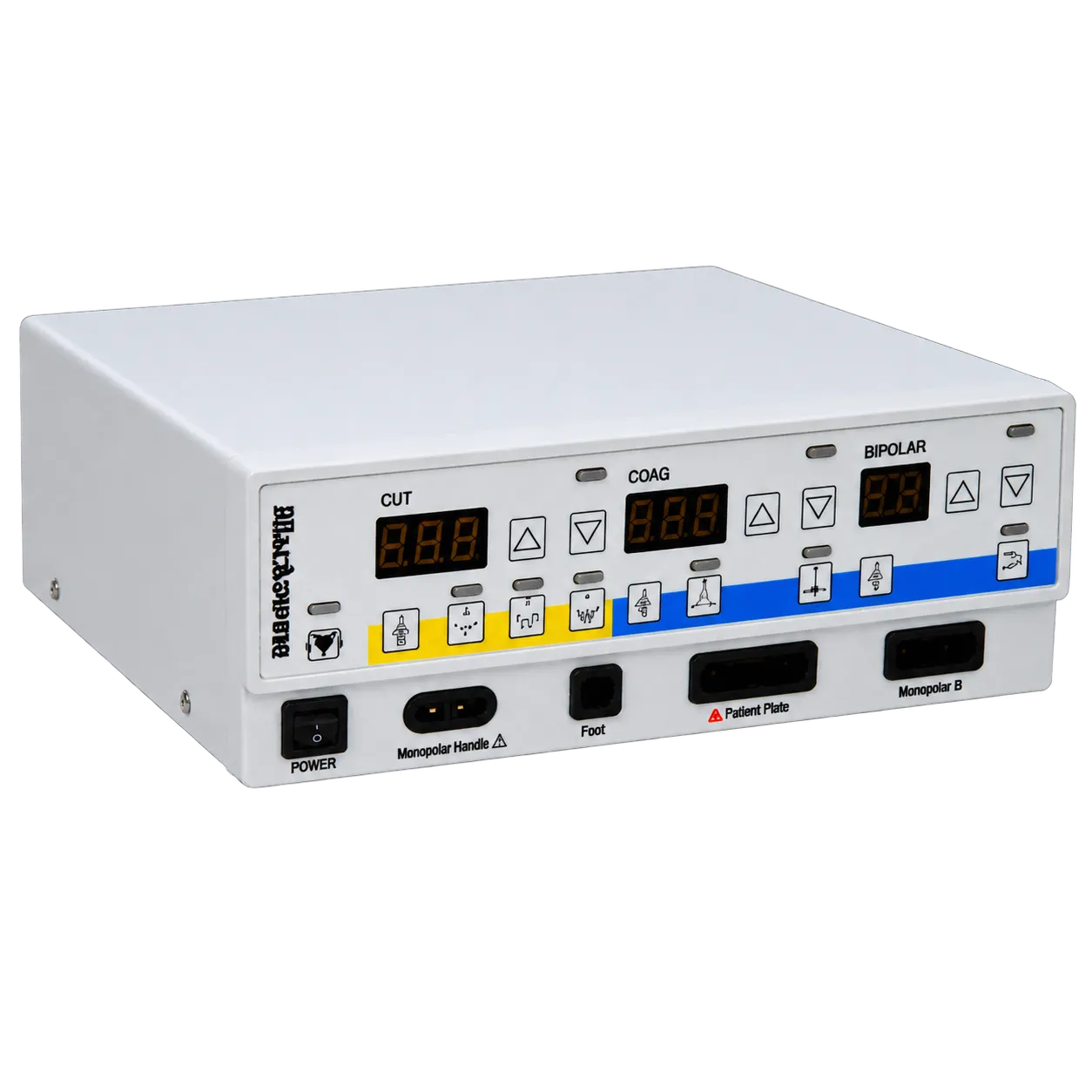
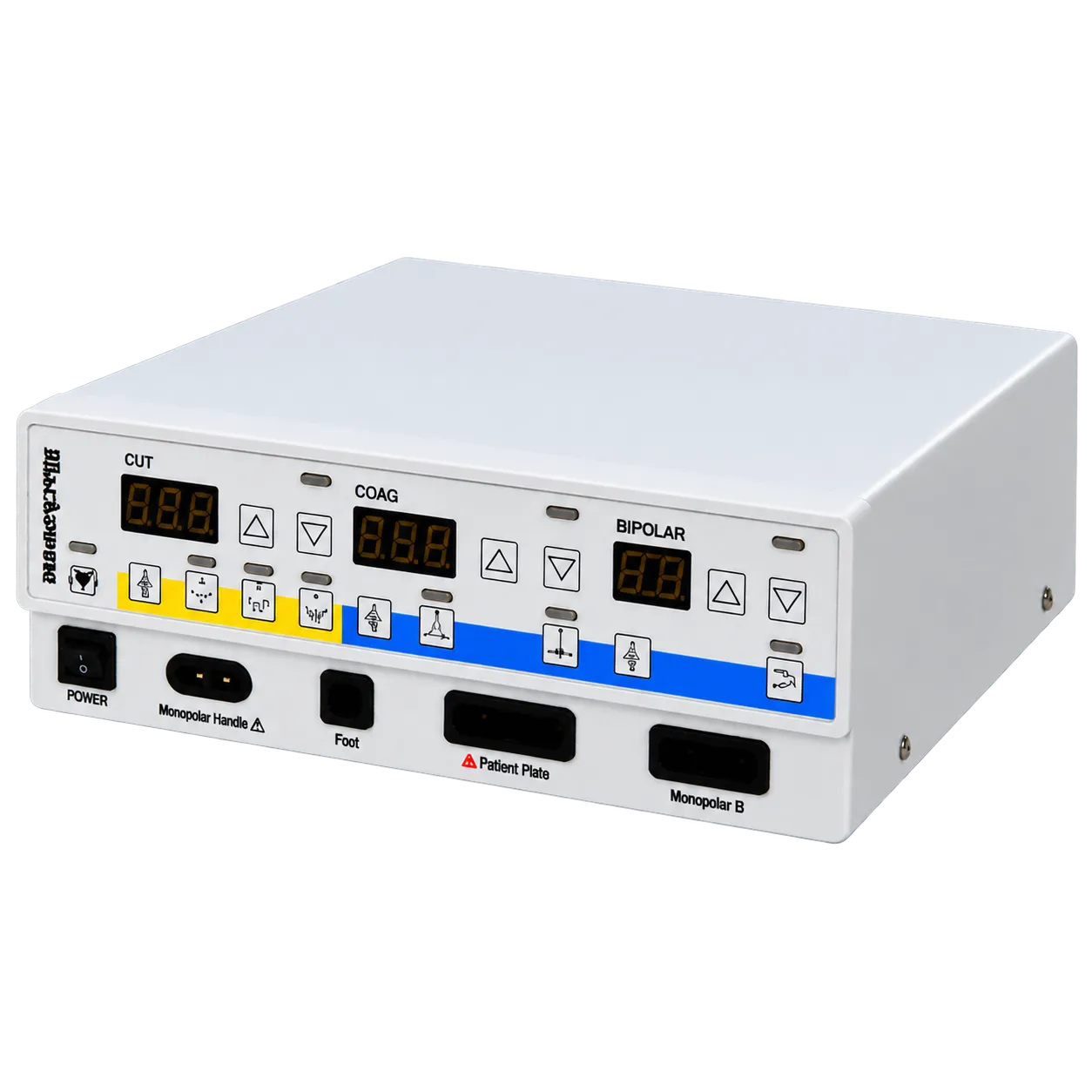
Laparoscopic general surgery and gynaecology are the natural homes for a unit listed under an endoscope video system heading. Monopolar current through a hook or scissors handles dissection. Blended cut adds haemostasis along the line, and spot coagulation deals with small vessels. Bipolar forceps suit bleeding close to bowel, ureter or nerve, since the current passes only between the jaws. Monopolar energy in a closed abdomen carries its own risk. Damaged insulation or capacitive coupling can release current outside the camera's view. The high voltages of spray coagulation make both more likely. Peak voltage per mode therefore matters, because every laparoscopic instrument has a rated accessory voltage and the output in the chosen mode must stay below it.
Endoscopic surgery also includes resection within urology and gynaecology. With bipolar limited to coagulation, any resection here would be monopolar. That means a non-conducting irrigant such as glycine or sorbitol rather than saline, with the fluid absorption risk it brings. Theatres that have moved to saline resection need a bipolar cutting mode, and none is listed. In flexible endoscopy, snare polypectomy and sphincterotomy are often done with a fractionated cut, which alternates short cutting and coagulating phases. This electrosurgical unit lists no such mode, so its fit for gastrointestinal work needs confirming.
Whatever the procedure, the return pad deserves care. Good practice places it on clean, dry skin over well-perfused muscle near the operative site. It should sit away from bony prominences, scar tissue, and metal implants. A split pad working with a contact quality monitor alerts the team if that contact weakens.
Medigear.uk is asking Blackstone for the monitoring details, per-mode outputs,s and peak voltages. The replies go to surgical teams and to the clinical engineers who will accept the unit into service.