
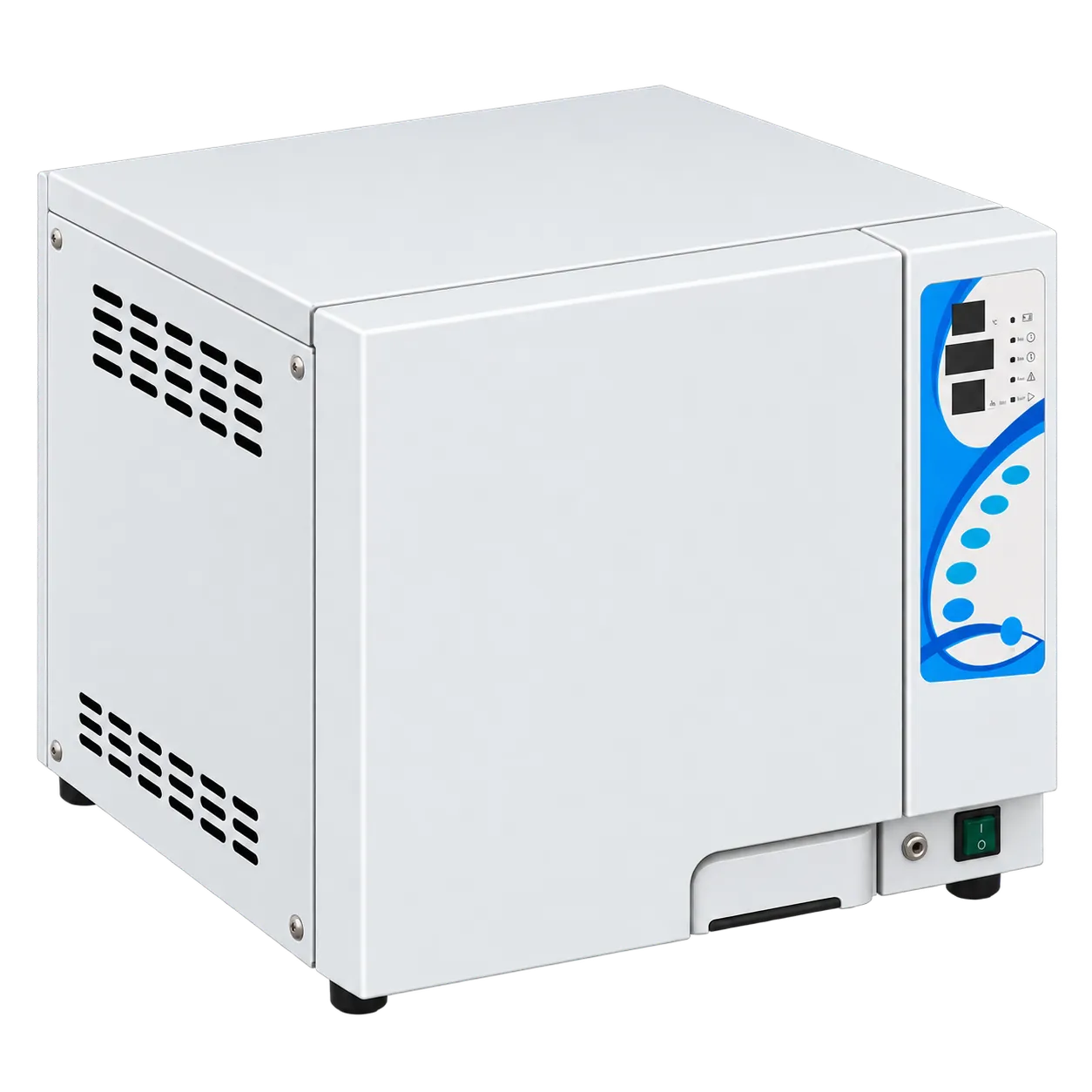
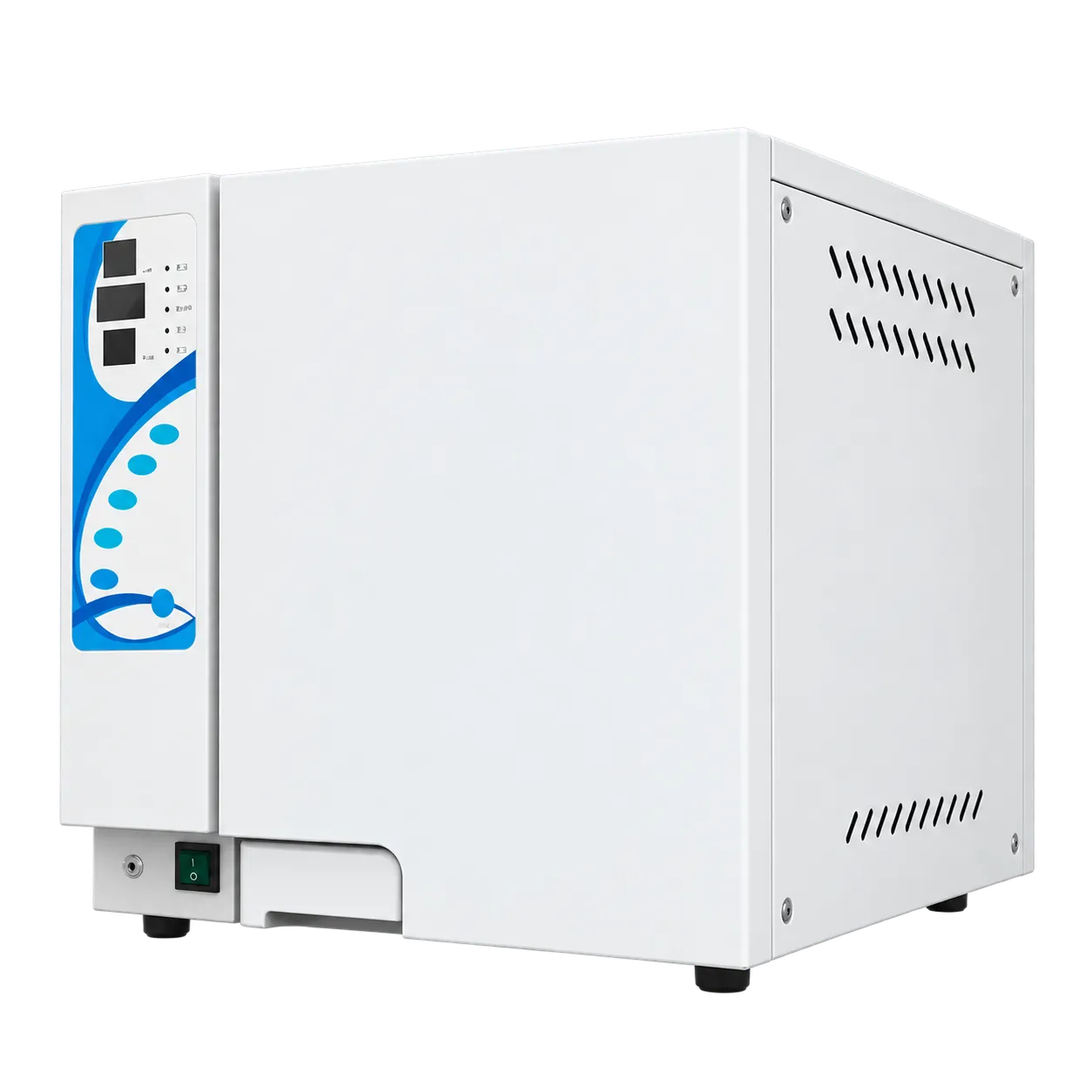
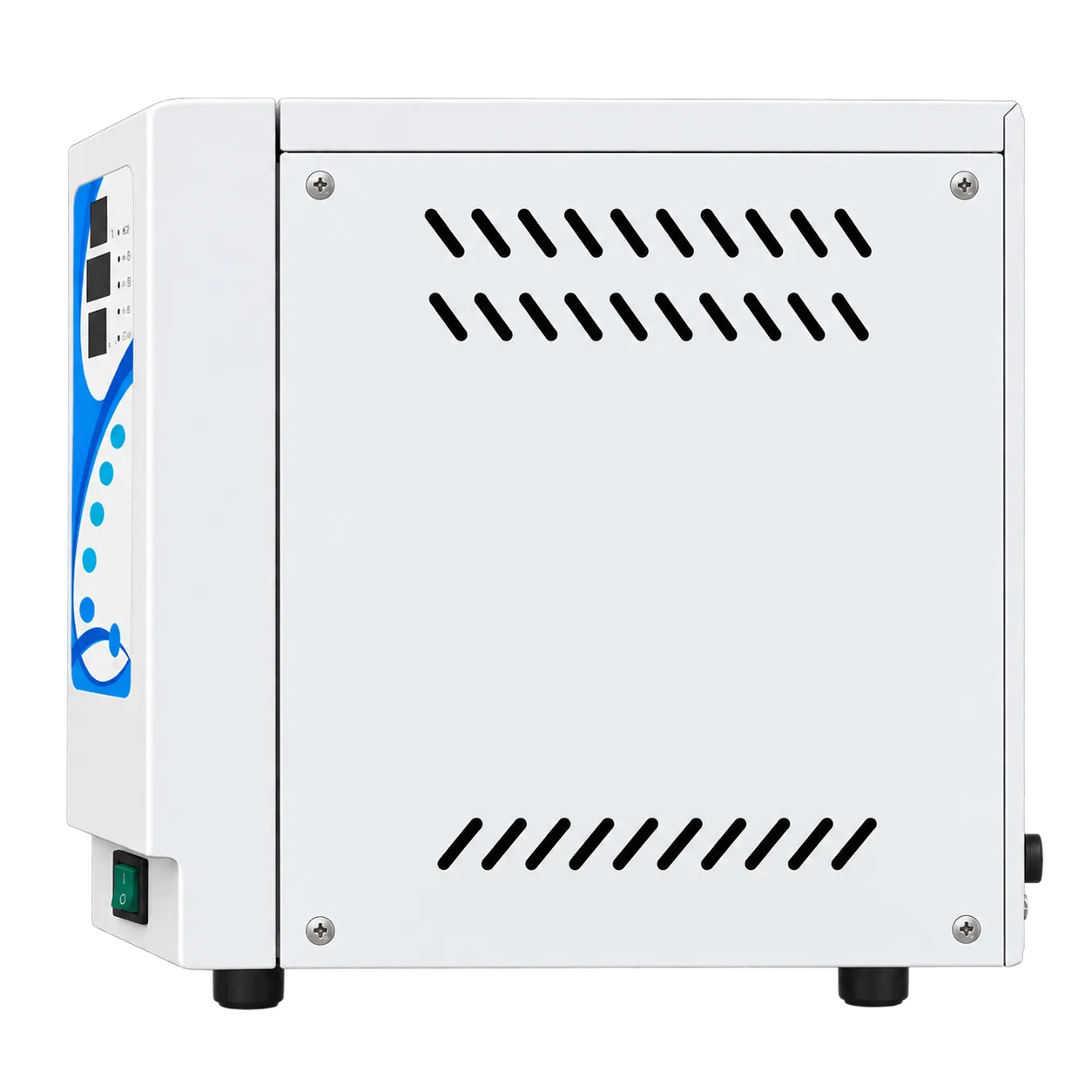
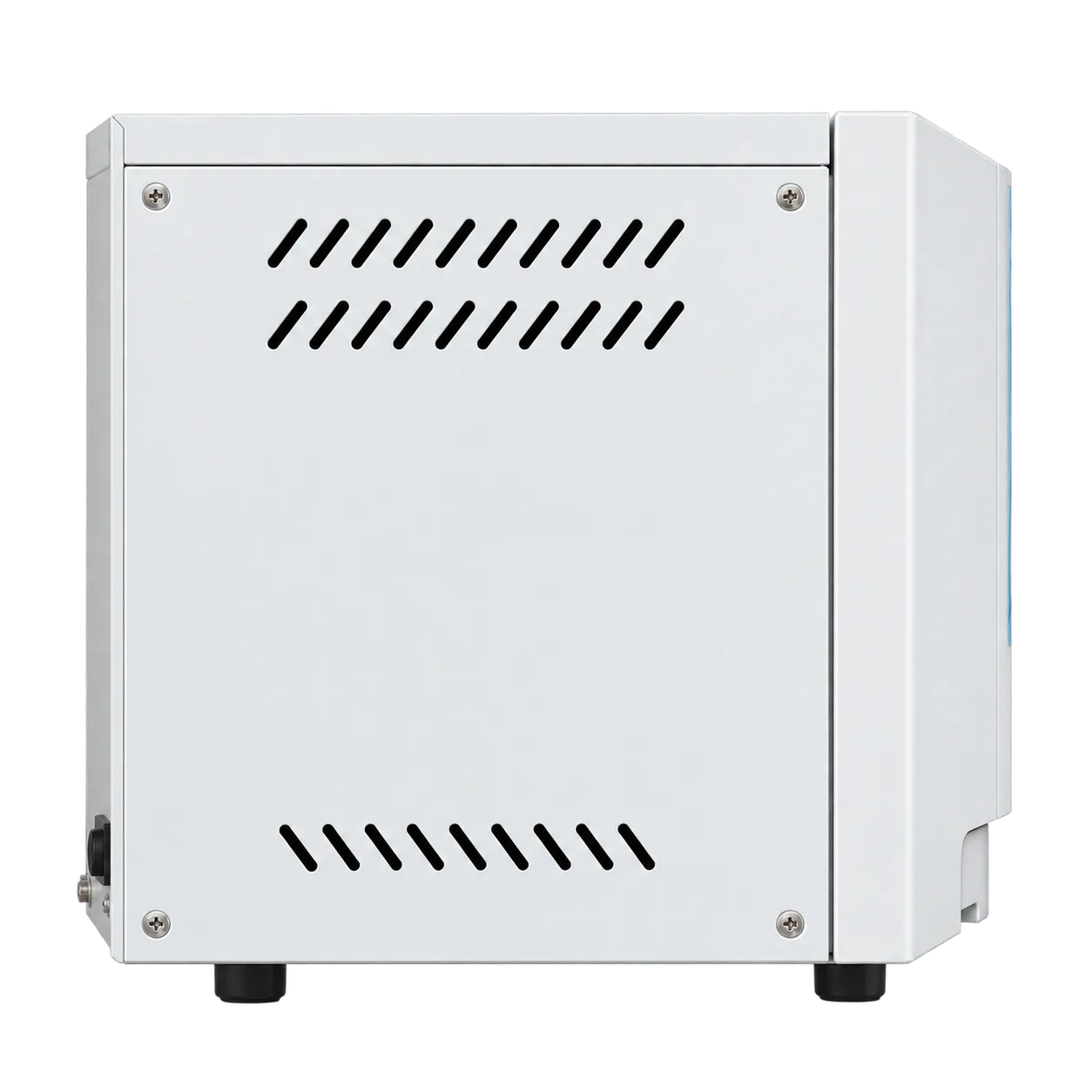
A busy clinic choosing Blackstone's 23-litre autoclave with drying typically processes a high daily volume of unwrapped solid instruments and wants them to come out dry. Multi-surgery dental practices and podiatry services are common examples. Examination sets, restorative instruments, forceps, scalers and nail nippers all fall within the Class N scope. Handpieces, lumened items, pouched sets, and textiles do not, no matter what the drying stage achieves.
The drying time should be settled with real loads. Because the chamber is larger, the right setting for a full set of trays may differ from what suits an 18 litre unit. The best way to find it is to run representative loads during validation, then inspect hinges, box joints, and tray surfaces. Drying is one of the performance requirements in EN 13060, so ask Blackstone for test results that include it. Wipe instruments still damp at the end with disposable, lint-free cloths, and the HTM 01-05 limits on storing unwrapped and post-wrapped instruments still apply.
Planning the room matters as much as choosing the model. The unit needs a bench deep and strong enough for 37 kg plus water, about 550 mm of clear height from wall cupboards, a nearby 13 amp socket, and a daily supply of distilled or RO water. UK duties are unchanged, from the pressure-vessel examination required by the Pressure Systems Safety Regulations 2000 to daily automatic control testing and cycle-by-cycle records.
Medigear.uk is obtaining the drying method, cycle times and width from Blackstone to support that planning.