
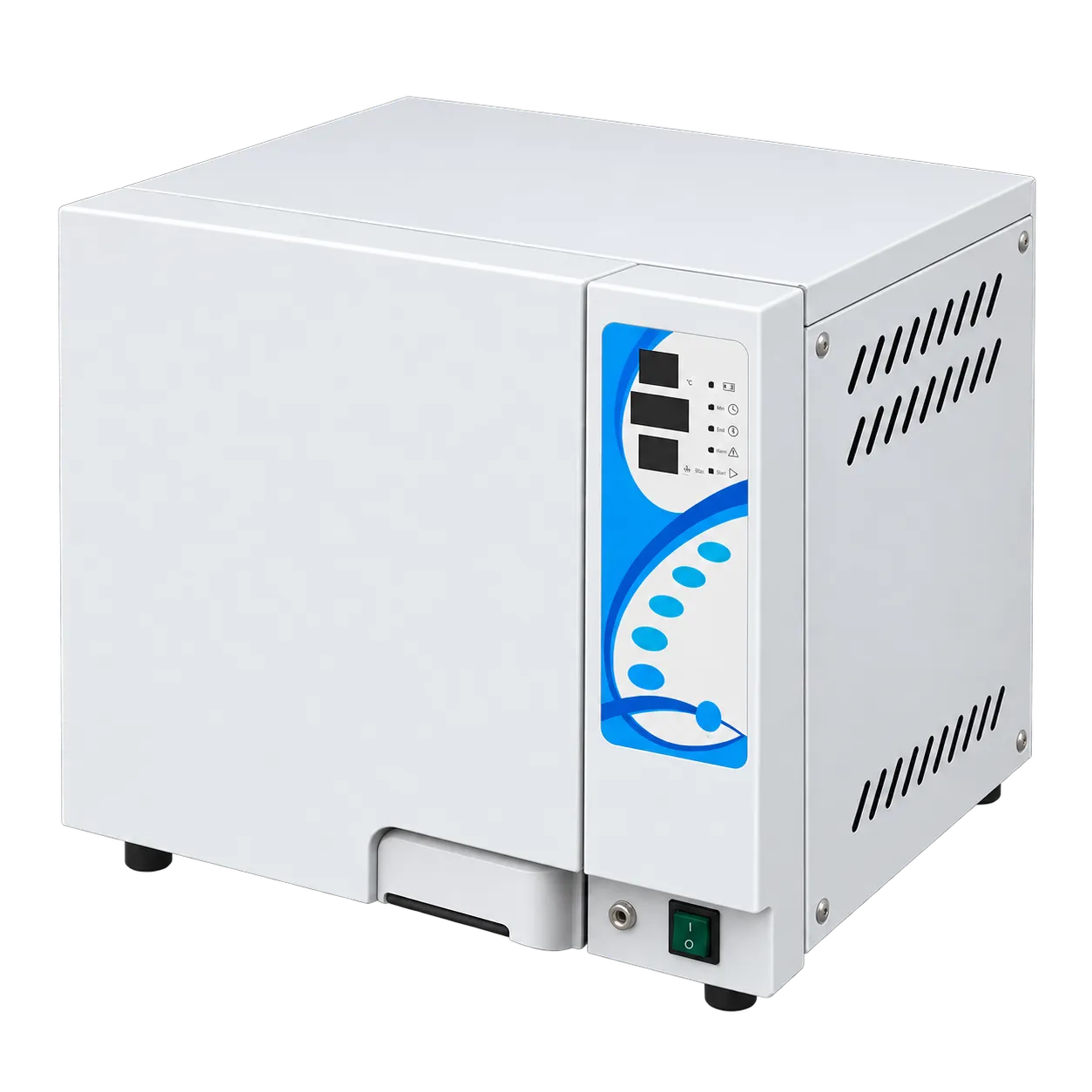
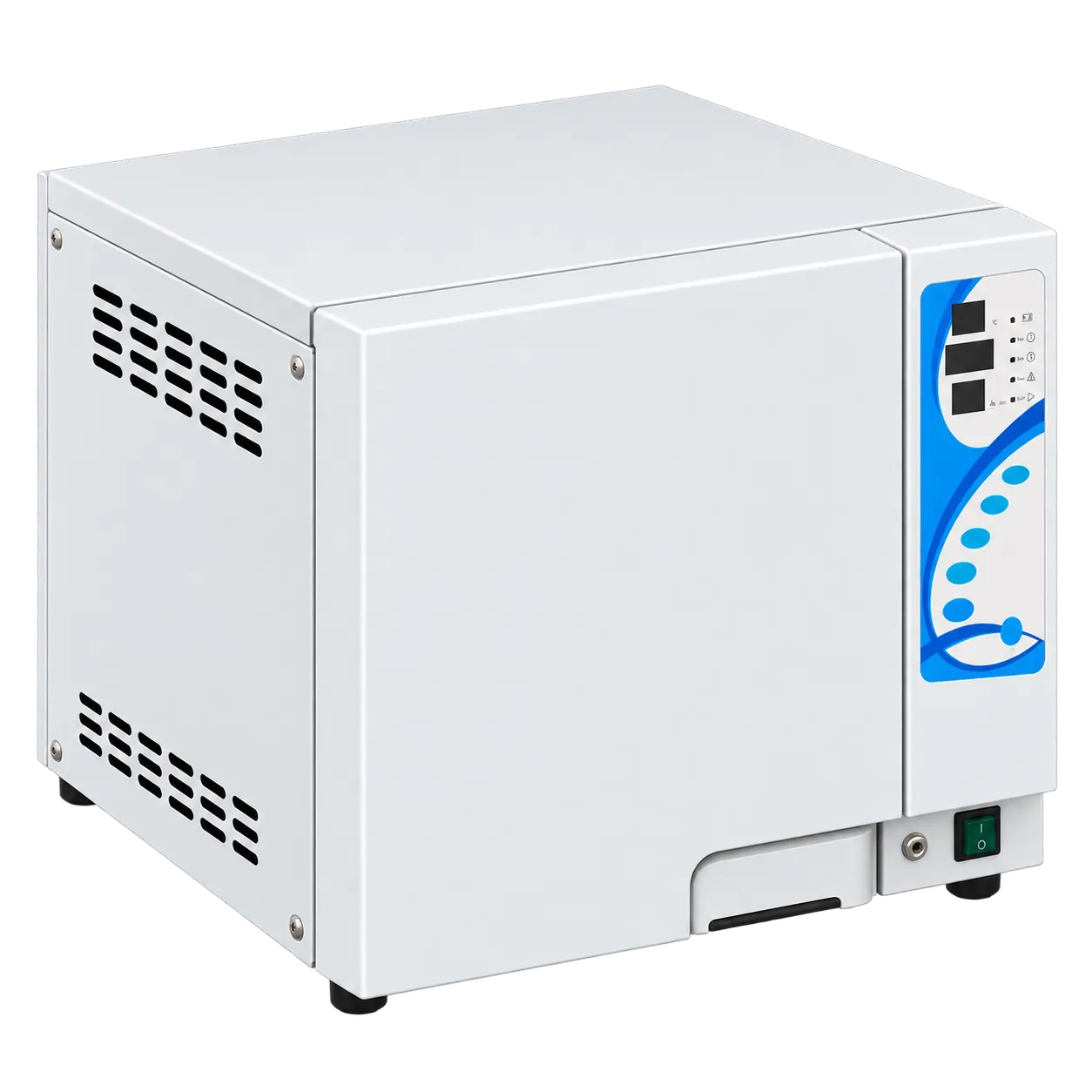
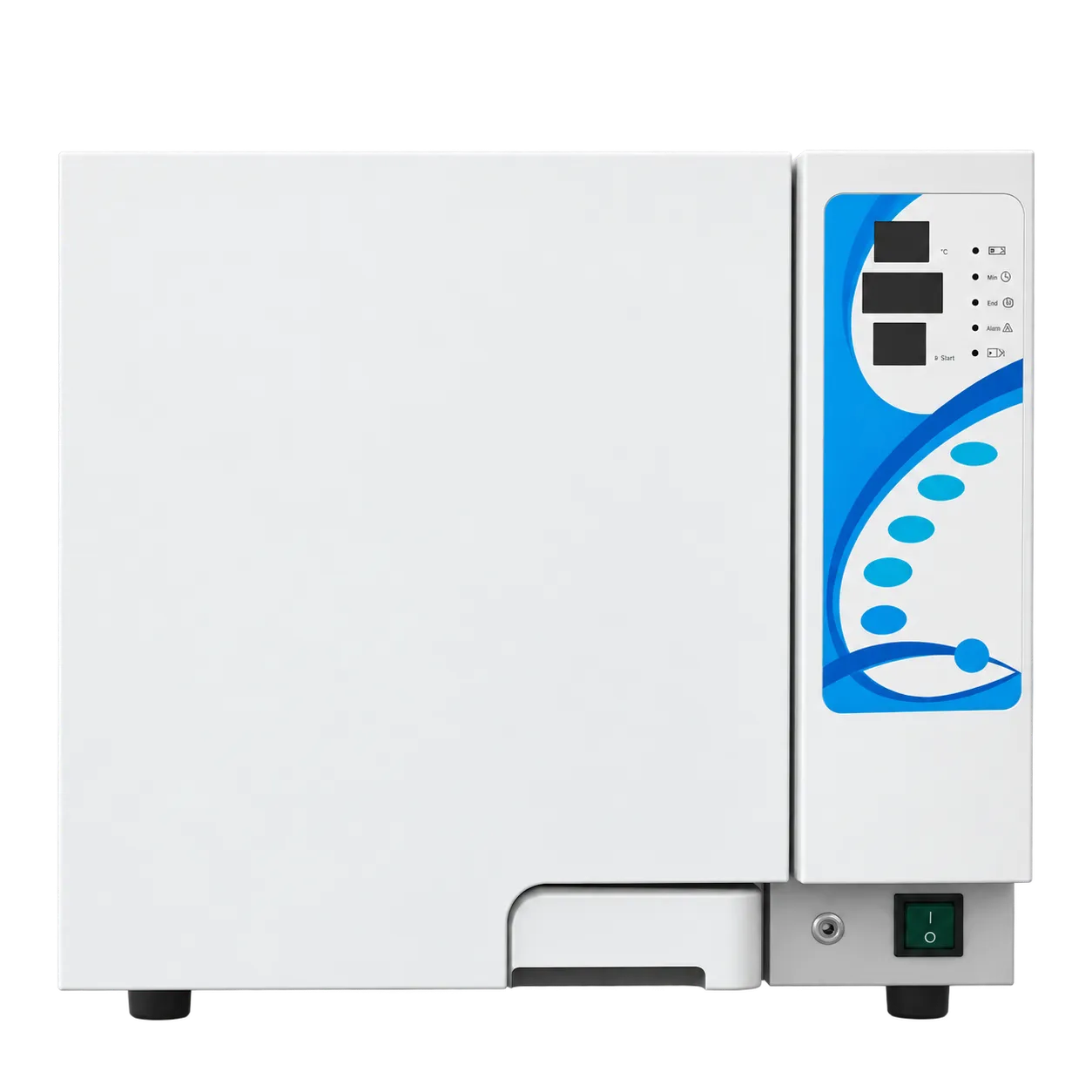
The E418 is aimed at practices that process unwrapped solid instruments and want to spend less time drying them by hand. A compact 18-litre autoclave with drying suits examination kits, restorative instruments, forceps and scalers, and a load that finishes dry can go straight into covered storage or post-sterilisation wrapping. Handpieces, lumened items and pouched sets still need a vacuum steriliser, drying phase or not.
Setting the drying time is a local decision. A 60-minute default is generous, and many practices will want to shorten it once they know how dry their usual load comes out. That belongs in validation: run representative trays, then check hinges, serrations and the tray surface for moisture rather than guessing. EN 13060 includes drying among its performance requirements, so test evidence against that standard is worth requesting. Any instrument that leaves the chamber damp still needs wiping with a disposable, lint-free cloth, the method HTM 01-05 describes for non-vacuum units.
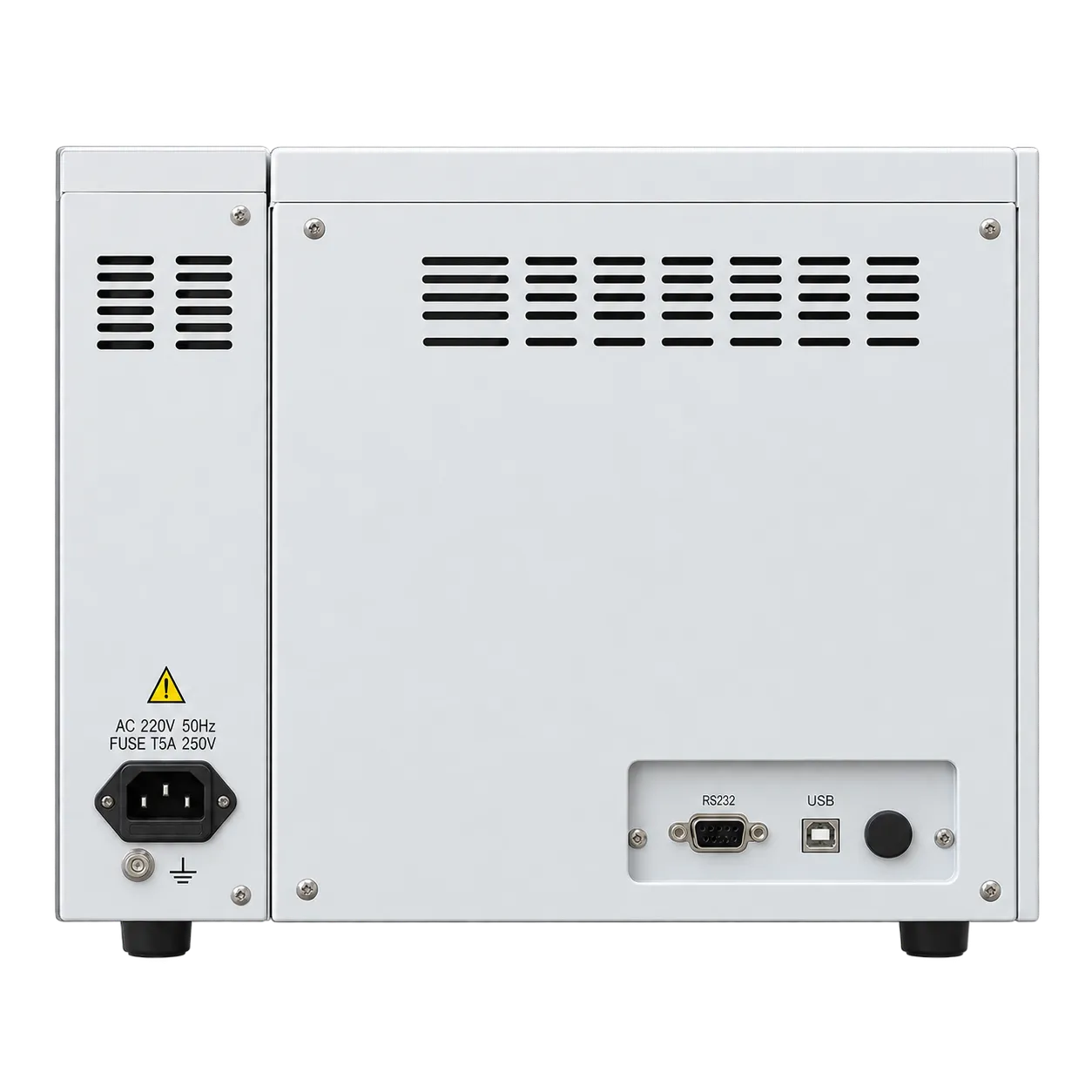
Throughput planning needs the full cycle time, which the sheet doesn't provide. With 70 minutes of hold and drying per 134 °C load at the defaults, a practice running many trays a day may need to trim the drying stage or stagger its loads. The routine UK duties still apply. The pressure vessel needs an examination scheme under the Pressure Systems Safety Regulations 2000, and HTM 01-05 expects the automatic control test to be run every day and each cycle to be recorded, by hand if no printer or data logger is fitted.
Medigear.uk has requested the drying method and cycle times from Blackstone so the practice can plan around them.