
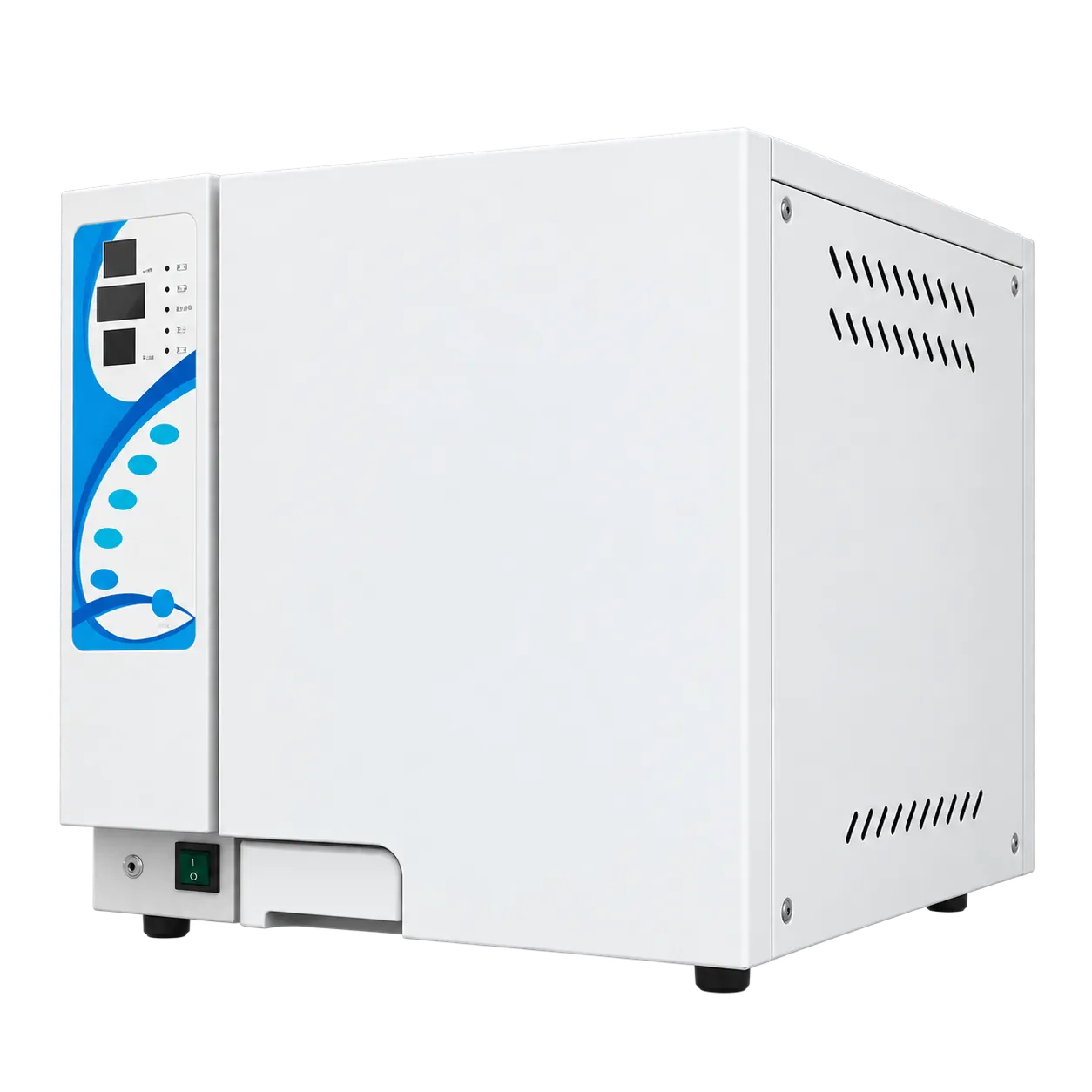
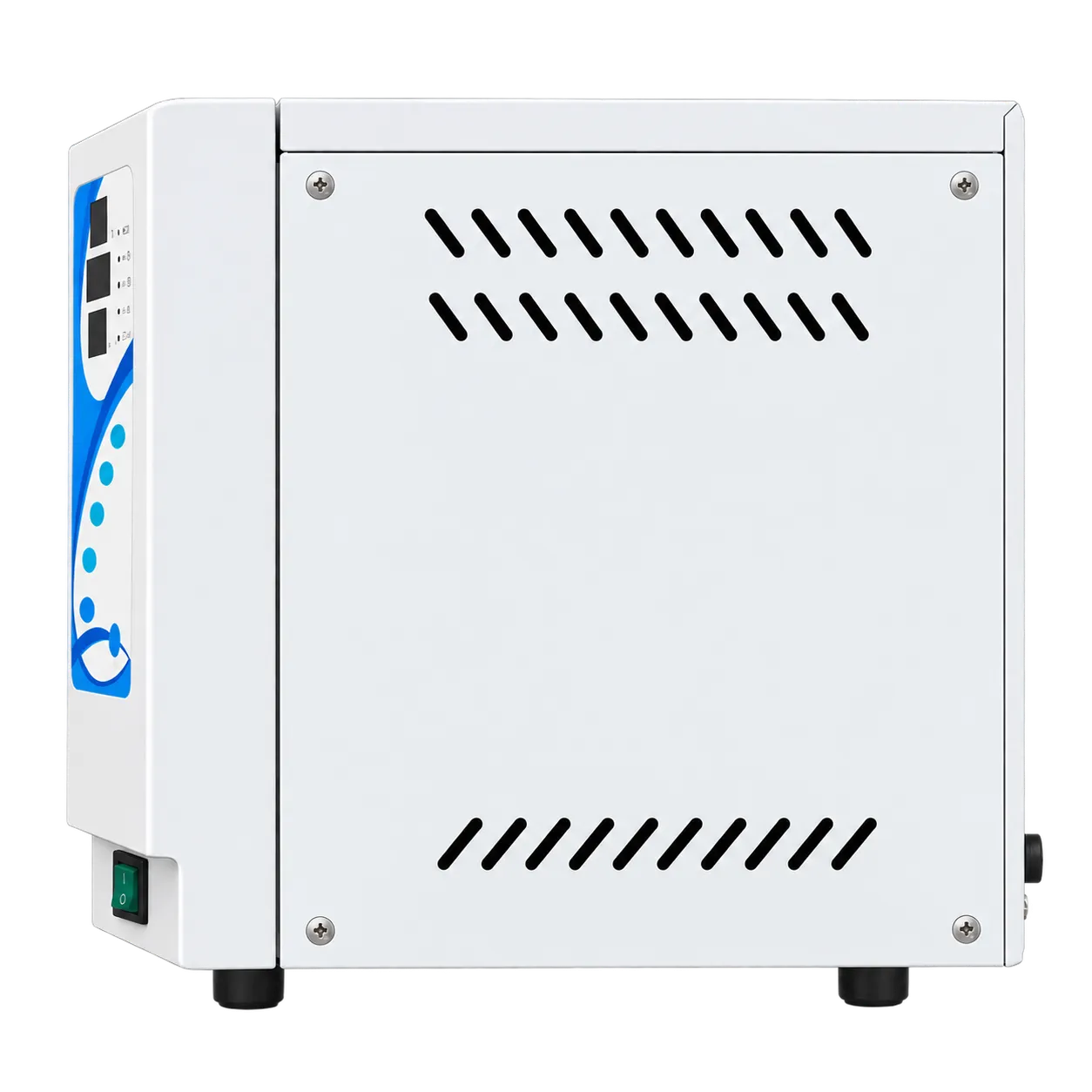
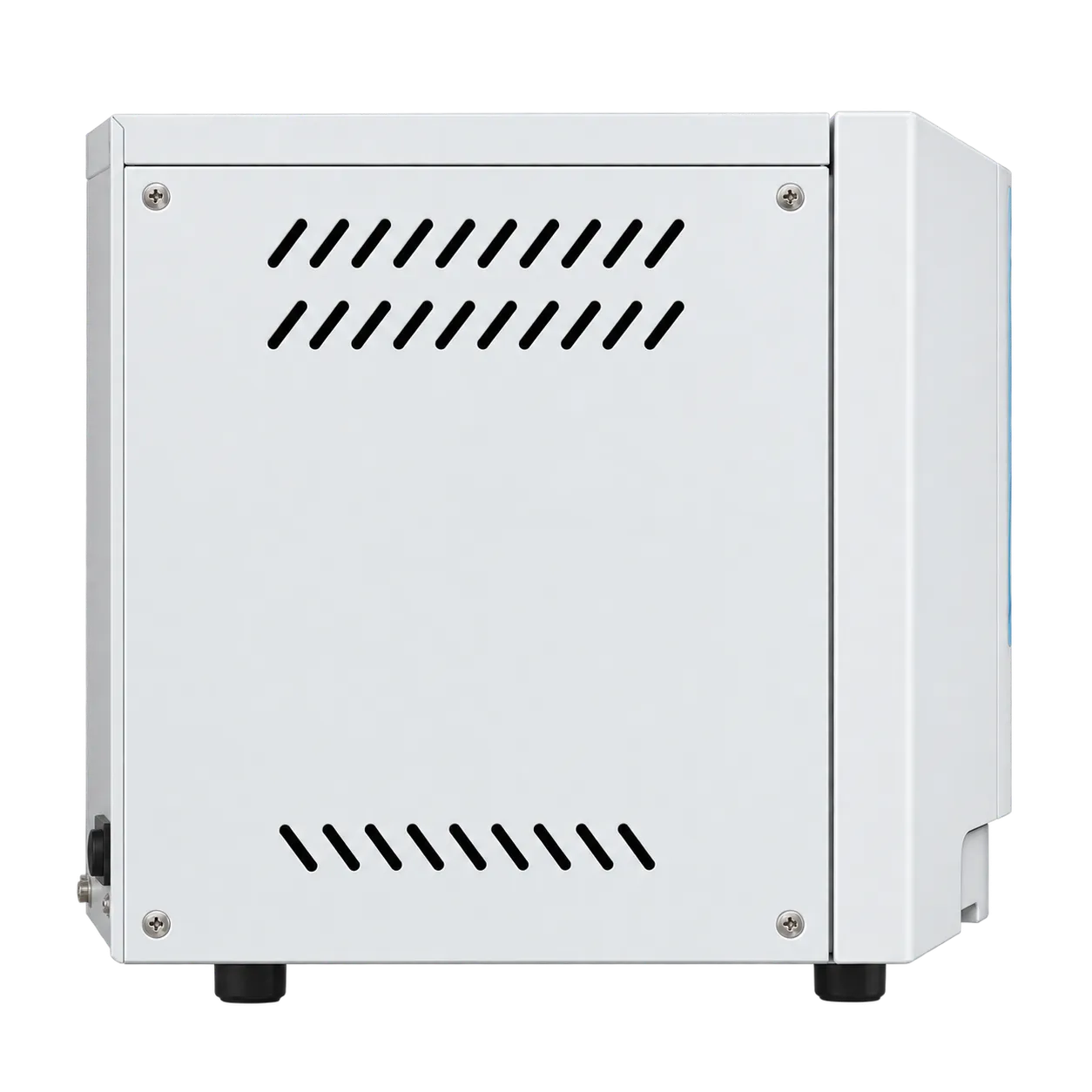
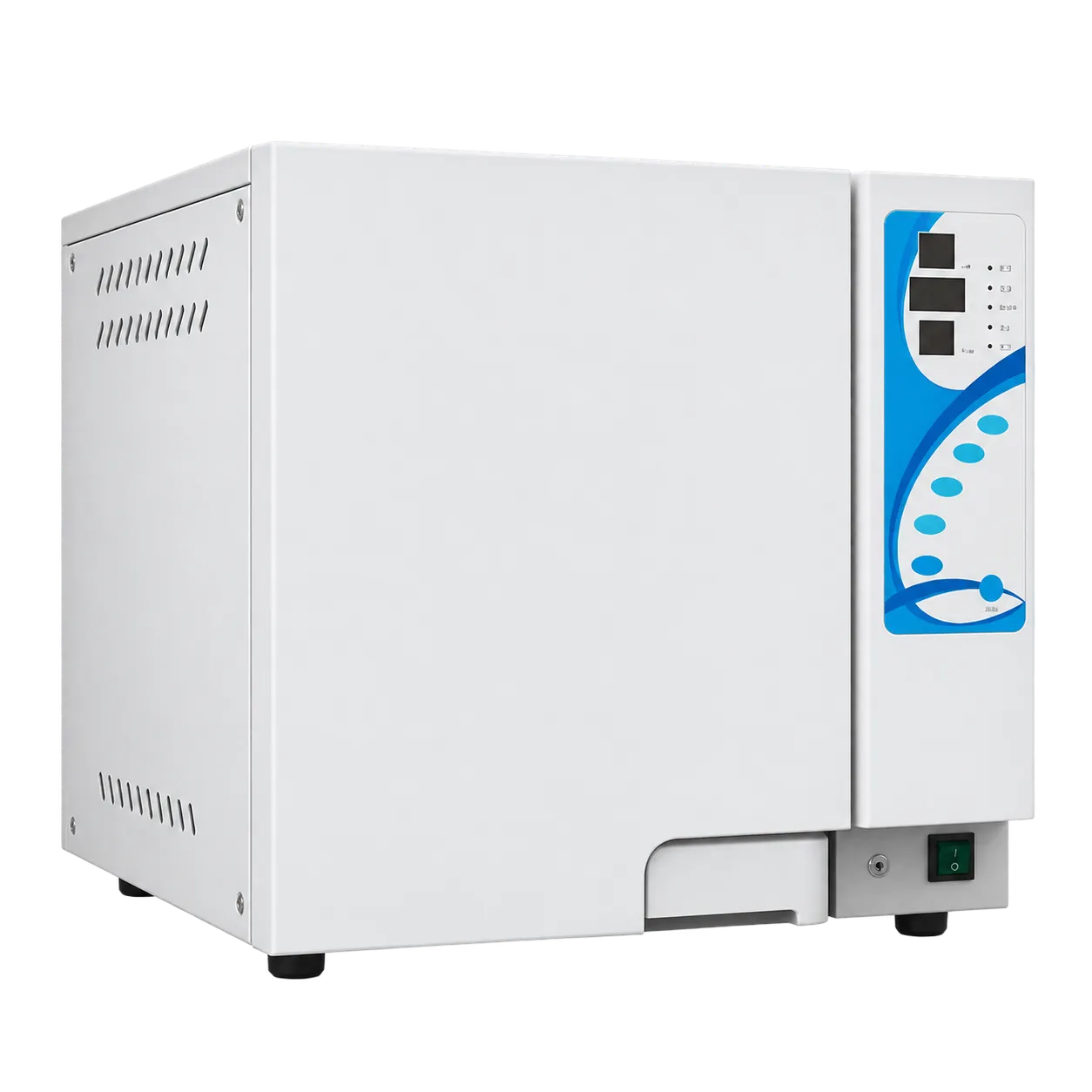
Practices weighing up to the E323, the 23-litre Class N autoclave Blackstone offers, can process more instruments than an 18-litre chamber can clear in a session, without drying, and still do so unwrapped. Multi-chair dental surgeries fit that description, as do podiatry and other clinics that reprocess their own solid instruments, as long as nothing carries a lumen or needs a pouch. Longer items may also fit more easily in the 450 mm chamber, although tray lengths are not given.
Loading matters more in a larger non-vacuum chamber. Steam has to reach every surface by displacing air, so instruments should sit in a single layer with hinged items open and nothing pressed against the chamber wall. Overfilled trays slow heating and can leave cool spots. After each cycle, the whole batch comes out wet, and HTM 01-05 requires Type N loads to be dried using disposable cloths that shed no lint before instruments are used, stored, or packaged. That drying time grows with batch size, so staffing should allow for it.
UK installation brings the usual duties for a pressure vessel. The Pressure Systems Safety Regulations 2000 require a written examination scheme prepared by a competent person, and HTM 01-05 adds a daily automatic control test and a record of every cycle. Because the E323 lists no printer or data logger, that record may have to be kept by hand. Its 36 kg weight and roughly 715 mm working depth also belong in the plan for the decontamination room.
Medigear.uk is obtaining the width, cycle times and recording options from Blackstone and will share them with whoever leads decontamination at the practice.