
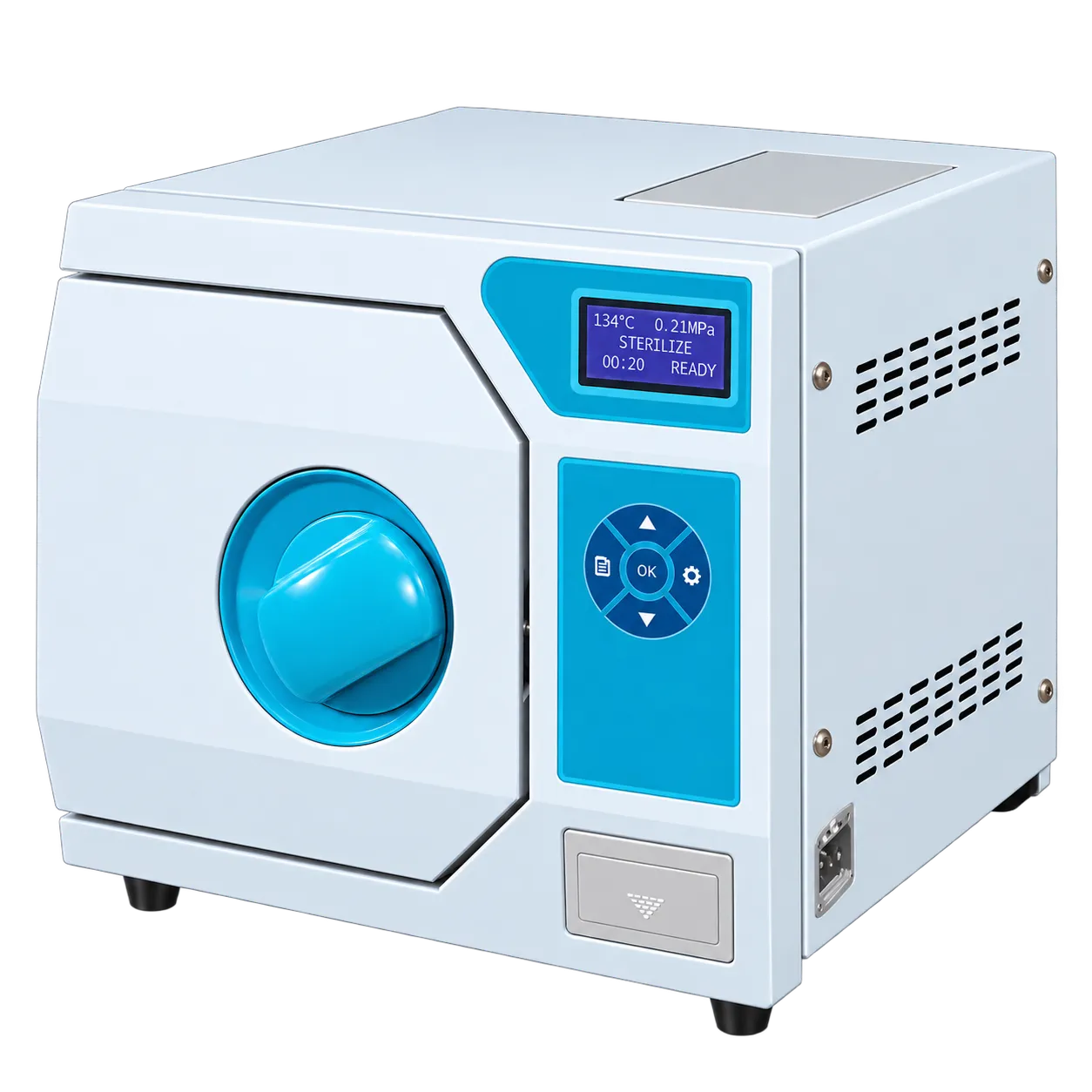
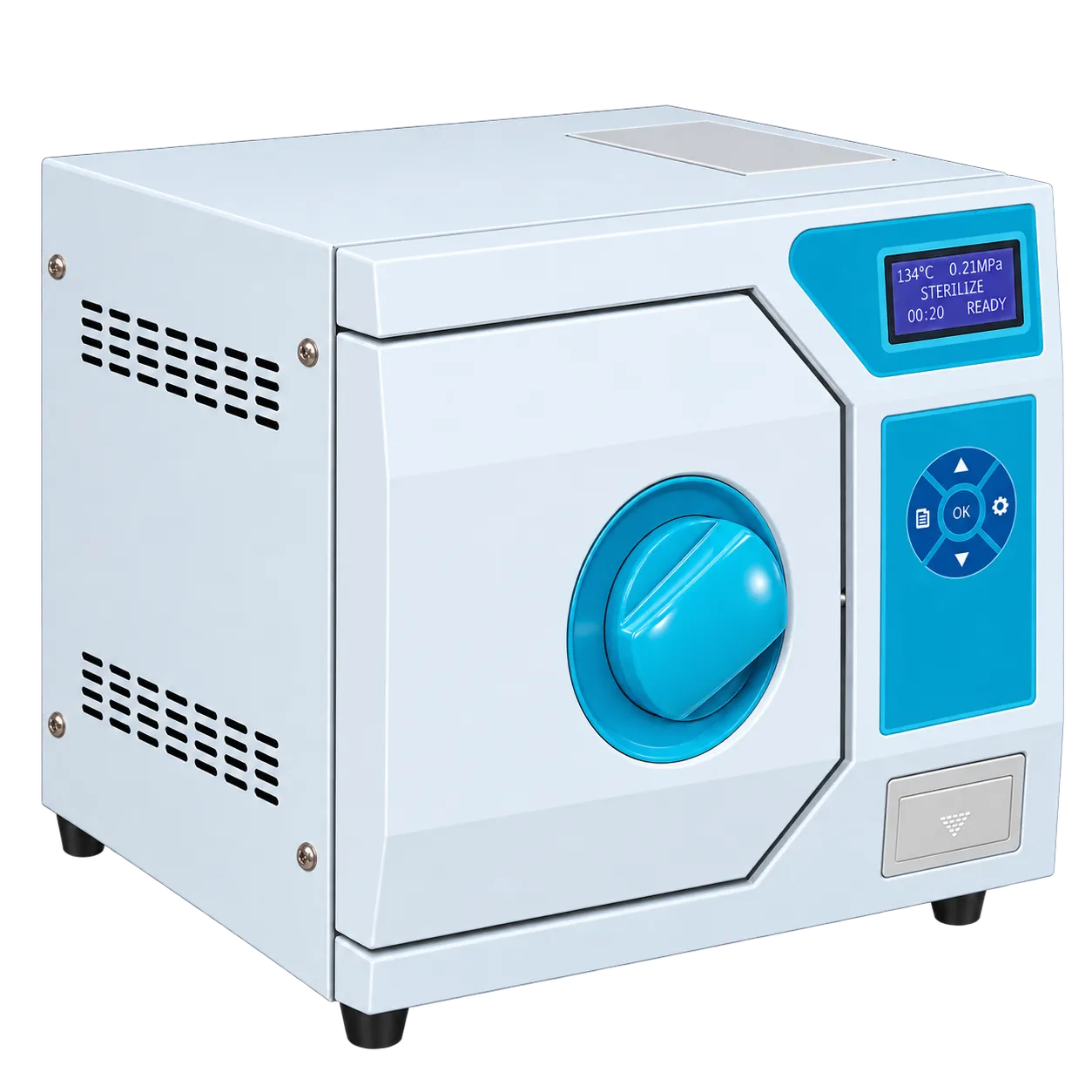
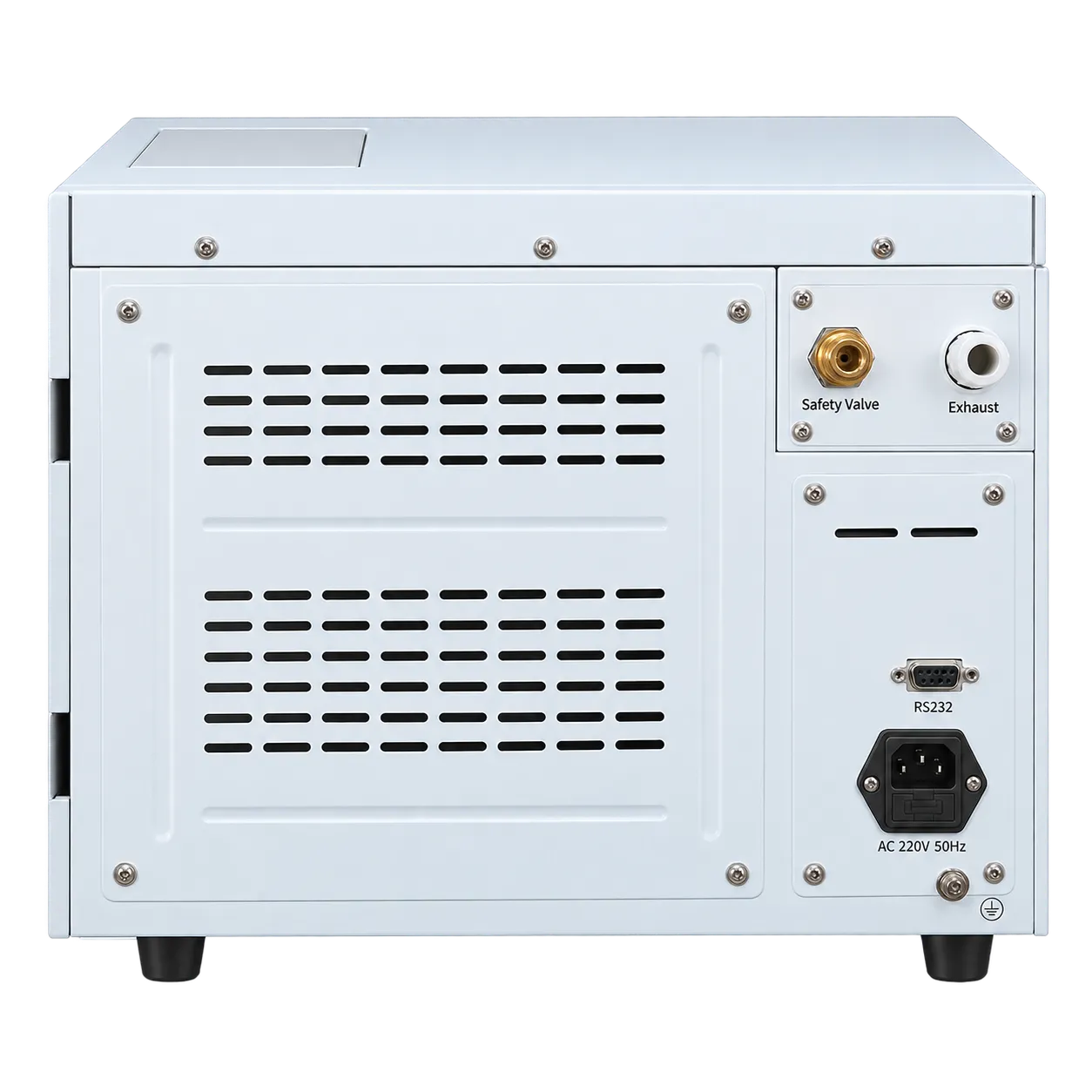
Dental practices with a steady flow of pouched kits and handpieces keep the record where it matters: at the steriliser, as the load comes out. The decontamination lead runs the morning Bowie-Dick or Helix test, loads the 18-litre chamber through the day, and files each printout in the log beside the machine while USB keeps the archive. Because the printout sits with the load, a nurse can match each batch of pouches to its cycle before they go into storage.
Minor surgery rooms and GP surgeries sterilise wrapped packs for suturing, skin surgery and dressings, and a printed cycle record makes it simple to show that a given pack went through a complete cycle. Podiatry clinics reprocess nippers, burrs and scalpel handles in pouches between appointments, with the hold and drying times set to suit wrapped or unwrapped loads. Practice managers who audit decontamination get paper and USB records from the same machine.
Tattoo and piercing studios reprocess stainless grips, tubes and forceps between clients. Tubes are hollow, so they rely on the triple pulsed vacuum, and a printout for each cycle gives the studio a running record of its sterilisation. Studio owners working alone can run the whole routine, from morning test to final printout, without leaving the bench. The same pattern fits aesthetic clinics, veterinary surgeries and small laboratories that sterilise heat-stable steel instruments or empty glassware.
Because water comes from a hand-filled tank, the unit can work in a room with no plumbing, and altitude calibration suits clinics at elevation. It is not built for a central sterile department, and heat-sensitive devices that cannot withstand steam at 116 °C require a low-temperature process that it does not offer.