
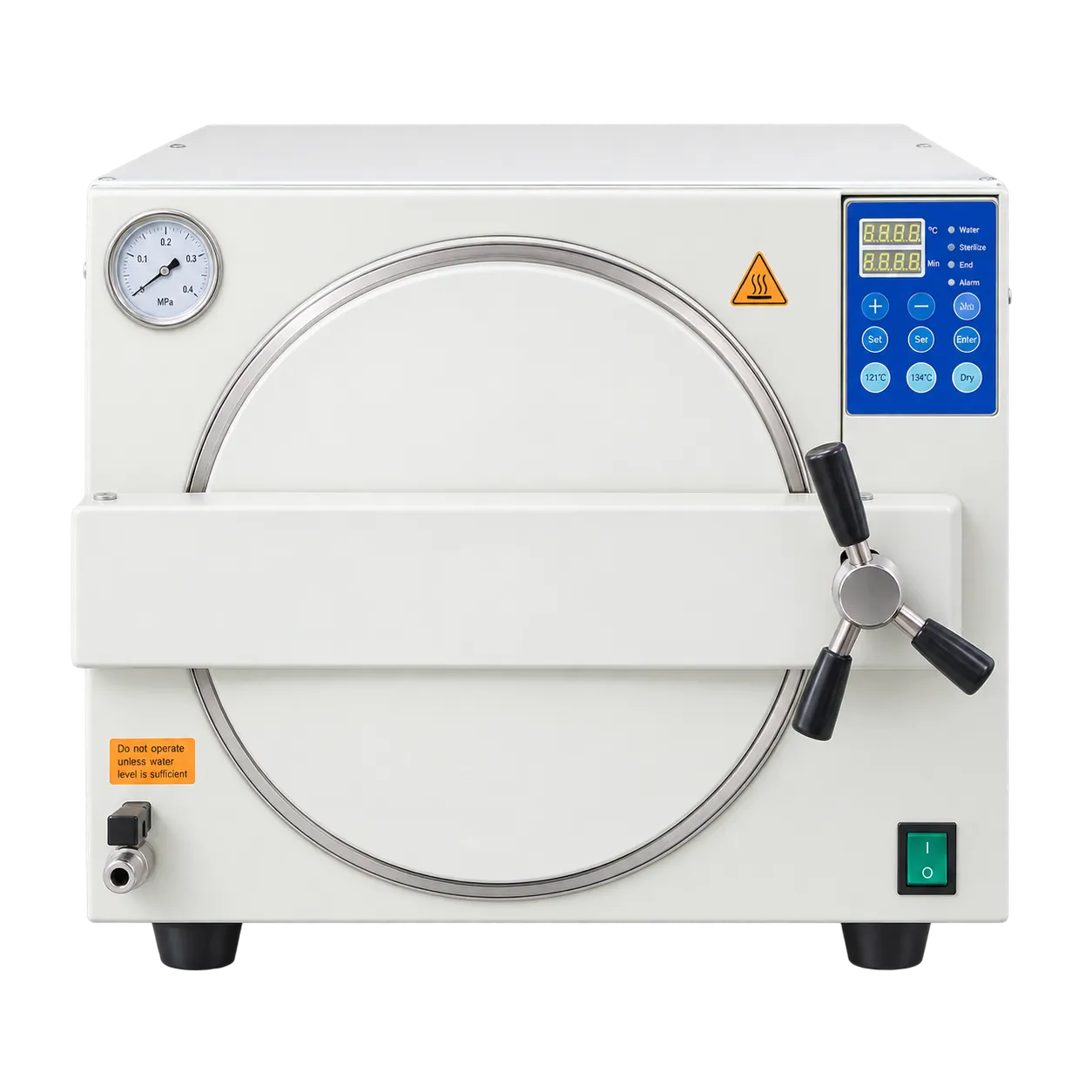
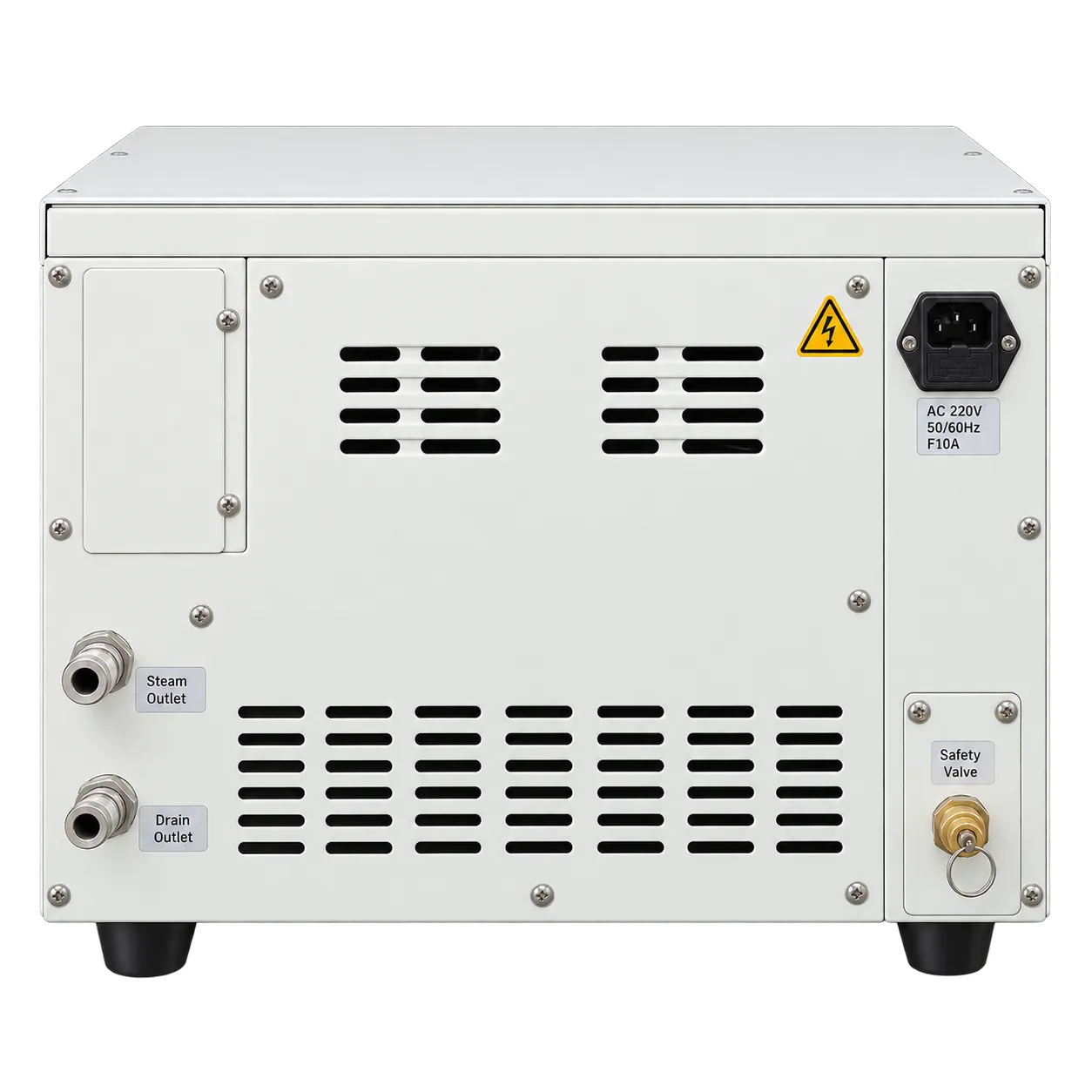
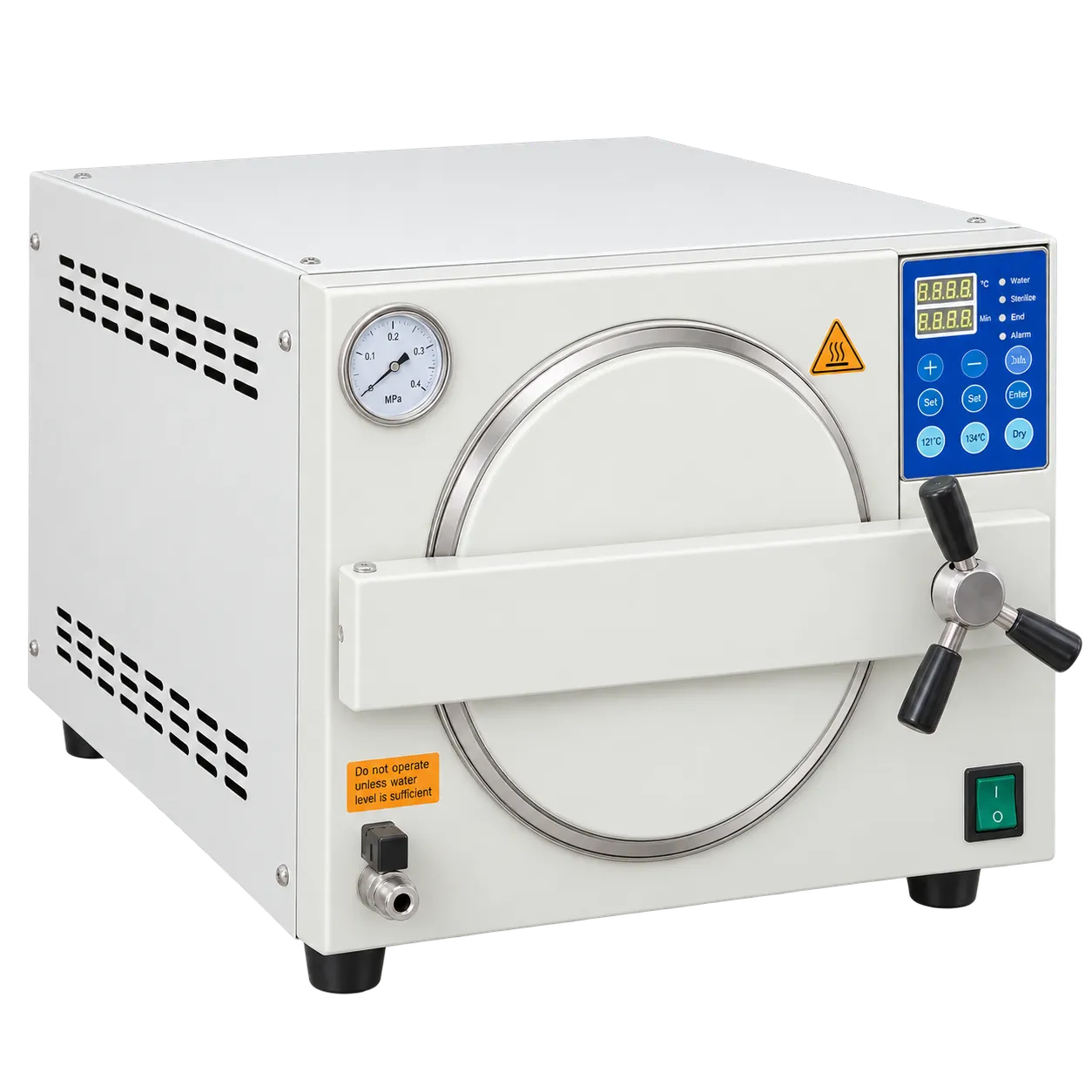
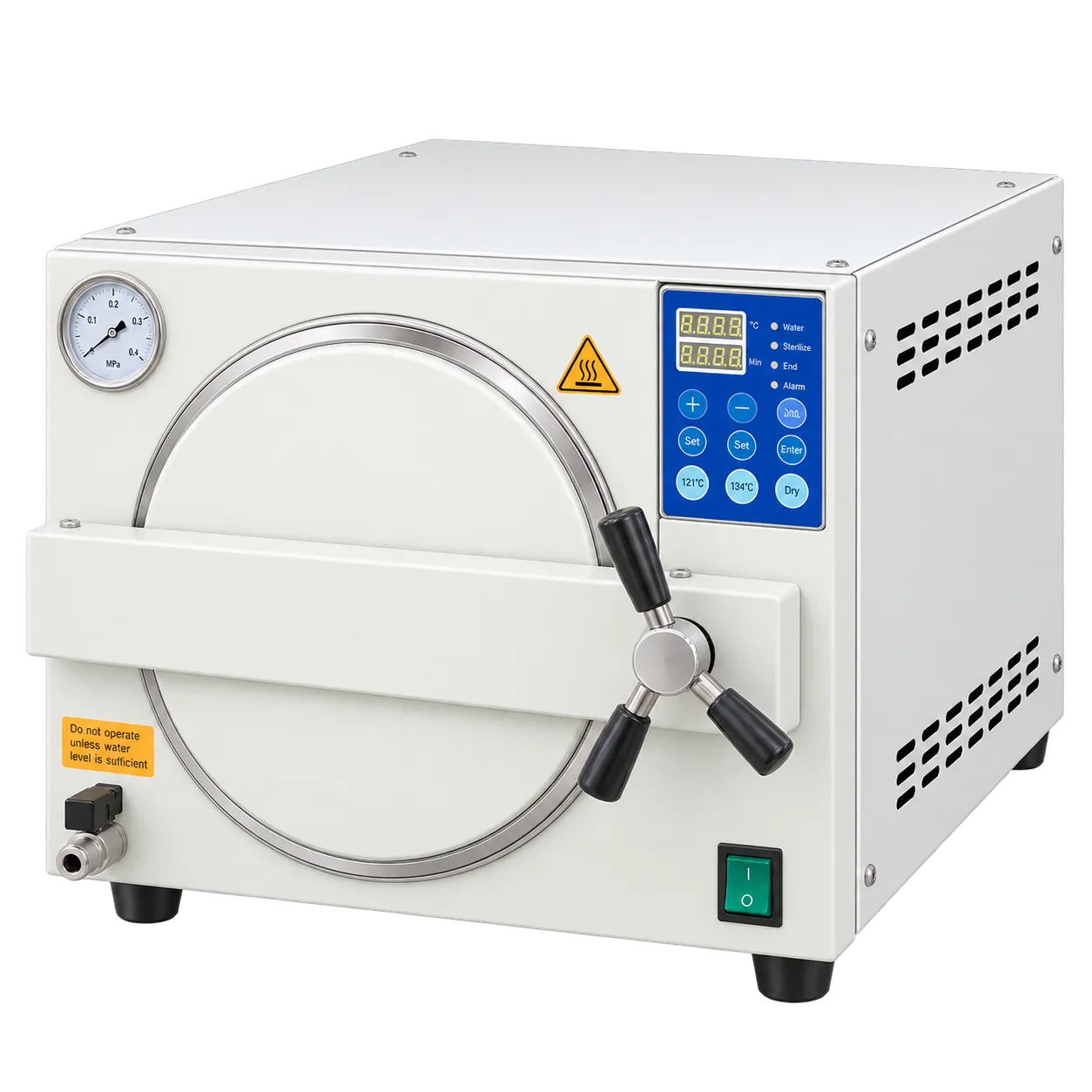
Dental practices, medical clinics and laboratories are the settings the manufacturer's distributors name, and hospital departments that keep a benchtop steriliser for solid instruments fit the same pattern. In each, the DGT-18A takes solid, unwrapped instruments such as dental hand instruments, scissors, forceps, and specula, and leaves hollow, wrapped, and porous items for a vacuum steriliser. In laboratories, it is also confined to solid items
Its size suits rooms with limited bench space. At 385 to 400 mm wide and 24 kg, it fits treatment rooms and small laboratories, provided the bench leaves room for the door and for drying instruments beside the unit.
Evidence on small sterilisers shows how they are used. In a cohort of 175 dental offices in San Luis Potosí, Mexico, 11% of 1,188 biological indicator checks between 2022 and 2024 showed bacterial growth. Staff training, equipment maintenance, correct procedure and feedback from indicator results were each associated with clean results. A 2001 study of reservoir water in 20 non-vacuum benchtop sterilisers in general dental practice found microbial and endotoxin contamination and concluded that the water needs frequent changes and regular reservoir cleaning. Well-run monitoring does far better: one Canadian province recorded failures in 0.2% of nearly 200,000 tests. The DGT-18A's protections guard the machine, while the water routine, loading, and checks remain with the people using it.
Public buyers apply the same scrutiny, since NHS procurement routes require conformity evidence and a validation plan for decontamination equipment, and public purchasers abroad usually ask for the same. The conformity documentation those procurement routes require is issued by the manufacturer and shared by the enquiry team.