
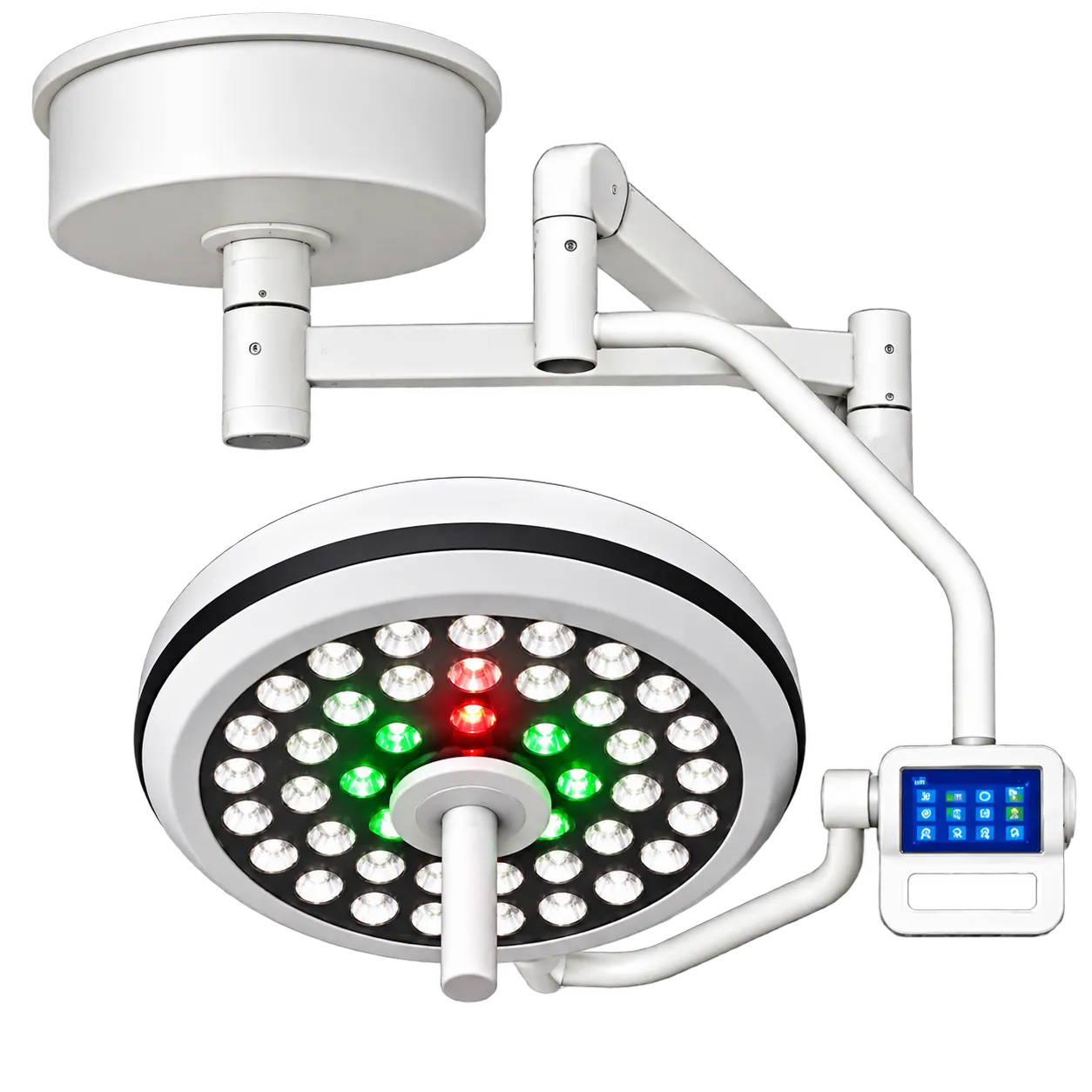
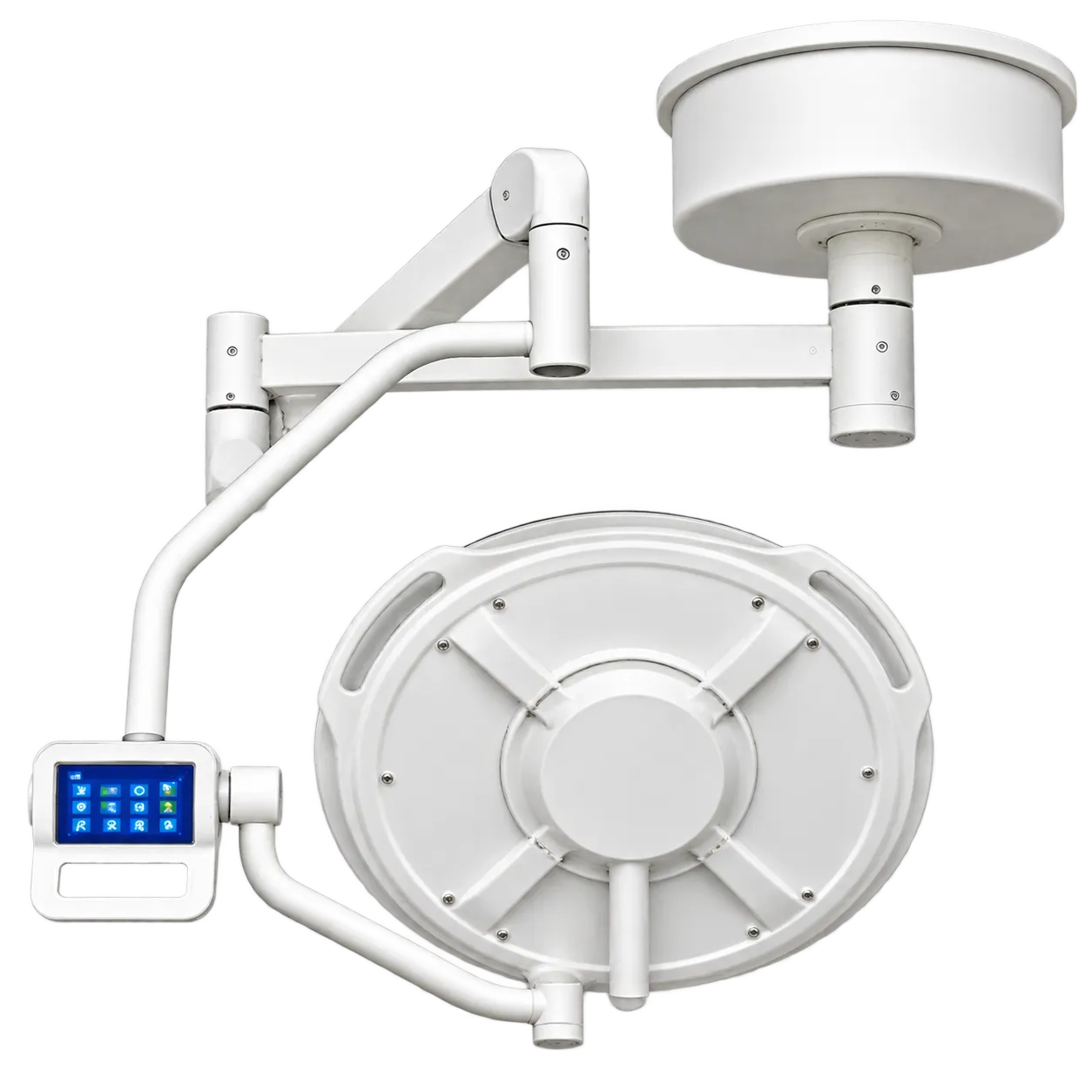
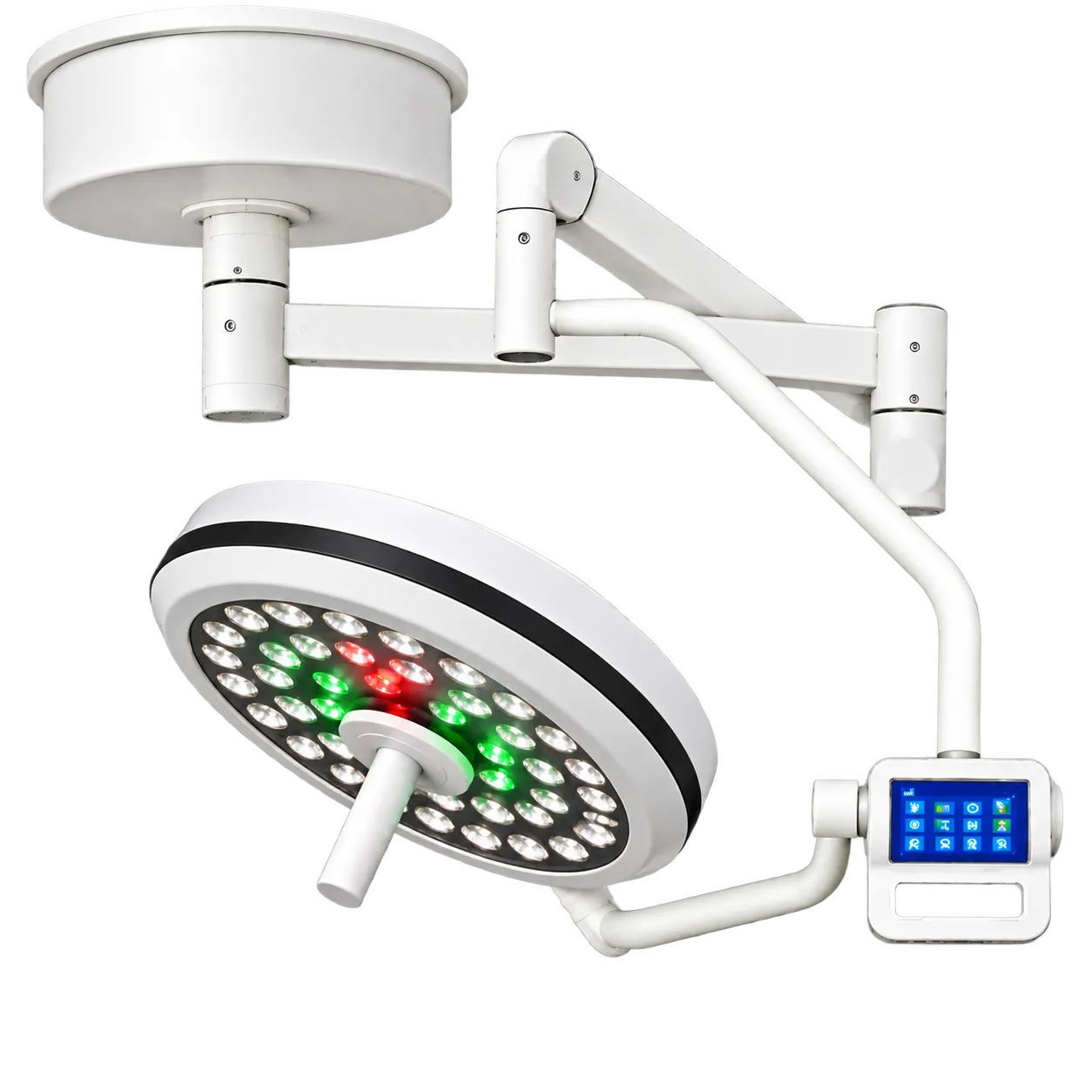
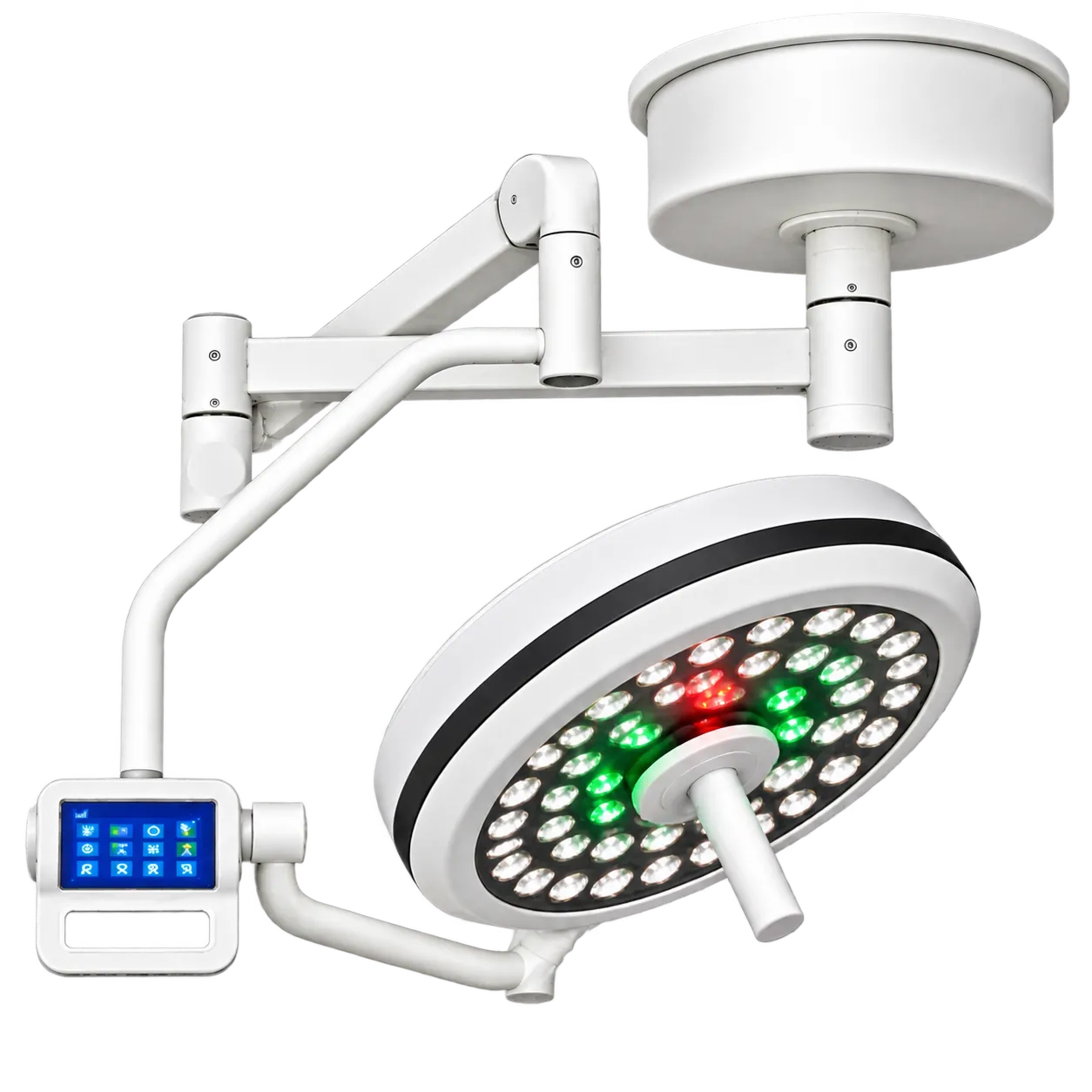
A compact surgical light has an obvious home, and it is not the main table in a major theatre. Five hundred millimetres suits a minor procedure room, a day surgery unit, a treatment room or a dental surgery, where a 700 mm head would dominate the ceiling and the space beneath it. It also suits satellite duty, mounted alongside a larger head to fill in illumination from a second angle entirely.
Satellite use is where the unchanged colour performance earns its keep. Two heads with different rendering make a field look different depending on which one is dominant, and a surgeon adjusting to that is a surgeon spending attention on lighting rather than on the patient. Identical Ra, identical R9 behaviour, and identical colour temperature steps across both sizes mean the light simply gets brighter when the second head comes on, rather than changing character entirely.
What cannot be judged from the sheet is the thing the smaller head most needs judging on. Fewer emitters over a smaller area means fewer angles, and fewer angles means shadow is filled in less completely. No Blackstone lamp sheet publishes a shadow dilution figure, so how much is given up is unknown. Add the missing light field diameter and depth of illumination, and a buyer choosing between the 500 and the 700 is choosing on head size alone.
Before this compact surgical light reaches a room, Medigear.uk pins down its shadow performance, the field diameter,r and how deep the illumination usefully goes.