
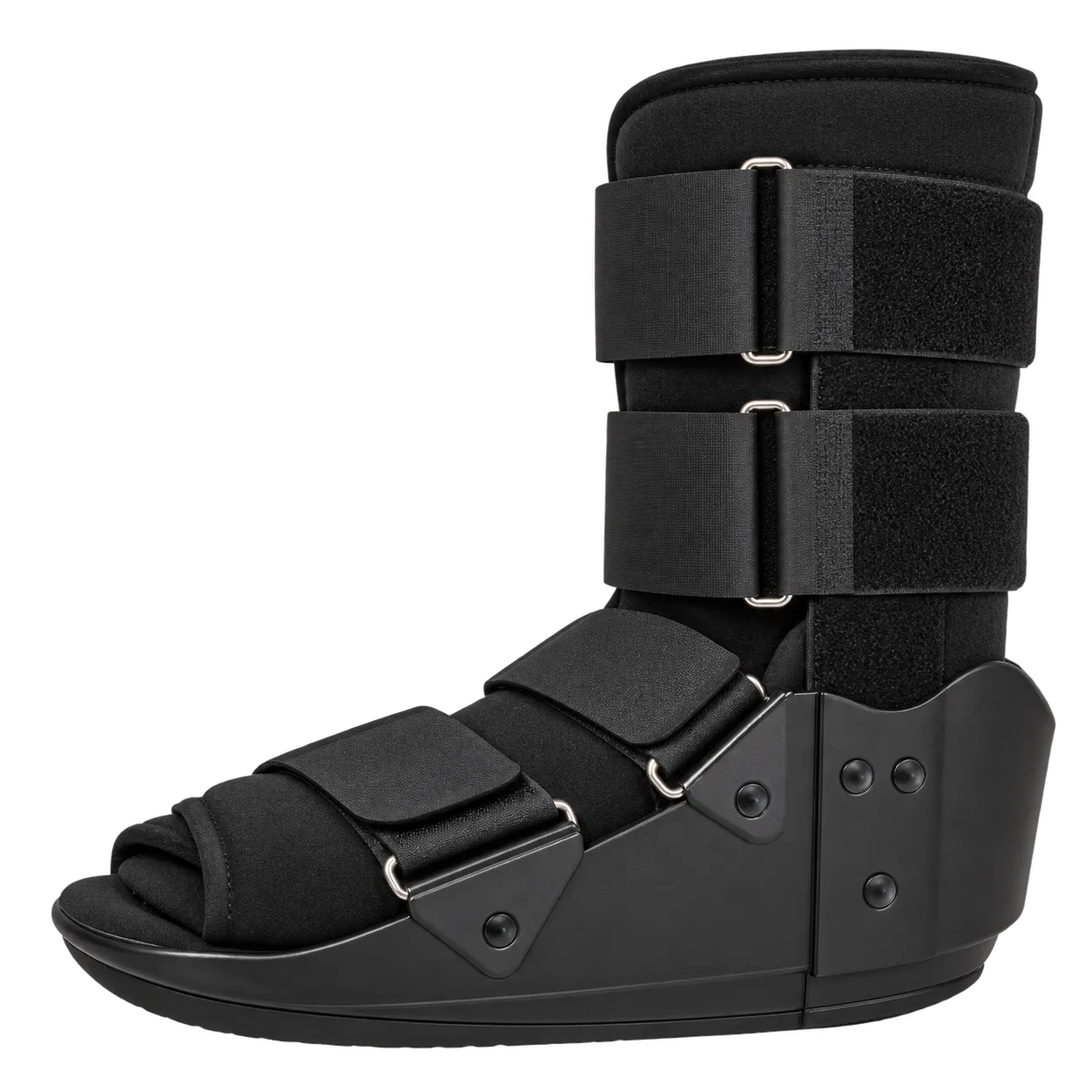
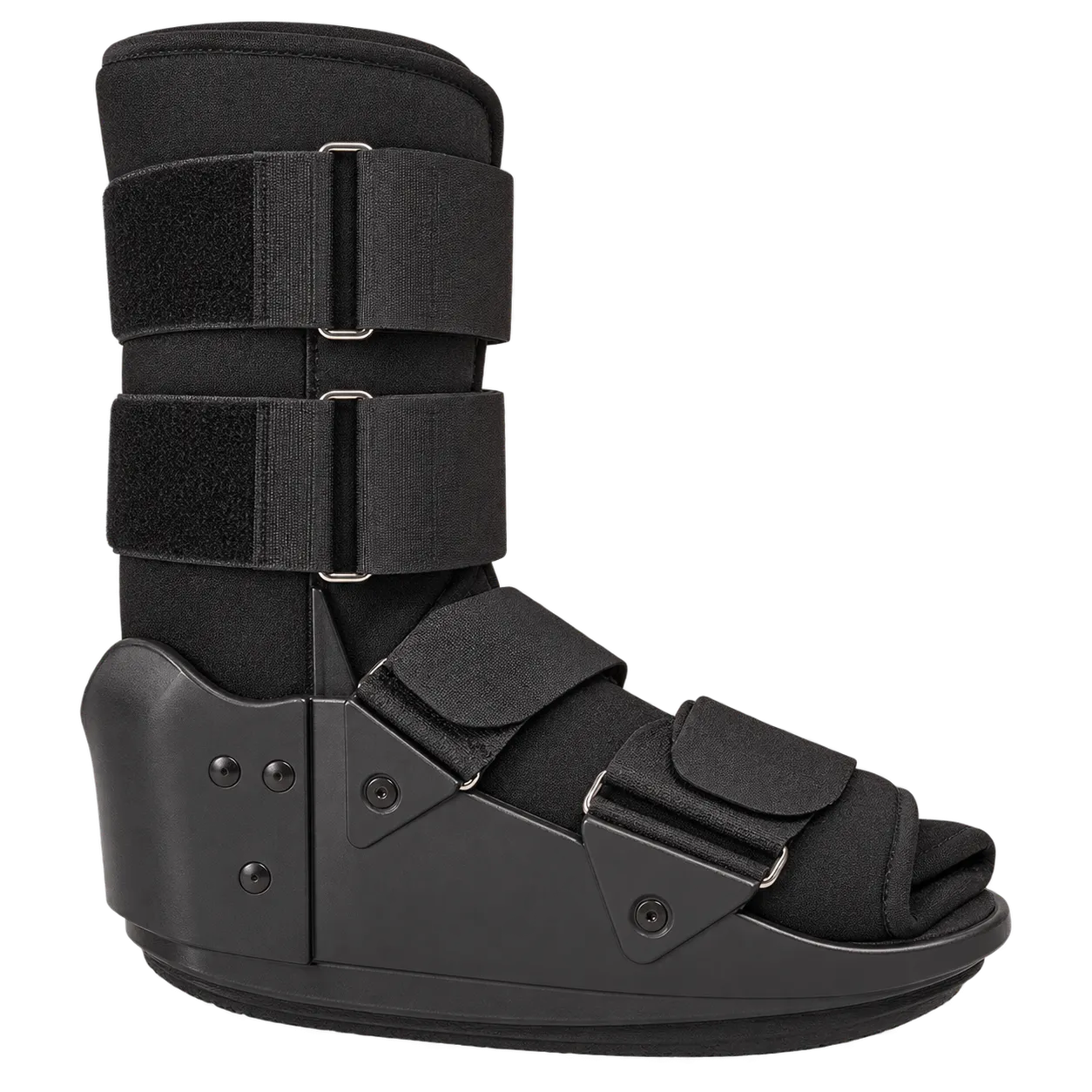
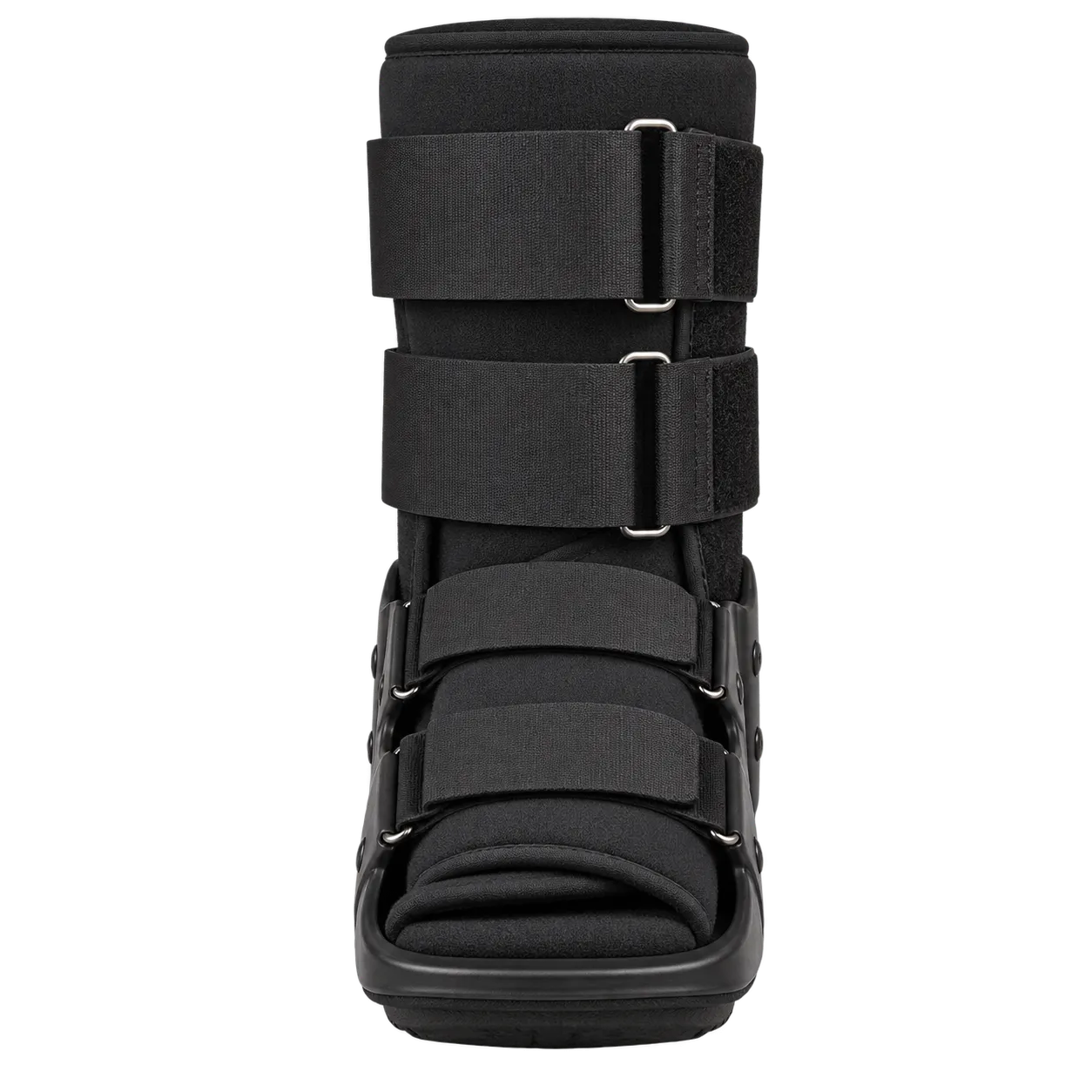
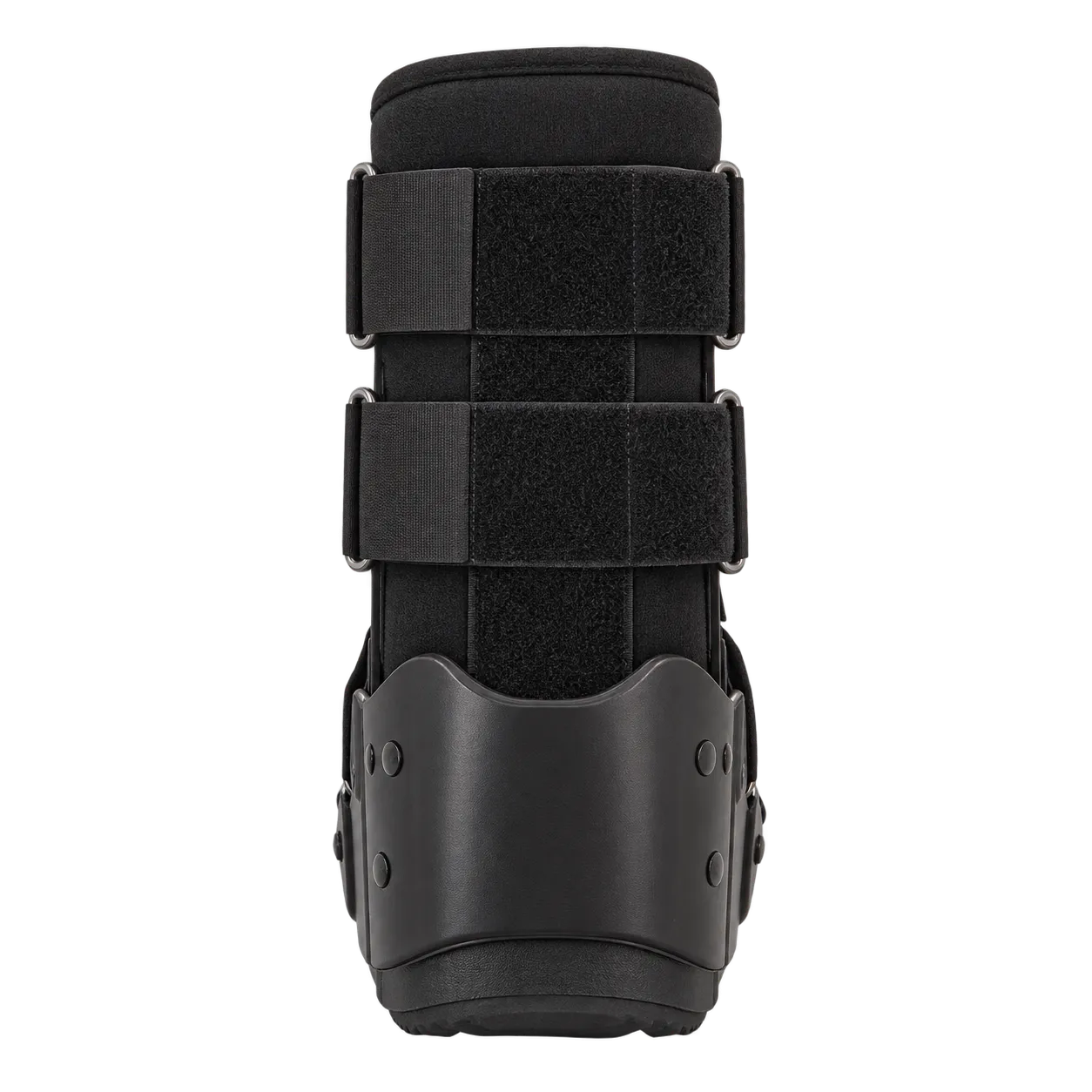
Fracture clinics can use the BL-52038 for stable forefoot, metatarsal and tarsal injuries where the treating clinician wants a protective walking boot but not adjustable compression. It suits older patients and those with limited hand function especially well, because fitting and refitting come down to the straps.
Emergency departments and minor injury units see many stable foot injuries in older adults who go home alone or with a relative. A boot without a pump removes one instruction from the discharge conversation, leaving time for falls advice, skin checks and the VTE risk assessment that NICE NG89 describes for adults discharged with lower limb immobilisation.
Foot and ankle surgical services can issue it after forefoot and midfoot procedures, where the roomy interior makes space for postoperative dressings. Nursing homes and community teams caring for those patients benefit from a device their staff can refit without special training.
Physiotherapy services meet the boot as patients progress to longer walks. The datasheet's non-slip sole claim supports that stage, though sole height and tread should be confirmed before advising on stairs and outdoor walking.
The datasheet covers distal fibular fractures and Achilles rehabilitation. Still, a low-cut boot without heel wedges will suit only some patients, and the treating surgeon should decide case by case.
NHS procurement routes ask for the device class and the declaration of conformity, and public buyers in other countries ask for the equivalent. The conformity documentation those procurement routes require is issued by the manufacturer and provided by the seller.