
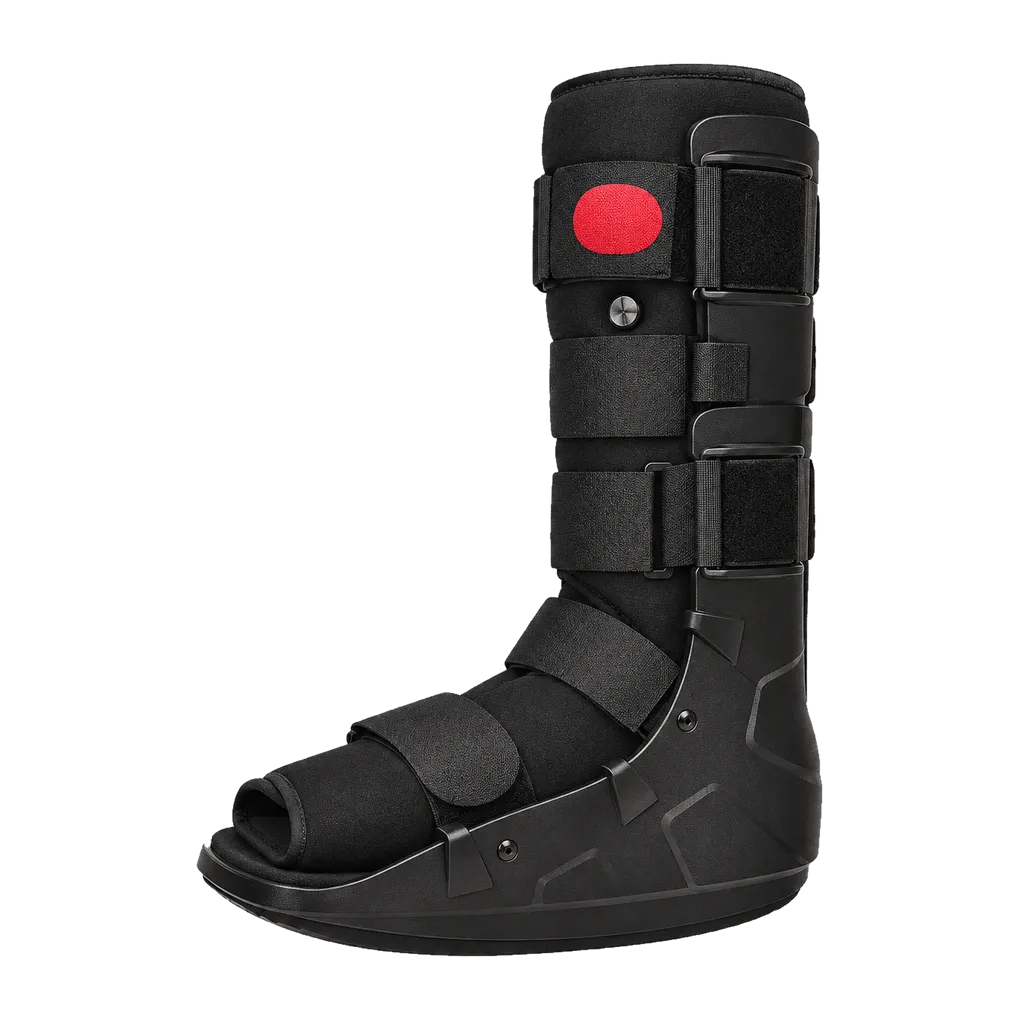
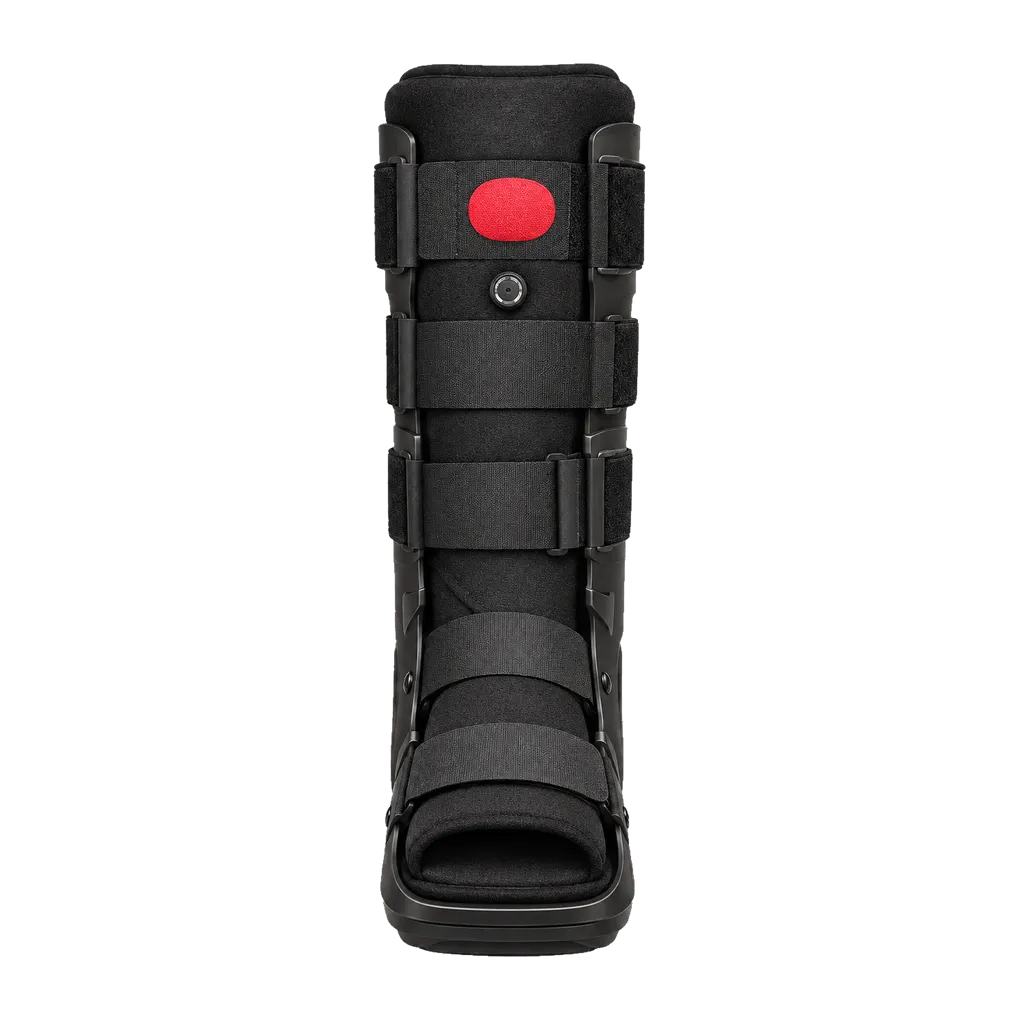
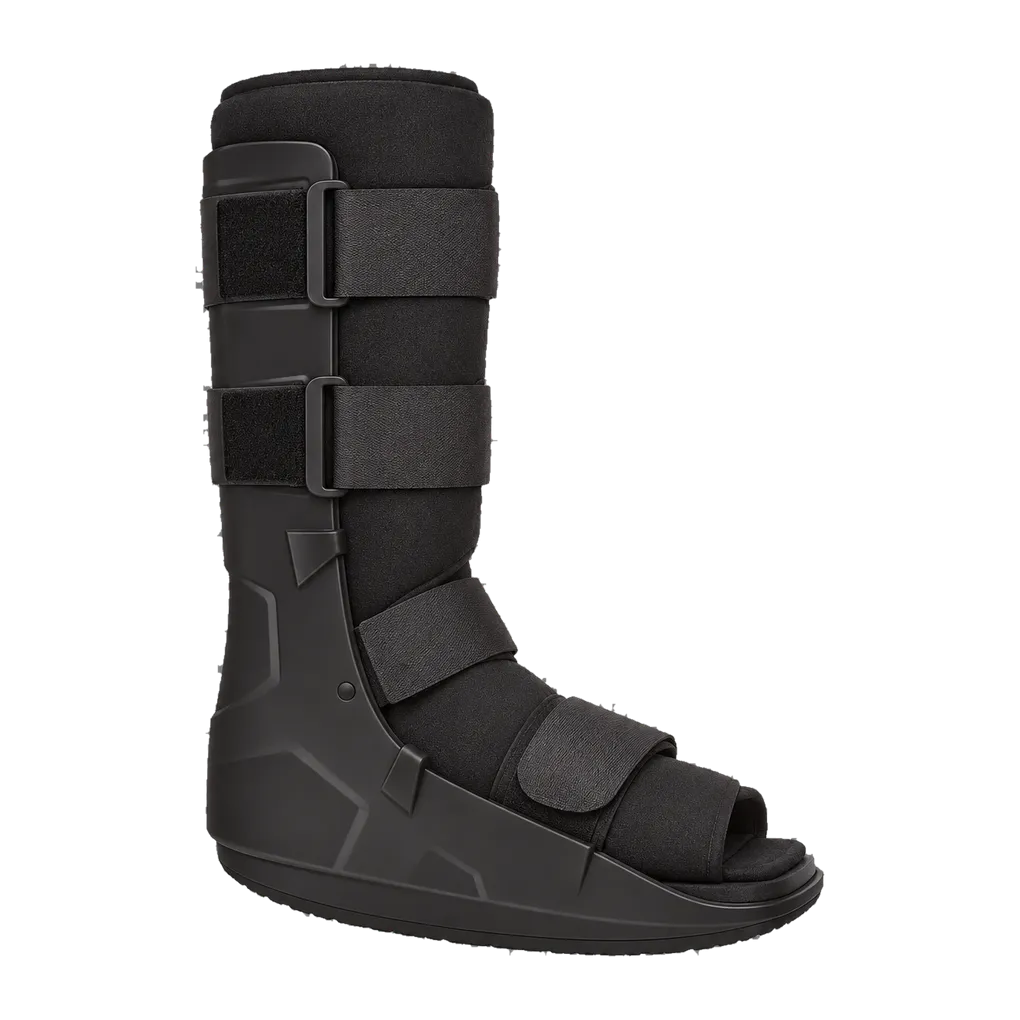
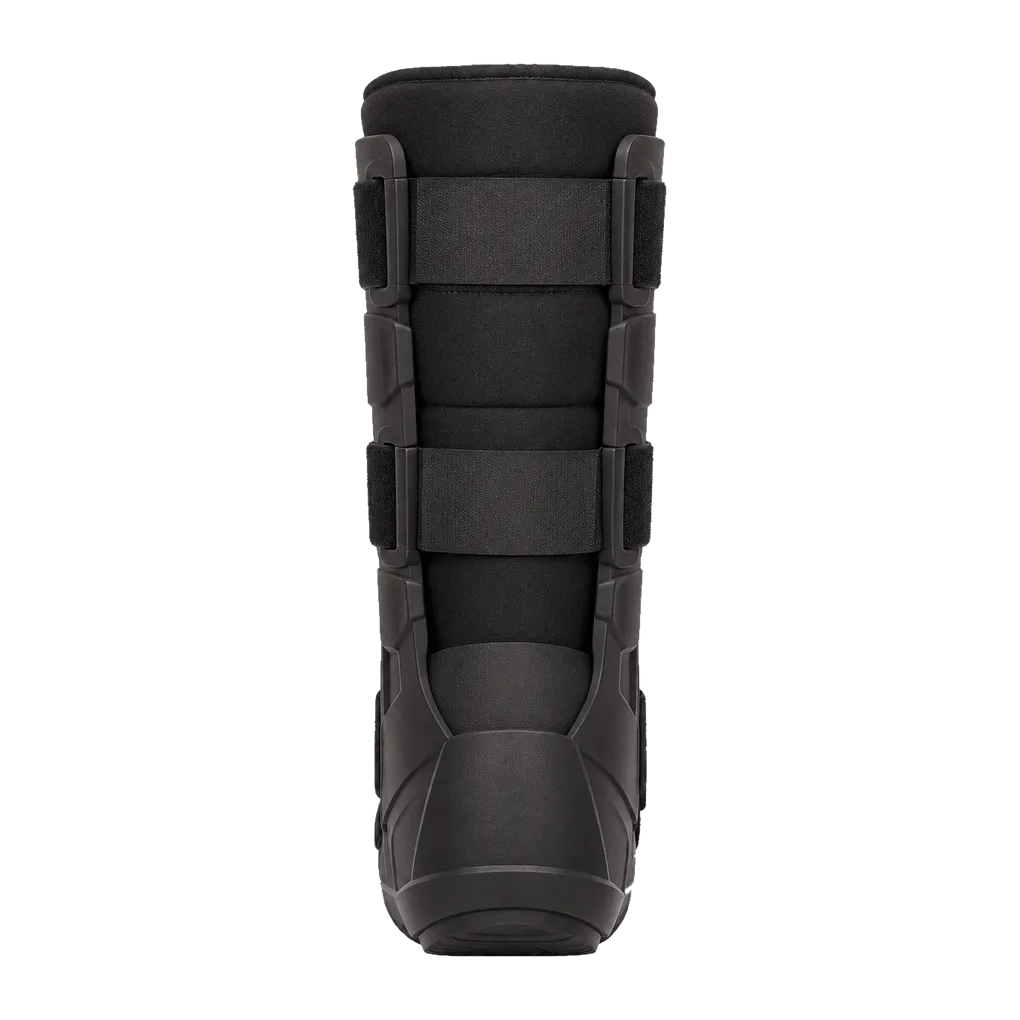
Fracture clinics fit most walking boots, and they fit them against the clock. The BL-52037-A suits a clinic where one practitioner applies the boot, inflates it from the shell control, and hands it to the patient in a single appointment. The datasheet covers stable distal fibular and metatarsal fractures, and the high-top shell gives the surgeon control of the lower leg where needed.
Emergency departments and minor injury units discharge a large share of ankle and foot injuries the same day. For those teams the boot's value is in the last ten minutes of the attendance: a quick fit, an inflation control the patient can see, and a clear point at which the VTE assessment, the leaflet and any first dose of prophylaxis are completed before the patient goes.
Foot and ankle surgical units can apply it for postoperative protection in theatre recovery or on the ward, where a roomy interior makes space for the dressing. Day-case patients benefit from being shown the inflation control while the nurse is still with them.
Physiotherapy and rehabilitation teams take over once the patient starts to wean out of the boot—a soft lining and a non-slip sole support the walking practice that fills that stage.
Achilles services should hold back until the seller explains how plantarflexion is achieved, since no heel wedges are listed.
NHS procurement routes ask for the device class and the declaration of conformity, and public buyers in other countries ask for the equivalent. The conformity documentation those procurement routes require is issued by the manufacturer and provided by the seller.