
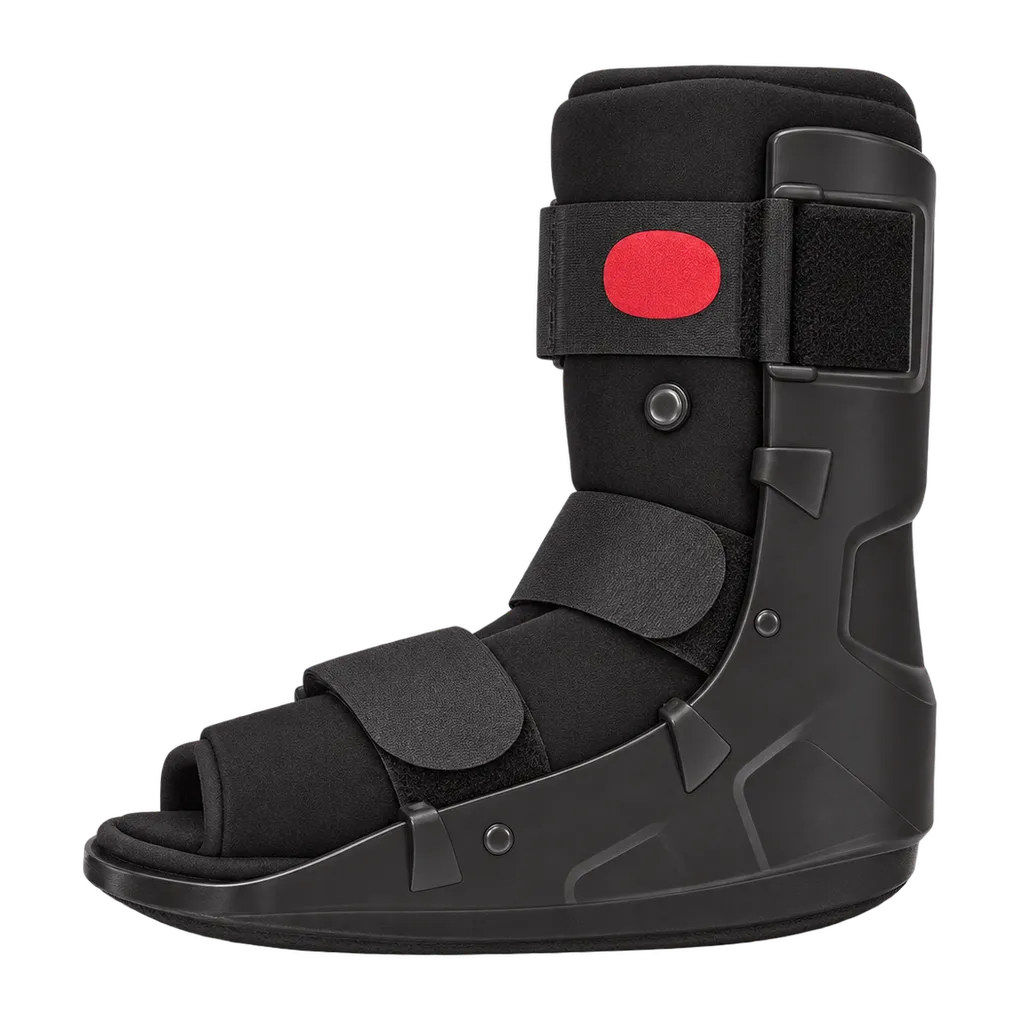
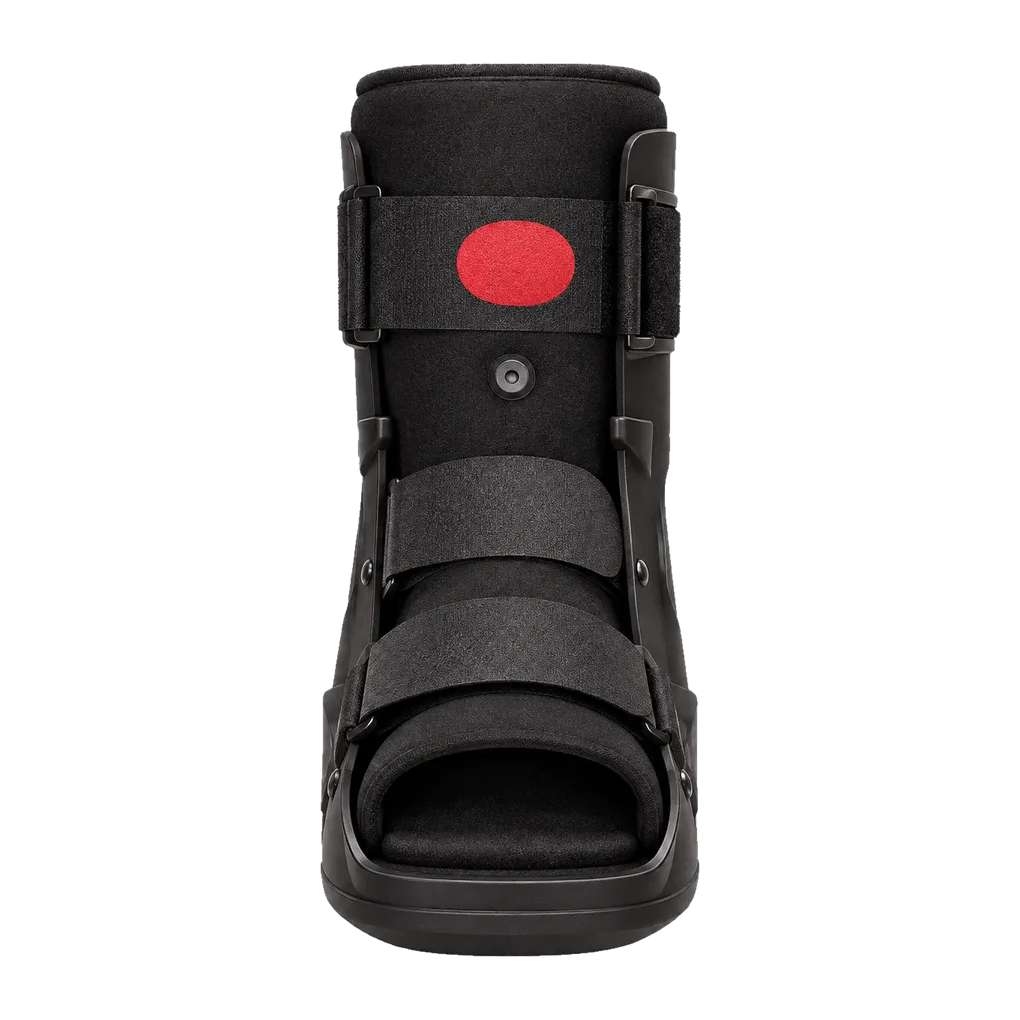
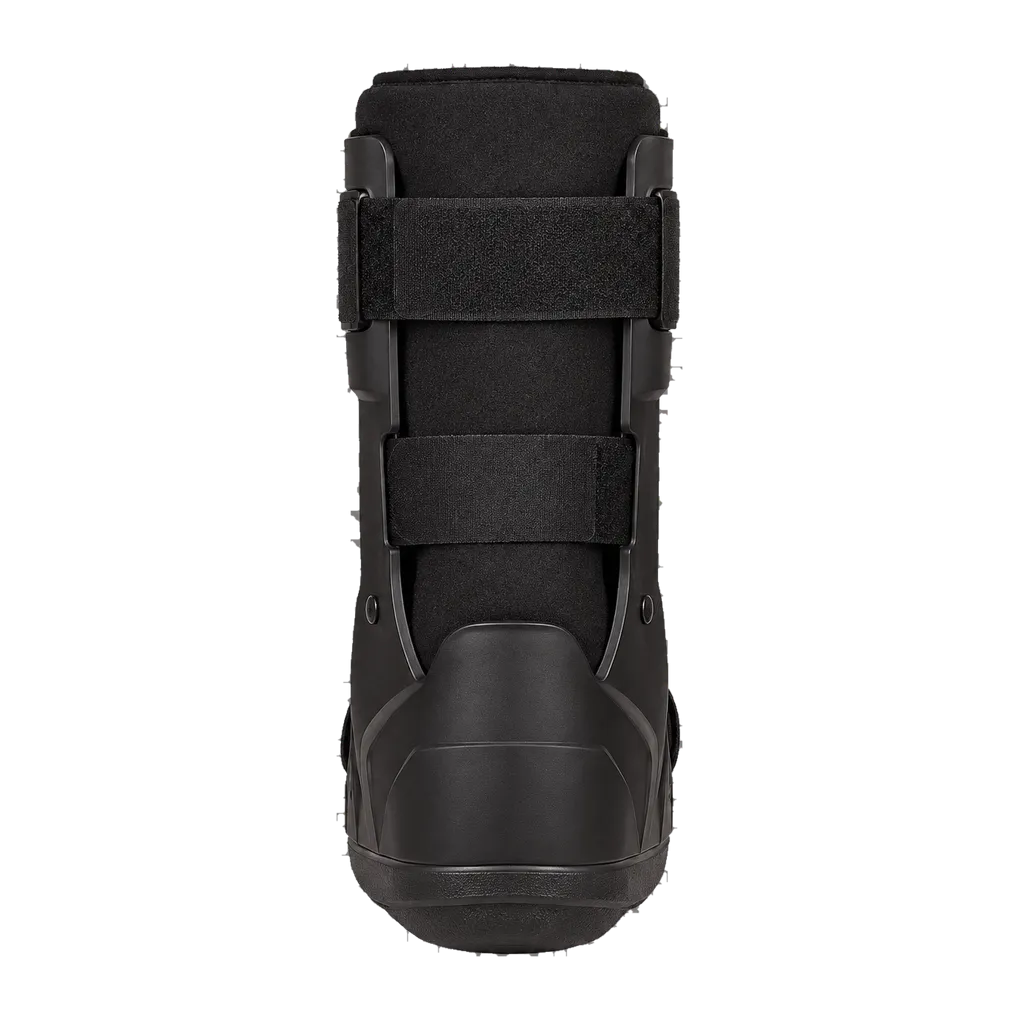
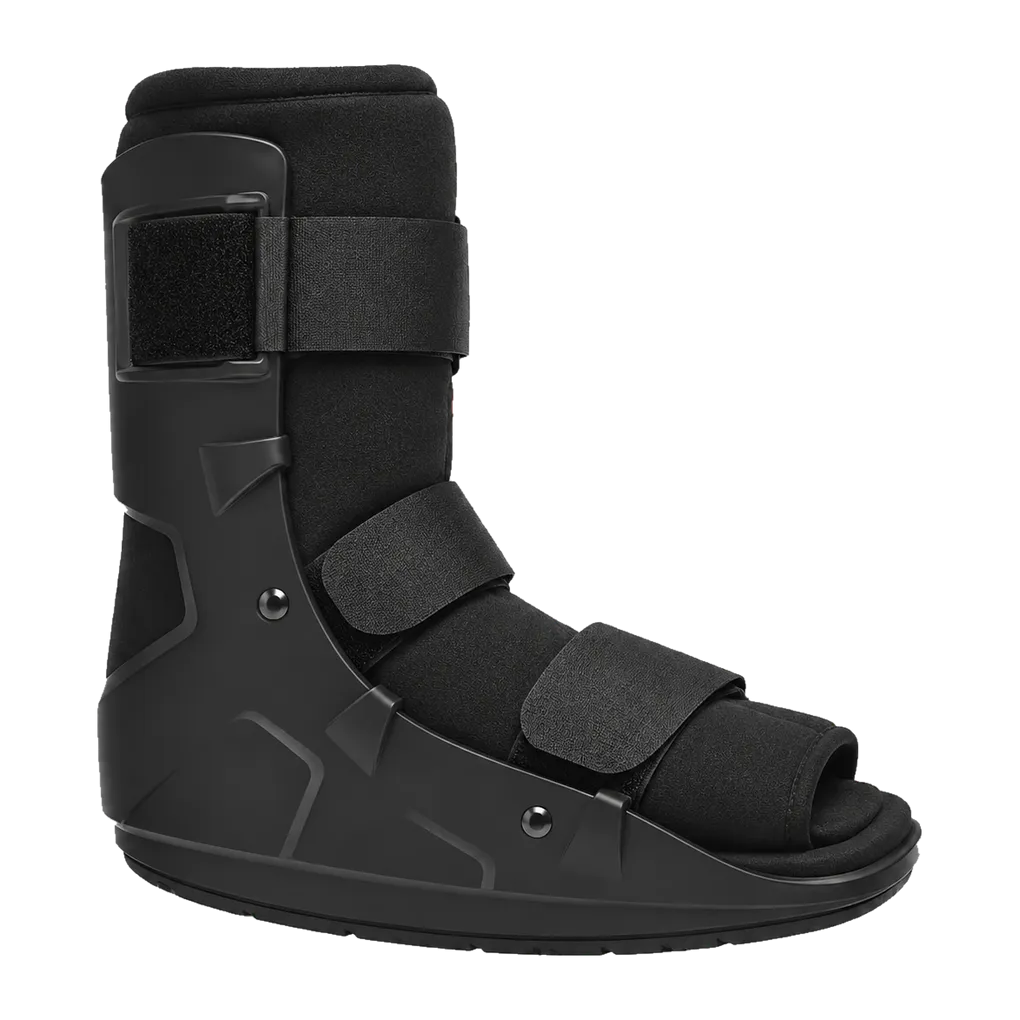
Fracture clinics can use the BL-52037 for stable forefoot, metatarsal and tarsal injuries, and for distal fibular fractures where the treating surgeon judges a low shell adequate. The press-type air cells allow the fit to be taken up as swelling falls, and the non-slip sole supports the patient through the first days of walking.
Foot and ankle surgical services can issue it after forefoot and midfoot procedures and for postoperative protection where the datasheet's indications fit the operation. A roomy interior leaves space for postoperative dressings, which is often the first practical problem on discharge.
Emergency departments and minor injury units may hold it for ligament and soft tissue injuries of the foot and ankle, issued under a clinician's direction. Stocking only three sizes keeps the fitting cupboard small, though patients above shoe size 45 need another option.
Physiotherapy and rehabilitation teams meet the boot as patients progress from protected walking to coming out of it. The sole matters most here, since the patient is walking further and more often each week.
Achilles services should wait for the seller to confirm how the foot is held in plantarflexion before using the boot on that pathway, despite its Achilles heading.
Any service issuing lower limb immobilisation to adults needs to build its VTE risk assessment into the fitting routine, as NICE NG89 describes. NHS procurement routes ask for the declaration of conformity and the device class, and public buyers in other countries ask for the equivalent. The conformity documentation those procurement routes require is issued by the manufacturer and provided by the seller.