
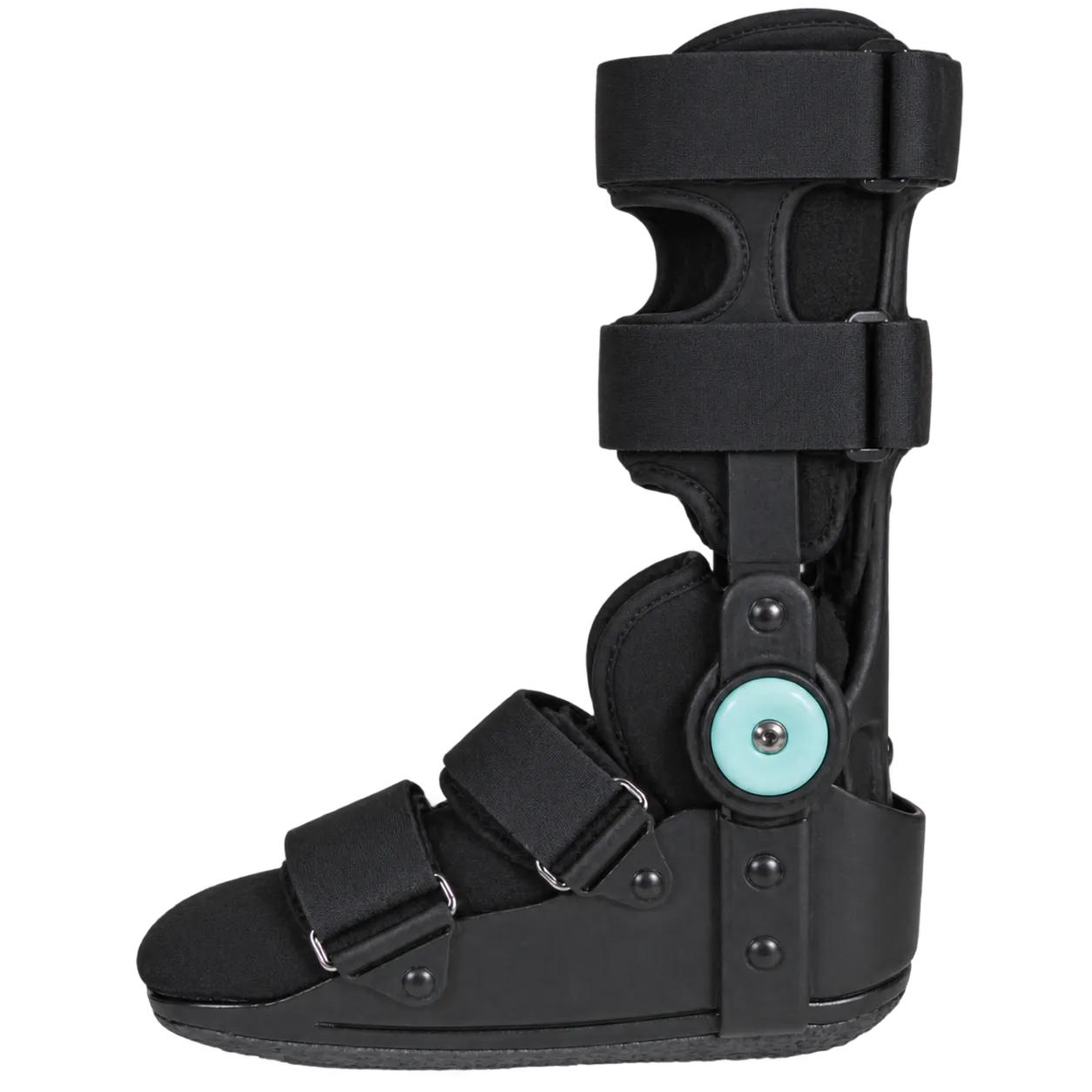
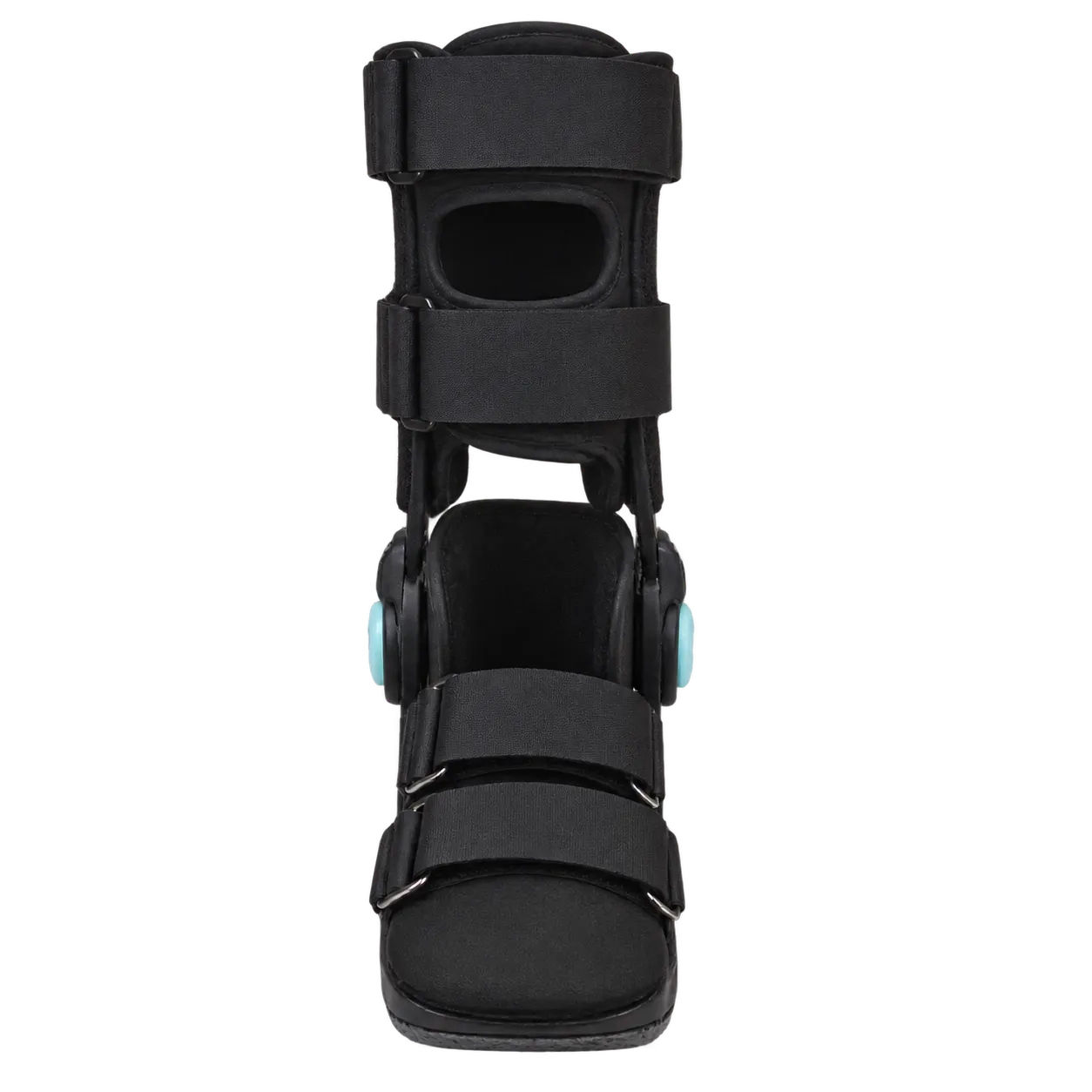
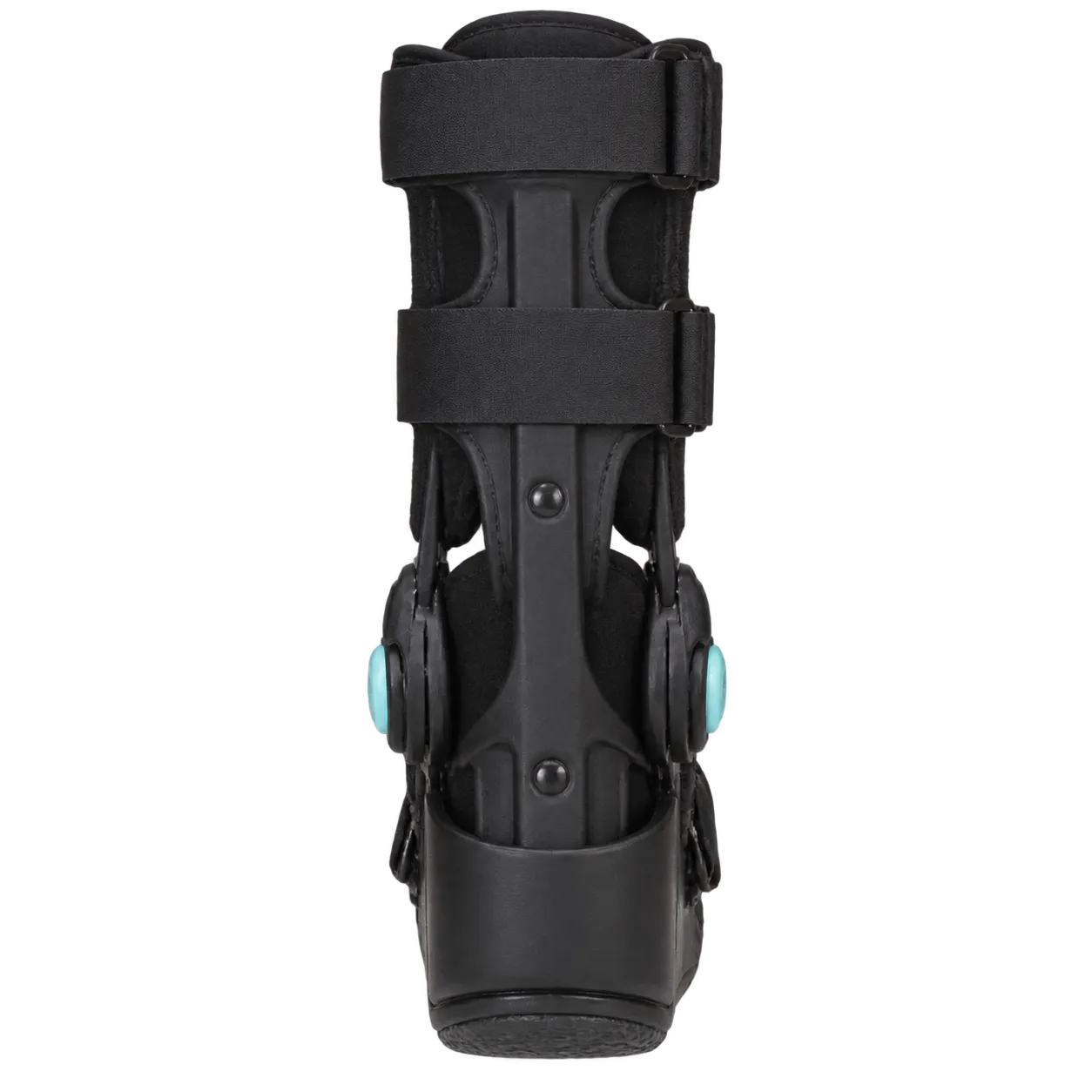
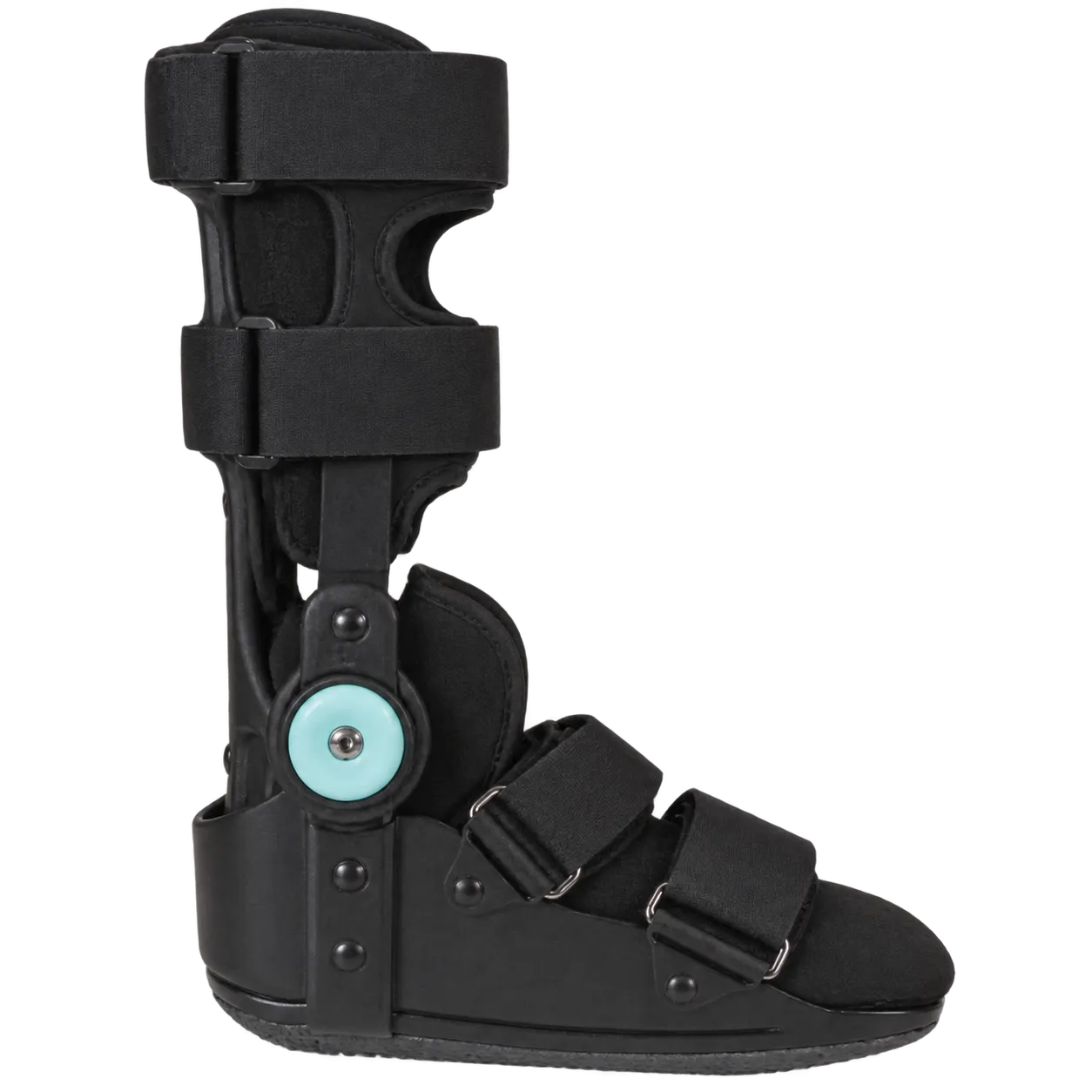
Foot and ankle surgical units are a natural setting for the BL-52020. After ankle fracture fixation or ligament repair, the surgeon can set the hinge to hold the ankle still at first and then open a limited range of movement at later reviews, all in the same boot. The dial settings belong in the operation note and each clinic letter.
Achilles tendon services may be able to use it once the seller confirms that the hinge locks in plantarflexion and adjusts in suitable steps. Graduated protocols of the kind used in the UKSTAR trial bring the foot up from a toes-down position over several weeks, and a hinged boot is one way of doing that without swapping devices.
Fracture clinics can use it for foot fracture rehabilitation and ankle recovery where the treating clinician wants to control movement as healing progresses. The high side support and four-point fixation hold the leg while the hinge controls the ankle.
Physiotherapy services work with the permitted range as patients move from protected walking to active rehabilitation. The listed indication of ankle angle adjustment during recovery training fits that stage, provided the physiotherapist and surgeon agree on who changes the setting.
Services seeing ankle instability can consider the boot where a period of controlled movement is wanted before moving to a lighter support.
Any service issuing lower limb immobilisation to adults also needs its VTE risk assessment in place, as NICE NG89 describes. NHS procurement routes ask for the device class and the declaration of conformity, and public buyers elsewhere ask for the equivalent. The conformity documentation those procurement routes require is issued by the manufacturer and provided by the seller.