
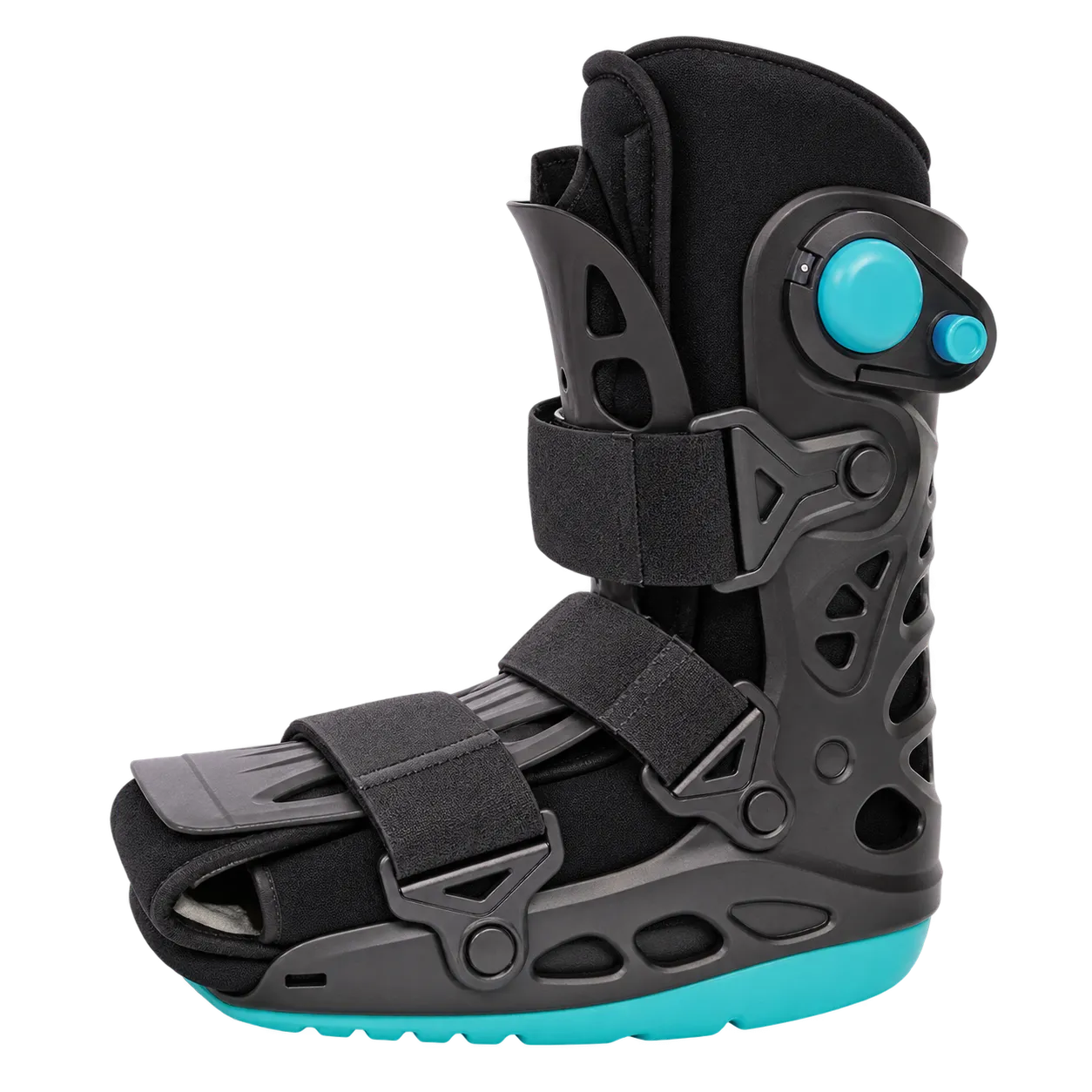
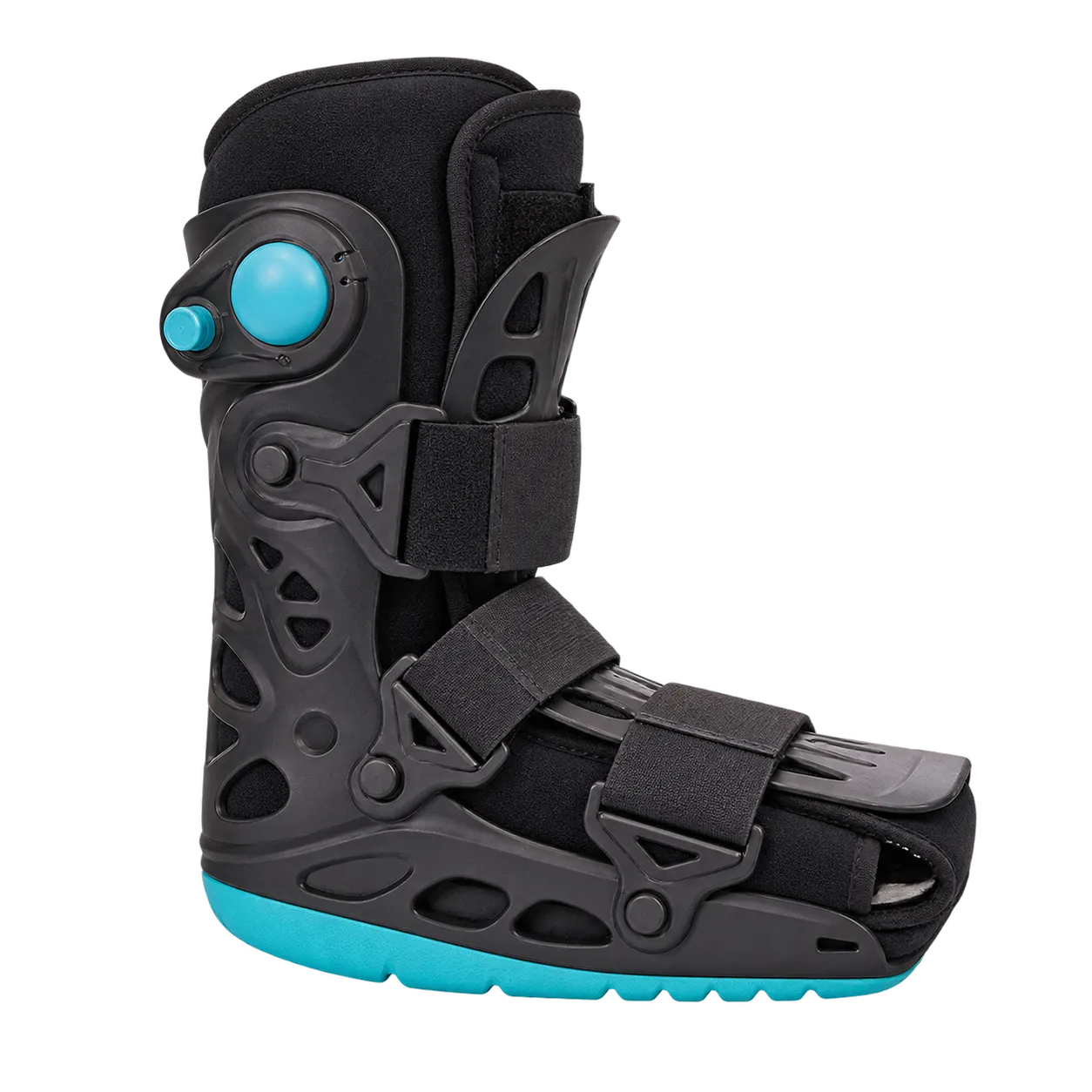
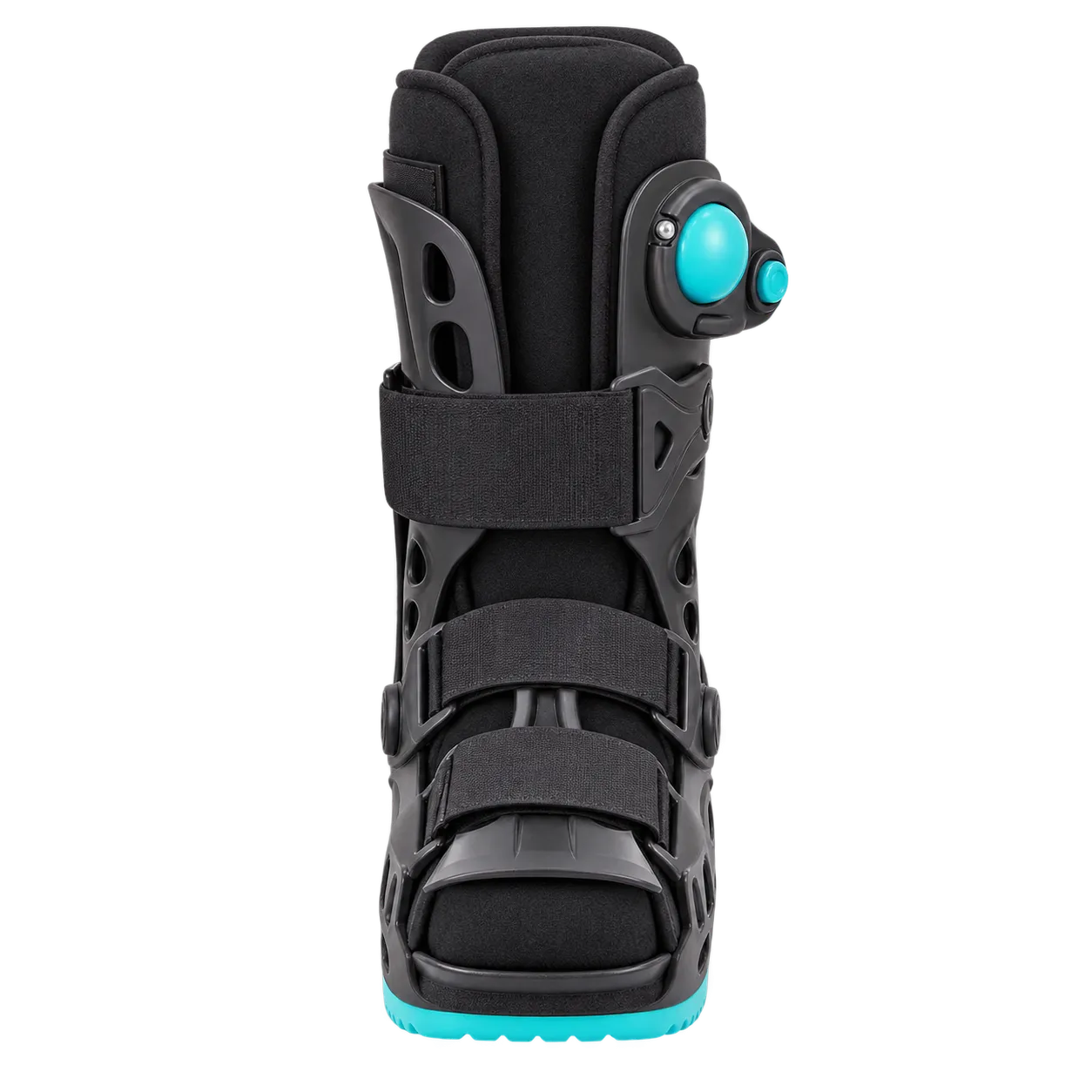
Fracture clinics fit the BL-52017, but patients wear it at home. A stable foot or ankle fracture managed in a removable device can go into the boot at the first appointment, with the air cells set for walking and the patient shown how to ease them for rest. The discharge conversation matters as much as the fitting: stairs, bathrooms, wet pavements, driving and footwear for the other foot.
Emergency departments and minor injury units discharge many foot and ankle injuries straight home, often late in the day. Teams using this boot should build stair practice, falls advice and a clear driving message into the discharge routine, alongside the VTE risk assessment that NICE NG89 describes for adults discharged with lower limb immobilisation.
Foot and ankle surgical units can issue it for protection after ankle surgery. Day-case patients going home the same afternoon benefit most from practising the stairs and inflation control before leaving.
Physiotherapy services lead on gait, stair technique, and weaning out of the boot. The adjustable air cells allow the fit to be relaxed as the patient walks further, and the washable liner handles the extra wear.
Community nursing, podiatry and occupational therapy teams often see patients at home in the boot. For them, skin checks, fall hazards, bathroom access, and releasing air if circulation changes are practical concerns, and a home visit may identify rails or equipment the patient needs.
NHS procurement routes ask for the device class and the declaration of conformity, and public buyers in other countries ask for the equivalent. The conformity documentation those procurement routes require is issued by the manufacturer and provided by the seller.