
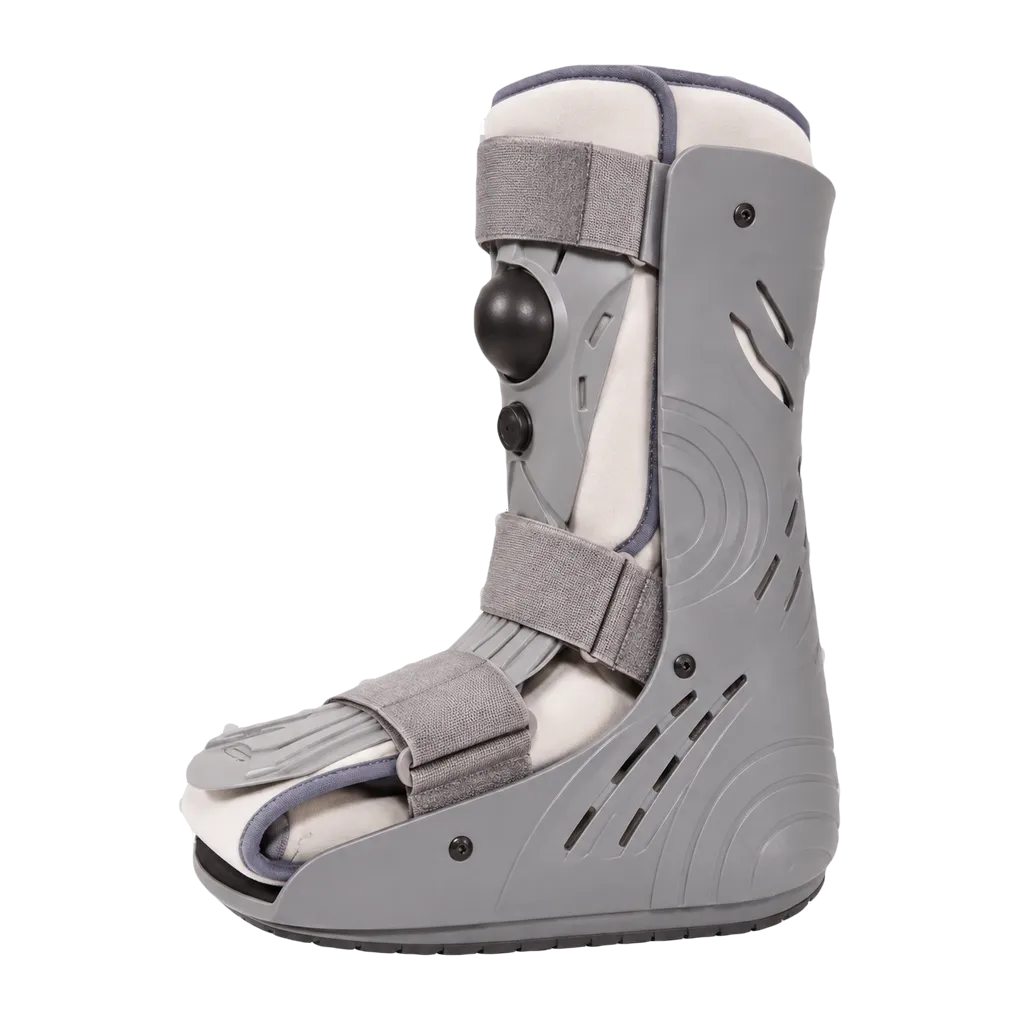
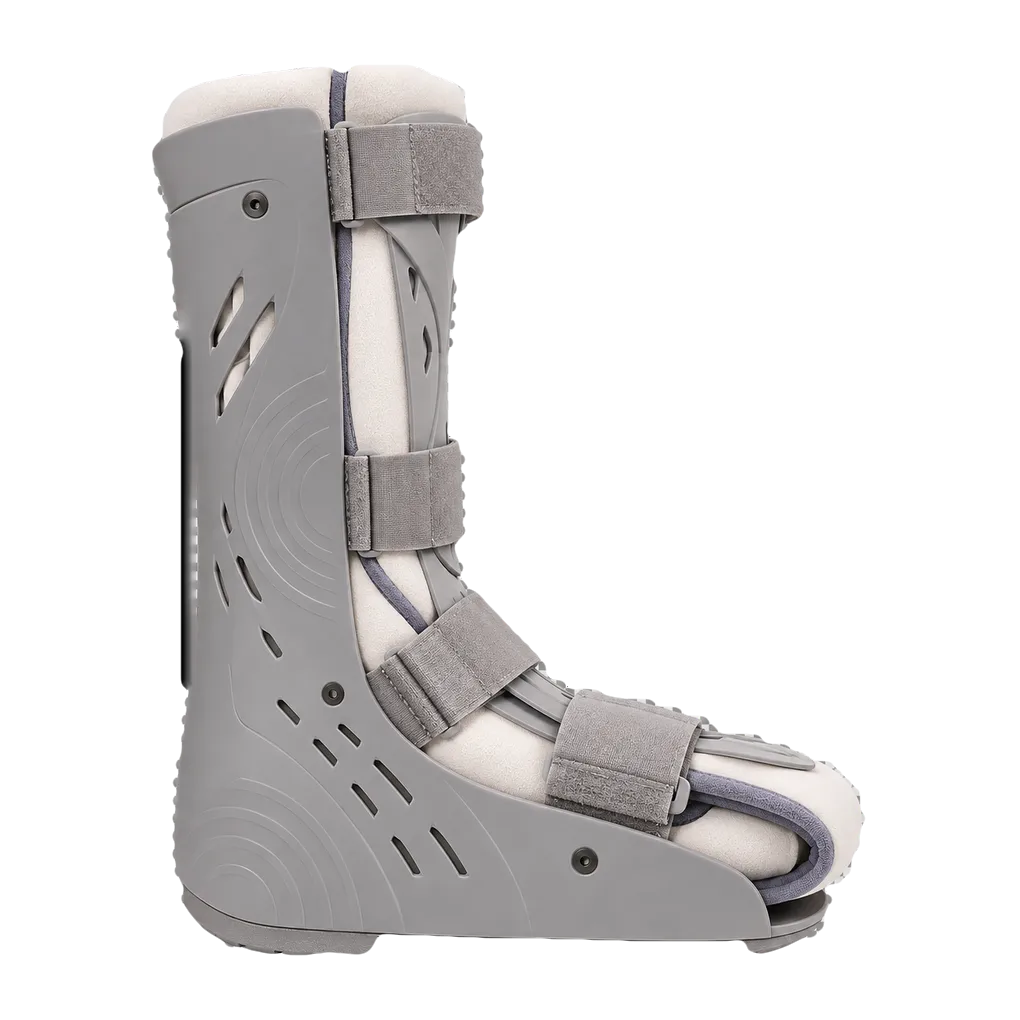
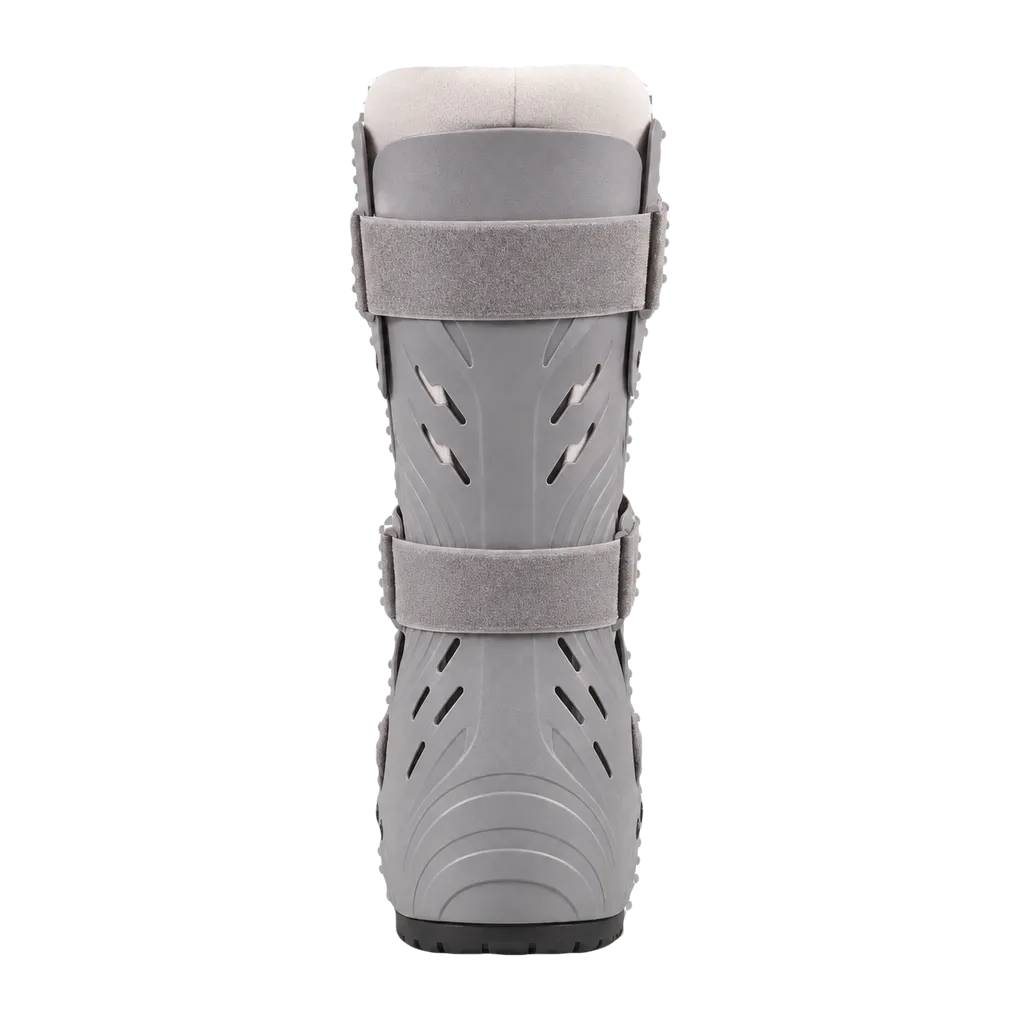
Fracture clinics carry the heaviest fitting load, and the BL-52015-A is set up for a clinic where different staff fit boots on different days. A stable ankle fracture managed in a removable device can be fitted at the first appointment using the same routine, whatever the patient's side or size, with the tall shell holding the lower leg and the air cells adjusted as swelling settles.
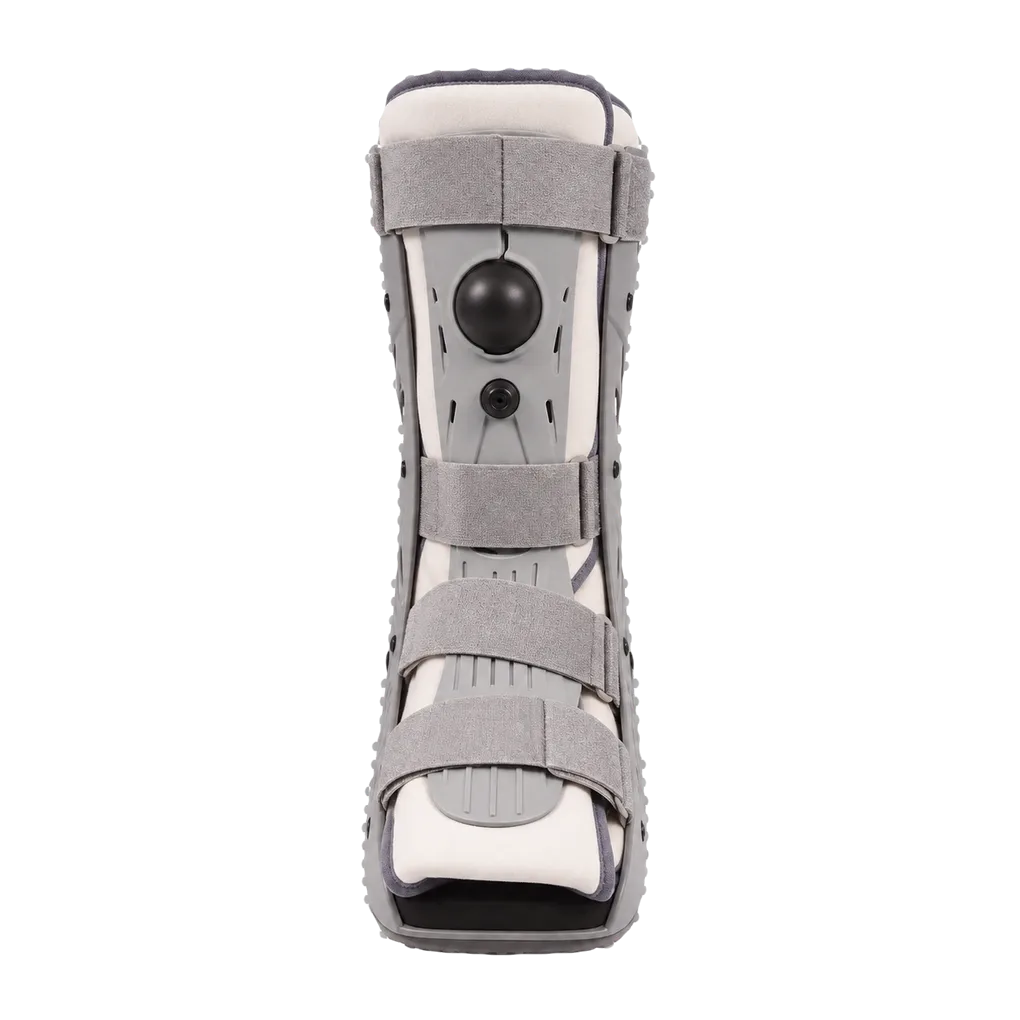
Orthopaedic wards can apply it for protection after ankle surgery, including fracture fixation and ligament repair. Ward nurses on rotating shifts can pick up a patient already in the boot and understand it quickly, and the open front lets them check the toes on every observation round.
Emergency departments and minor injury units often fit boots overnight with whoever is on shift. A device with one shell for either foot and three sizes reduces the scope for picking the wrong item from the cupboard. The VTE risk assessment set out in NICE NG89 for adults discharged with lower limb immobilisation still has to be completed before the patient leaves.
Physiotherapy and rehabilitation teams continue care as patients wean out of the boot. Teaching the patient to adjust the air and wash the liner at the first fitting reduces the questions that reach the physiotherapist later.
Plaster room and orthotic services that train new staff can build a single competency for this boot and sign staff off once. Services that also fit larger feet will need a second product and a second competency for sizes above 46.
NHS procurement routes ask for the device class and the declaration of conformity, and public buyers elsewhere ask for the equivalent. The conformity documentation those procurement routes require is issued by the manufacturer and provided by the seller.