
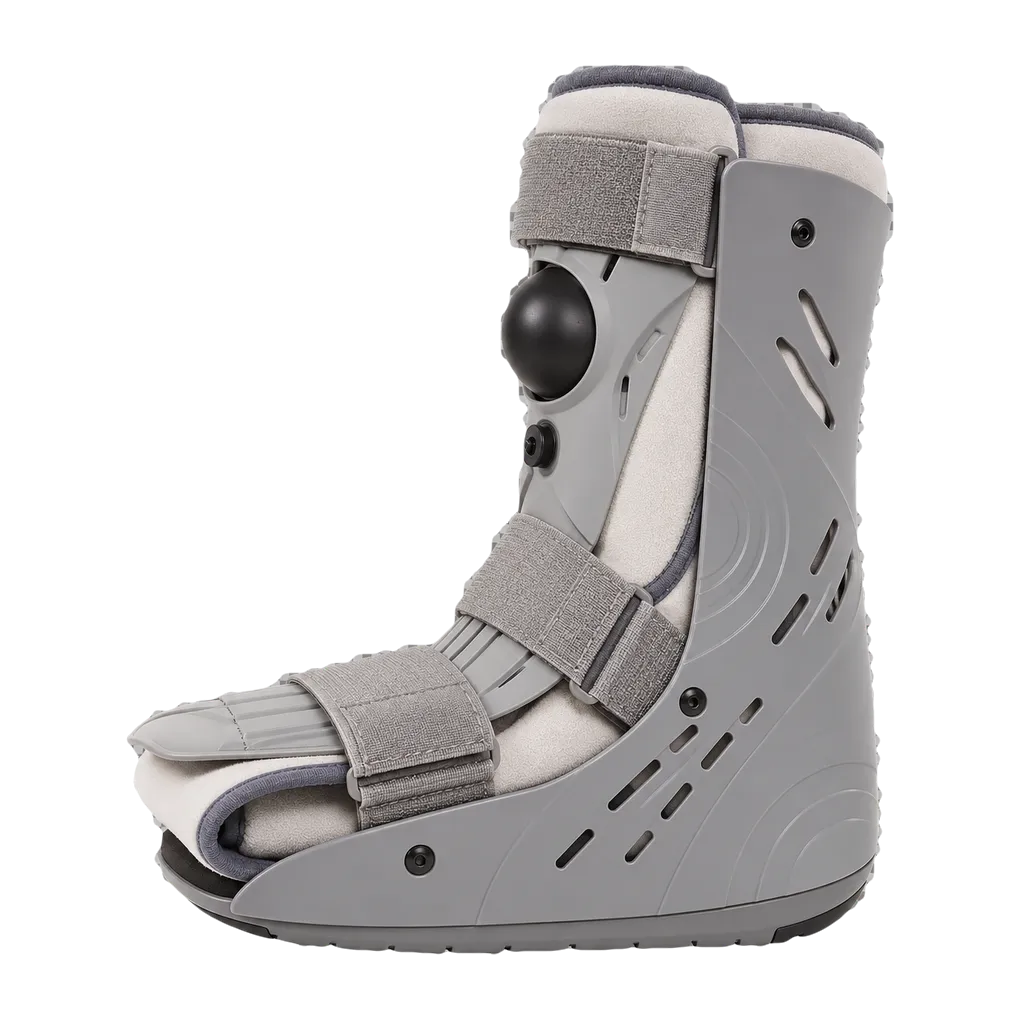
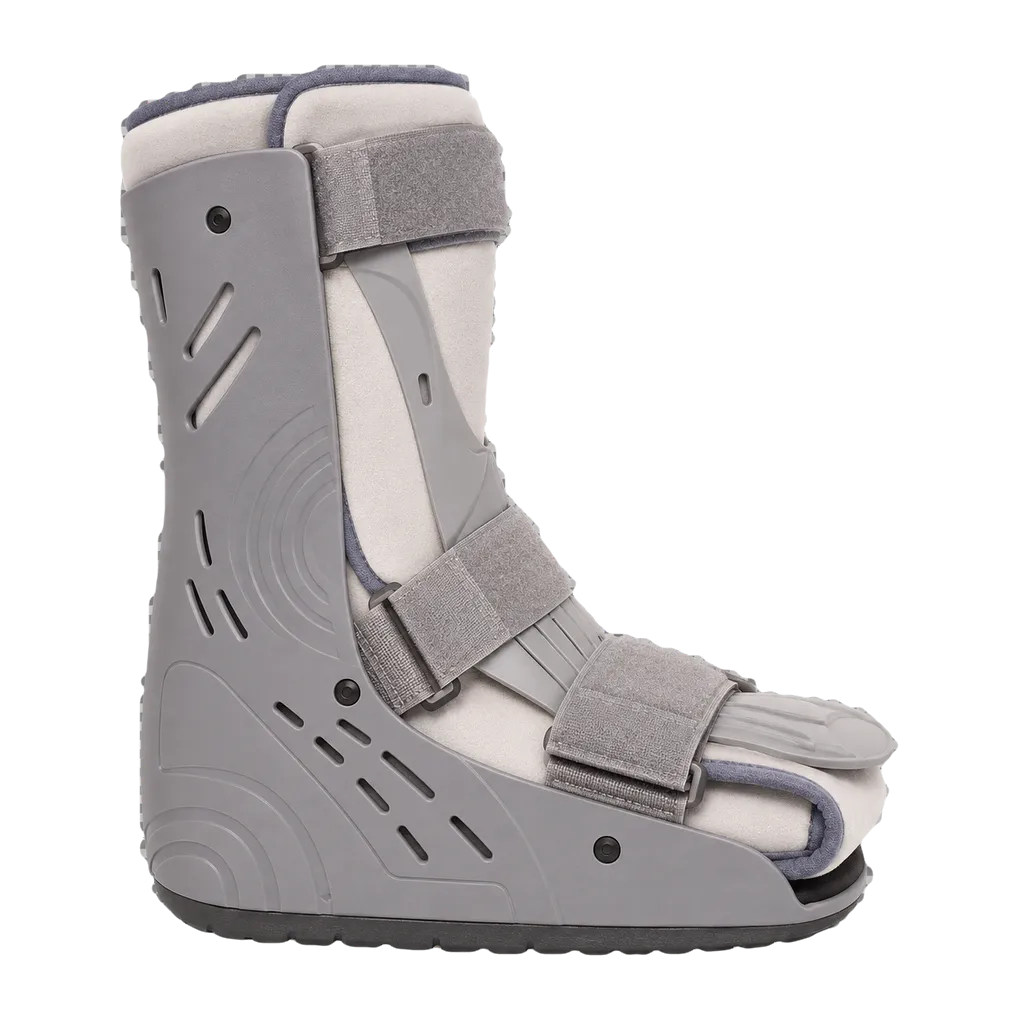
Fracture clinics can use the BL-52015 for stable foot and ankle fractures managed in a removable device, fitting it at the first appointment and adjusting the air cells as swelling settles. The three-size range suits clinics whose patients fall within shoe sizes 35 to 46, which keeps the fitting cupboard small and reorders predictable.
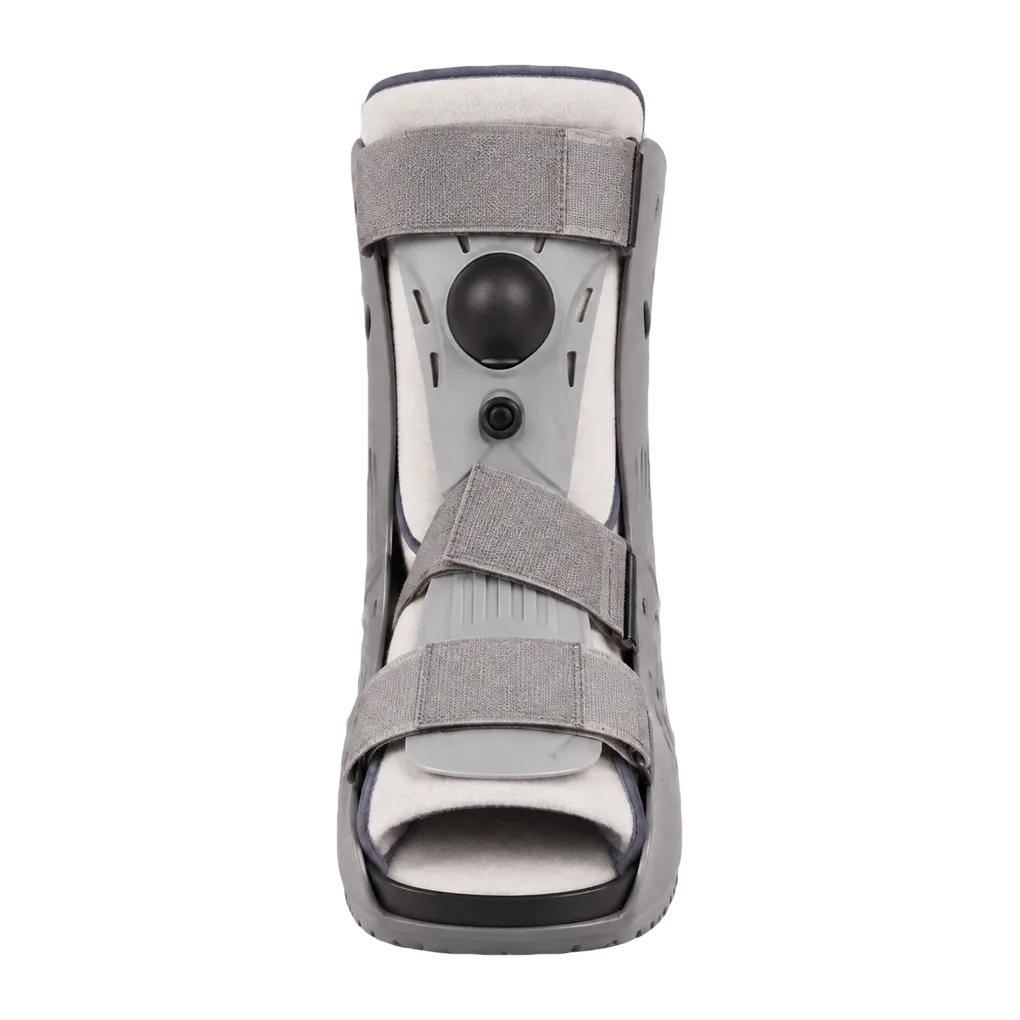
Foot and ankle surgical units can issue it for postoperative protection after ankle surgery. The open front leaves room for a forefoot dressing and lets ward staff see the toes at each observation round without removing the boot.
Emergency departments and minor injury units may keep it for foot and ankle fractures and ligament injuries, under a clinician's direction. Casualty teams should know where the range stops, because a patient with a size 47 foot arriving at night needs a different device ready on the shelf. The VTE risk assessment that NICE NG89 describes for adults discharged with lower limb immobilisation applies whichever boot is fitted.
Physiotherapy and rehabilitation services see the boot as patients return to walking and begin weaning out of it. The washable liner helps with the skin care that runs through that stage, and the straps allow the fit to be eased as the patient progresses.
Community and podiatry teams may meet patients already wearing one. For them, the key points are the twice-daily skin check, liner care, and releasing air if circulation changes.
NHS procurement routes ask for the device class and the declaration of conformity, and public buyers in other countries ask for the equivalent. The conformity documentation those procurement routes require is issued by the manufacturer and provided by the seller.