
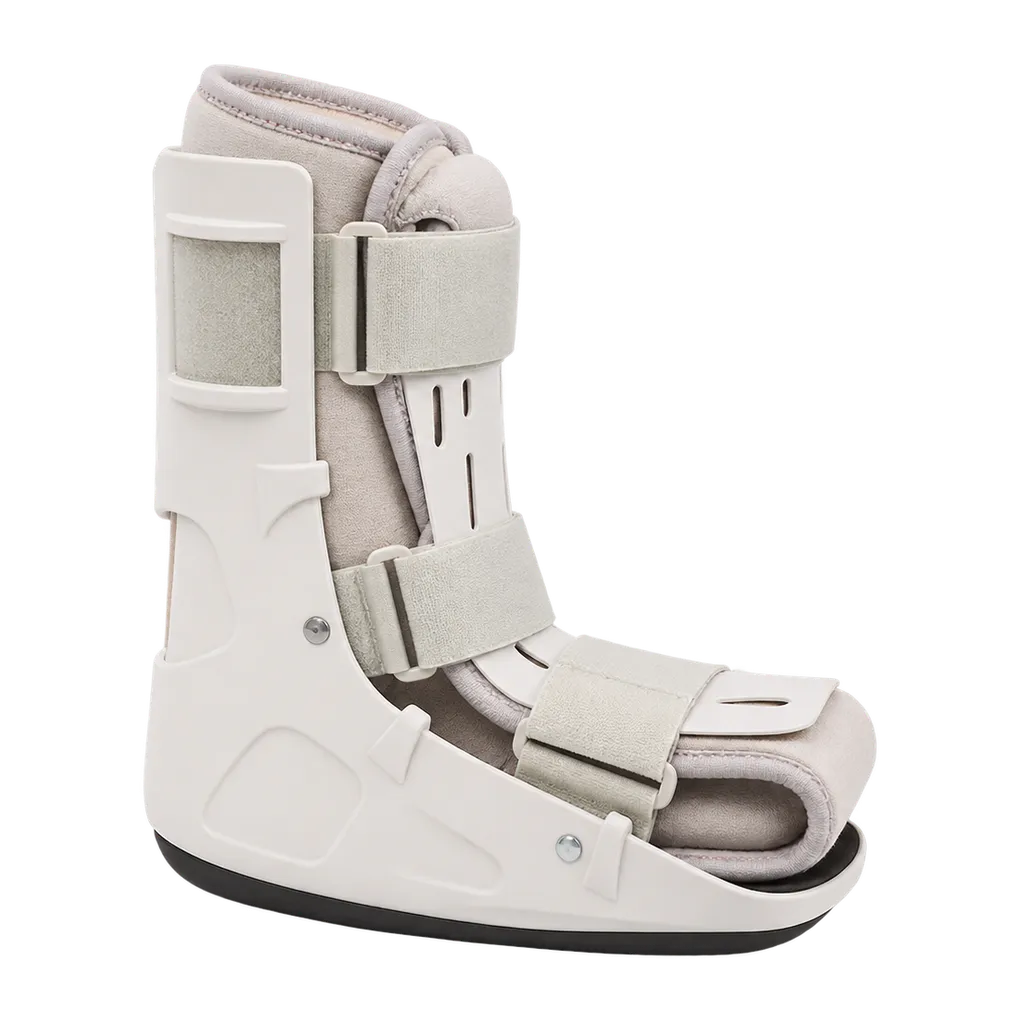
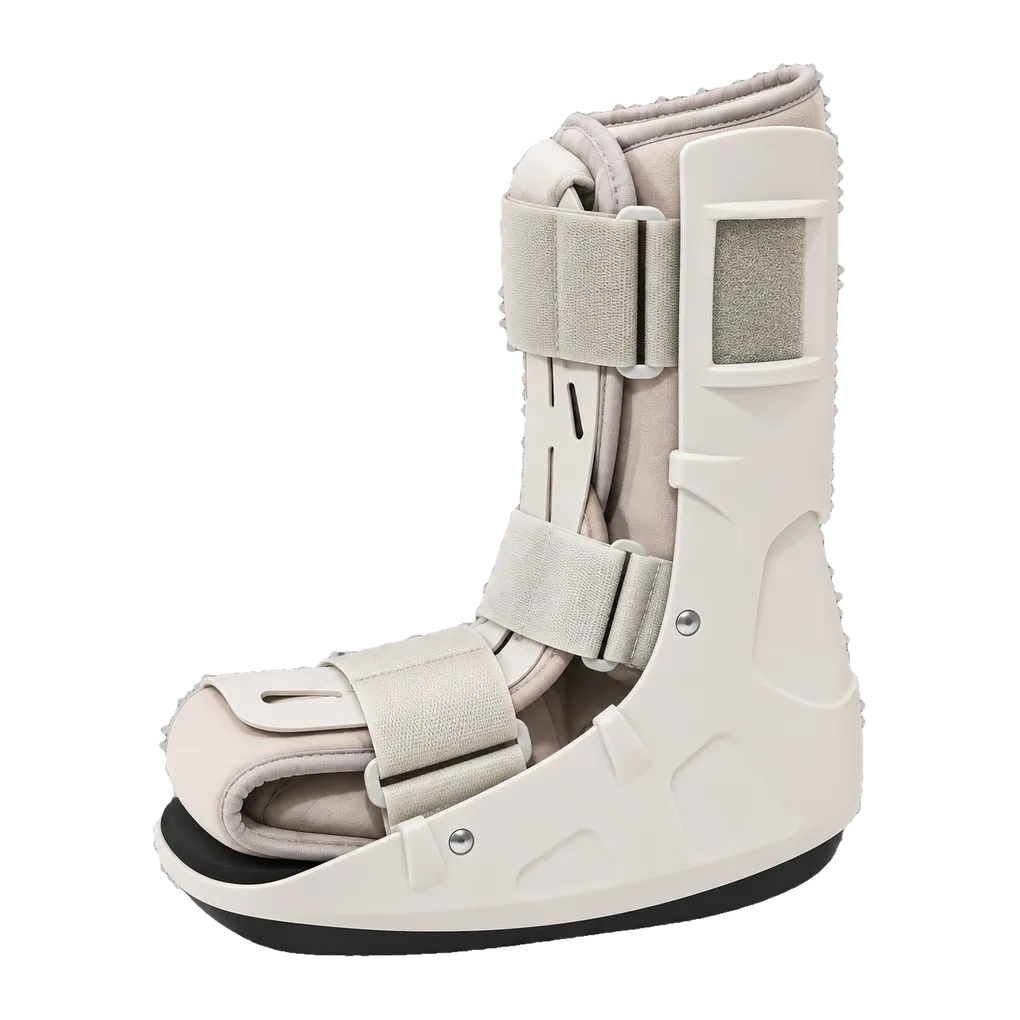
Fracture clinics issue walker boots to patients who will live in them for weeks, and the BL-52014 is set up for that stretch. Stable foot and ankle fractures managed in a removable device can be fitted at the first appointment, with the air cells adjusted as swelling settles and the patient sent home with a liner they can wash.
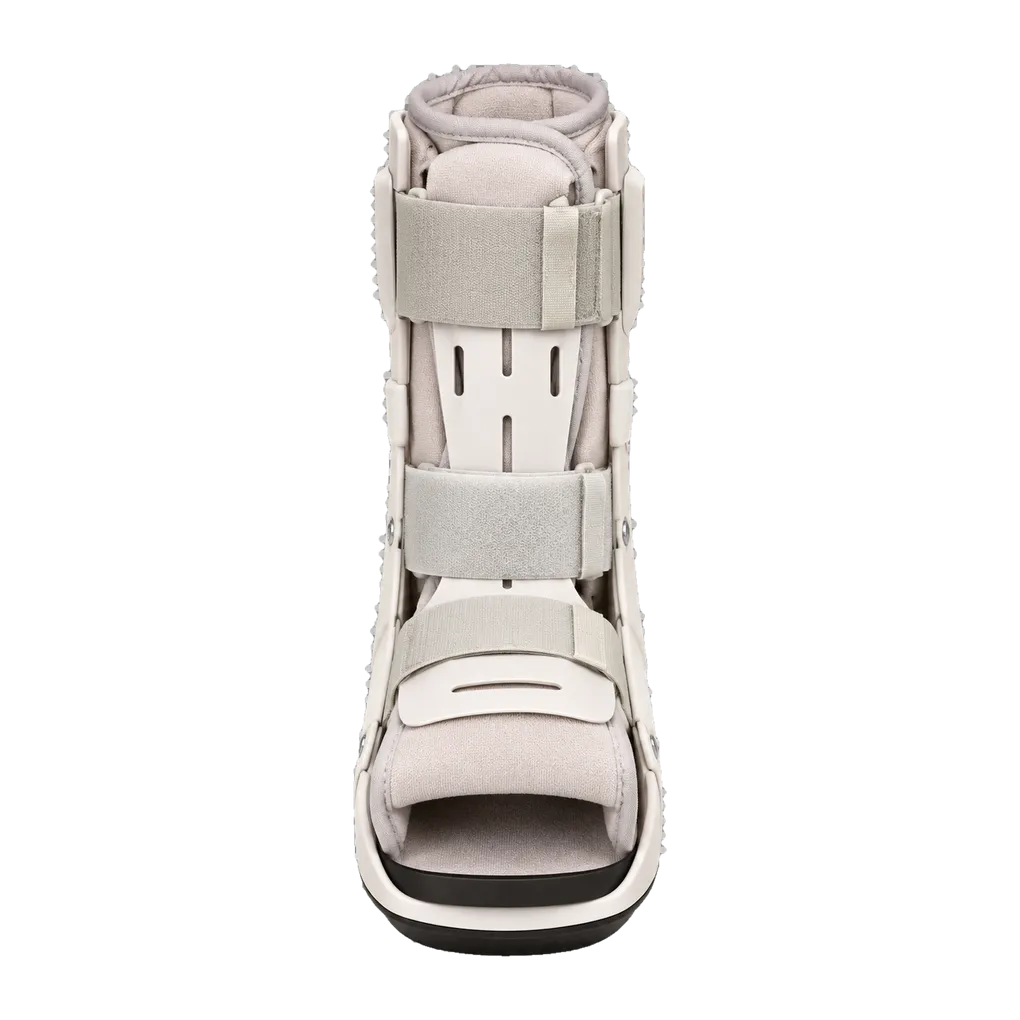
Orthopaedic and foot and ankle surgical units can use it for protection after ankle surgery. The open front leaves room for a forefoot dressing, and ward nurses can see the toes at each observation round without removing the boot.
Emergency departments and minor injury units may stock it for ligament and soft tissue injuries under a clinician's direction. The skin advice matters most here, because patients discharged from emergency care often have no scheduled review for several days. A written reminder to remove the boot and check the skin twice daily belongs in the discharge leaflet.
Community nursing and podiatry teams sometimes inherit patients in boots issued elsewhere. For those teams the washable liner and open toe make skin inspection and foot hygiene a practical home routine.
Physiotherapy services see the boot as patients return to walking longer distances. Hip and back discomfort from the raised sole is worth asking about at that stage, and a shoe lift on the other foot can help.
Services issuing lower limb immobilisation to adults also need their VTE risk assessment in place, in line with NICE NG89. NHS procurement routes ask for the declaration of conformity and the device class, and public buyers elsewhere ask for the equivalent. The conformity documentation those procurement routes require is issued by the manufacturer and provided by the seller.