
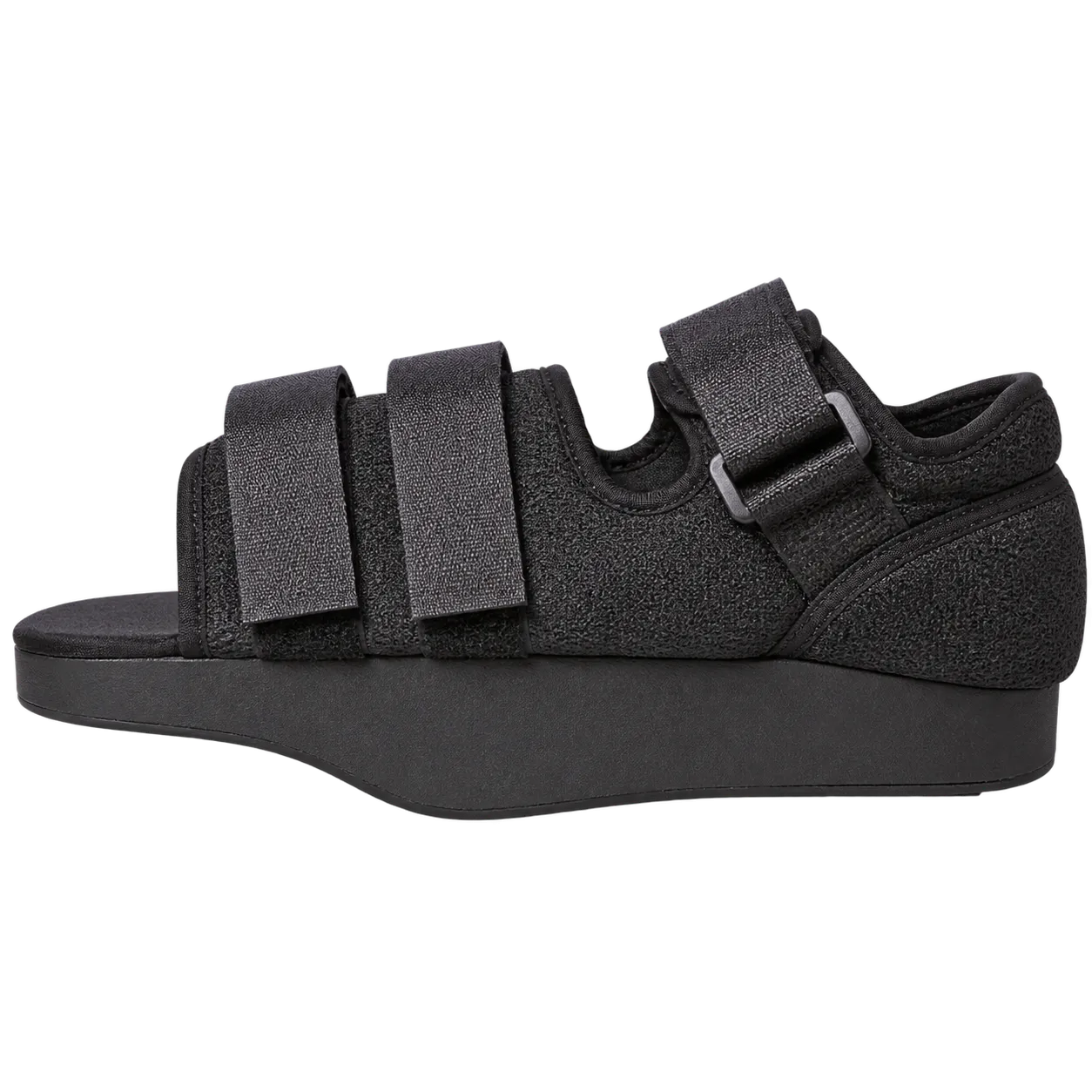
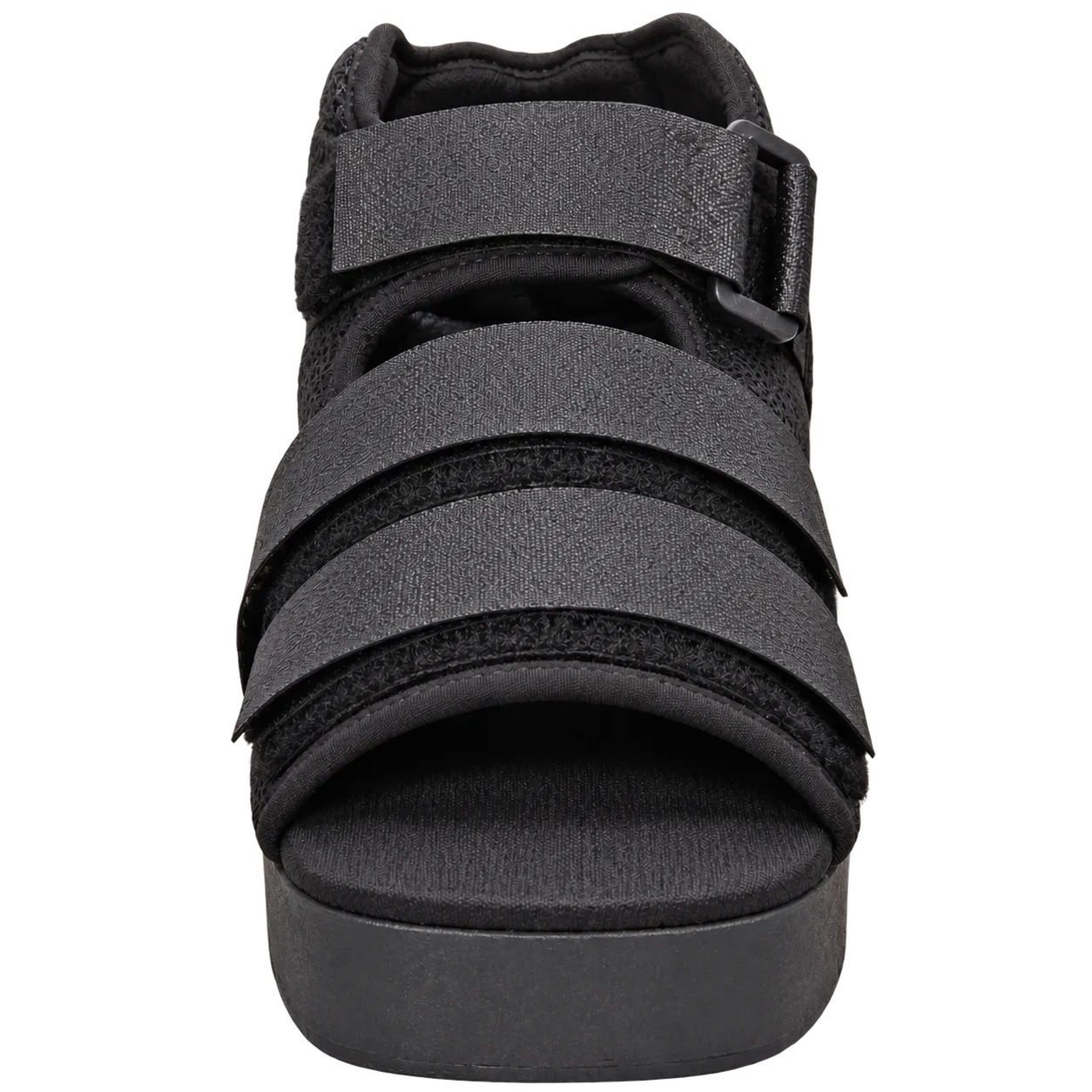
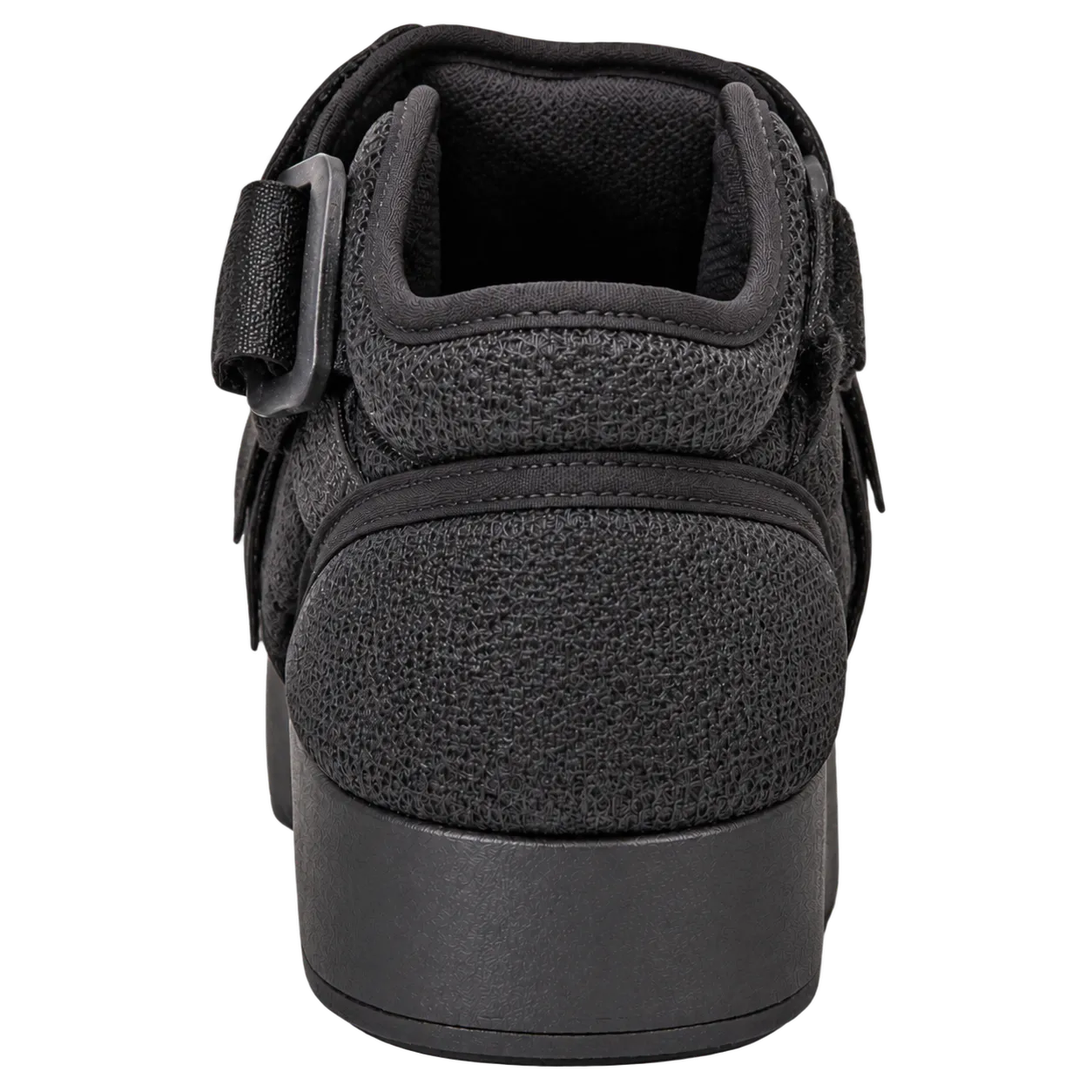
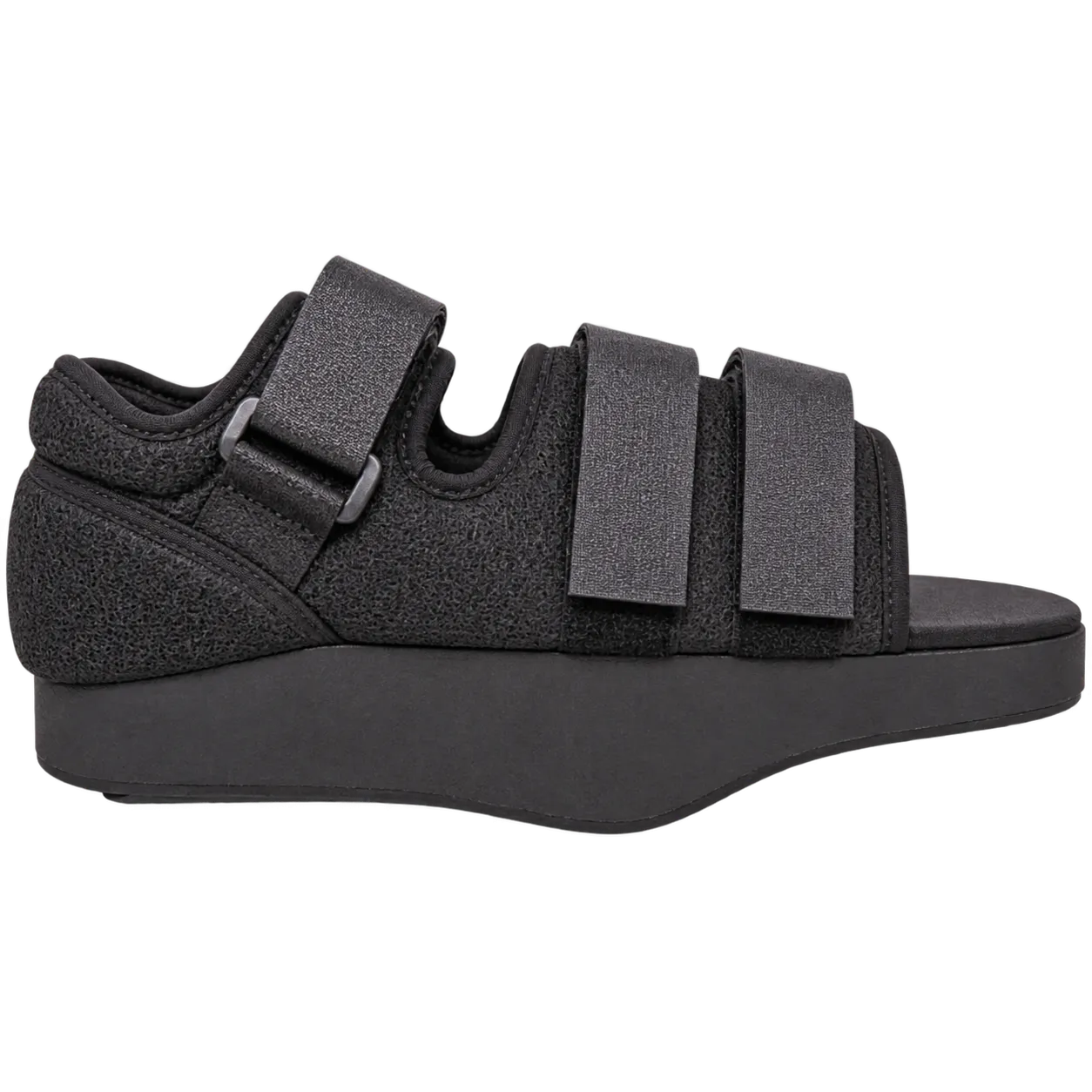
Foot and ankle surgical units can use the BL-52007 for postoperative offloading after forefoot fractures, where the surgeon wants the patient walking without loading the front of the foot. The angled sole and rocker are designed for exactly that, and the open front allows dressings and wound checks. A balance check before discharge is essential.
Fracture clinics may issue it for forefoot and toe fractures managed without surgery, where offloading the front of the foot eases pain and protects healing. Walking aids and advice on the altered gait should accompany it.
Wound care and tissue viability services see trauma-related skin injuries of the forefoot and toes. The shoe can take load off those areas while the wound heals, with the open front keeping dressing changes straightforward.
Diabetic foot services should approach the ulcer indication carefully. International guidance places non-removable knee-high devices first and removable knee-high or ankle-high walkers second for neuropathic plantar forefoot ulcers, so a removable offloading shoe should be used only where the specialist team has decided it fits the patient's plan.
Podiatry and musculoskeletal services can consider it for plantar forefoot pain needing offloading, such as metatarsal pain, as a short-term measure while addressing the underlying cause.
Physiotherapy services are well placed to teach safe walking in the shoe, given the gait changes offloading footwear produces.
NHS procurement routes ask for the device class and the declaration of conformity, and public buyers in other countries ask for the equivalent. The conformity documentation those procurement routes require is issued by the manufacturer and provided by the seller.