
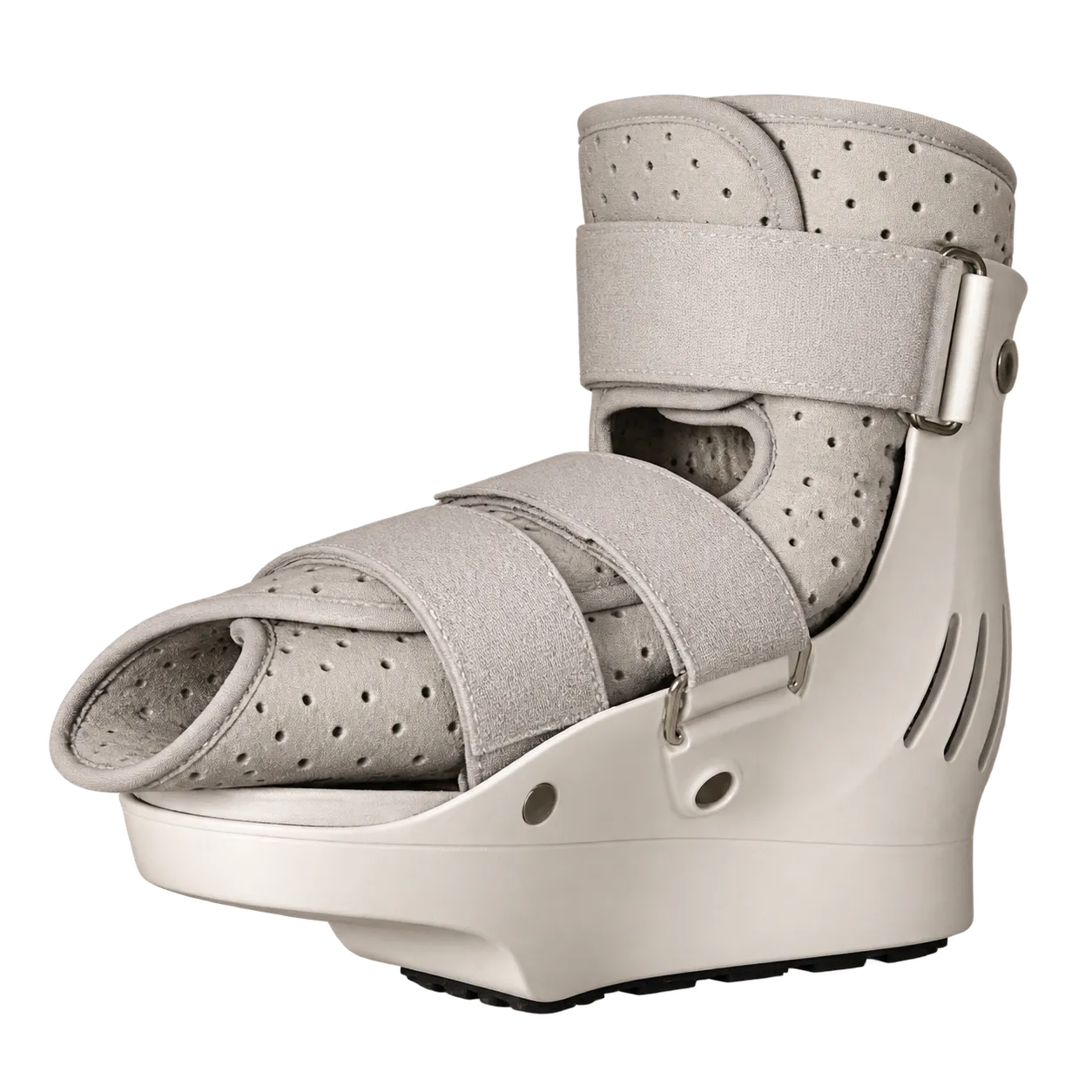
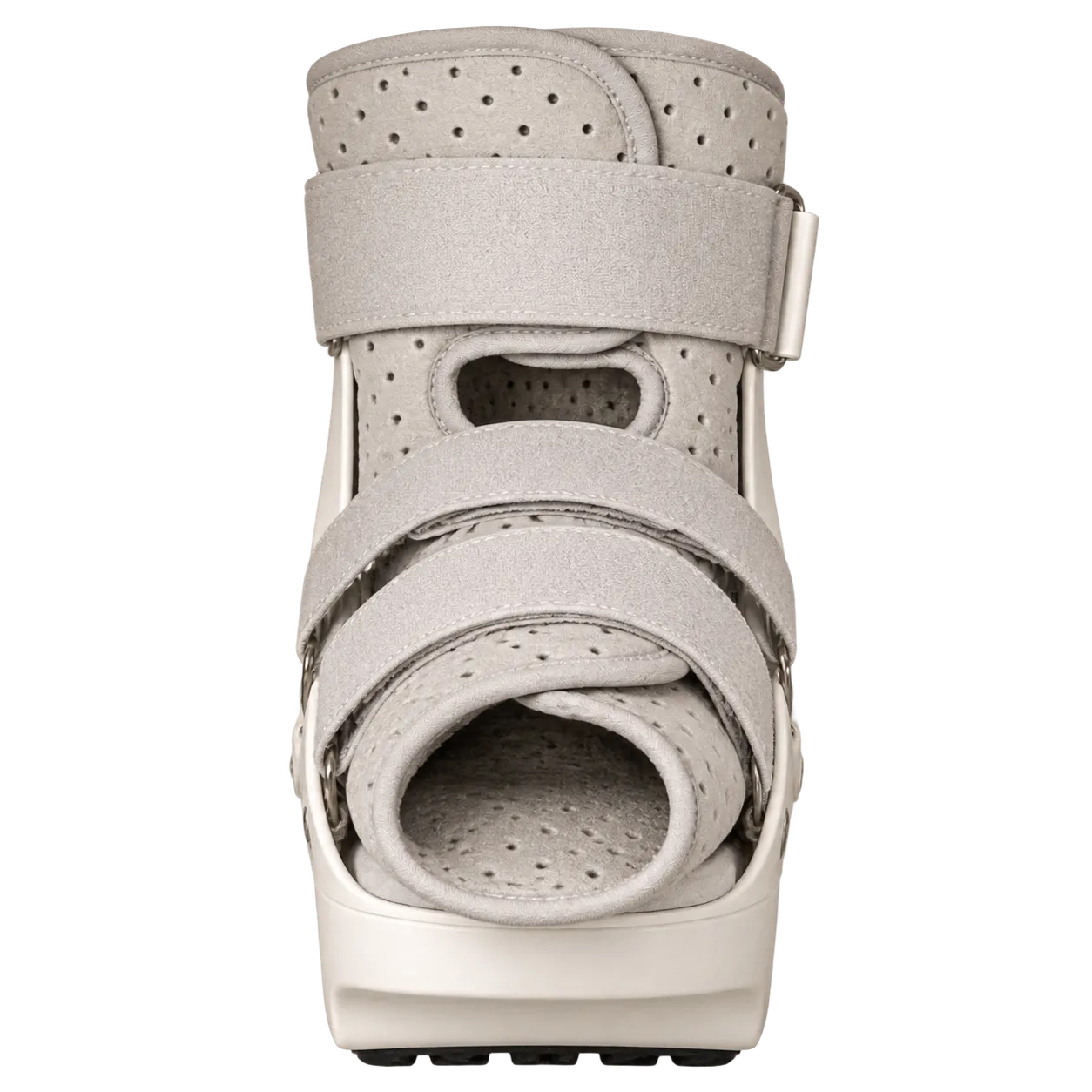
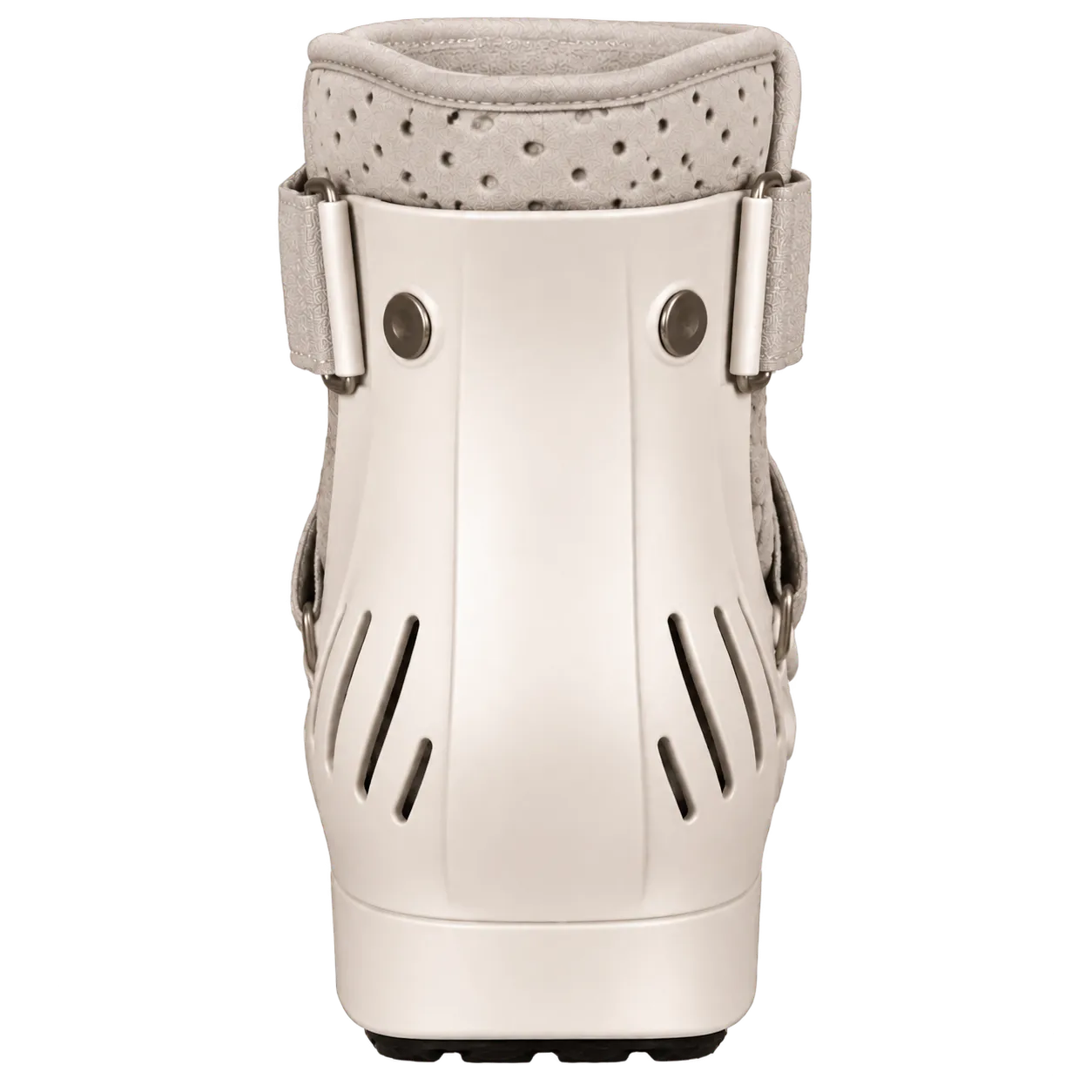
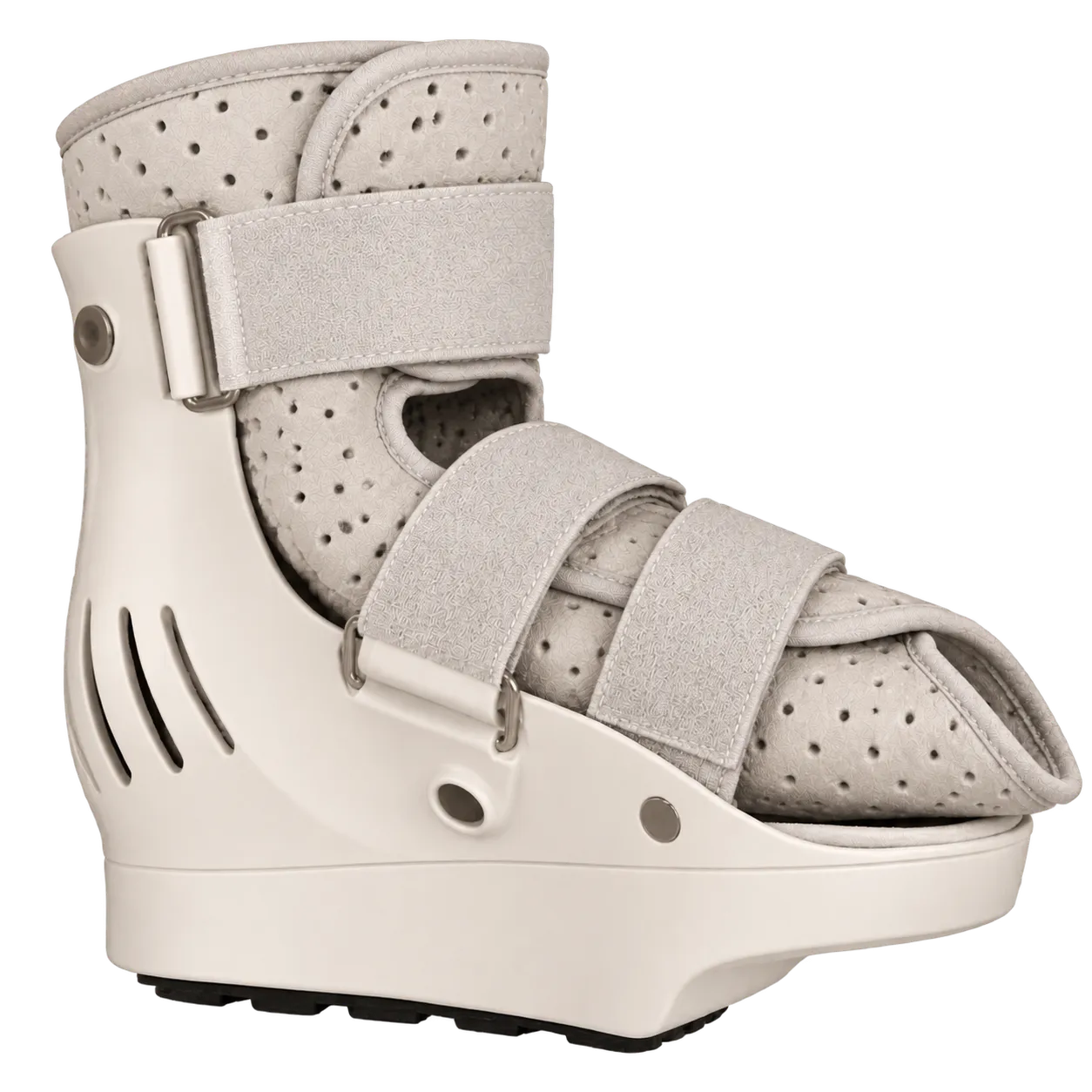
Foot and ankle surgical units are the main setting for the BL-52006. After fixation of forefoot fractures or other forefoot surgery, patients can wear the shoe during recovery or on the ward, with the open front allowing first dressing checks without removing it. Day-case patients can be shown how to adjust the straps before going home.
Podiatric surgery services will find the same routine useful. Post-operative reviews usually include wound checks and dressing changes, and a shoe that opens at the front fits that pattern. The wedge outsole keeps load off the forefoot between reviews.
Fracture clinics can use it for metatarsal injuries with swelling or pressure pain, where the treating clinician wants to offload the front of the foot while the injury settles. The straps allow the fit to adapt as swelling changes.
Wound care nurses and community teams supporting post-operative patients at home benefit from the open front, which keeps dressing access straightforward during home visits. Clear written instructions on strap adjustment and warning signs should travel home with every patient.
Physiotherapy services can assess balance and gait in the shoe and teach walking aid use, given the gait changes that offloading footwear produces.
Diabetic foot services should note that ulcers are not listed and that specialist guidance places other devices first for plantar forefoot ulcers.
NHS procurement routes ask for the device class and the declaration of conformity, and public buyers in other countries ask for the equivalent. The conformity documentation those procurement routes require is issued by the manufacturer and provided by the seller.