
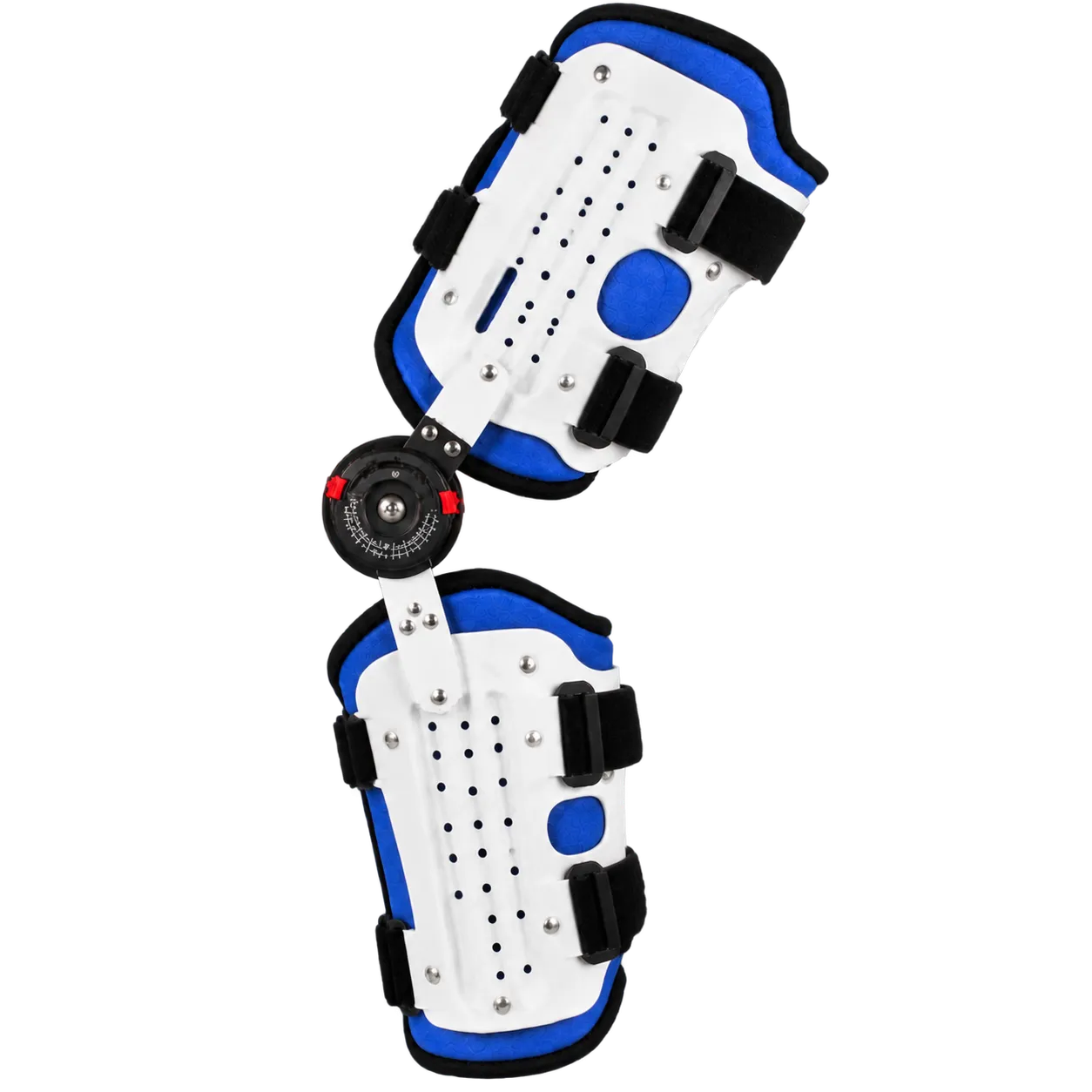
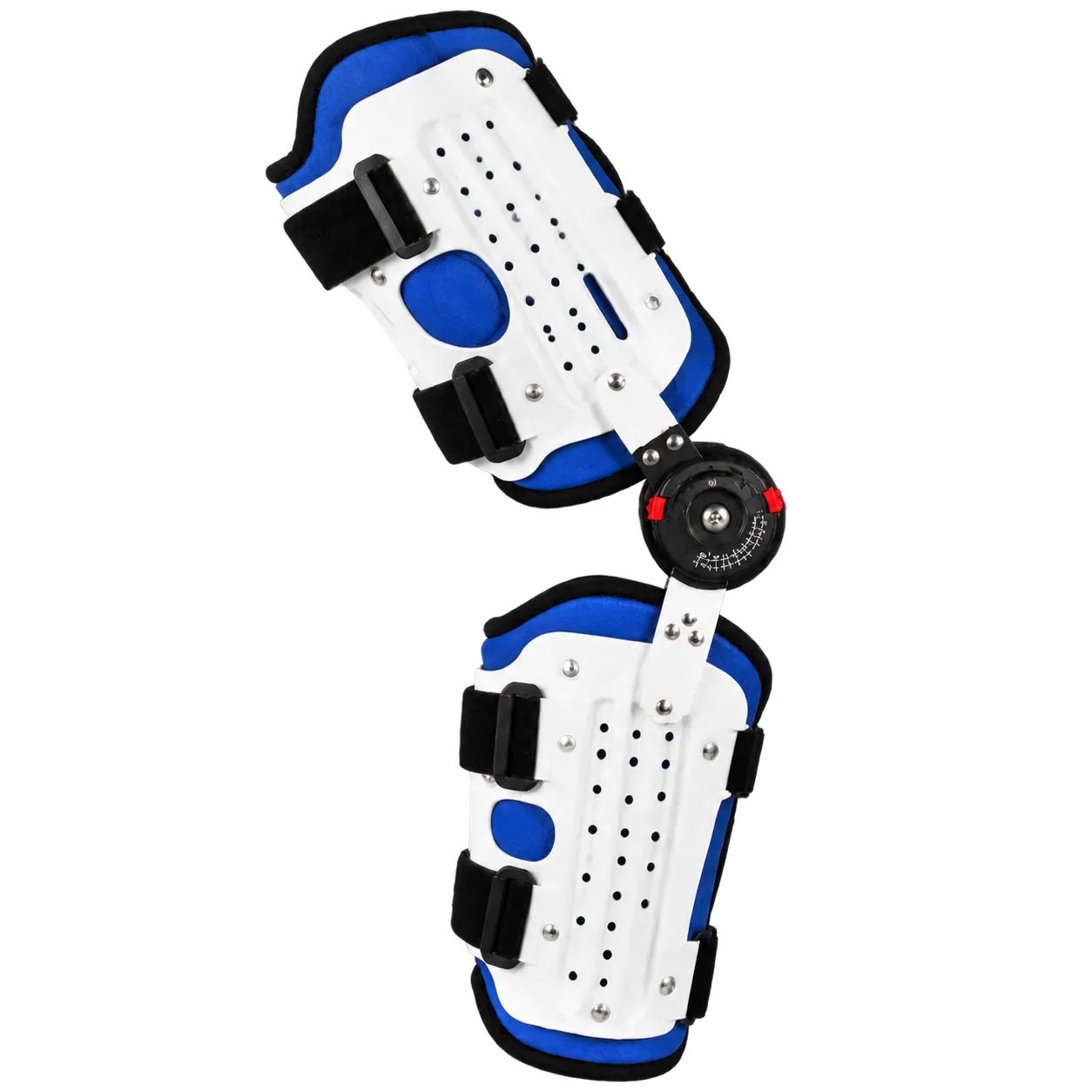
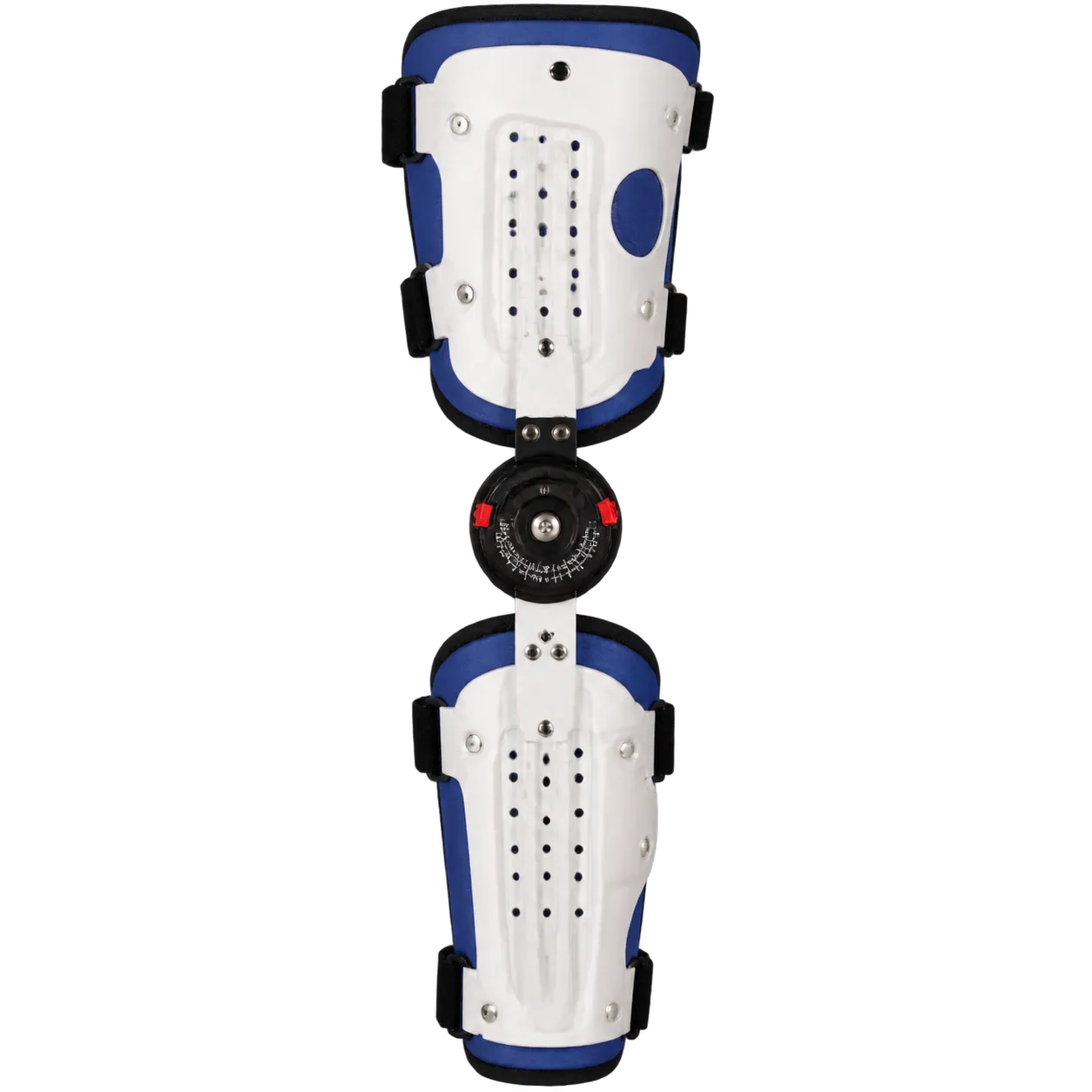
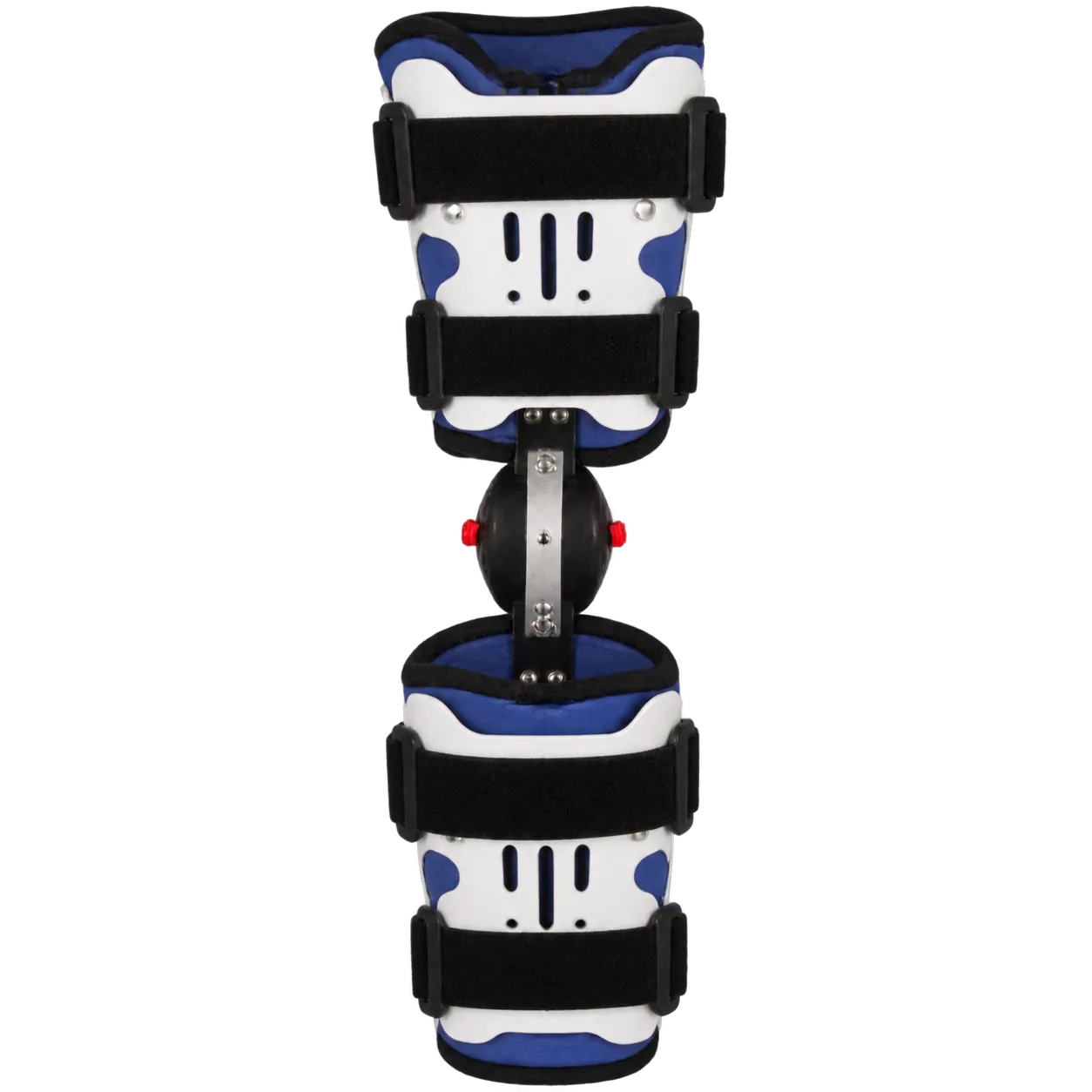
Physiotherapy and rehabilitation services are the clearest fit for the BL-42011 as specified. Angle-controlled rehabilitation is listed, and the dial hinge lets you set the permitted range between 10 and 120 degrees as the patient progresses, with the setting recorded at each session.
Orthopaedic surgical units should confirm the hinge before using it for initial post-surgical fixation. The datasheet lists that indication but no locking function, and the range starts at 10 degrees, so early protocols that need the knee held still or fully straight depend on the seller's answer.
Fracture clinics may use it for ligament and soft tissue injuries where a hinged brace with controlled movement is wanted. The multi-hole straps let you adjust the single size to the leg, and the hinge position should be checked after walking.
Orthotic services will assess the need for valgus and varus correction. Alignment braces are specialised devices, so this claim needs the seller's explanation and an orthotist's assessment before relying on it.
Warm clinical environments suit the ventilated shell, which is listed to reduce heat build-up during long wear.
ACL reconstruction pathways should note the systematic review evidence against routine bracing and reserve the brace for cases where the surgeon has a specific reason to control movement.
Any service discharging adults with the knee immobilised needs the VTE risk assessment described in NICE NG89. NHS procurement routes ask for the device class and the declaration of conformity, and public buyers in other countries ask for the equivalent. The conformity documentation those procurement routes require is issued by the manufacturer and provided by the seller.