
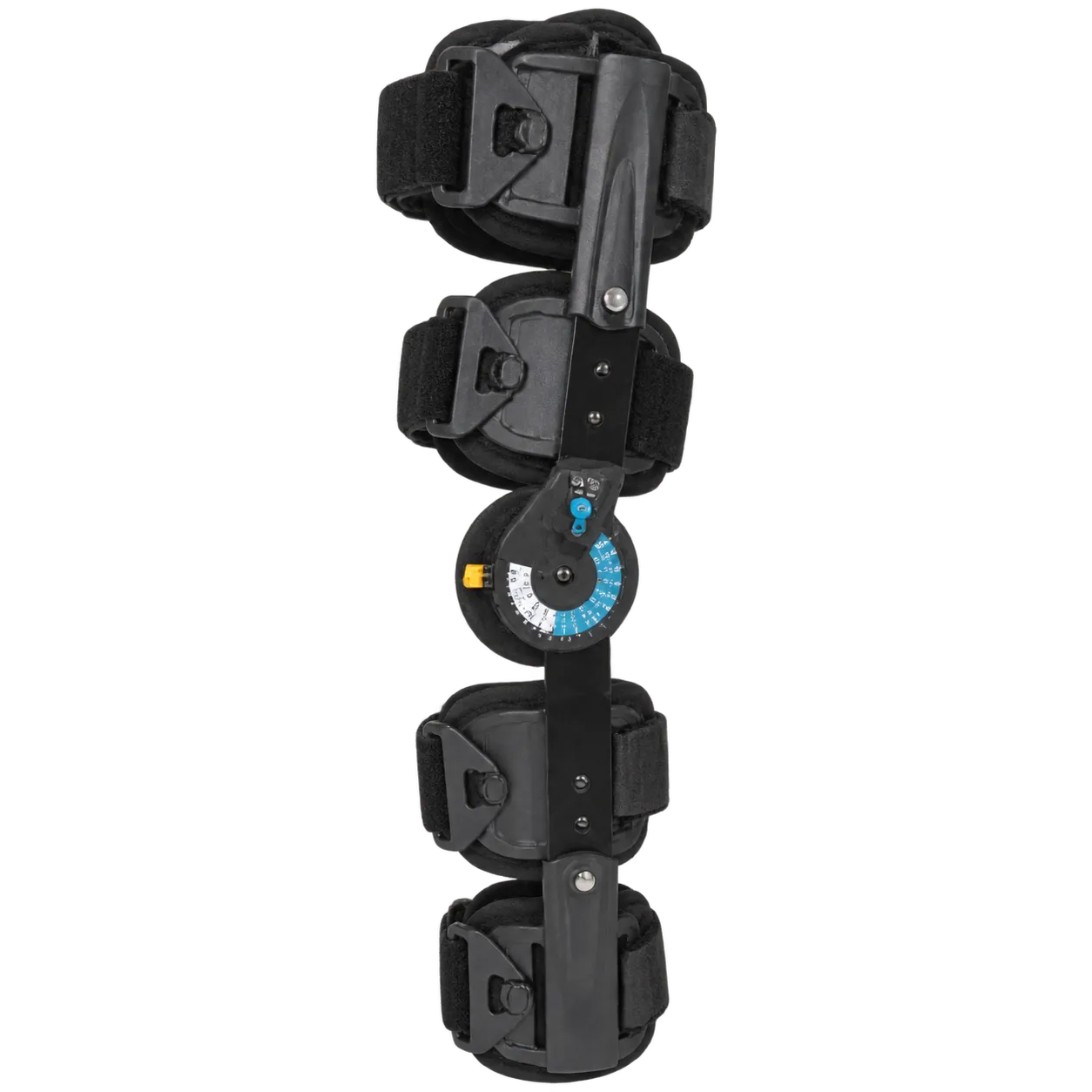
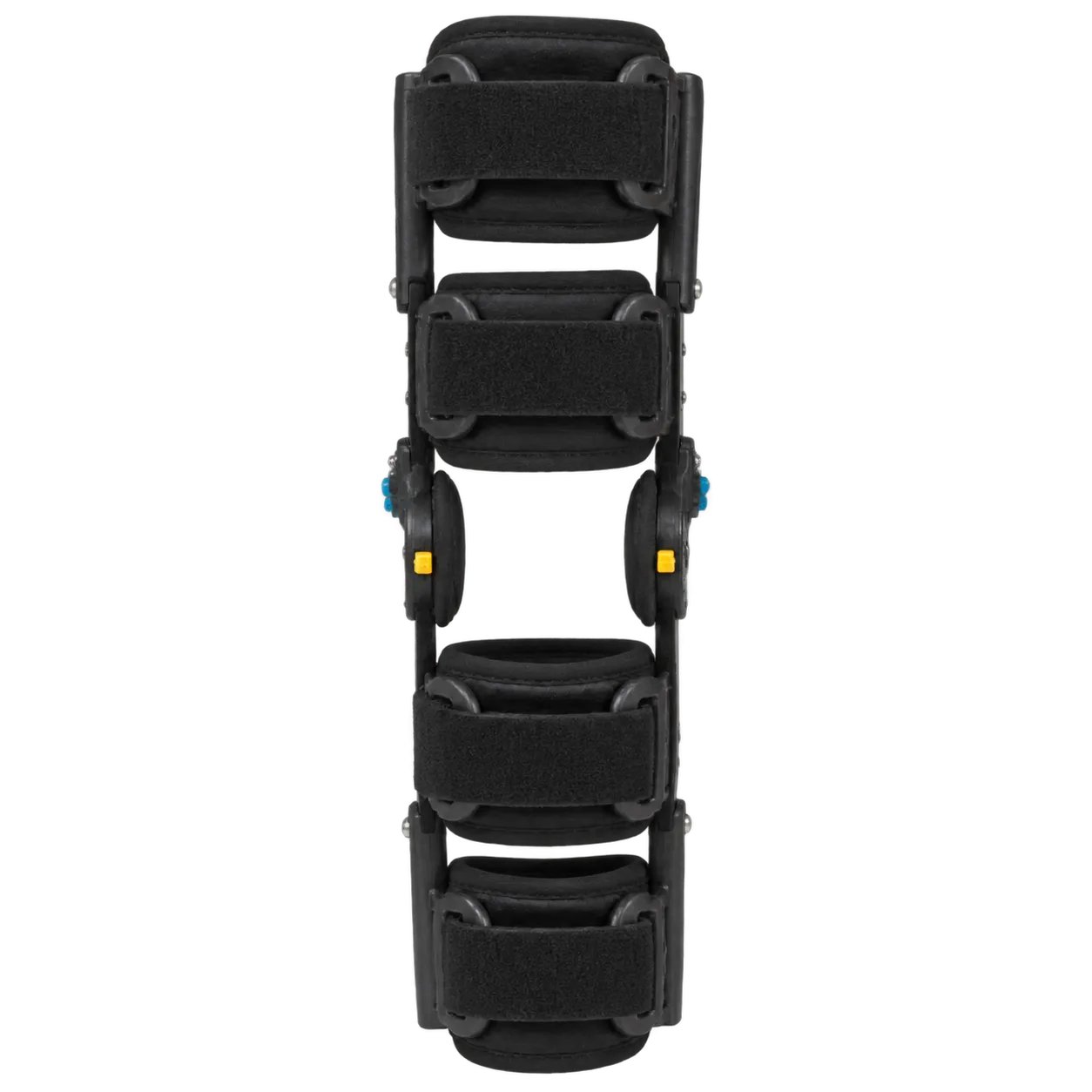
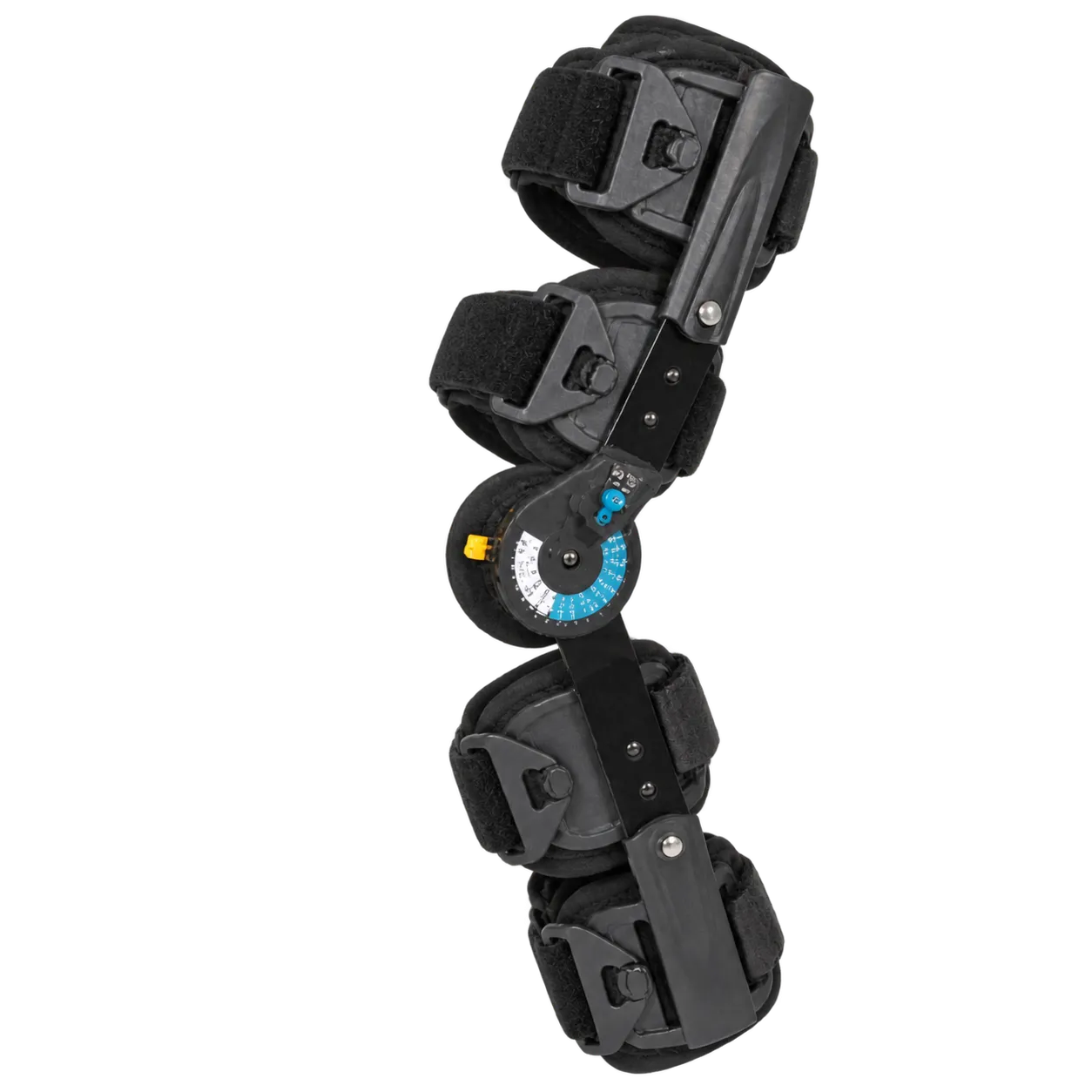
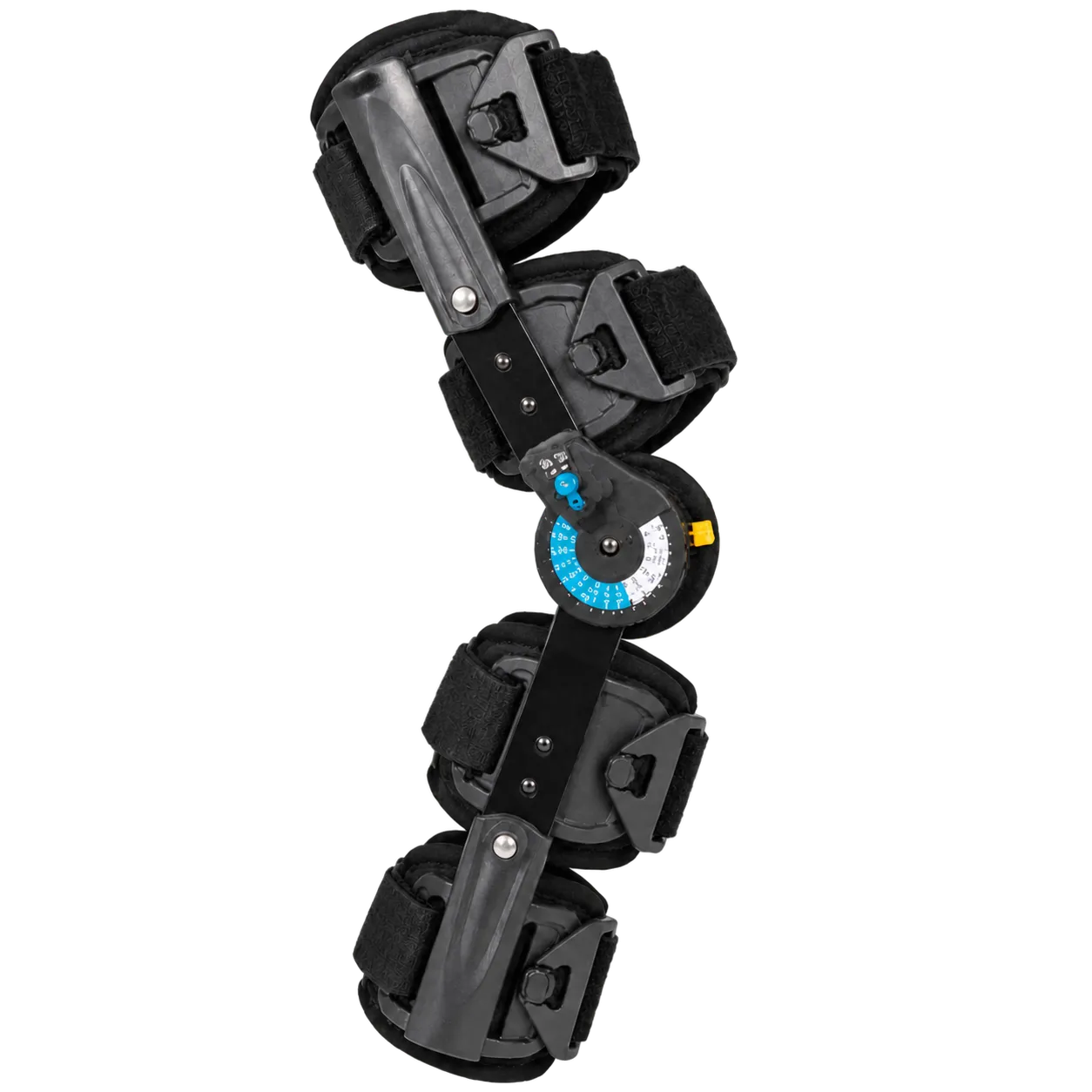
Orthopaedic surgical units are the main setting for the BL-42010. After patellar fracture fixation or repair at the front of the knee, the hinge can be locked at 0 degrees for the first phase and then released in stages as the surgeon's protocol allows. The dial setting belongs in the operation note and every clinic letter.
Trauma services managing femur fractures and knee trauma can use it where the surgeon wants the knee held and then moved progressively. The widened non-slip straps and apparent suspender help keep the hinge aligned with the joint during walking.
Meniscus and ligament pathways may use the adjustable range for protected movement after repair. For ACL reconstruction, the systematic review evidence against routine bracing means the brace is best reserved for cases where the surgeon has a specific reason to control movement.
Physiotherapy services work with the range as patients progress, recording the setting at each session and checking that locks are never set in the minus range without the surgeon's instruction.
Fracture clinics and emergency departments may use it for knee instability and trauma where a hinged immobiliser is wanted, with the angle set by the treating clinician.
Community teams seeing patients at home should check the skin under the perforated padding and ask how it is cleaned.
Any service discharging adults with the knee immobilised needs the VTE risk assessment described in NICE NG89. NHS procurement routes ask for the device class and the declaration of conformity, and public buyers in other countries ask for the equivalent. The conformity documentation those procurement routes require is issued by the manufacturer and provided by the seller.