
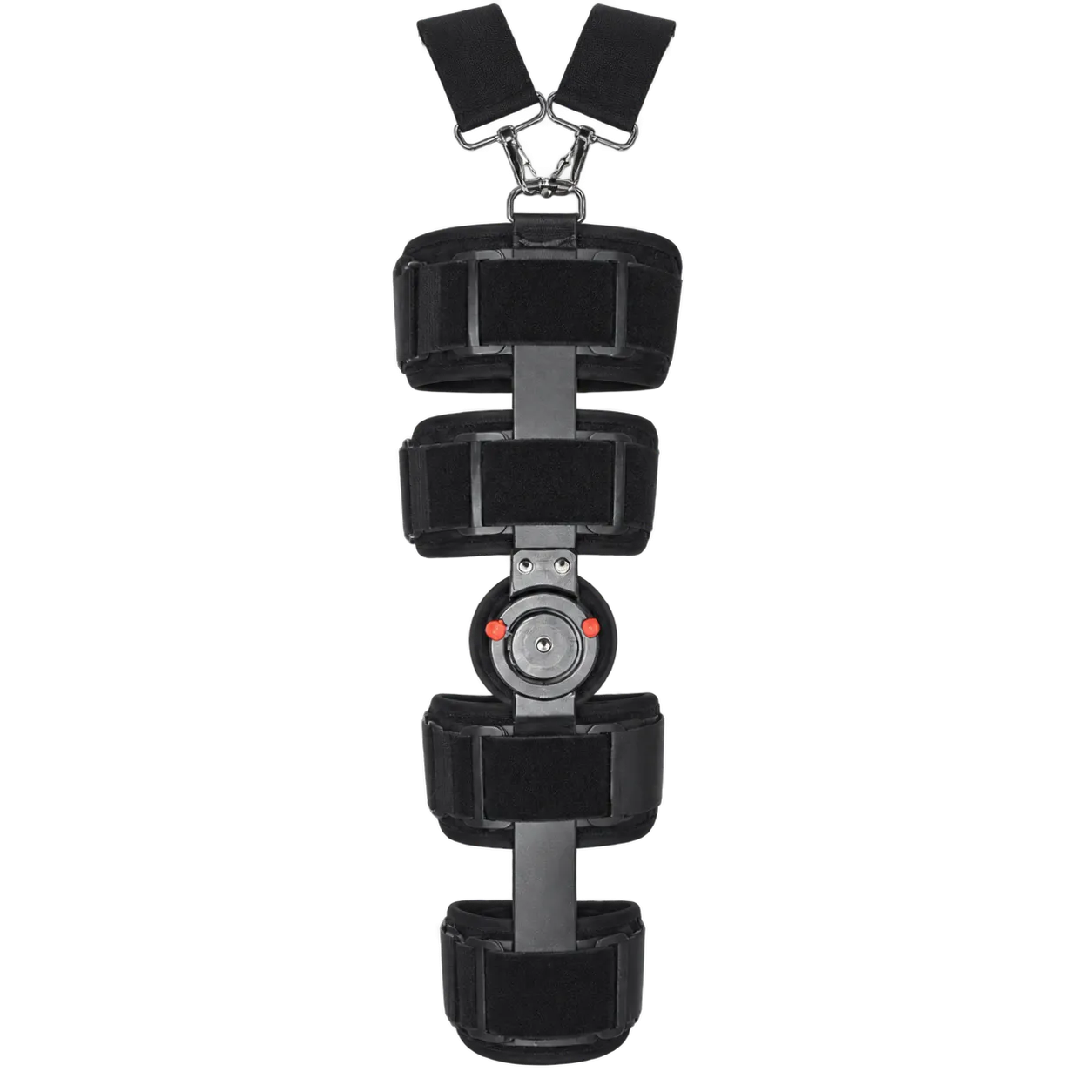
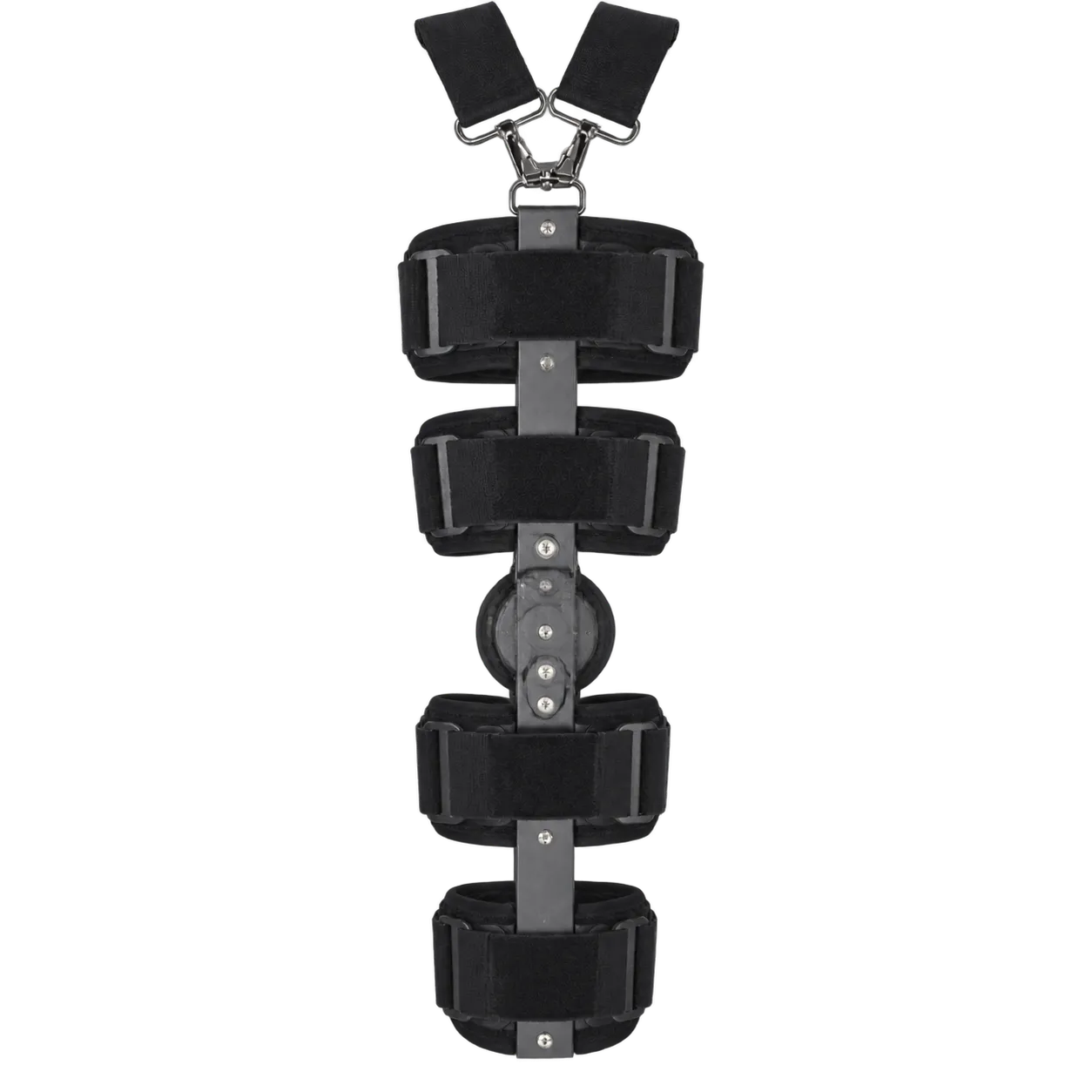
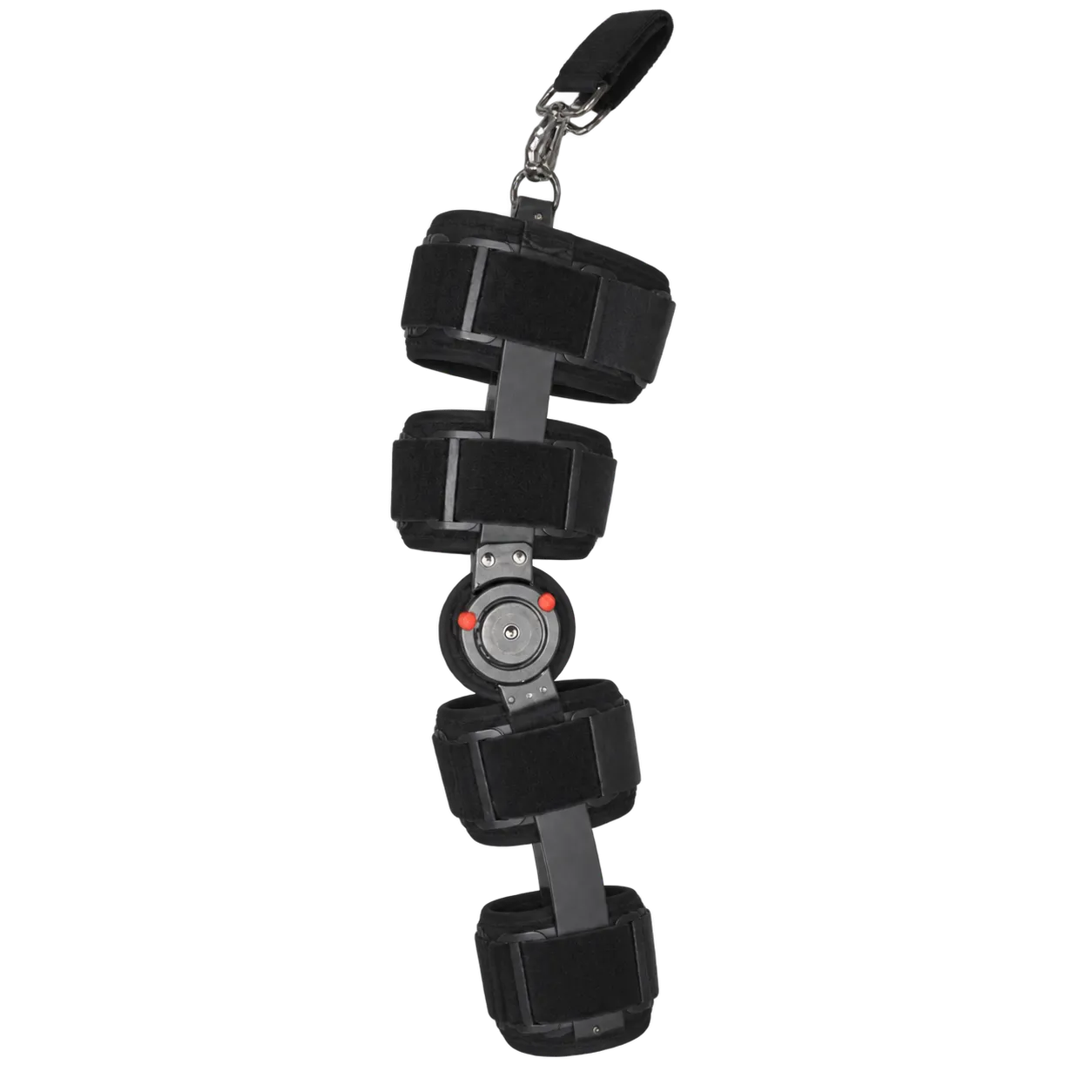
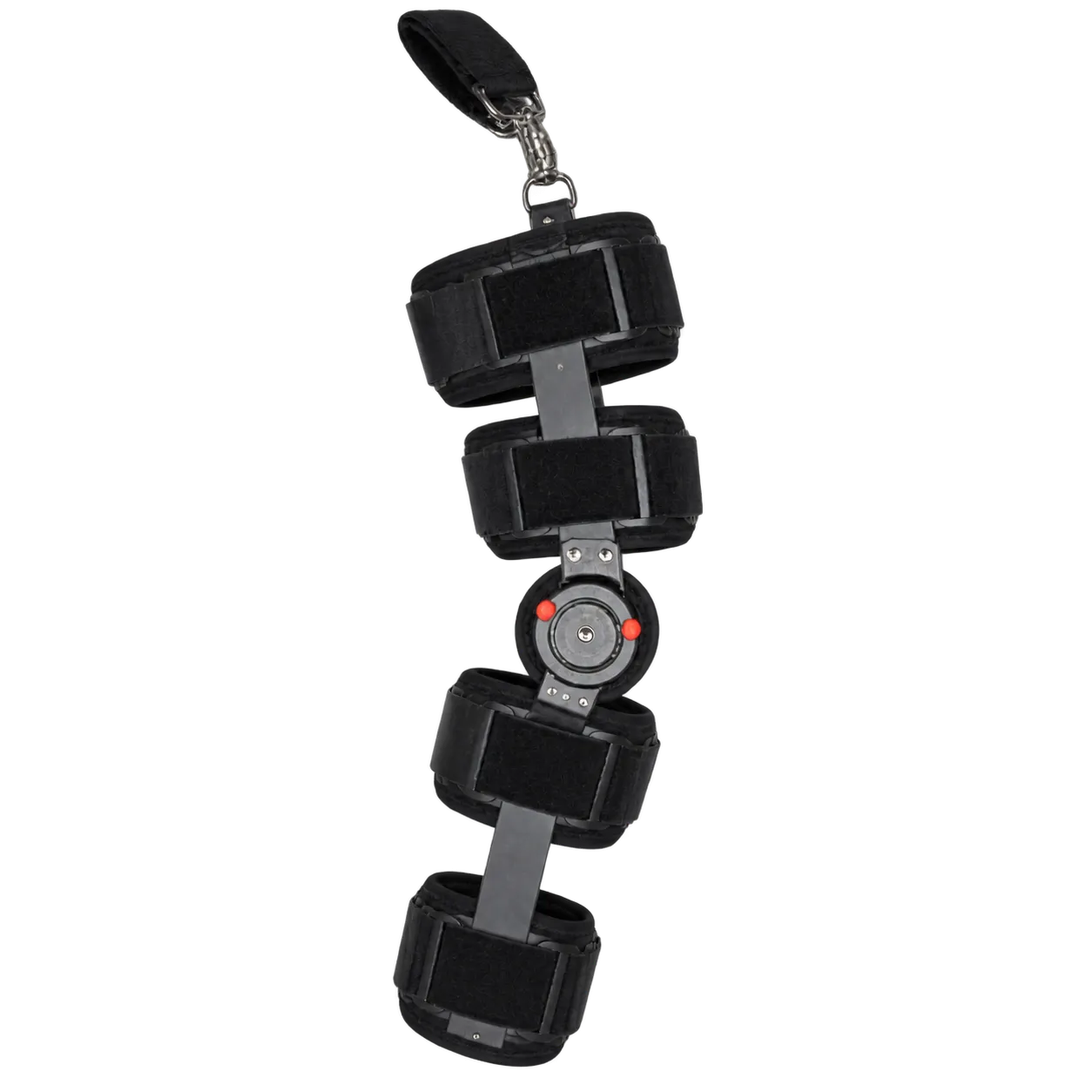
Orthopaedic surgical units can use the BL-42001 after knee procedures where the surgeon wants the knee held at a set angle and then allowed a controlled range. Meniscal repair, collateral ligament injuries and some fracture fixations are typical examples, with the dial set to the surgeon's protocol at each review.
Patellar fracture and extensor mechanism pathways need care. The datasheet lists locking from 10 degrees, and many of those protocols begin with the knee held fully straight, so the seller must confirm whether a 0 degree lock is available before the brace is used there.
ACL reconstruction pathways are listed on the datasheet, but systematic reviews and a 2025 meta-analysis found no longer-term benefit from routine postoperative bracing. Services should reserve the brace for cases where the surgeon has a specific reason to control movement.
Fracture clinics and emergency departments may use it for knee sprains and ligament injuries where a hinged brace is wanted, with the range set by the treating clinician. The thigh and calf straps should be checked so the hinge stays level with the knee.
Physiotherapy services work with the adjustable range as patients progress. Recording the dial settings at each session keeps the whole team aligned, and a check of hinge position should be routine.
Any service discharging adults with the knee immobilised needs the VTE risk assessment described in NICE NG89. NHS procurement routes ask for the device class and the declaration of conformity, and public buyers in other countries ask for the equivalent. The conformity documentation those procurement routes require is issued by the manufacturer and provided by the seller.