
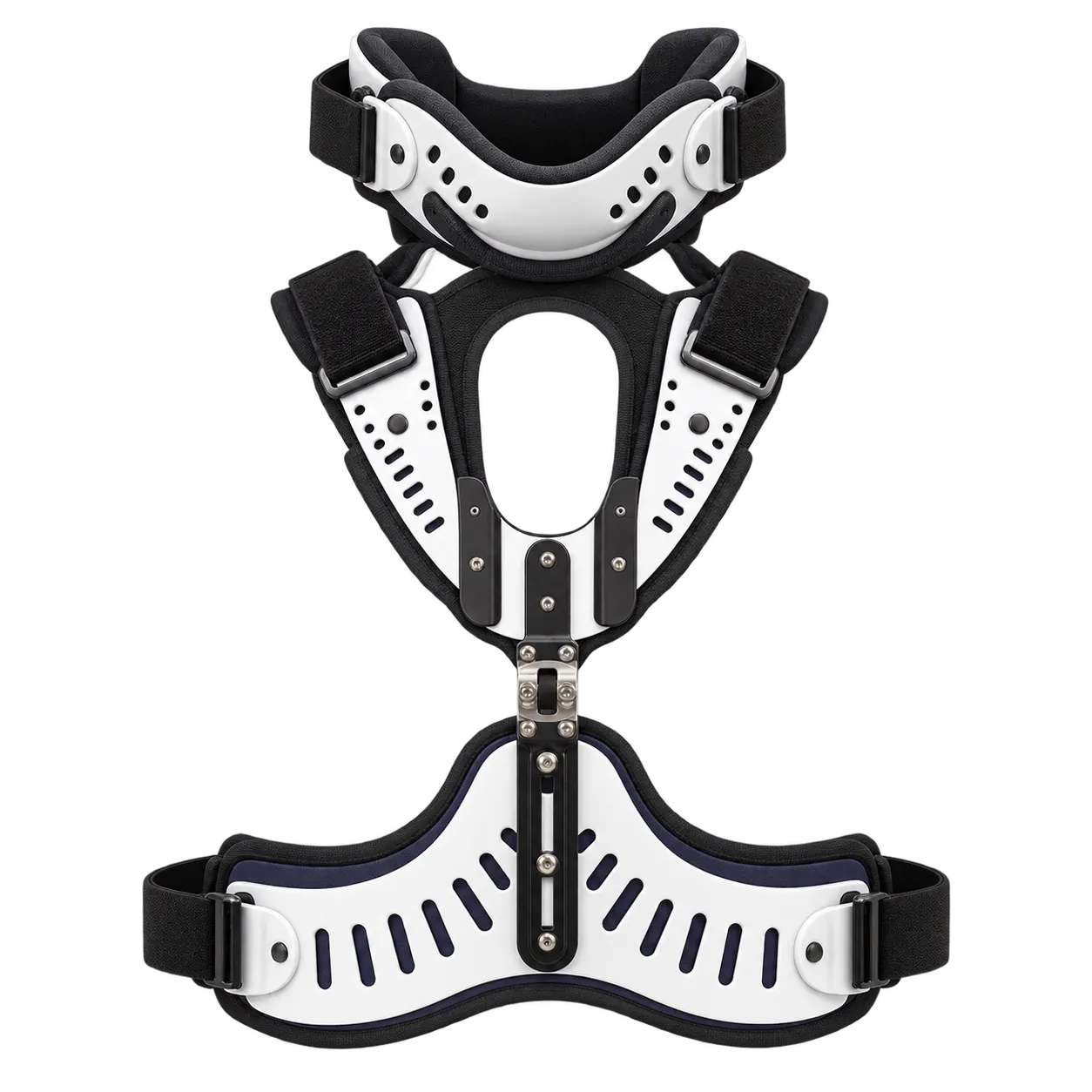
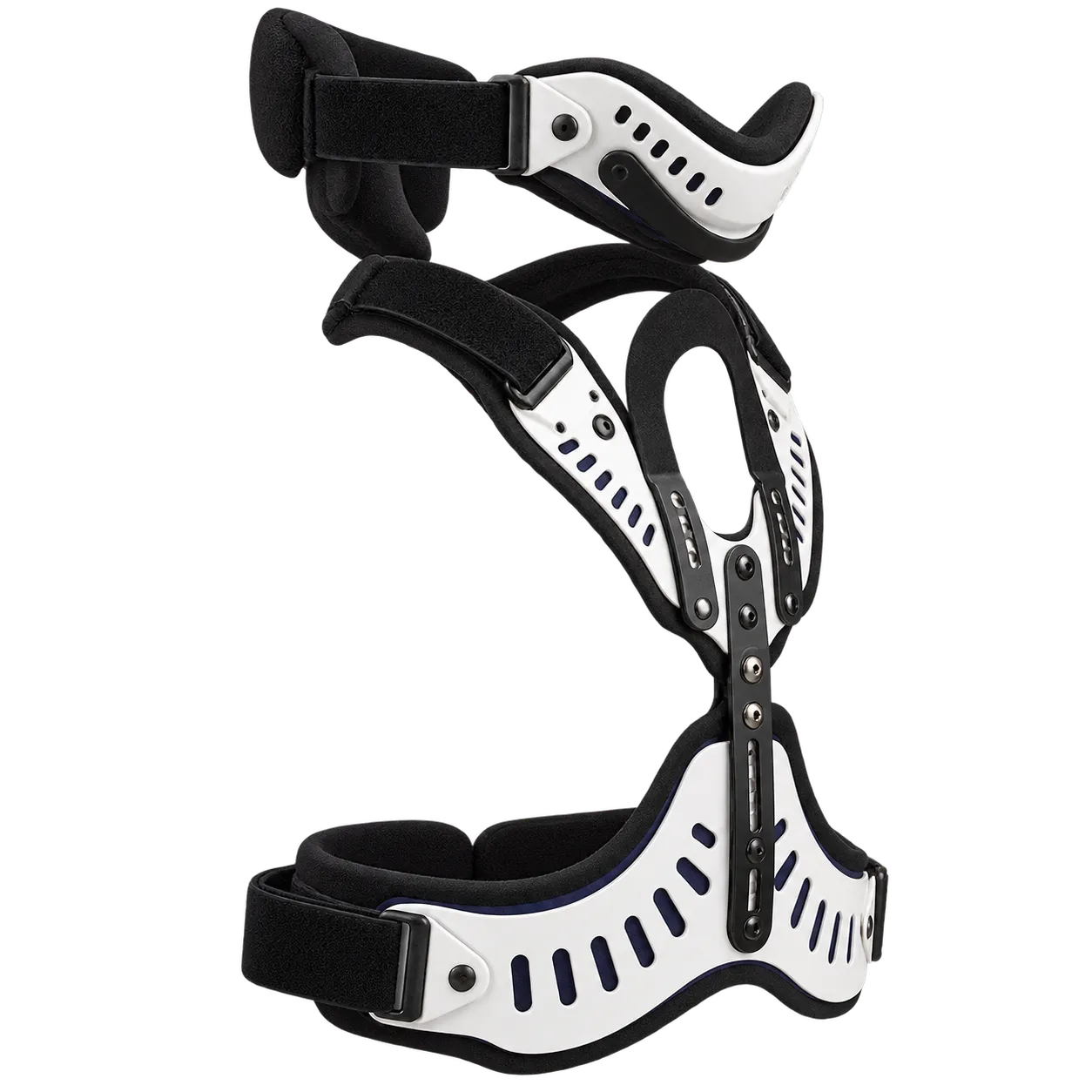
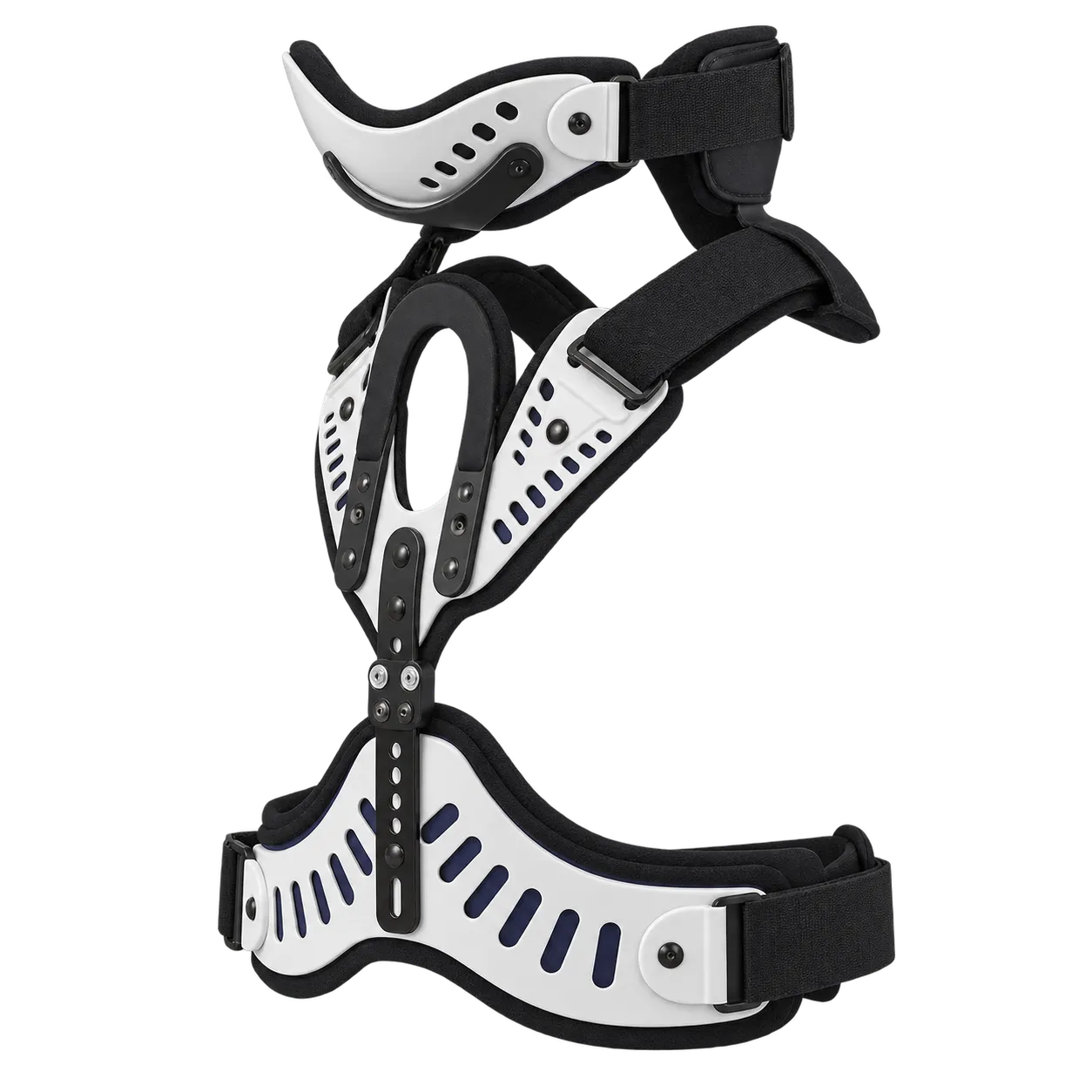
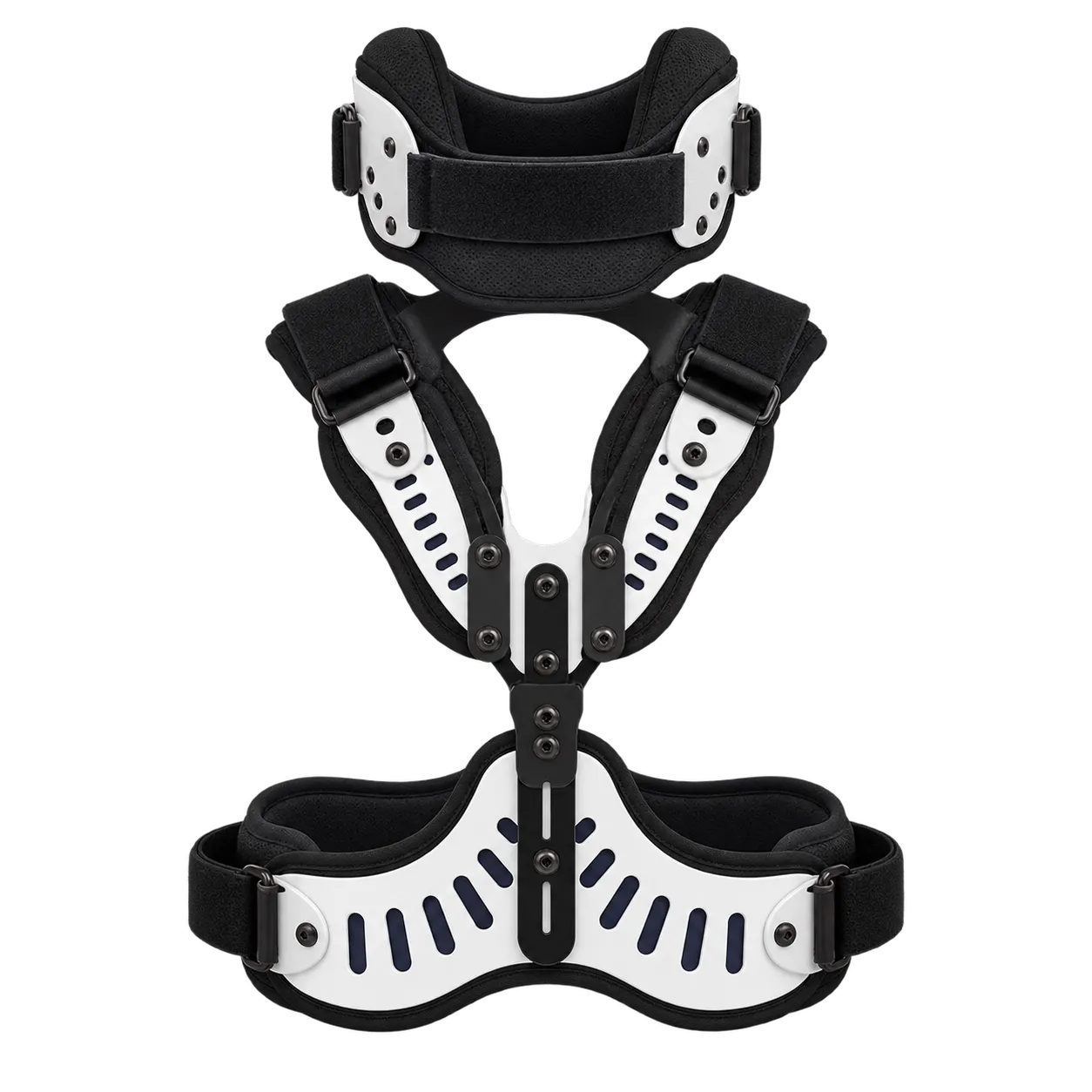
Neurosurgery and spinal surgery units can use the BL-22001 after cervical operations where the surgeon's protocol calls for head, neck and chest immobilisation. Orthotics departments can fit it, set the height and tension, and teach ward staff and carers what to check. Major trauma and spinal injury teams can use it once an injury has been imaged and assessed and the specialist has chosen this level of support. Spinal rehabilitation units can continue the regime as the patient recovers. Community and district nursing teams supporting patients at home can carry out skin checks and report concerns to the spinal team, which keeps supervision continuous after discharge.
Safety governs every use. A suspected neck injury follows emergency spinal protocols first, and instability or post-operative care stays under specialist supervision. Pressure injuries under the chin, at the back of the head and around the chest plate are a real risk, so skin checks should be at least daily and closer for patients who cannot report discomfort. Every patient and carer should know the warning signs and who to call. Breathing, swallowing and neurological symptoms need prompt review, and neck pain or stiffness on its own is usually managed with advice and movement, with lighter collars reserved for specific cases.
Hospital purchasing teams in the NHS and overseas public systems use procurement routes that require a device's conformity status and registration. The conformity documentation those procurement routes require is issued by the manufacturer and shared by the enquiry team.