Examination couches look simple, which is why they are often bought without much scrutiny and then cause problems for years. The height range determines who can get on unaided. Upholstery decides how the couch survives daily cleaning. The safe working load determines which patients the room can accommodate at all.
These ten couch types cover general clinics, specialist rooms and mobile work. Each entry explains where it fits and what to confirm before ordering.
Access comes first
A couch that does not lower far enough excludes patients who cannot step up, and a couch that does not rise high enough forces clinicians into poor posture. Electric height adjustment through a wide range solves both, which is why it has become the default choice for general clinic rooms rather than a premium option.
Consider the room too. Door widths, turning space and clearance affect which couch works in practice. Measure ordering rather than after delivery.
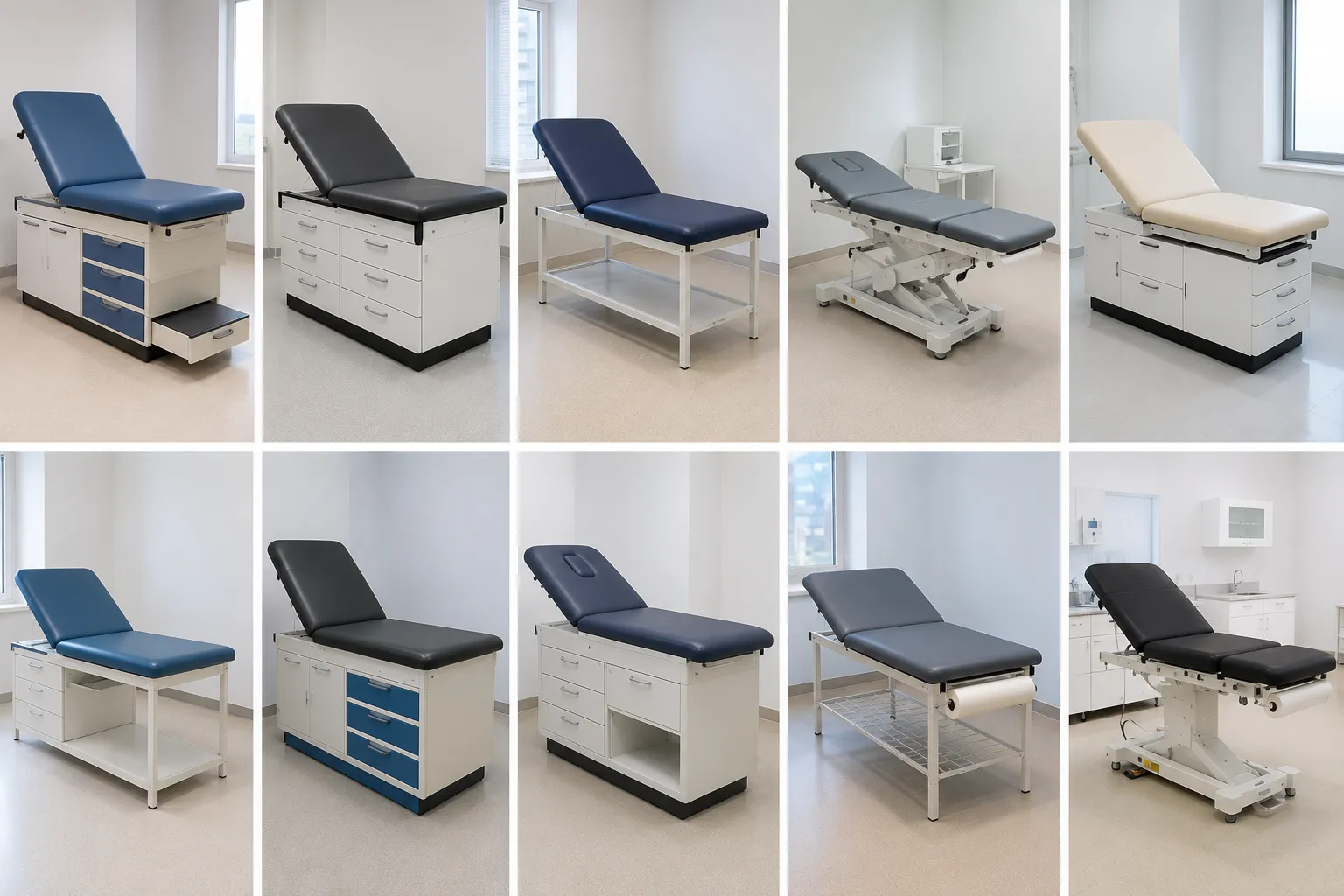
The ten examination couch types
1. Fixed height examination couches
Simple, robust and static. Suitable where patients are mobile and the room is used for straightforward examinations, though they limit access for less mobile patients.
2. Hydraulic couches
Foot-pedal height adjustment with no power requirement. A practical middle option, though repeated pumping is a physical task during a busy clinic.
3. Electric height-adjustable couches
Powered adjustment through a foot control or handset, with a wide height range. The standard choice for general outpatient rooms and the most accessible option for patients.
4. Couches with adjustable backrest and leg sections
Multi-section tops allowing seated, semi-reclined and flat positions. Useful in clinics covering a range of examination types in one room.
5. Bariatric examination couches
Wider platforms with reinforced frames and higher safe working loads. Confirm that the stated rating covers the patient together with any equipment placed on the couch.
6. Gynaecological and examination couches with supports
Fitted with leg supports, drainage provision and appropriate positioning. Confirm which supports are included and how they are cleaned between patients.
7. Phlebotomy and treatment chairs
Chair-to-couch designs allowing seated treatment with rapid recline if needed. Common in blood-taking, infusion and minor treatment rooms.
8. Paediatric examination couches
Smaller platforms with appropriate safety features and, in many rooms, integrated changing provision for infants.
9. Imaging-compatible couches
Designed to work alongside ultrasound or other imaging, with suitable access and, where required, radiolucent sections. Confirm compatibility with your specific equipment.
10. Portable and folding couches
Lightweight couches for domiciliary visits, screening events and outreach clinics. Weight, setup time and stability under load are the practical measures.
What to confirm before ordering
-
Height range. Check both the lowest and highest positions, not just the travel distance.
-
Safe working load. Confirm the rating and whether it applies across all positions and sections.
-
Upholstery. Verify material compatibility with the cleaning products your clinic uses, since incompatible agents cause cracking.
-
Seam construction. Ask about welded or sealed seams, which resist fluid ingress better than stitched alternatives.
-
Castors and brakes. Confirm whether the couch needs to be bent.;
-
Accessories. Paper roll holders, side rails, arm supports and drainage bowls should be specified with the couch.
Cleaning, servicing and lifecycle
Upholstery failure is the most common reason couches are replaced early, and it's a cleaning issue. If there is a problem, issue a written notice to the approved agents and share that information with the staff who clean the rooms, not just the clinical team.
For powered couches, agree planned maintenance covering actuator function, electrical safety testing, hand control condition and any battery replacement. Ask about replacement upholstery pads and section covers, since refurbishing a sound frame is usually preferable to full replacement.
Confirm availability and expected life in writing, and ensure the organisation receives published device safety alerts so the maintenance team is informed.
Final thoughts
Buy for the least mobile patient the room will see. For most outpatient clinics that means an electric height-adjustable couch with a wide range, upholstery matched to your cleaning products, a safe working load that reflects your patient population, and replacement pads available for the years ahead.
This article provides general procurement guidance for healthcare organisations and clinics. It is not clinical advice and does not replace manufacturer instructions or local policy.