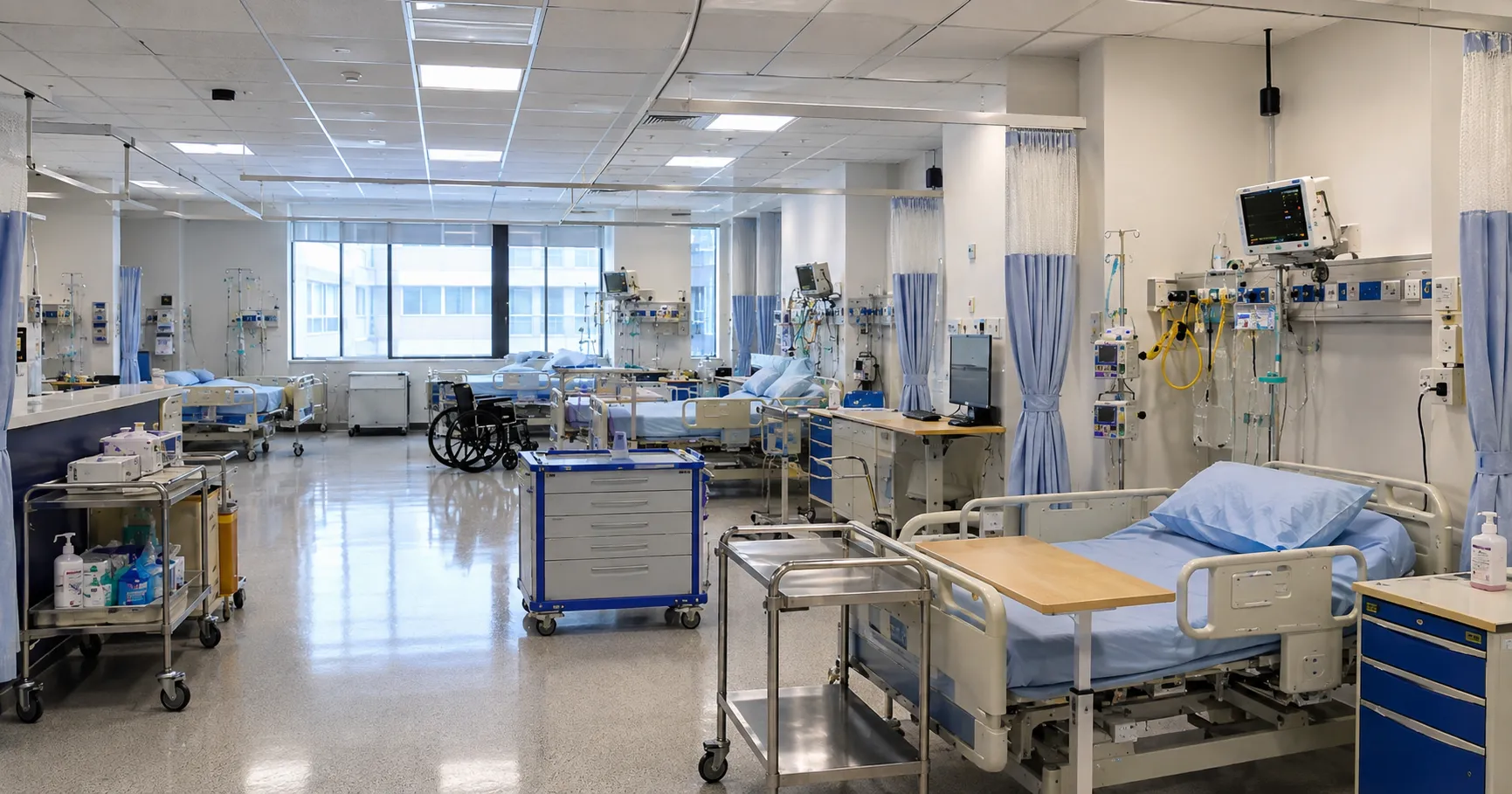
An inpatient ward is where most of a hospital stay occurs, and the equipment below is what enables a nursing team to care for a floor full of patients around the clock. From the bed itself to the resuscitation trolley, this equipment is the everyday backbone of inpatient care. Procurement teams browse ward equipment for buyers on Medigear.uk when planning.
Because a ward supports so many aspects of care at once, its equipment is best understood by the kinds of tasks it supports, from monitoring to mobility to medication. Grouping the equipment this way shows how a ward is furnished to keep patients comfortable and secure.
The 100 items below are grouped into 10 areas, from beds to safety. Grouping them this way follows how an inpatient ward actually works through its day.
The ten areas of a ward
The equipment falls into ten areas: beds and bedside, monitoring, mobility and transfer, medication, hygiene and continence, nutrition, the nurse station, treatment and procedures, comfort and environment, and safety and emergency.
Beds and bedside
The bed and its surroundings are where inpatients spend most of their time. Comfort and safe positioning here shape the patient's whole experience of a stay. Suppliers can also ask the Medigear.uk team about ward equipment.
-
Ward beds — adjustable beds for inpatient stays
-
Bedside lockers — stowing patients' belongings
-
Overbed tables — for meals and activities
-
Pressure-relieving mattresses — safeguarding the skin
-
Bed rails — heading off falls from bed
-
Pressure cushions — easing seated pressure
-
Backrests — steadying patients upright
-
Footboards — settling the feet
-
Bed levers — assisting with patients repositioning
-
Bedside armchairs — for sitting out of bed
Monitoring
Regular observation keeps patients safe on a ward. Regular, reliable readings are how a ward notices a patient beginning to deteriorate.
-
Ward monitors — watching over vital signs at the bed
-
Spot-check monitors — quick routine observations
-
Ward blood pressure monitors — reading off pressure regularly
-
Ward pulse oximeters — verifying blood oxygen
-
Tympanic thermometers — reading temperature quickly
-
Ward ECG machines — logging heart traces
-
Early warning systems — flagging deteriorating patients
-
Standing scales — measuring the weight of patients
-
Bladder scanners — assessing bladder volume
-
Vital signs trolleys — conveying observation kit
Mobility and transfer
Moving patients safely is a constant task on the ward. Moving patients safely protects both them and the staff who care for them.
-
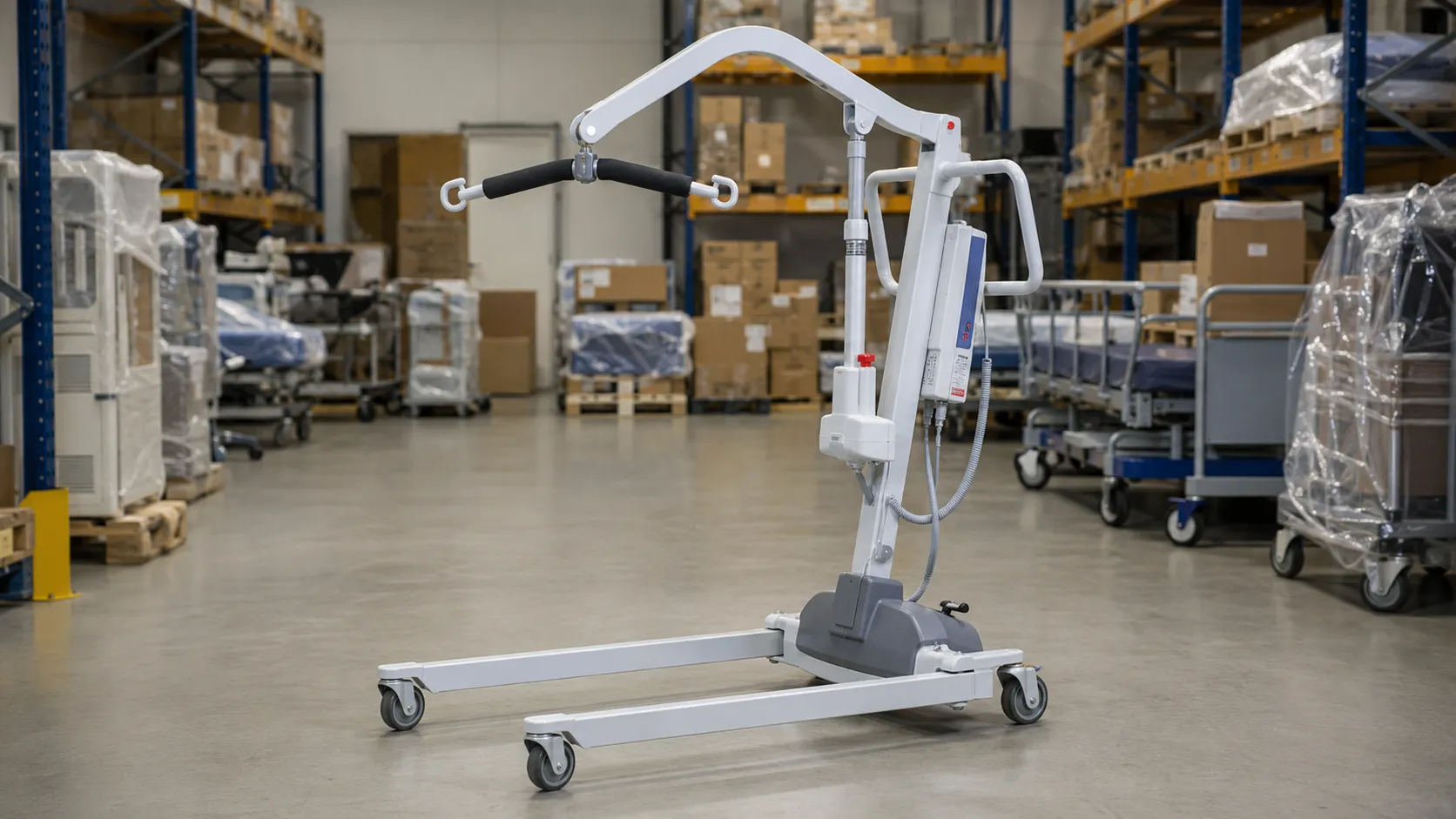
Patient hoists — raising patients safely.
-
Transfer boards — bridging bed to chair
-
Slide sheets — repositioning in bed
-
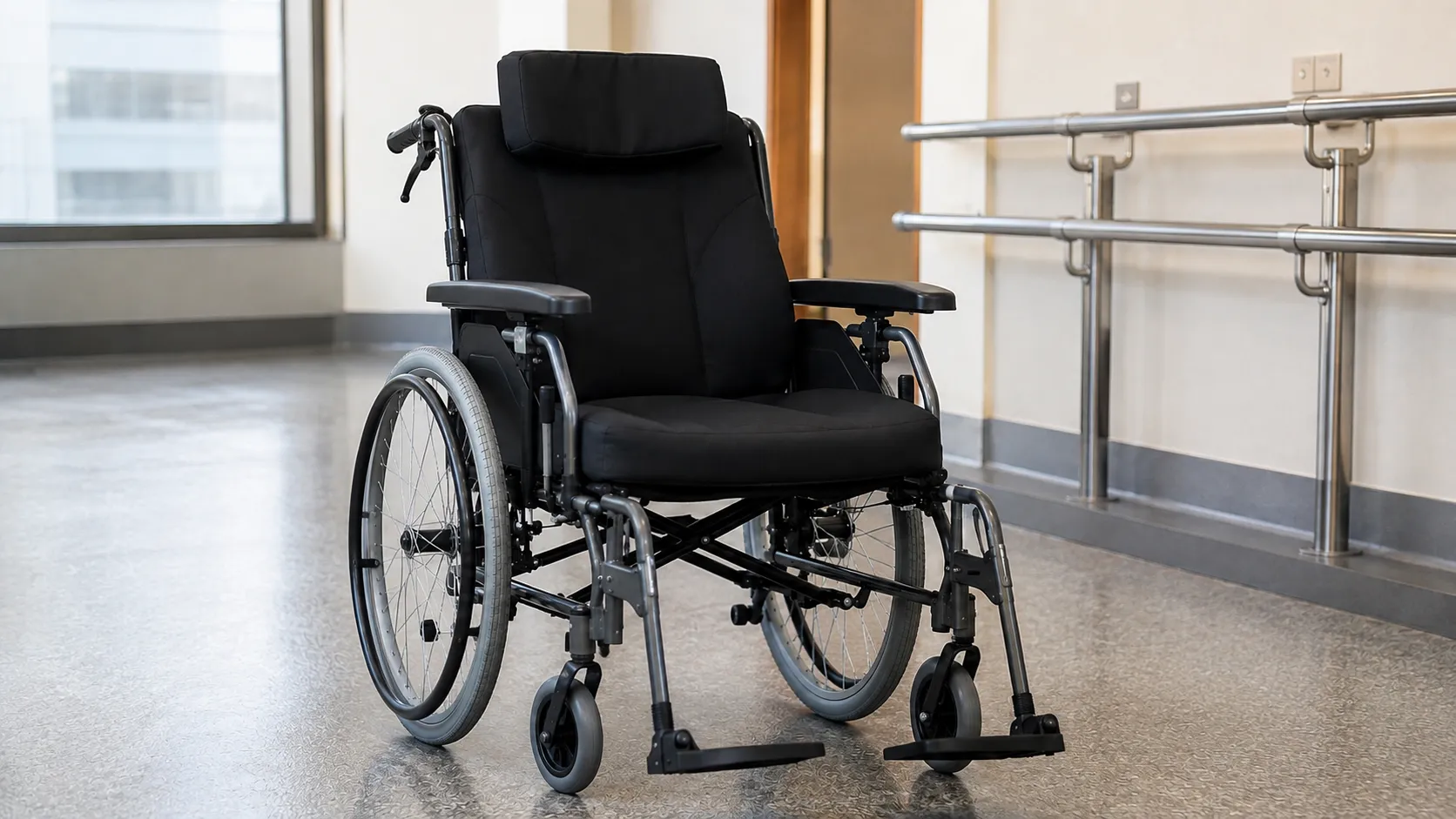
Ward wheelchairs — shifting patients around
-
Walking frames — steadying first steps
-
Standing aids — assisting withpatients's rise
-
Transfer belts — assisting safe transfers
-
Turning aids — rolling patients gently
-
Patient trolleys — transporting between areas
-
Commode chairs — toileting with support
Medication
Safe medicine handling runs throughout the ward. Each of these items supports delivering the right medicine at the right time.
-
Drug trolleys — handing out medicines on rounds
-
Medicine cabinets — stowing ward medicines
-
Controlled drug cabinets — cradling safe restricted medicines
-
Ward infusion pumps — giving fluids and drugs
-
Syringe drivers — giving small, steady doses
-
Medicine fridges — stowing cold-chain drugs
-
Dispensing trolleys — organising individual doses
-
Medication charts — logging what is given
-
Drug preparation trays — preparing doses safely
-
Ward sharps containers — disposing of needles
Hygiene and continence
Dignity and cleanliness are daily priorities. Attending to these needs with dignity is a large part of good nursing.
-
Wash basins — steadying personal washing
-
Ward bed pans — toileting in bed
-
Bedside commodes — toileting with privacy
-
Continence pads — managing continence
-
Care wipes — freshening and cleaning
-
Barrier screens — giving privacy
-
Bedside curtains — screening the bed area
-
Hand hand-hygiene points — encouraging clean hands
-
Clinical waste bins — segregating waste
-
Bedpan washers — decontaminating reusable items
Nutrition
Good nutrition supports recovery on a ward. Recovery depends on nutrition as surely as on treatment.
-
Feeding pumps — giving tube feeds
-
Nutrition trolleys — serving meals
-
Water jugs — cradling patients hydrated
-
Adapted feeding aids — assisting with patients eating
-
Meal trays — presenting meals tidily
-
Weighing chairs — measuring the weight of seated patients
-
Supplement storage — cradling nutritional drinks
-
Nasogastric supplies — steadying tube feeding
-
Drinking beakers — aiding safe drinking
-
Food warmers — cradling meals warm
The nurse station
The nurse station coordinates care through the ward. From here the ward is coordinated, documented and kept running smoothly.
-
Nurse call systems — linking patients to staff
-
Nursing workstations — steadying documentation
-
Patient status boards — showing the ward at a glance
-
Handover trolleys — steadying shift handover
-
Document storage — cradling records securely
-
Communication systems — linking the team
-
Chart racks — organising patient charts
-
Reference terminals — verifying guidance
-
Key cabinets — cradling safe ward keys
-
Alarm panels — displaying ward alarms
Treatment and procedures
Wards carry out many bedside procedures. These items allow much of the routine care to happen by the bed rather than elsewhere.
-
Ward dressing trolleys — organising wound care
-
Bedside procedure lights — lighting close work
-
Examination lamps — aiding examination
-
Ward suction units — clearing airways
-
Ward oxygen supplies — giving oxygen
-
Ward nebulisers — giving inhaled treatment
-
Treatment sets — steadying minor procedures
-
Bedside instrument trays — cradling instruments
-
Specimen sample kits — catching up samples
-
Wound care supplies — dressing wounds
Comfort and environment
A calm environment helps patients recover. A calm, ordered environment helps patients rest and recover.
-
Day-room chairs — comfortable seating away from bed
-
Patient recliners — resting out of bed
-
Bedside lamps — gentle personal lighting
-
Air-circulation fans — cradling patients cool
-
Curtain rails — enclosing bed spaces
-
Storage cupboards — keeping the ward tidy
-
Notice boards — passing on information
-
Ward clocks — assisting with orientation
-
Wayfinding signage — guiding patients and visitors
-
Waiting seating — for visitors
Safety and emergency
Every ward must be ready for a crisis. Kept ready and checked, this equipment can save a life in the first minutes of a crisis.
-
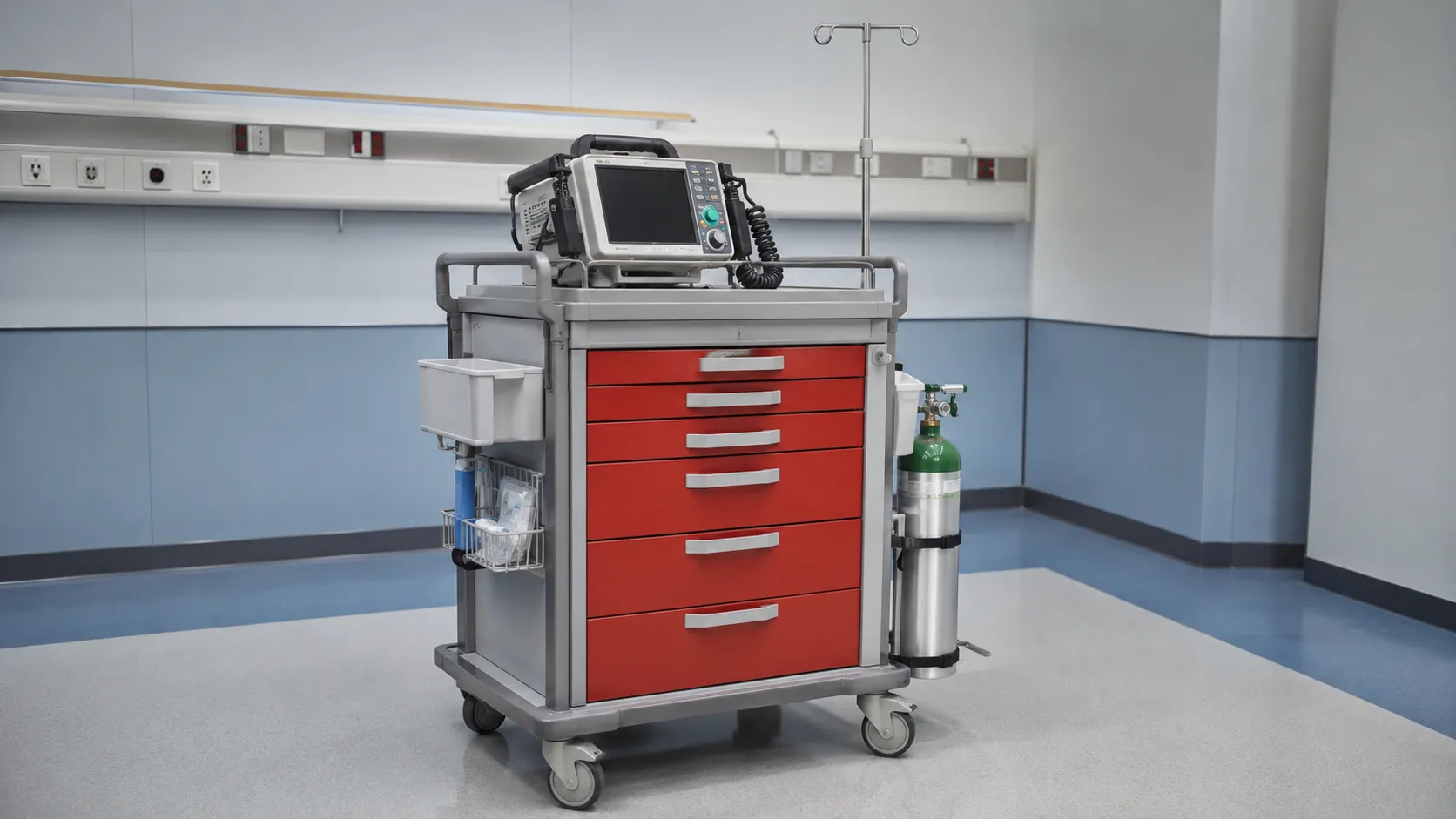
Resuscitation trolleys — stocked for emergencies
-
Ward defibrillators — treating cardiac arrest
-
Ward emergency oxygen — oxygen in an emergency
-
Falls sensors — signalling to falls risk
-
Bed exit alarms — warning of unsafe movement
-
Fire equipment — for fire safety
-
Ward spill kits — dealing with spills
-
Emergency call points — summoning urgent help
-
Evacuation aids — shifting patients in emergency
-
First aid kits — for minor injuries
Care that runs around the clock
Unlike a clinic that closes at night, a ward cares for patients continuously, so its equipment must be dependable at three in the morning as much as at midday. Reliability and ease of use matter enormously when a small night team is caring for a full floor. Ward equipment is chosen for reliability at every hour.
Safety woven through the ward
So much of a ward's equipment exists to prevent harm, from falls sensors and bed rails to hand hygiene points and resuscitation trolleys. Patient safety is not a separate category but a thread running through every area of the ward. Good ward equipment quietly reduces the everyday risks of inpatient care.
Dignity in the everyday
Alongside clinical care, a ward attends to the dignity of people who are unwell and dependent, and much of its equipment, from curtains to commodes, exists to preserve that dignity. Comfort and privacy are not luxuries but part of good care. Thoughtful ward equipment respects the person as well as treating the patient.
The nurse station as the hub
A ward runs from its nurse station, where care is coordinated, documented and communicated across shifts. The equipment here, from call systems to status boards, keeps a busy floor organised and responsive. A well-equipped nurse station is the nerve centre of safe inpatient care.
Ready for the unexpected
Even on a settled ward, a patient can deteriorate suddenly, so emergency equipment must be ready and staff must know where it is. A resuscitation trolley that is checked and stocked can make the difference in the first minutes of a crisis. Preparedness is a defining feature of good ward equipment.
Planning a ward's equipment
A ward is equipped based on the number and dependency of the patients it cares for, so beds, monitoring, and mobility equipment are provided in the right quantities for a full floor. Because the same ward may care for very different patients over time, equipment is chosen to be flexible and easily moved between bays.
Reliability and infection control shape many choices, since equipment is in constant use and shared between patients. Choosing durable, easily cleaned equipment keeps a ward running safely through its relentless daily cycle.
Points to keep in mind
-
Round the clock. Choose equipment dependable at any hour.
-
Safety thread. Weave safety through every area.
-
Dignity. Preserve privacy and comfort.
-
The hub. Equip the nurse station well.
-
Emergencies. Keep resuscitation kit ready.
The backbone of inpatient care
These 100 ward equipment essentials are the backbone of inpatient care, enabling a nursing team to keep a whole floor safe, comfortable, and cared for around the clock. A ward equipped for every area, chosen for reliability and dignity, gives patients the steady, watchful care that recovery depends on.
The ward as a place to recover
A ward is not only a place for treatment but also a place where people live, sleep, and recover for days at a time, so its equipment must support comfort and daily living as well as clinical care—getting this balance right shapes how patients experience their stay. A good ward feels both cared for and clinically equipped.
Shared equipment, shared risks.
Much ward equipment is shared between many patients, which makes cleaning and infection control especially important, since a shared device can carry infection as easily as it carries care. Equipment chosen for easy cleaning reduces this risk at the source. On a ward, hygiene and equipment are inseparable.
Equipment that follows the patient
As patients recover, their needs change, from close monitoring to gentle mobilisation, and a ward's equipment is chosen to support this whole journey. Beds, monitors and mobility aids all play their part as a patient improves. Good ward equipment adapts to the patient rather than the other way round.
The night shift test
The real test of ward equipment is the night shift, when a small team cares for a full floor, and everything must be simple, reliable and where it is expected. Equipment that passes this test serves a ward at every hour. Designing for the hardest moment protects patients at all the others.
Equipment and the flow of a shift
A ward's equipment shapes the rhythm of a nursing shift, from the drug round to the observation round to the hoist-assisted transfer, and reliable equipment and handheld devices keep that rhythm smooth. When a monitor fails, or a hoist is missing, the whole flow of care stumbles. Thoughtful provision of equipment, in the right numbers and the right places, lets a team move through its work without avoidable interruption. The smoother the flow, the more time there is for patients themselves.
Involving the ward team in choices
The staff who work a ward every day know better than anyone which equipment eases their work and which frustrates it, so involving them in equipment choices leads to better decisions. A bed, hoist or monitor that suits the people using it is used more readily and more safely. Listening to the ward team turns procurement from a distant exercise into a practical one. Equipment chosen with its users rarely gathers dust in a store.
The geography of the bay
The way a bay is laid out shapes which ward equipment earns its place in, since the distance between the sluice, the drug trolley, the linen store, and the furthest bed determines how much walking a shift involves. Equipment that folds, nests, or wheels neatly reclaims scarce floor space around each bed, while bulky items that block a bed space slow every handover and every hoist transfer. Choosing equipment that respects the cramped geography of a bay is a quietly practical discipline, and it is felt in the smoothness of every busy afternoon on the floor.
Rhythm, rest and the night bay
A ward keeps a daily rhythm that its equipment must not disturb, from the quiet of a darkened bay at night to the bustle of a morning drug round, so the hum of a pump, the beep of a monitor and the glare of an overbed light all matter to a patient trying to sleep. Equipment with considerate alarms, dimmable displays and quiet castors helps a ward protect rest, which is itself part of recovery. Attending to noise, light and the patient's need for undisturbed sleep is an underrated mark of thoughtfully chosen ward equipment.
What the ward inherits and passes on
A ward rarely starts from nothing; it inherits a mix of equipment from years of separate purchases, and each new item either fits that inheritance or fights it. Choosing additions that match the fittings, mounts and connectors already on the floor keeps a bay coherent rather than turning it into a museum of incompatible generations. The tidy ideal of a matched, well-mounted bay is worth aiming at, because a floor whose equipment shares brackets, batteries and cables is quicker to run and simpler to fix. Thinking about what the ward already has, and what it will pass on when it re-equips, is part of choosing wisely for an inpatient floor. Teams often find ward equipment from suppliers on Medigear.uk for their service.
Servicing and safety
Ward equipment is in constant, shared use, so regular cleaning, maintenance and safety checks are essential, with the resuscitation kit checked especially carefully. Staff should also monitor the MHRA's device safety alerts and recalls so that any concerns about ward equipment are acted on.
Ward equipment in short
An inpatient ward runs on dependable, well-chosen equipment across every area of care. Grouping the one hundred essentials by area, planning for a full floor and favouring reliable, easily cleaned equipment turns a ward into a comfortable and secure place to recover. Equipped this way, ward equipment carries the daily work of inpatient care.
This overview offers general procurement guidance on ward equipment and is not clinical advice; local policy and manufacturer instructions always take precedence.