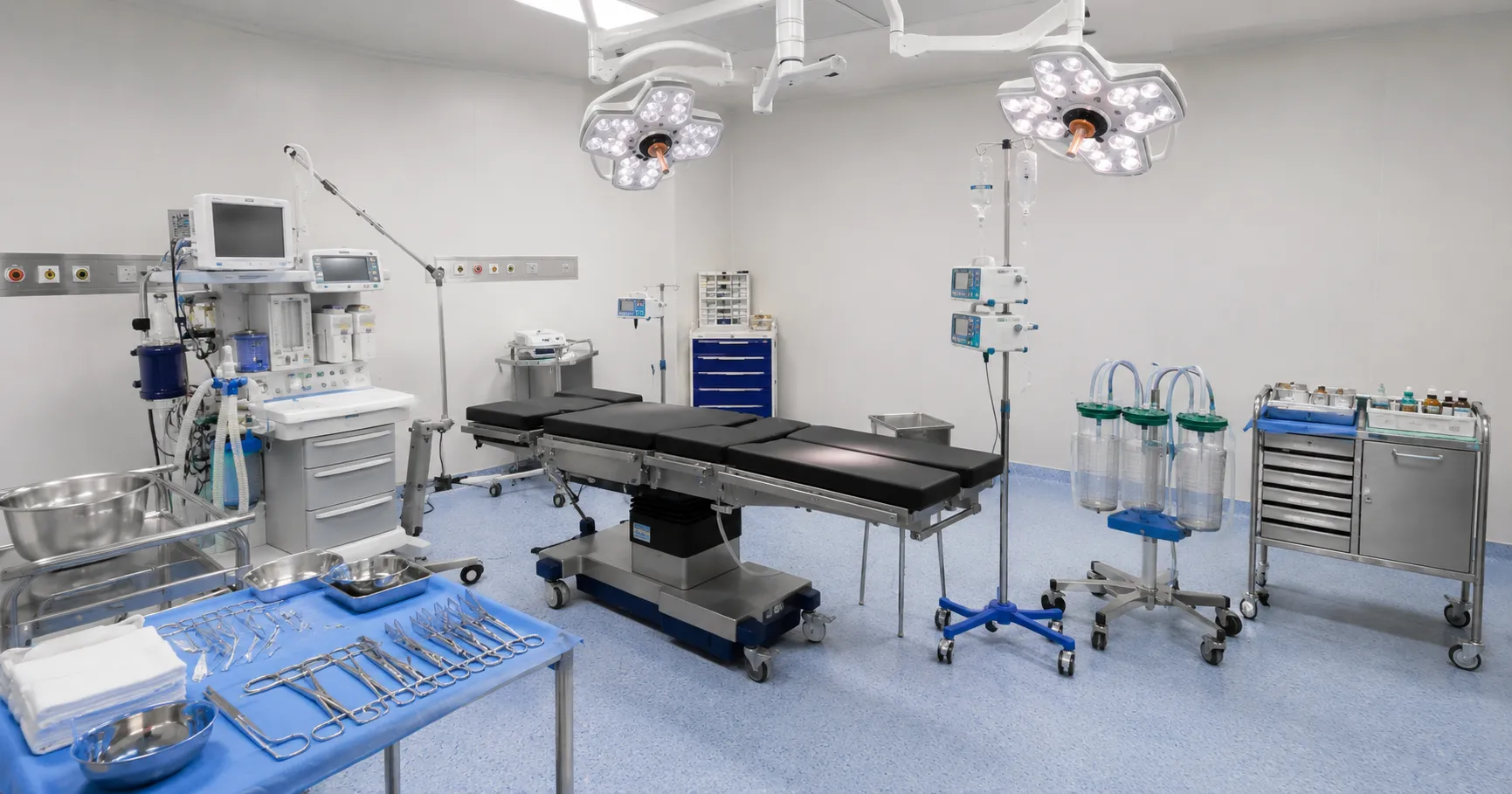
A smooth operation depends on the operating room being fully and thoughtfully equipped, and the essentials below enable a surgical team to work safely and efficiently. From the operating table to the sterile drape, this equipment turns a room into a place where surgery can proceed without interruption. Many services explore operating room equipment for buyers on Medigear.uk as they plan.
Because an operating room supports many functions at once, its essentials are best understood by the role each plays, from positioning the patient to powering the surgery. Grouping the equipment this way shows how a theatre is built for both safety and efficiency.
The one hundred essentials below are grouped into ten functions of ten, from the table to theatre support. Grouping them this way follows how an operating room actually comes together for a case.
The ten functions of a theatre
The essentials fall into ten functions: table and positioning, lighting, anaesthesia, surgical energy, monitoring, instruments and sets, suction and fluid, sterile supplies, imaging and visualisation, and theatre support.
Table and positioning
The patient must be positioned safely and accessibly. Correct, secure positioning is the quiet foundation of a safe operation. A team can also supply your operating room equipment on Medigear.uk as a partner.
-
Operating tables — supporting the patient for surgery
-
Table accessories — adapting the table to the case
-
Positioning aids — holding the patient in position
-
Arm boards — supporting the arms
-
Leg supports — positioning the legs
-
Head rests — cradling the head
-
Lateral supports — steadying the patient's side
-
Gel positioning pads — protecting pressure points
-
Safety straps — securing the patient
-
Table extensions — adjusting table length
Lighting
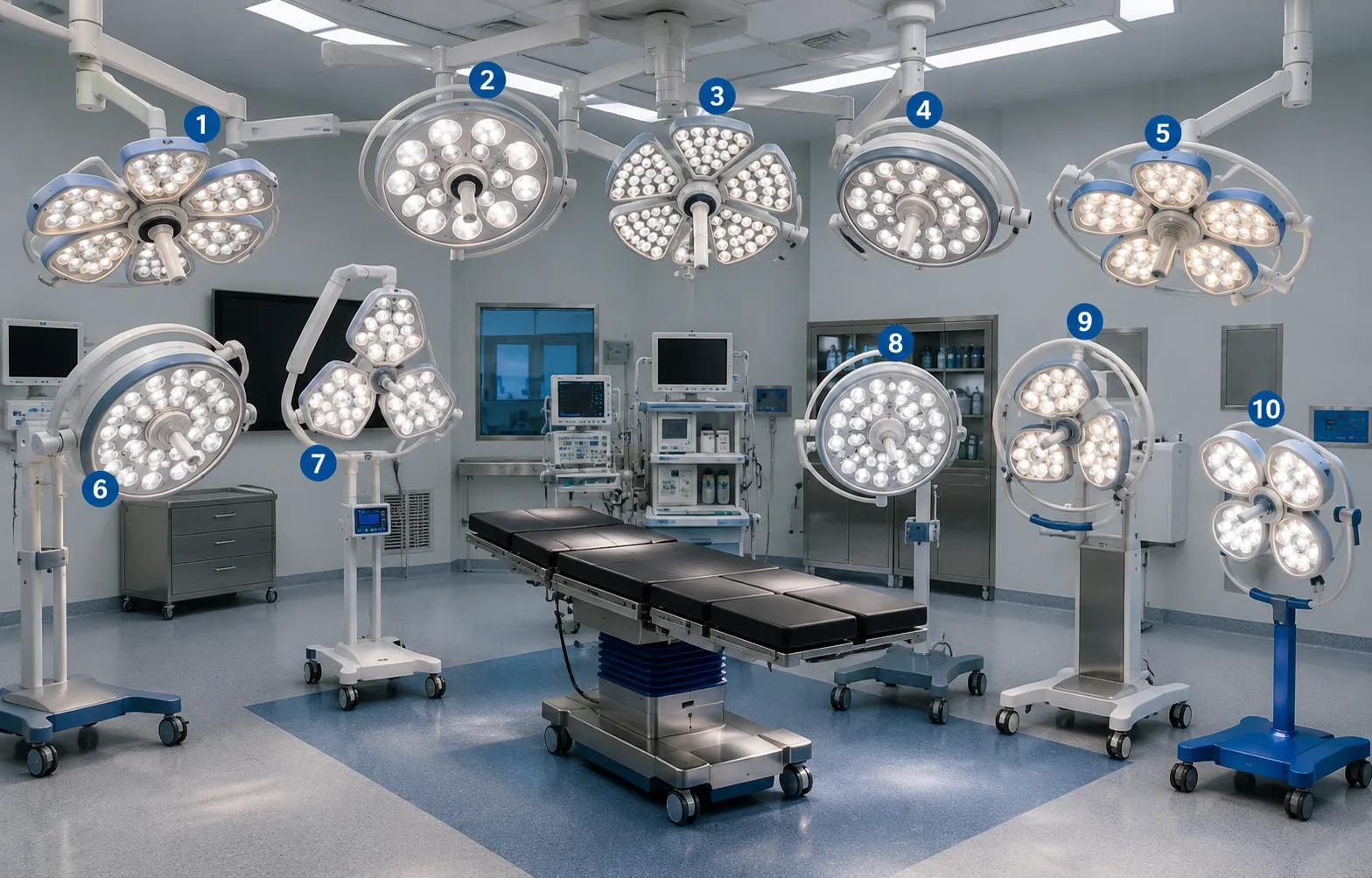
Surgery needs precise, shadow-free light. Good light, free of shadow, is something a surgical team can never do without.
-
Surgical lights — illuminating the operative field
-
Satellite lights — adding light from another angle
-
Surgical headlights — lighting deep cavities
-
Theatre examination lights — for pre-operative checks
-
In-light cameras — recording the field
-
Sterile light handles — adjusting lights cleanly
-
Portable theatre lights — backup lighting
-
Minor procedure lights — for small cases
-
Light control panels — adjusting illumination
-
Emergency theatre lighting — light during power loss
Anaesthesia
Anaesthesia keeps the patient safe and still. This equipment keeps the patient safe, still and comfortable throughout surgery.
-
Anaesthetic machines — delivering anaesthesia
-
Anaesthetic vaporisers — dosing anaesthetic gas
-
Breathing circuits — carrying gases to the patient
-
Gas scavenging systems — removing waste gas
-
Anaesthetic monitors — watching the anaesthetised patient
-
Airway trolleys — stocked for airway management
-
Ventilator modules — supporting breathing
-
Anaesthetic gas analysers — measuring delivered gases
-
Theatre infusion pumps — giving drugs precisely
-
Patient warming devices — keeping the patient warm
Surgical energy
Energy devices cut, seal and coagulate tissue. Used well, these devices make surgery quicker, cleaner and less bloody.
-
Electrosurgical units — cutting and coagulating
-
Diathermy pencils — applying surgical energy
-
Bipolar forceps — sealing small vessels
-
Vessel sealers — sealing larger vessels
-
Ultrasonic scalpels — cutting with ultrasound
-
Argon units — surface coagulation
-
Surgical smoke evacuators — clearing surgical smoke
-
Return electrodes — completing the circuit safely
-
Energy foot switches — hands-free activation
-
Generator carts — housing energy units
Monitoring
Continuous monitoring guards the patient. Continuous monitoring is what lets the team operate with confidence.
-
Theatre patient monitors — tracking vital signs
-
Depth-of-anaesthesia monitors — gauging anaesthetic depth
-
Neuromuscular monitors — checking muscle relaxation
-
Theatre temperature monitors — watching body temperature
-
Invasive pressure modules — measuring pressures directly
-
Cardiac output monitors — assessing the circulation
-
Cerebral oximeters — checking brain oxygen
-
Gas monitoring modules — tracking anaesthetic gases
-
Theatre alarm systems — alerting the team
-
Central display screens — showing data to all
Instruments and sets
The right instruments must be ready and sterile. Having the right instruments ready and sterile keeps an operation flowing.
-
General instrument sets — for routine surgery
-
Speciality instrument sets — for specific operations
-
Surgical retractors — holding tissue aside
-
Surgical clamps — controlling vessels
-
Needle holders — driving sutures
-
Scissors sets — cutting tissue and suture
-
Forceps sets — grasping tissue
-
Scalpel handles — holding blades
-
Suction tips — clearing the field
-
Instrument trolleys — presenting instruments
Suction and fluid
Managing fluids keeps the field clear. Keeping the field clear lets the surgeon see and work precisely.
-
Surgical suction units — removing blood and fluid
-
Fluid warmers — warming infusions
-
Irrigation systems — washing the field
-
Fluid collection systems — measuring losses
-
Suction canisters — collecting suctioned fluid
-
Rapid infusion devices — giving fluids fast
-
Cell salvage systems — recovering the patient's blood
-
Fluid management systems — balancing input and output
-
Waste fluid disposal — emptying safely
-
Warming cabinets — warming fluids and blankets
Sterile supplies
Sterility protects the patient from infection. Every item here exists to protect the patient from infection.
-
Sterile surgical drapes — creating a sterile field
-
Surgical gowns — protecting the sterile team
-
Surgical glove packs — sterile hand protection
-
Surgical swab packs — absorbing and counting
-
Suture materials — closing tissue
-
Skin preparation solutions — cleaning the site
-
Sterile equipment covers — keeping devices sterile
-
Custom procedure packs — assembling case supplies
-
Sterile bowls — holding sterile fluids
-
Surgical marking pens — marking the site
Imaging and visualisation
Seeing inside guides many operations. Seeing clearly inside the body guides many of today's operations.
-
Mobile C-arms — imaging during surgery
-
Endoscopy stacks — supporting keyhole surgery
-
Laparoscopic towers — housing laparoscopic kit
-
Surgical cameras — displaying the field
-
Theatre monitors — showing surgical images
-
Endoscopic light sources — lighting from within
-
Insufflators — creating working space
-
Surgical navigation systems — guiding precise surgery
-
Ultrasound probes — imaging in theatre
-
Image recorders — capturing the procedure
Theatre support
Supporting kit keeps the theatre efficient. This supporting kit is what keeps a theatre efficient between and during cases.
-
Scrub sinks — for surgical hand washing
-
Preparation trolleys — laying out supplies
-
Kick buckets — collecting waste swabs
-
Mayo stands — holding instruments to hand
-
Back tables — staging instruments
-
Theatre waste bins — segregating waste
-
Specimen stations — handling specimens
-
Theatre warming units — warming supplies
-
Storage racks — organising theatre stock
-
Theatre stools — supporting the seated team
Efficiency is a team achievement
An efficient operating room is not simply well equipped; its equipment is arranged and prepared so the team can flow through a case without hunting for what they need. The best theatres pair good equipment with good organisation, so instruments, energy and imaging are ready at the right moment. Efficiency is designed in, not hoped for.
Safety is never traded for speed.
Speed in theatre matters, but never at the expense of safety, and much of a theatre's equipment exists precisely to keep a fast operation a safe one. Monitoring, sterile supplies and correct positioning protect the patient while the team works efficiently. Good theatres are quick because they are safe, not despite it.
The sterile field at the centre
Everything in an operating room orbits the sterile field, and a great deal of equipment exists to create and protect it, from drapes and gowns to sterile covers. A breach of sterility undoes the finest surgery, so this equipment is fundamental rather than incidental. Protecting the field is protecting the patient.
Ready for every kind of case
A single theatre may host many different operations, so its equipment is chosen for versatility, with general sets and adaptable tables complemented by speciality kits. Being ready for a range of cases keeps a theatre efficient and a list moving. Flexible equipment is what lets one room serve many surgeries.
Turnaround matters too
Efficiency is not only about the operation but about the time between cases, when a theatre must be cleaned, restocked and reset. Equipment that is easy to clean and quick to prepare shortens turnaround time and allows more patients to be treated. A theatre's efficiency is measured both between cases and during them.
Planning an operating room
An operating room is equipped to support the range of surgery it will host, so tables, energy, imaging, and instruments match the cases planned for it. Because theatres are among the most demanding environments in a hospital, planning favours dependable, well-supported equipment that will not fail mid-case.
Sterility and safety shape every choice, since the consequences of failure here are immediate. Choosing reliable, easily maintained equipment, and preparing it meticulously, is what lets a theatre run both safely and efficiently.
Points to keep in mind
-
Organisation. Arrange equipment for smooth flow.
-
Safety first. Never trade safety for speed.
-
Sterile field. Protect it above all.
-
Versatility. Equip for many kinds of cases.
-
Turnaround. Choose equipment that resets quickly.
Where preparation meets precision
These 100 operating room essentials are where careful preparation meets surgical precision, enabling a team to operate safely and efficiently. A theatre equipped for every function, organised for flow and built around the sterile field gives surgeons and patients the conditions that good surgery demands.
Preparation is half the operation.
Much of what makes surgery efficient happens before the first incision, in the preparation of the room, the checking of equipment and the laying out of instruments. A theatre that prepares thoroughly runs smoothly, while one that improvises loses time and risks safety. The unseen preparation is as important as the operation itself.
Standardising for safety
Many theatres standardise their equipment and layout so that any member of staff can find what they need in any room, which reduces error and speeds every case. This consistency is a quiet source of both safety and efficiency. Standard theatres are safer theatres.
Technology in the modern theatre
Surgery increasingly relies on advanced imaging, energy, and navigation equipment that allow operations to be less invasive and more precise. Providing and maintaining this technology is an increasingly important part of equipping a theatre. The modern operating room is as much a technical environment as a surgical one.
The team around the table
Equipment supports but never replaces the surgical team, whose coordination turns a well-equipped room into a smoothly running operation. The finest theatre still depends on the people in it. Good equipment serves the team; it does not stand in for them.
Counting, tracking and safety checks
Alongside its clinical equipment, a theatre relies on the disciplines of counting swabs and instruments, checking equipment and confirming the patient and procedure, all supported by equipment and systems designed for the purpose. These safety routines prevent some of the most serious errors in surgery. The trolleys, counts and checklists that support them are as much a part of theatre equipment as any device. Safety in theatre is built as much on routine as on technology, and the two reinforce one another.
Keeping a theatre list moving
A theatre's efficiency is measured across a whole list, not a single case, so equipment that speeds preparation, cleaning and turnaround helps as much as anything used during surgery. Delays between cases waste scarce theatre time and keep patients waiting. Equipment chosen and arranged with turnaround in mind lets a list run to time. A theatre that resets quickly treats more patients without ever rushing the surgery itself.
Recovery begins in theatre.
A patient's recovery does not wait until they leave the operating room; it begins with careful positioning, warming and monitoring during the operation itself, all supported by dedicated equipment. Keeping a patient warm, well positioned and closely watched throughout surgery reduces complications and speeds their return to the ward. The equipment that supports this quiet care is easily overlooked beside the dramatic instruments, yet it shapes how well a patient does afterwards. A theatre that looks after the whole patient, not only the operation, sends people to recovery in better condition. Many services list operating room equipment from suppliers on Medigear.uk for their service.
Servicing and safety
Operating room equipment is safety-critical, so servicing, testing and sterile-processing checks are essential to keep every device dependable. Staff should also know how to report a problem with a medical device to the MHRA if any theatre device is found faulty.
Operating room essentials in short
An efficient operating room rests on equipment for every function, organised for flow and centred on the sterile field. Grouping essential items by function, planning for a range of cases, and favouring dependable instruments turn a room into a place where surgery proceeds smoothly. Equipped this way, an operating room serves both safety and efficiency.
This overview offers general procurement guidance on operating room equipment and is not clinical advice; local policy and manufacturer instructions always take precedence.