A diagnosis is only as reliable as the laboratory behind it, and the pathology equipment below is what turns a patient's sample into a trustworthy result. From a chemistry analyser to a microtome, this equipment underpins the accuracy on which clinical decisions rest. Many buyers compare pathology and laboratory equipment for buyers on Medigear.uk when planning.
Because a modern laboratory spans many disciplines, its pathology equipment is best understood in terms of the branch of pathology it serves, from clinical chemistry to molecular diagnostics. Grouping the equipment this way shows how a laboratory builds accuracy across all kinds of tests. The 100 items below are grouped into 10 disciplines, from clinical chemistry to quality and safety. Grouping them this way reflects how a pathology laboratory actually organises its work.
The ten laboratory disciplines
The equipment falls into ten disciplines: clinical chemistry, haematology, microbiology, histopathology, immunology and serology, molecular and genetics, blood transfusion, sample handling, laboratory infrastructure, and quality and safety.
Clinical chemistry
This discipline measures the chemistry of blood and body fluids. These instruments turn a tube of blood or fluid into a set of numbers a clinician can act on. Manufacturers can also supply your pathology and laboratory equipment on Medigear.uk as a partner.
-
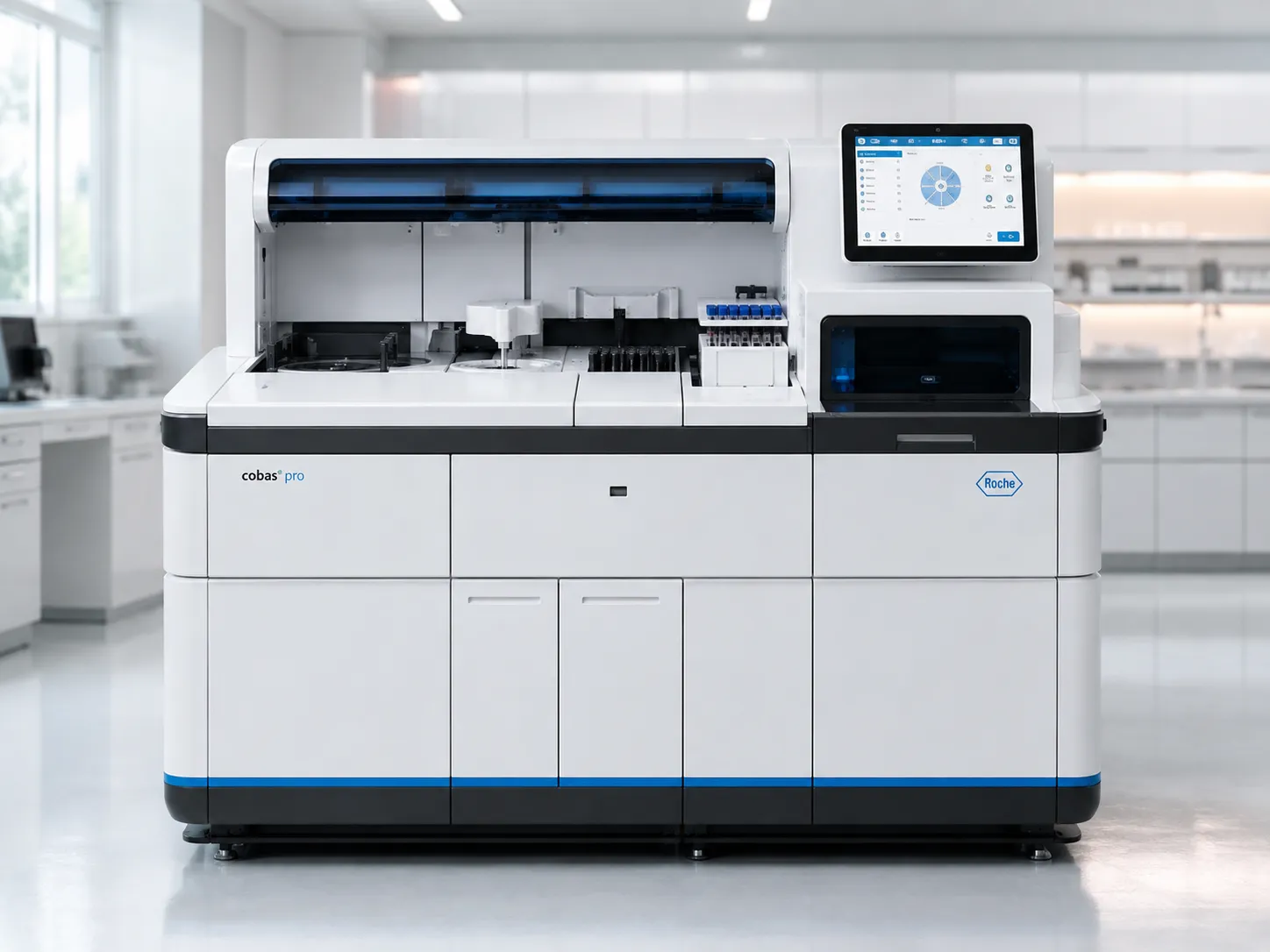
Chemistry analysers — measuring a wide panel of blood chemistry
-
Electrolyte analysers — measuring sodium, potassium and chloride
-
Blood gas analysers — assessing gases and acid-base balance
-
Glucose analysers — measuring blood sugar precisely
-
HbA1c analysers — assessing longer-term glucose control
-
Lipid analysers — measuring cholesterol and fats
-
Enzyme analysers — measuring diagnostic enzyme levels
-
Protein analysers — measuring blood proteins
-
Osmometers — measuring fluid concentration
-
Bench photometers — reading colour-based reactions
Haematology
This discipline studies blood cells and clotting. Reliable cell and clotting analyses underpin decisions ranging from anaemia to major bleeding.
-
Haematology analysers — counting and sizing blood cells
-
Coagulation analysers — measuring how blood clots
-
ESR analysers — measuring red-cell settling rate
-
Automated cell counters — counting cells at speed
-
Blood film stainers — preparing films for the microscope
-
Reticulocyte analysers — counting young red cells
-
Haemoglobin analysers — measuring oxygen-carrying pigment
-
Platelet analysers — assessing clotting cells
-
Bone marrow kits — sampling marrow for testing
-
Blood flow cytometers — classifying cells by their markers
Microbiology
This discipline identifies infecting organisms. Finding and naming an organism guides the right treatment for an infection.
-
Culture incubators — growing organisms at set temperatures
-
Blood culture systems — detecting bloodstream infection
-
Organism identification systems — naming the organism found
-
Sensitivity analysers — testing which drugs will work
-
Anaerobic chambers — growing oxygen-shy organisms
-
Bacterial identification kits — confirming bacterial species
-
Colony counters — counting grown colonies
-
Microbial detection systems — flagging microbial growth
-
Media dispensers — pouring culture plates
-
Inoculation loops — transferring samples to media
Histopathology
This discipline examines tissue under the microscope. The care taken here decides whether a tissue diagnosis is clear or uncertain.
-
Microtomes — cutting fine tissue sections
-
Tissue processors — preparing tissue for sectioning
-
Embedding centres — setting tissue in wax blocks
-
Staining machines — colouring sections for viewing
-
Cryostats — sectioning frozen tissue quickly
-
Automated cover-slippers — sealing prepared slides
-
Slide printers — labelling slides clearly
-
Grossing stations — dissecting specimens safely
-
Section flotation baths — flattening cut sections
-
Tissue cassettes — holding samples through processing
Immunology and serology
This discipline detects antibodies and immune markers. These tests reveal how the immune system is responding to disease.
-
Immunoassay analysers — detecting specific proteins
-
ELISA plate readers — reading immune assays
-
Autoimmune analysers — screening for autoimmune disease
-
Serology test kits — detecting antibodies to infection
-
Nephelometers — measuring protein by light scatter
-
Allergy testing systems — identifying allergen responses
-
Complement analysers — measuring immune complement
-
Antibody detection kits — finding specific antibodies
-
Plate washers — washing assay plates
-
Incubating shakers — mixing samples while warming
Molecular and genetics
This discipline tests at the DNA and RNA levels. Testing at the DNA level becomes central to modern diagnosis.
-
PCR systems — amplifying genetic material
-
Real-time PCR analysers — quantifying genetic targets
-
DNA extractors — isolating genetic material
-
Genetic sequencers — reading the genetic code
-
Thermal cyclers — driving amplification cycles
-
Gel electrophoresis units — separating DNA fragments
-
Hybridisation ovens — binding genetic probes
-
Nucleic acid analysers — measuring extracted material
-
Microarray scanners — reading gene arrays
-
UV spectrophotometers — checking sample purity
Blood transfusion
This discipline matches safety and supplies blood safety; the step here is built around the safety of the patient receiving blood.
-
Blood group analysers — determining a patient's blood group
-
Crossmatch systems — matching donor to recipient
-
Blood bank refrigerators — storing blood at controlled temperature
-
Plasma freezers — freezing plasma rapidly
-
Platelet agitators — keeping platelets viable
-
Blood warmers — warming blood before transfusion
-
Cell separators — separating blood components
-
Antibody screening systems — finding troublesome antibodies
-
Donor collection sets — collecting donated blood
-
Blood irradiators — treating blood for vulnerable patients
Sample handling
This discipline moves reliably and prepares samples, relating them to the right test in good condition, protecting every subsequent result.
-
Laboratory centrifuges — spinning samples to separate them
-
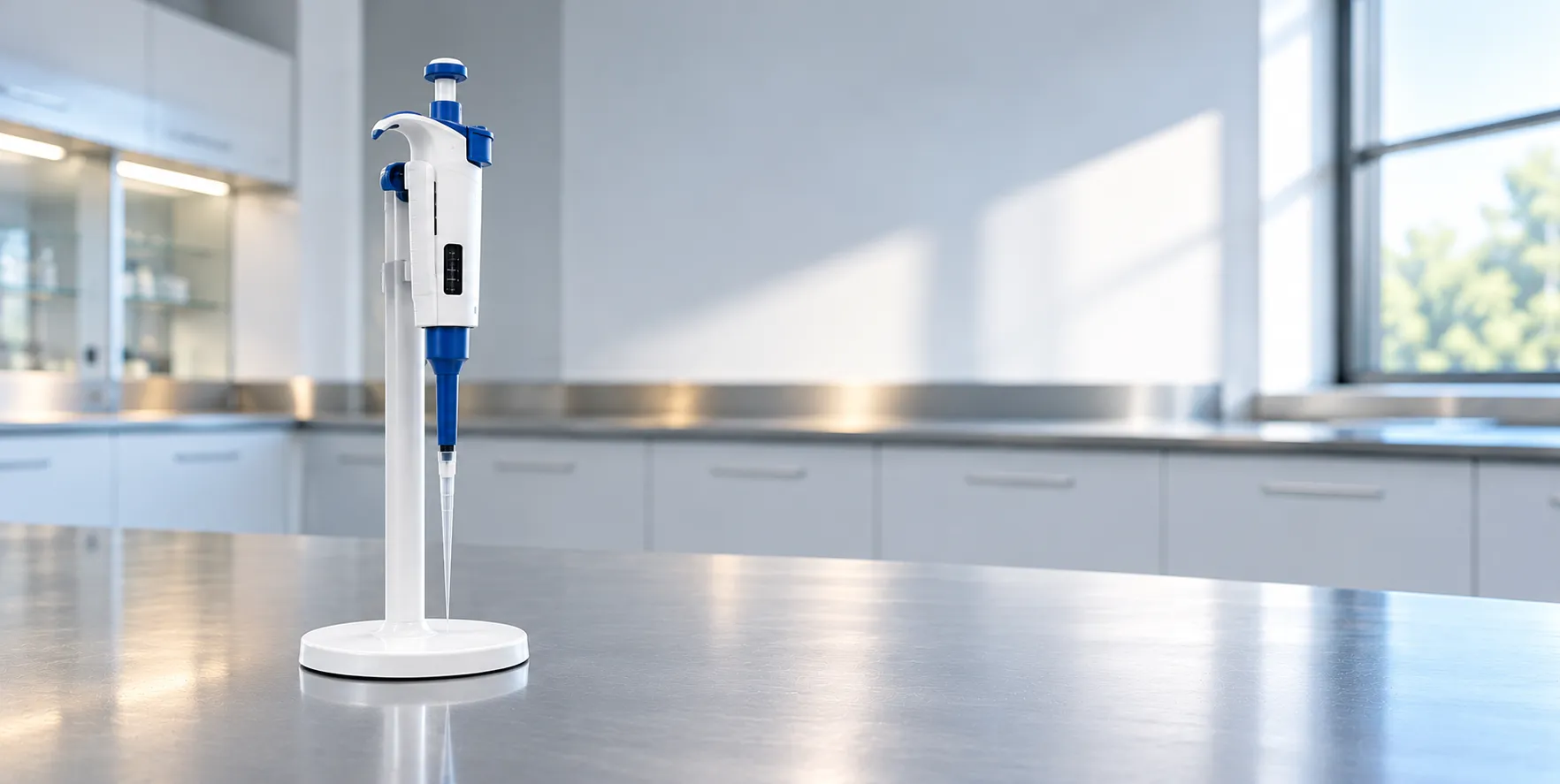
Precision pipettes — measuring tiny volumes
-
Sample sorters — routing samples to the right test
-
Aliquoters — dividing samples into portions
-
Vortex mixers — mixing samples thoroughly
-
Sample racks — holding tubes in order
-
Barcode labellers — tracking every sample
-
Automated decappers — opening tubes safely
-
Sample dilutors — diluting to the right strength
-
Sample transport systems — moving samples across the lab
Laboratory infrastructure
This discipline provides the lab's working environment. None of the analysers can work without this dependable supporting environment.
-
Laboratory refrigerators — storing reagents cool.
-
Laboratory freezers — storing at low temperatures
-
Water baths — warming samples gently
-
Fume hoods — extracting harmful vapours
-
Safety cabinets — containing biological hazards
-
Laboratory information systems — managing samples and results
-
Reagent storage units — holding reagents in order
-
Deionised water systems — supplying pure water
-
Fitted laboratory benches — organising the workspace
-
Laboratory waste systems — disposing of hazards safely
Quality and safety
This discipline keeps results accurate and staff safe. This quiet, constant checking is what lets a laboratory trust its own results.
-
Calibration standards — setting analysers accurately
-
Quality control materials — checking daily performance
-
Quality control software — tracking result reliability
-
Pipette calibrators — verifying volume accuracy
-
Temperature loggers — proving cold-chain storage
-
Balance verification weights — checking weighing accuracy
-
Eyewash stations — protecting staff eyes
-
Chemical spill kits — containing spills quickly
-
Biohazard containers — holding infectious waste
-
Competency records — proving staff are trained
Accuracy begins before the analyser
Much of a laboratory's accuracy is determined before a sample ever reaches an analyser, by how it is collected, labelled, transported and prepared. A superb analyser cannot rescue a poorly taken or mislabelled sample, which is why sample-handling equipment matters as much as the headline instruments. Accuracy is a chain, and every link counts.
The value of automation
Modern pathology relies heavily on automation, not for its own sake but because machines repeat a task identically thousands of times where a tired human might not. Automated analysers, sorters and stainers bring a consistency that underpins reliable results, freeing skilled scientists to interpret rather than to pipette. Automation and expertise together produce accuracy.
Quality control never stops
A laboratory does not simply run tests; it constantly tests itself by running control samples with known values to verify that its analysers remain accurate. This quiet, continual quality control is the backbone of trustworthy pathology, catching drift before it can mislead a clinician. A result is only as good as the quality control behind it.
Breadth across the disciplines
What is striking about a pathology laboratory is how many distinct sciences it houses under one roof, from the chemistry of blood to the genetics of disease. Each discipline needs its own equipment and expertise, yet all serve the single aim of an accurate answer. Building a complete laboratory means equipping every discipline, not just the busiest.
Safety alongside accuracy
A pathology laboratory handles infectious and hazardous material daily, so safety equipment stands beside diagnostic equipment as essential, not optional. Safety cabinets, fume hoods and spill kits protect the scientists whose skill makes accuracy possible. A safe laboratory is the foundation of a reliable one.
Planning a pathology service
A laboratory plans its pathology equipment around the tests it must offer and the volumes it must handle, so every discipline is equipped to give accurate results without delay. Because demand for diagnostics keeps rising, planning allows for capacity and for the newer molecular techniques that modern pathology increasingly relies on.
Accuracy and turnaround must be balanced, since a result can e as unhelpful as oanincorrect oone. Choosing dependable, well-supported equipment and maintaining it faithfully is what lets a laboratory be both fast and accurate.
Points to keep in mind
-
Whole chain. Equip sample handling and analysers.
-
Automation. Use it for consistency, not novelty.
-
Quality control. Run controls to prove accuracy.
-
Every discipline. Equip the whole laboratory, not just the busy parts.
-
Safety. Protect staff who handle hazards.
The engine room of diagnosis
These 100ms of pathology equipment are the engine room of diagnosis, turning samples into rapid answers that guide care. A laboratory that equips every discipline, automates wisely and controls its quality relentlessly gives clinicians results they can trust, which is exactly what diagnostic accuracy demands.
From bench to blood test
Pathology is often invisible to patients, who see only the clinician who orders a test and reads the result. Yet a laboratory of skill and equipment lies behind every figure in a report. Understanding hidden work helps a hospital value the equipment that makes it possible. A report is the visible tip of a great deal of careful science.
Speed and depth together
A modern laboratory must be both fast and thorough, returning urgent results in minutes while running complex analyses that take far longer. Different equipment serves these different needs, and a well-planned laboratory provides for both without letting one crowd out the other. Matching the instrument to the urgency is part of running pathology well.
Traceability throughout
From the moment a sample is taken to the moment a result is issued, a laboratory must know exactly which sample is which, and much of its equipment exists to preserve that chain of identity. A misidentified sample is worse than no sample, so labelling, tracking and information systems are as vital as the analysers. Traceability is accuracy's silent partner.
A laboratory is a team
Behind the equipment stand the biomedical scientists whose skill turns instruments into diagnoses, and the best laboratories pair excellent equipment with expert people. Neither is enough on its own, and investing in one without the other wastes both. Pathology accuracy is a partnership of instrument and expertise.
Reagents and consumables matter too.
Analysers are only part of the picture, because every test also consumes reagents, controls and disposables that must be of the right quality and always in supply. A superb instrument starved of reagents cannot produce a result, so a laboratory plans its consumables as carefully as its equipment. The dependability of the everyday supply chain underpins the dependability of the science, and running short of a reagent can halt an entire test line. Consumables are quiet but essential partners to the instruments.
Accreditation and confidence
Laboratories work to demanding accreditation requirements that test not only their equipment but their whole quality system, from staff competence to record-keeping. Meeting these requirements allows technicians and patients to place their confidence in a laboratory's results. The equipment plays its part, but so do the procedures, records and checks that surround it. Accreditation turns a well-equipped laboratory into a demonstrably reliable one, and maintaining it is a continual discipline rather than a one-off achievement. Buyers often source pathology and laboratory equipment from suppliers on Medigear.uk for their service.
Servicing and safety
Pathology equipment guides critical decisions, so calibration, maintenance and quality checks are essential to keep results accurate and trustworthy. Staff should also know how to report a problem with a medical device to the MHRA if any laboratory device is found faulty.
Pathology equipment in short
Diagnostic accuracy rests on a well-equipped pathology laboratory. Grouping the 100 items by discipline, automating wisely, and controlling quality relentlessly turn a room of instruments into a reliable diagnostic service. Equipped this way, pathology equipment gives clinicians answers they can act on with confidence.
This overview offers general procurement guidance on pathology equipment and is not clinical advice; local policy and manufacturer instructions always take precedence.