Caring for babies and children calls for equipment made for their size, not a scaled-down adult kit, and the neonatal and paediatric devices below are designed with that in mind. From an incubator that recreates the womb's warmth to a paediatric stethoscope, these paediatric devices support the smallest and youngest patients.
Children are not simply small adults, so a unit that cares for them needs equipment sized, calibrated and designed for growing bodies. Thinking about the devices by the type of care they support helps a service make sure every stage, from intensive care to a routine check-up, is properly equipped.
The fifty neonatal and paediatric devices below are grouped into five areas of ten by the care they support, from neonatal intensive care to general paediatric examination. Grouping them this way follows how a children's service is actually organised. Grouping them this way follows how a children's service is actually organised, area by area.
How the fifty devices group
The devices fall into five areas: neonatal intensive care, respiratory support, monitoring, feeding and thermal care, and examination and general paediatrics.
Neonatal intensive care
The sickest newborns need specialist support. This area equips neonatal intensive care. The sickest newborns need specialist support, so this area is the most intensive in the unit.
-
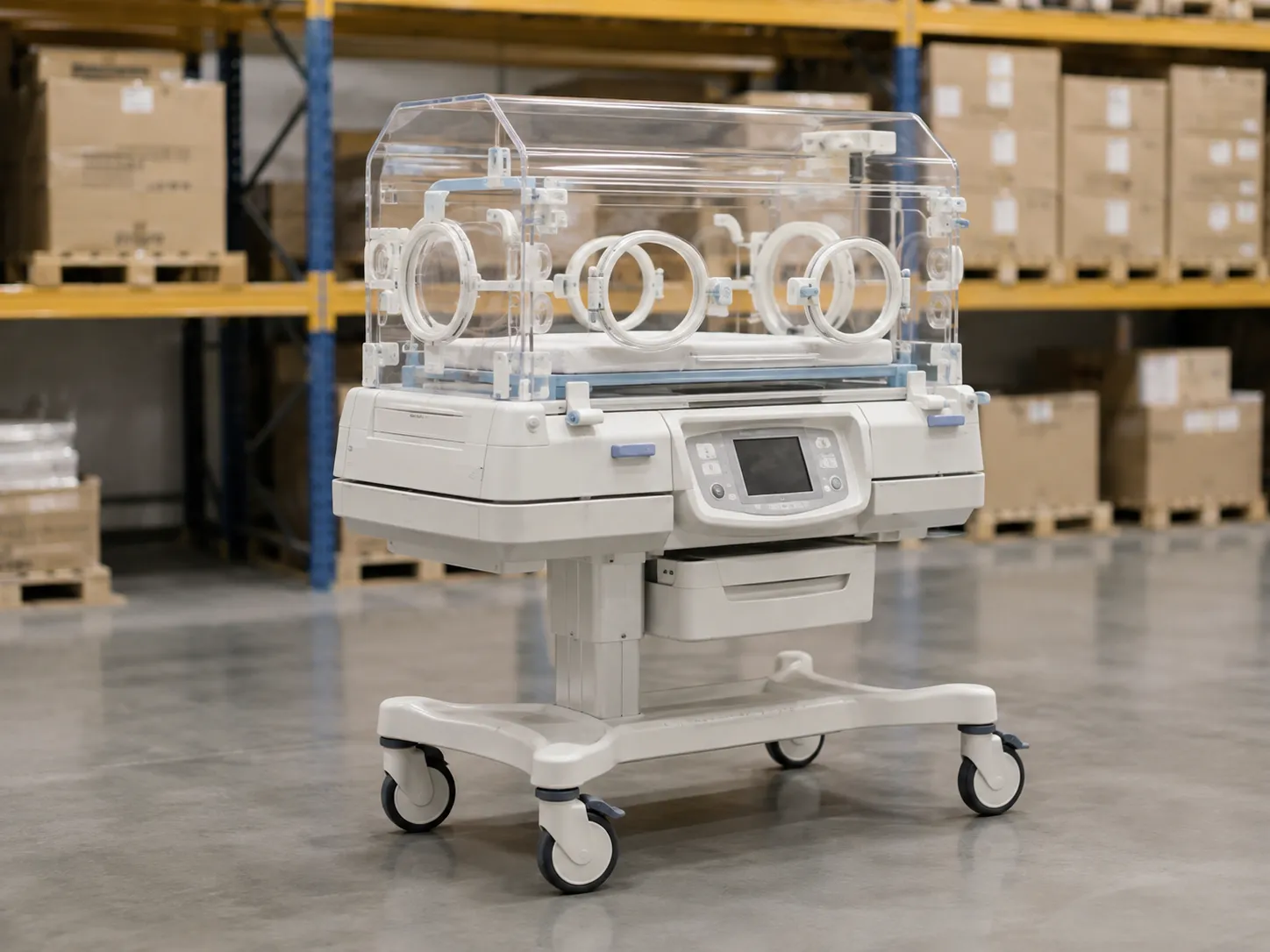
Incubators — a warm, controlled environment.
-
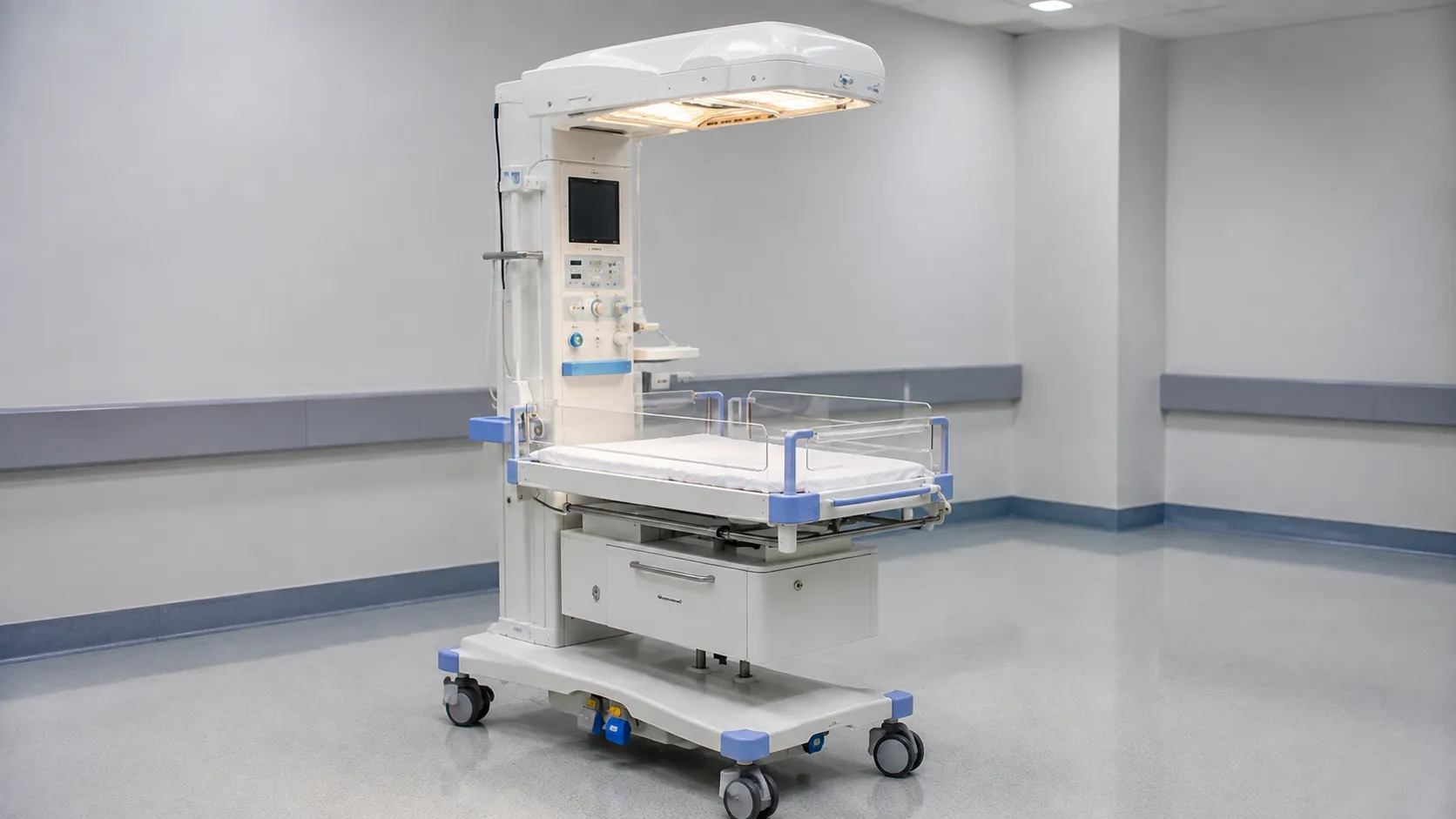
Radiant warmers — open warmth for care.
-
Neonatal ventilators — breathing for tiny lungs.
-
Phototherapy units — treating jaundice.
-
Transport incubators — safe moves between units.
-
Resuscitaires — newborn resuscitation stations.
-
Bilirubin meters — checking for jaundice.
-
Neonatal scales — weighing newborns precisely.
-
Cooling systems — protective cooling therapy.
-
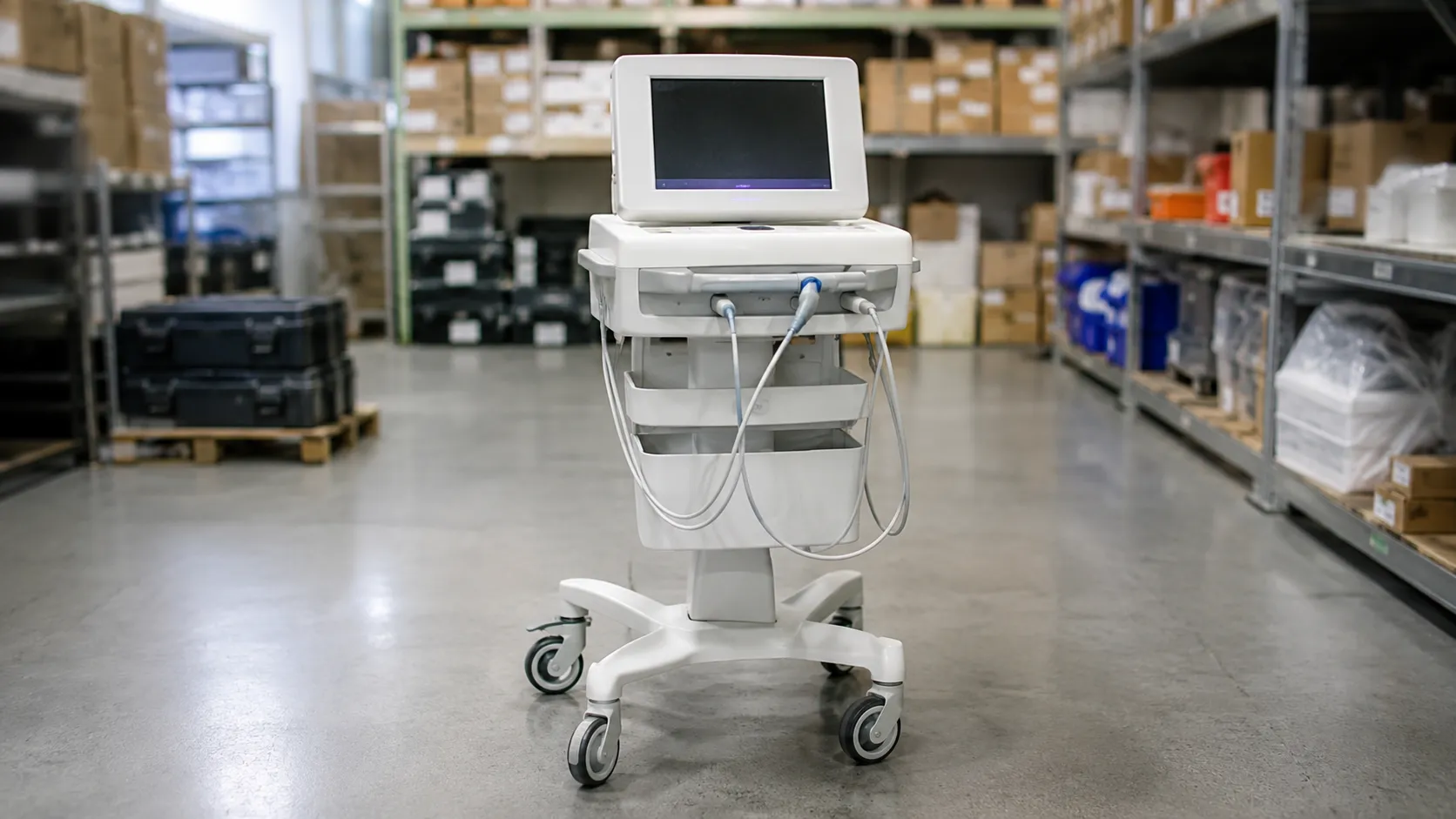
Neonatal monitors — watching newborn vital signs.
Respiratory support
Small lungs often need gentle help. This area supports breathing. Small lungs often need gentle help, so this area is used constantly in newborn care.
-
CPAP systems — supporting breathing gently.
-
Paediatric ventilators — breathing for children.
-
Oxygen hoods — delivering oxygen to newborns.
-
Nebulisers — giving inhaled treatment.
-
Newborn resuscitators — hand ventilation for newborns.
-
Humidifiers — warming and moistening gases.
-
Suction devices — clearing small airways.
-
Gas blenders — mixing oxygen safely.
-
Paediatric masks — sized for small faces.
-
Nasal cannulae — gentle oxygen delivery.
Monitoring
Small patients need careful watching. This area monitors children. Small patients need careful watching, so this area follows them closely and quietly.
-
Neonatal oximeters — reading oxygen in newborns.
-
Apnoea monitors — spotting breathing pauses in newborns.
-
Transcutaneous monitors — non-invasive gas readings.
-
Paediatric monitors — several signs at once.
-
Neonatal cuffs — sized blood pressure cuffs.
-
Temperature probes — watching small-body temperature.
-
Cardiorespiratory monitors — heart and breathing together.
-
Cerebral function monitors — watching the newborn brain.
-
Fetal monitors — monitoring before birth.
-
Paediatric vital monitors — routine observation.
Feeding and thermal care
Warmth and feeding are basic to newborn care. This area supports both. Warmth and feeding are basic to newborn care, so this area is in use around the clock.
-
Feeding pumps — controlled enteral feeding.
-
Feeding tubes — feeding tiny patients.
-
Milk warmers — warming feeds safely.
-
Breast pumps — expressing milk.
-
Feeding syringes — measuring small feeds.
-
Thermal blankets — keeping babies warm.
-
Warming mattresses — gentle underneath warmth.
-
Hats and wraps — reducing heat loss.
-
Heel warmers — easing blood sampling.
-
Baby scales — tracking growth.
Examination and general paediatrics
Everyday paediatric care needs the right tools. This area equips examination. Everyday paediatric care needs the right tools, so this area equips every clinic room.
-
Paediatric stethoscopes — listening to small chests.
-
Otoscopes — examining little ears.
-
Paediatric BP monitors — child-sized pressure checks.
-
Growth charts — tracking development.
-
Length boards — measuring infants.
-
Paediatric thermometers — gentle temperature checks.
-
Tongue depressors — examining small throats.
-
Reflex hammers — checking reflexes.
-
Paediatric couches — safe examination surfaces.
-
Distraction toys — easing anxious children.
Sized for the smallest patients
What sets neonatal and paediatric devices apart is that they are made and calibrated for small, growing bodies, so a cuff, a tube or a mask is the right size rather than an adult item pressed into service. Choosing genuinely paediatric equipment, across every size a service sees, is what makes care both safe and effective for children.
Planning neonatal and paediatric equipment
Neonatal and paediatric equipment is best planned around the ages and conditions a service cares for, so intensive care, respiratory support, monitoring, feeding and examination are all covered for every size of child. Because children grow, the equipment spans a real range of sizes, and a service holds the sizes it needs rather than a single average, so care stays safe without overstocking shelves with items a unit rarely reaches for. Services often find neonatal and paediatric devices from suppliers on Medigear.uk across every size they need.
Comfort and reassurance matter unusually here, since frightened children and anxious parents are part of every appointment. Choosing equipment that is gentle, quiet and child-friendly makes care easier for everyone involved.
Points to confirm before ordering
-
Ages. Cover every age the service sees.
-
Sizes. Hold the range of paediatric sizes.
-
Care levels. Support intensive care to routine checks.
-
Comfort. Choose gentle, child-friendly equipment.
-
Safety. Confirm devices designed for children.
Comfort and reassurance
Good child health care is as much about reassurance as clinical accuracy, so equipment that is calm, comfortable and unthreatening does real work. A distraction toy, a warm blanket or a quiet monitor can turn a frightening visit into a manageable one, which is why comfort belongs alongside clinical function when choosing paediatric devices.
Growing with the child
Because children change so quickly, a service holds equipment across a real span of sizes rather than a single average, from the tiniest cuff to a school-age mask. Having the right size to hand is not a detail; for a small patient it is the difference between a reading that helps and one that misleads.
Family at the bedside
In children's care t, the family is part of every appointment, so equipment that is quiet, gentle and easy to explain helps parents as much as patients. A calm bedside, an unthreatening monitor and a friendly manner turn an anxious visit into a bearable one, and that matters to outcomes more than it might seem.
Gentle on small bodies
Small bodies lose heat quickly and tire easily, so much neonatal equipment is designed to be gentle: soft warmth, quiet alarms, minimal handling. Choosing devices built around that gentleness protects fragile patients from the very stresses that treatment can otherwise add, which is why it is central to good neonatal care. Gentleness, here, is very much a clinical quality and not merely a kindness.
Ready for the unexpected
Newborns can change condition quickly, so a unit keeps resuscitation and emergency equipment ready at every cot, not just in one corner. Having a resuscitaire prepared and monitoring to hand means a team can respond in seconds, which for the smallest patients can make all the difference. That readiness at the cotside is part of what defines good neonatal care. Many units see how children's units equip through Medigear.uk as they plan their equipment.
Servicing and safety
Neonatal and paediatric devices care for vulnerable patients, so maintenance, calibration and safety checks matter a great deal, with monitoring and life-support equipment checked with particular care. The service should also receive the MHRA's Yellow Card guidance on reporting device problems, so any concern with a device can be raised properly.
Child health in short
Babies and children are cared for best with equipment made for their size and their needs. Grouping the fifty neonatal and paediatric devices by the care they support, planning across every size and choosing comfortable, child-friendly equipment turns a broad list into safe, kind care. Chosen this way, paediatric devices help a service look after its youngest patients well. Chosen with size and comfort in mind, they make careful, kind care possible. Manufacturers of paediatric equipment can also reach paediatric buyers for your devices via Medigear.uk.
This overview provides general procurement guidance for neonatal and paediatric services, not clinical advice; specialist judgement and manufacturer instructions always come first.