Thermal care in the delivery room happens in the first minutes, alongside everything else the team is doing. Equipment that requires attention to set up, or that fights or interferes with the rotation taking place on the same surface, will not be used well. The best-performing device is the one that is already warm, already positioned and already familiar.
The ten device types below cover delivery room and immediate postnatal warming. Each entry explains its role and what to confirm before purchase.
Control mode matters as much as output.
Radiant warmers generally operate in manual power mode or servo mode, where the temperature probe regulates the output. Servo control adjusts continuously, which is why probe placement and secure attachment are so important: a detached probe reports incorrect information, and the device responds accordingly. Confirm how the device signals a probe failure, a temperature outside the set range, and a power interruption, and ensure alarms are audible over the noise of an active delivery room.
The ten warming device types
1. Open radiant warmers
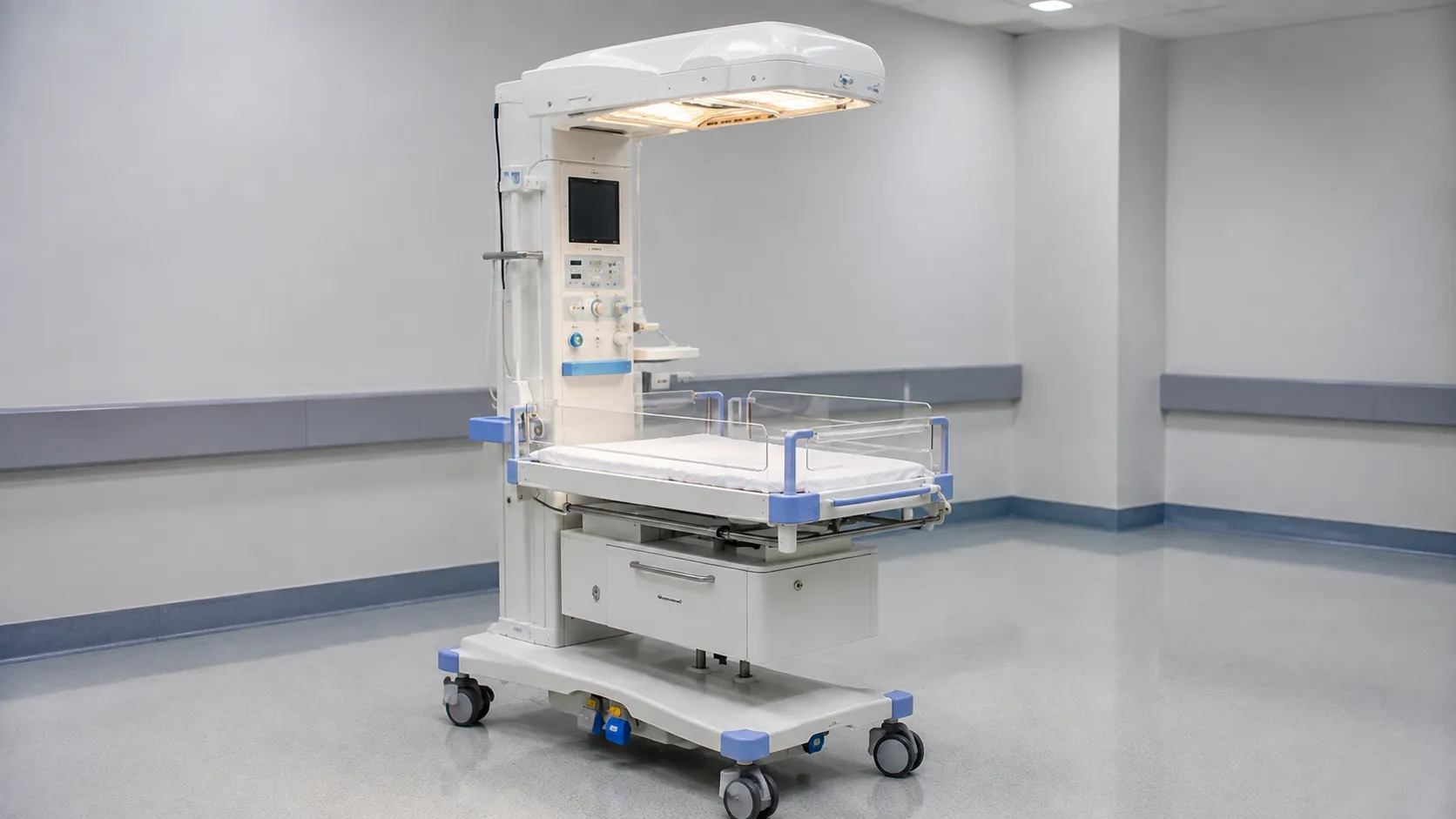
Overhead heaters above an open platform, giving full access for the team. The standard delivery room warming surface.
2. Resuscitation platforms with integrated warming
Combine radiant warming with gas supply, suction, timer, and lighting on a single tray, so resuscitation and thermal care occur in the same place.
3. Mobile resuscitation and warming trolleys
Wheeled units that can be brought to a birth wherever it happens, including theatre. Manoeuvrability and cable management are practical considerations.
4. Warmers with servo temperature control
Regulate output against a skin probe reading. Probe supply, attachment method and failure alarms are the important specification points.
5. Warmers with manual power control
Deliver a set proportion of maximum output under staff control, used according to local protocol and usually with time-limited operation.
6. Transport incubators
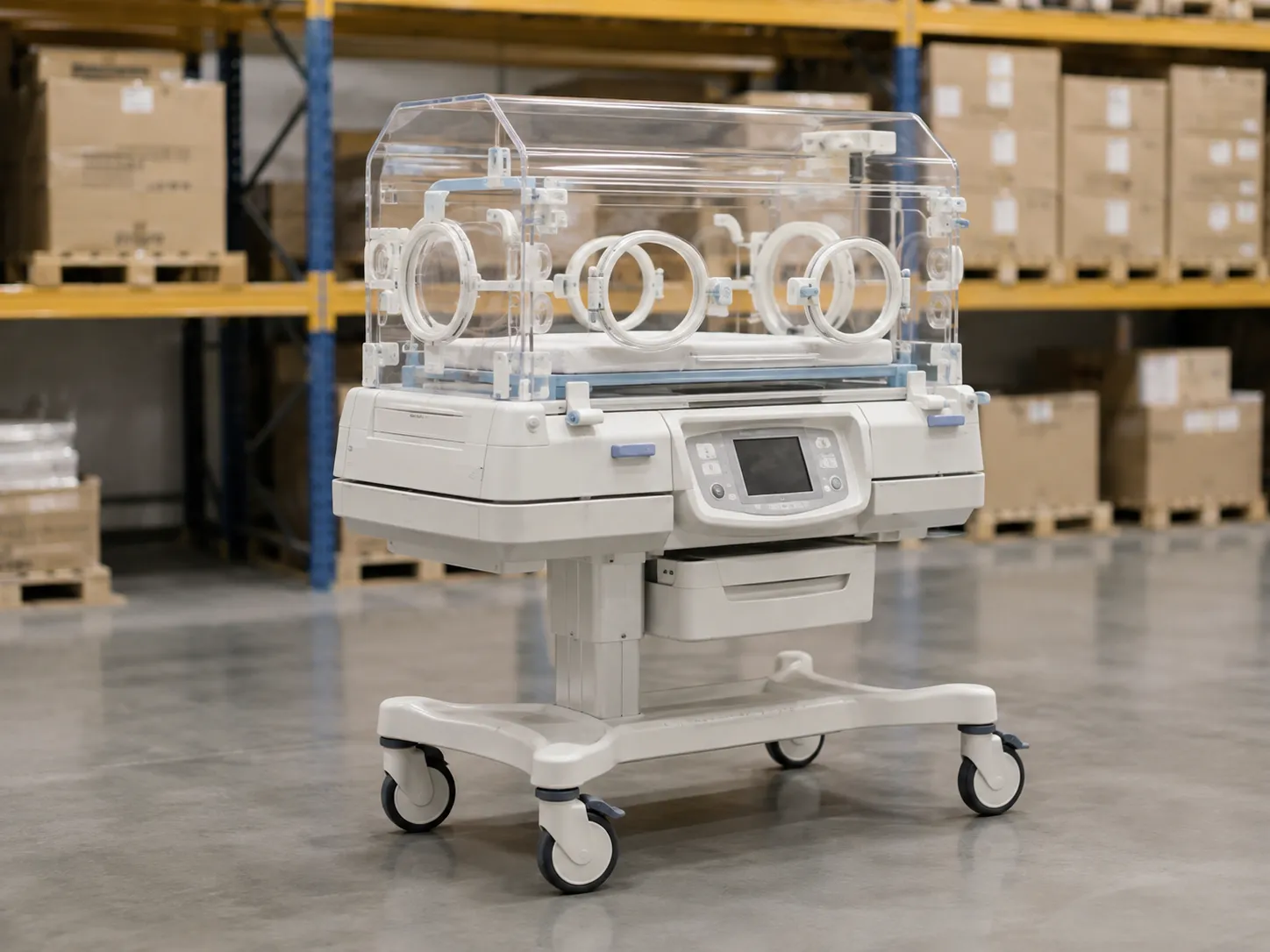
Enclosed units maintaining temperature during movement to the neonatal unit or between hospitals, with battery operation and secure mounting.
7. Warming mattresses
Portable heated surfaces used to support thermal care during stabilisation or transfer, including chemical and electrically heated types.
8. Radiant warmers with height adjustment
Allow the working surface and heater distance to be set for the team, as these affect both comfort and the temperature delivered to the mattress.
9. Devices with integrated timers and displays
Provide an elapsed time display from birth, supporting the team's record of events during resuscitation.
10. Combined warming and weighing platforms
Incorporate scales into the platform to avoid the handling step. Confirm calibration arrangements for the weighing function.
Delivery room layout and readiness
Warming equipment only works if it is switched on before it is needed, which makes placement and routine as important as specification. Position the platform where the team can work from both sides, with the gas outlets, suction and power sockets it needs within reach rather than across the room. Agree who pre-warms the device for each delivery and how that is recorded, and keep a short readiness check covering heater function, probe availability, gas supply and suction. In theatres and rooms used less often, the check matters more, because equipment left idle is the most likely to be found cold or incomplete.
What to confirm before ordering
-
Control modes. Confirm servo and manual modes and how they are selected.
-
Probe supply. Establish probe type, attachment method and consumable arrangements.
-
Alarms. Check probe failure, temperature and power alarms and their audibility.
-
Integration. Verify suction on-light timer provided on platforms.
-
Access. Confirm the team can work from both sides with equipment attached.
-
Cleaning. Verify approved agents for the mattress, platform and heater housing.
Training, checks and servicing
Training should cover mode selection, probe placement and securing, alarm response, height adjustment and pre-warming routine. Include midwifery, neonatal and theatre staff, since delivery room teams vary between departments.
Daily checks belong on the same footing as resuscitation trolley checks: heater function, probe stock, gas and suction availability, and the device positioned ready for use.
For servicing, agree planned maintenance intervals, heater output verification, probe accuracy checks, alarm testing, electrical safety testing and spare parts availability. Ensure the department receives published device safety alerts so field safety notices reach neonatal and engineering teams.
Probe supply and gas integration should be confirmed alongside the warming platform itself. Units equipping delivery rooms can review configurations through buyer support services.
Final thoughts
Specify around the room and the routine. Most delivery areas need a combined resuscitation and warming platform positioned for two-sided access, servo control with a reliable probe supply, audible alarms, and a pre-warming routine performed by someone on every shift.
This article provides general procurement guidance for healthcare organisations. It is not clinical or neonatal care advice, and it does not replace manufacturer instructions, training or local policy.