Hospitals depend on reliable access to medical equipment to support patient care, operational efficiency, and clinical performance. Procuring healthcare technology involves much more than purchasing equipment. Healthcare organisations must evaluate products, manage logistics, ensure regulatory compliance, coordinate installation, and maintain equipment throughout its lifecycle.
Medical equipment distributors help bridge the gap between manufacturers and healthcare providers. They play a vital role in helping hospitals access technologies, manage procurement processes, and navigate increasingly complex healthcare supply chains.
For healthcare facility buyers services decision-makers, distributors often provide valuable expertise that extends beyond equipment sourcing. Their support can influence procurement efficiency, equipment availability, lifecycle management, and long-term operational success.
Healthcare organisations often rely on healthcare facility procurement decision-makers to assess distributor capabilities when evaluating procurement strategies and healthcare technology investments.
What Medical Equipment Distributors Actually Do
Medical equipment distributors act as intermediaries between manufacturers and healthcare providers, helping hospitals access a wide range of healthcare technologies and support services.
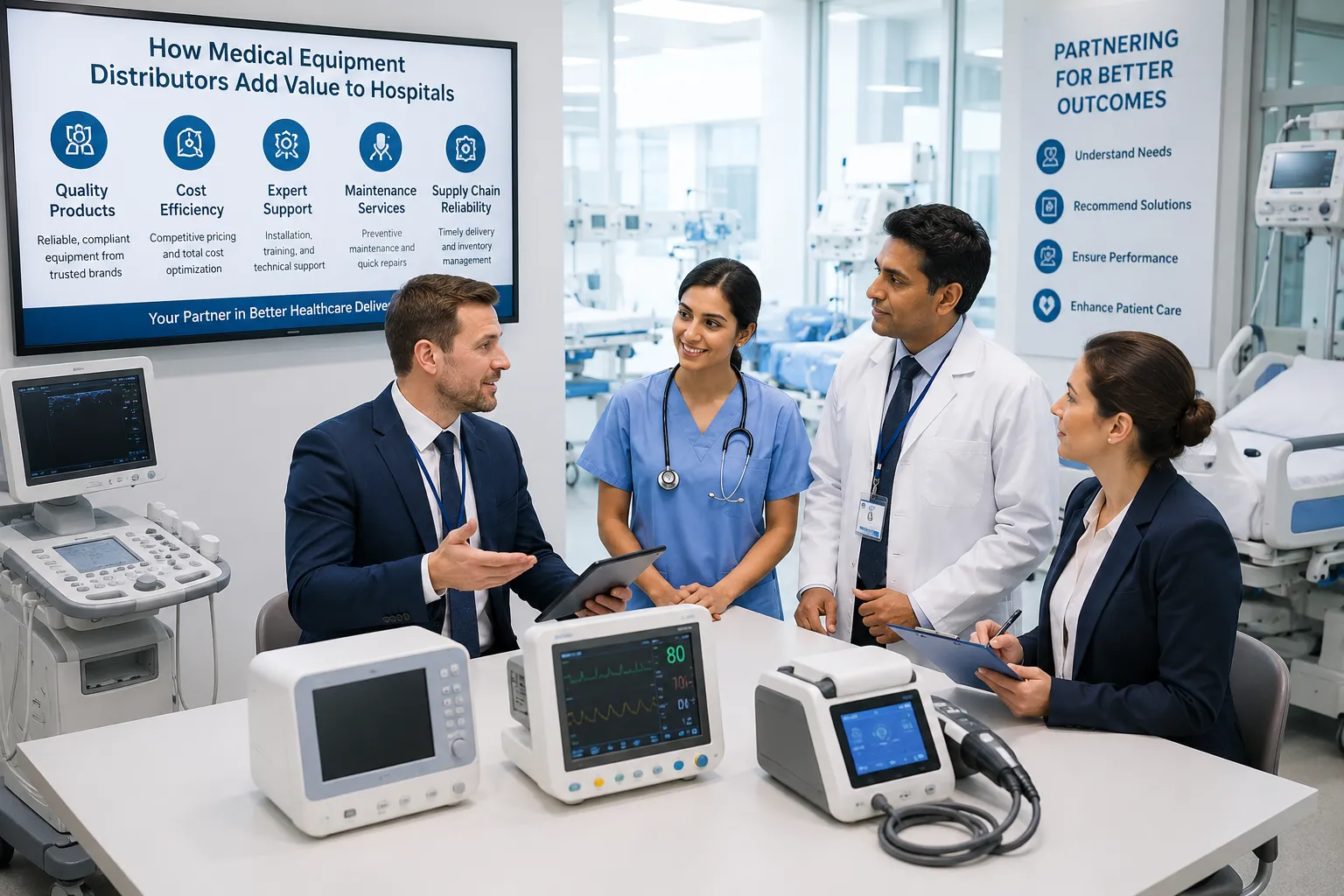
Equipment Sourcing and Supply: Distributors help healthcare facilities identify suitable equipment from multiple manufacturers and suppliers. This provides hospitals with greater access to technology options and procurement flexibility.
Product Knowledge and Technical Guidance: Many distributors offer technical expertise to help healthcare organisations evaluate equipment specifications, clinical applications, and operational requirements.
Supply Chain Coordination: Distributors often manage logistics, transportation, warehousing, inventory planning, and delivery coordination.
Lifecycle Support- Many distributors continue supporting hospitals after procurement through maintenance coordination, spare parts sourcing, training support, and equipment lifecycle management.
Healthcare organisations that source equipment through regulated, certified business suppliers worldwide often benefit from broader access to products and procurement support.
How Distributors Improve Hospital Procurement Efficiency
Hospital procurement teams frequently manage multiple equipment categories, suppliers, budgets, and operational priorities simultaneously.
Reducing Procurement Complexity- Distributors help simplify procurement by providing access to multiple products and manufacturers through a single point of contact.
Supporting Product Evaluation- Experienced distributors can assist healthcare organisations in comparing technologies, specifications, service requirements, and lifecycle considerations.
Improving Vendor Coordination- Rather than communicating with multiple manufacturers separately, hospitals often work directly with distributors who coordinate supplier interactions.
Enhancing Procurement Speed
Established distributor networks can help reduce sourcing times and improve procurement efficiency.- Experienced clinical supply managers typically value distributor expertise when evaluating healthcare technology investments.
The Importance of Logistics and Supply Chain Management
Healthcare equipment procurement often involves complex logistics and supply chain requirements.
International Sourcing Support- Many hospitals procure technologies from manufacturers located in different countries and regions.
Inventory Management- Distributors often help healthcare organisations manage inventory requirements and reduce supply chain disruptions.
Delivery Coordination- Large medical devices frequently require specialised transportation, handling, and installation planning.
Documentation Management- Procurement processes often require extensive documentation, including certifications, shipping records, customs documentation, and compliance information.
Effective logistics support can significantly improve procurement outcomes and operational efficiency.
Distributor Expertise Supports Better Procurement Decisions
Distributors often provide expertise that helps healthcare organisations make more informed purchasing decisions.
Technology Comparisons- Distributors can help hospitals compare multiple products based on clinical requirements and operational objectives.
Understanding Lifecycle Costs- Equipment selection increasingly involves evaluating maintenance requirements, service support, spare parts availability, and total ownership costs.
Regulatory Considerations- Healthcare organisations frequently require support in navigating applicable local regulatory standards and import requirements.
Training and Adoption Support- Many distributors assist hospitals with equipment familiarisation, user training, and implementation planning.
Healthcare providers often review information from suppliers and manufacturers business advertise to global healthcare buyers when comparing technologies, service offerings, and procurement support capabilities.
How Distributors Support Equipment Throughout Its Lifecycle
The value provided by medical equipment distributors often extends well beyond the initial procurement process.
Maintenance Coordination- Many distributors assist healthcare facilities in coordinating preventive maintenance, servicing schedules, software updates, and technical support activities. This support can help improve equipment reliability and operational continuity.
Spare Parts Availability- Access to replacement components is essential for maintaining equipment performance. Distributors frequently support hospitals by sourcing genuine spare parts and coordinating supply requirements.
Upgrade Planning- Healthcare technology evolves rapidly. Distributors often help organisations evaluate upgrade pathways that extend equipment lifespan while maintaining clinical relevance.
Replacement Strategy Development- Equipment replacement decisions are increasingly based on lifecycle data, performance trends, maintenance history, and operational requirements rather than age alone.
Facilities that take a lifecycle-focused approach often achieve greater value from healthcare technology investments.
Biomedical Engineering and Technical Support Services
Technical expertise plays an important role in healthcare equipment management.
Installation Support- Many distributors coordinate installation activities to help ensure equipment is deployed safely and efficiently.
Performance Verification- Equipment testing and verification activities help confirm systems are operating according to manufacturer specifications.
User Training Programmes- Proper training helps healthcare professionals operate equipment effectively while reducing the likelihood of user-related issues.
Technical Troubleshooting- Distributors often provide access to technical resources that support issue resolution and operational continuity.
Experienced healthcare technology managers frequently view technical support capabilities as an important part of distributor evaluation.
Long-Term Relationships Create Additional Value
Many healthcare organisations establish long-term relationships with distributors rather than approaching procurement as a series of individual transactions.
Consistent Procurement Support- Long-term relationships help distributors develop a deeper understanding of healthcare facility requirements, operational priorities, and equipment preferences.
Improved Planning Capabilities- Ongoing collaboration can support more effective equipment planning, budgeting, and lifecycle management.
Enhanced Service Coordination- Hospitals often benefit from streamlined communication and more efficient service support when working with established distribution partners.
Strategic Healthcare Technology Management- Long-term collaboration frequently supports broader healthcare technology strategies that extend beyond individual procurement projects.
Healthcare systems managing multiple facilities often benefit from establishing long-term medical equipment supply business partners that support procurement planning, logistics management, equipment standardisation, and lifecycle optimisation.
How Digital Technologies Are Transforming Medical Distribution
Technology continues to reshape healthcare equipment distribution and supply chain management.
Digital Procurement Platforms- Online procurement systems provide hospitals with improved visibility into products, specifications, availability, and procurement workflows.
Supply Chain Visibility- Advanced tracking technologies help organisations monitor equipment movement and delivery status more effectively.
Data-Driven Decision Making- Analytics tools provide valuable insights into procurement patterns, inventory management, and equipment utilisation.
Remote Support Capabilities- Digital communication tools increasingly support technical assistance, training, troubleshooting, and service coordination.
Healthcare organisations that embrace digital procurement and supply chain technologies often improve operational efficiency and procurement transparency.
Future Trends in Medical Equipment Distribution
Several trends are expected to influence the future role of distributors within healthcare systems.
Greater Focus on Sustainability- Healthcare organisations increasingly evaluate distributors based on sustainability practices, logistics efficiency, and environmental responsibility.
Expansion of Global Supply Networks- International sourcing is expected to remain important as healthcare providers seek access to innovative technologies and specialised equipment.
Increased Demand for Lifecycle Services- Hospitals increasingly expect distributors to support maintenance, upgrades, asset management, and lifecycle planning in addition to procurement activities.
Growing Importance of Supply Chain Resilience: Healthcare organisations continue to prioritise reliable supply chains that support critical healthcare operations.
Integration of Digital Technologies: Artificial intelligence, predictive analytics, and digital procurement platforms are expected to play an increasingly important role in healthcare distribution.
These trends are likely to strengthen further the strategic role distributors play within healthcare procurement ecosystems.
Final Thoughts
Medical equipment distributors play a critical role in supporting hospitals throughout the procurement, deployment, maintenance, and lifecycle management process. Their contributions often extend far beyond equipment sourcing and include logistics coordination, technical expertise, regulatory support, training, inventory management, and long-term lifecycle services.
For healthcare facility procurement decision-makers, distributors can provide valuable support that improves procurement efficiency, equipment availability, operational performance, and technology planning. Effective distributor relationships help healthcare organisations navigate complex supply chains while ensuring access to reliable healthcare technologies.
As healthcare systems continue evolving, distributors are expected to play an increasingly important role in supporting procurement strategies, digital transformation initiatives, supply chain resilience, and sustainable healthcare technology management.
Disclaimer
Medigear.uk is a global medical equipment supplier, exporter, and distributor. The content published on this site is intended for educational and informational purposes only. Nothing on this page constitutes medical advice, clinical guidance, or treatment recommendations. All healthcare procurement and clinical decisions should be made by qualified medical professionals and compliant procurement teams operating within the regulatory frameworks of their respective countries.