Healthcare facilities rely on medical equipment to support patient care, diagnostics, treatment, monitoring, and operational efficiency. Selecting the right equipment is important, but choosing the right sourcing and supply partner can be equally critical to long-term success.
A global medical equipment partner does much more than provide products. The right partner can help healthcare organisations navigate procurement challenges, access international technologies, manage logistics, ensure regulatory compliance, and support equipment throughout its lifecycle.
For healthcare facility procurement decision-makers, selecting a trusted global partner often influences procurement efficiency, equipment reliability, operational performance, and long-term healthcare outcomes.
Healthcare organisations frequently involve healthcare facility buyers' services decision-makers when evaluating sourcing strategies, supplier capabilities, and international procurement opportunities.
What Is a Global Medical Equipment Partner?
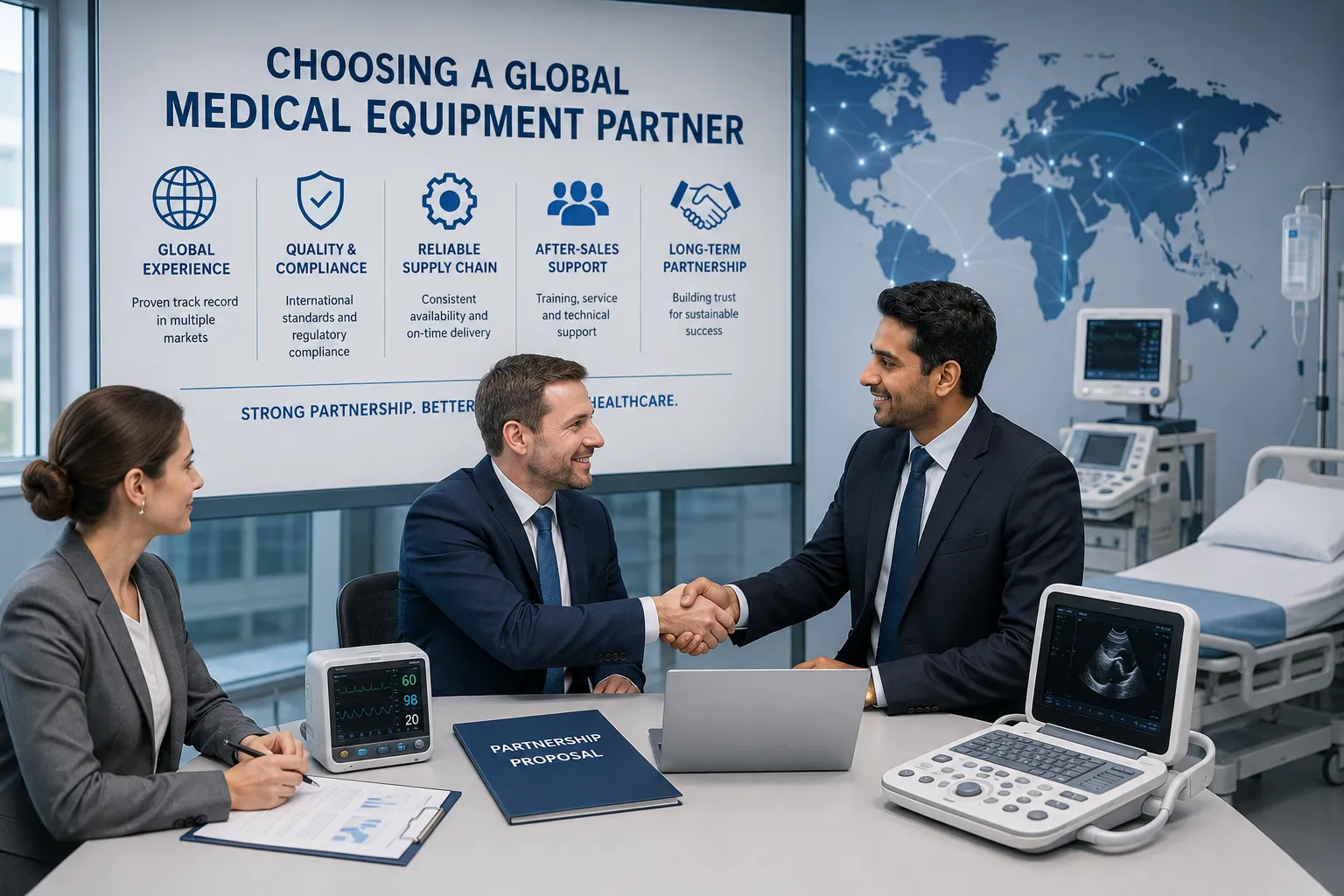
A global medical equipment partner is an organisation that helps healthcare providers source, procure, deliver, and manage medical technologies from manufacturers and suppliers across multiple countries and regions.
International Equipment Sourcing- Global partners help healthcare organisations access technologies from leading manufacturers worldwide.
Procurement Support- They assist with equipment selection, supplier evaluation, procurement planning, and technology comparisons.
Logistics Coordination- Global sourcing often requires transportation planning, customs management, documentation support, and delivery coordination.
Lifecycle Management Support - Many partners continue to provide support through installation, maintenance planning, spare parts sourcing, upgrades, and replacement strategies.
Healthcare facilities that source technology from regulated, certified equipment business suppliers worldwide often benefit from broader access to products and stronger procurement support.
Access to Global Healthcare Technology Markets
One of the most important advantages of working with a global medical equipment partner is access to a wider range of healthcare technologies.
Broader Product Selection- Healthcare facilities gain access to technologies from multiple manufacturers rather than relying on limited local availability.
Specialised Equipment Availability- Global sourcing partners can help identify specialised technologies that may not be readily available within domestic markets.
Innovation Access- Healthcare providers often gain earlier access to emerging technologies and advanced medical solutions.
Competitive Procurement Opportunities- Access to international supplier networks can create more procurement options and flexibility.
Facilities evaluating major technology investments frequently benefit from broader market visibility during the procurement process.
Procurement Expertise Creates Significant Value
Healthcare procurement can be complex, particularly when sourcing equipment internationally.
Technology Evaluation Support- Global partners often help healthcare organisations compare products, manufacturers, and technical specifications.
Supplier Assessment- Experienced sourcing partners evaluate supplier reliability, quality standards, certifications, and support capabilities.
Budget Planning Assistance- Procurement teams often require support in balancing clinical requirements with financial objectives.
Risk Reduction- Experienced partners help identify procurement risks and support more informed purchasing decisions.
Healthcare organisations often achieve better procurement outcomes when supported by partners with strong international sourcing expertise.
Logistics and Supply Chain Management Capabilities
Medical equipment procurement frequently involves complex logistics requirements.
International Transportation Coordination- Global partners manage shipping arrangements across multiple countries and regions.
Customs and Import Support- International procurement often requires customs documentation, import approvals, certifications, and regulatory paperwork.
Delivery Planning- Large medical devices may require specialised transportation, installation scheduling, and handling procedures.
Supply Chain Visibility- Experienced partners help healthcare organisations track shipments and manage delivery expectations.
Effective logistics support can significantly reduce procurement delays and operational disruptions.
Regulatory Knowledge Is Increasingly Important
Healthcare equipment procurement must often comply with multiple regulatory requirements.
Product Certifications- Healthcare organisations frequently require support in understanding certifications and compliance documentation.
Import Requirements- International procurement may involve country-specific import regulations and approval processes.
Documentation Management- Accurate documentation is essential for customs clearance, compliance verification, and procurement records.
Risk Mitigation- Experienced partners help reduce regulatory risks associated with international sourcing of healthcare technology.
Regulatory expertise often becomes increasingly valuable when procurement projects involve multiple countries and suppliers.
Technical Support and Lifecycle Services Matter
A strong global medical equipment partner provides support that extends well beyond the procurement stage.
Installation Coordination- Many healthcare technologies require careful installation planning to ensure equipment is deployed safely and efficiently. Experienced partners often assist with installation scheduling and implementation support.
Training and User Support- Healthcare professionals may require training to maximise equipment performance and ensure safe operation. Effective training programmes can improve adoption and reduce operational issues.
Maintenance Planning- Equipment performance depends on ongoing servicing, preventive maintenance, and lifecycle management. Global partners frequently assist healthcare organisations with maintenance planning and support coordination.
Spare Parts Availability- Access to replacement parts is essential for maintaining operational continuity. Reliable partners help ensure spare parts remain available throughout the equipment lifecycle.
Healthcare facilities often achieve better long-term outcomes when technical support is considered during the initial procurement process.
The Importance of Supplier and Manufacturer Networks
The strength of a sourcing partner's network can significantly influence procurement outcomes.
Access to Multiple Manufacturers- Global partners with extensive supplier networks can provide healthcare organisations with a broader range of technology options.
Greater Procurement Flexibility- A diverse supplier network helps organisations compare products, specifications, support services, and pricing structures.
Improved Availability- Strong relationships with manufacturers often improve access to products, spare parts, and technical resources.
Enhanced Market Knowledge- Global sourcing partners typically maintain visibility across multiple healthcare markets, helping organisations identify emerging technologies and procurement opportunities.
Healthcare providers often review information from suppliers and manufacturers' business advertising to global healthcare buyers when evaluating sourcing capabilities, product portfolios, and supplier relationships.
Long-Term Partnerships Deliver Greater Value
Healthcare procurement is increasingly viewed as a long-term strategic activity rather than a series of isolated purchases.
Strategic Procurement Planning- Long-term partnerships allow healthcare organisations to align procurement decisions with operational objectives and future growth plans.
Improved Lifecycle Management- Partners with a long-term perspective often provide stronger support for maintenance, upgrades, replacement planning, and asset optimisation.
Consistent Service Delivery- Established relationships can improve communication, coordination, and service responsiveness.
Technology Roadmap Support- Global partners can help healthcare facilities prepare for future technology requirements and infrastructure developments.
Healthcare systems managing multiple facilities frequently benefit from establishing long-term medical equipment supply business partners that support procurement planning, technology standardisation, logistics management, and lifecycle optimisation.
Digital Transformation Is Changing Global Healthcare Sourcing
Technology continues to reshape how healthcare organisations procure medical equipment internationally.
Digital Procurement Platforms- Online sourcing platforms provide improved visibility into products, specifications, certifications, and supplier information.
Supply Chain Transparency- Advanced tracking systems help healthcare organisations monitor equipment movement and delivery status more effectively.
Data-Driven Procurement Decisions- Analytics tools provide insights that support supplier evaluation, procurement planning, and inventory management.
Remote Collaboration- Digital communication technologies make it easier for healthcare providers, manufacturers, and sourcing partners to collaborate across international markets.
Healthcare organisations that embrace digital procurement solutions often improve efficiency and decision-making capabilities.
Future Trends in Global Medical Equipment Partnerships
Several trends are expected to influence the future of international healthcare sourcing.
Growing Demand for Sustainability: Healthcare organisations increasingly evaluate sourcing partners based on sustainability initiatives, environmental responsibility, and lifecycle management capabilities.
Expansion of International Healthcare Markets: Global sourcing opportunities are expected to continue to grow as healthcare systems seek access to innovative technologies.
Greater Focus on Supply Chain Resilience- Reliable supply chains remain a priority for healthcare providers seeking to minimise operational disruptions.
Increased Importance of Lifecycle Services- Healthcare facilities increasingly expect sourcing partners to provide support throughout the entire equipment lifecycle.
Integration of Advanced Technologies- Artificial intelligence, predictive analytics, digital asset management, and connected healthcare technologies are expected to influence future procurement strategies.
These trends are likely to strengthen the role of global medical equipment partners in supporting healthcare technology management.
Final Thoughts
Choosing a global medical equipment partner is one of the most important decisions healthcare organisations make when planning technology investments. The right partner can provide access to international healthcare technologies, procurement expertise, logistics support, regulatory guidance, technical services, and long-term lifecycle management.
For healthcare facility procurement decision-makers, selecting a trusted global partner can improve procurement efficiency, reduce risk, strengthen supply chain resilience, and support long-term operational success. A strong partnership often creates value that extends far beyond the initial equipment purchase.
As healthcare technology continues evolving and global supply chains become increasingly interconnected, experienced medical equipment partners will play a critical role in helping healthcare organisations navigate complex procurement environments while ensuring access to reliable, high-quality healthcare technologies.
Disclaimer
Medigear.uk is a global medical equipment supplier, exporter, and distributor. The content published on this site is intended for educational and informational purposes only. Nothing on this page constitutes medical advice, clinical guidance, treatment recommendations, or procurement advice. All healthcare procurement and clinical decisions should be made by qualified medical professionals and authorised procurement teams operating within the regulatory frameworks of their respective countries.