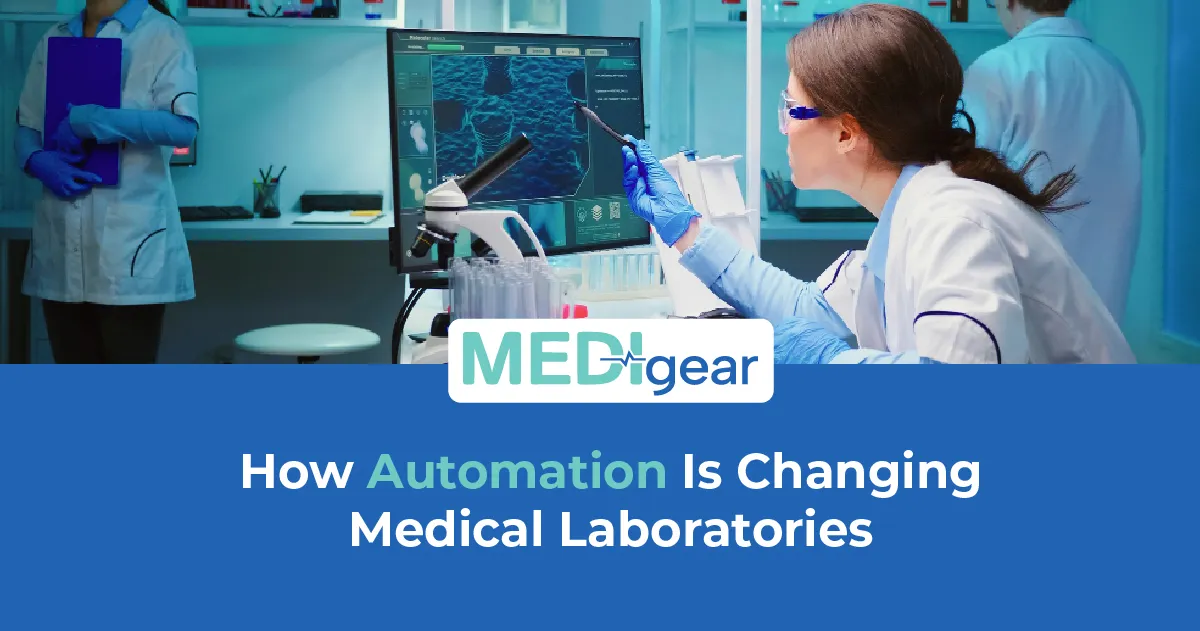
Medical laboratories are undergoing a major transformation as automation becomes increasingly integrated into diagnostic workflows. What once depended heavily on manual handling, repetitive processing, and paper-based reporting is now evolving into a faster, more connected, and highly efficient laboratory environment.
Automation is helping healthcare facilities improve workflow consistency, reduce operational delays, support growing testing demand, and strengthen laboratory scalability. From sample handling and analyser integration to digital reporting and predictive maintenance, automation is reshaping nearly every stage of laboratory operations.
This guide explores how automation is changing medical laboratories, the technologies driving this shift, and the operational benefits healthcare facilities are experiencing in 2026.
Why Medical Laboratories Are Investing in Automation
Diagnostic laboratories are managing rising sample volumes, faster turnaround expectations, staffing challenges, and increasing pressure to maintain operational consistency.
Key Drivers Behind Laboratory Automation
Healthcare facilities are adopting automation to improve:
-
Workflow efficiency
-
Sample processing speed
-
Reporting coordination
-
Operational scalability
-
Error reduction
-
Resource management
Reducing Repetitive Manual Workload – Automation helps laboratory staff focus more on oversight and workflow management rather than repetitive tasks.
Supporting Faster Diagnostic Turnaround – Integrated systems improve sample movement and the speed of result generation.
Healthcare facilities modernising diagnostic infrastructure often review sourcing support resources available through Buyers Services.
Automated Sample Handling Is Improving Workflow Speed
Sample handling has traditionally been one of the most labour-intensive parts of laboratory operations.
How Automation Is Changing Sample Management
Modern systems now support:
-
Automated barcode scanning
-
Robotic sample sorting
-
Automated centrifugation routing
-
Digital specimen tracking
-
Integrated sample loading
Reducing Sample Identification Errors – Automated tracking improves workflow accuracy and specimen visibility.
Improving Laboratory Throughput Capacity – Faster sample movement supports high-volume testing environments.
Diagnostic laboratories evaluating broader workflow modernisation often compare the automation strategies discussed in Medigear.uk’s educational guide on automated vs semi-automated laboratory equipment.
Analyser Integration Is Creating Connected Laboratory Ecosystems
Laboratory analysers are increasingly operating as part of centralised digital systems rather than as isolated devices.
Integrated Laboratory Workflow Systems
Modern laboratories now connect:
-
Hematology analyzers
-
Biochemistry analyzers
-
PCR systems
-
Blood gas analysers
-
Laboratory information systems
Improving Operational Coordination – Connected analysers reduce workflow fragmentation between departments.
Supporting Centralised Reporting – Digital integration improves laboratory data management and accessibility.
Healthcare suppliers supporting laboratory modernisation projects may also explore collaboration opportunities through business Suppliers.
Automation Is Helping Reduce Manual Errors
Manual laboratory processes can increase operational variability, especially during high testing demand.
Areas Where Automation Improves Consistency
-
Sample labeling
-
Reagent dispensing
-
Data entry
-
Calibration reminders
-
Result reporting
Improving Workflow Standardisation – Automated systems help laboratories maintain more consistent operational procedures.
Reducing Administrative Burden – Digital workflows reduce repetitive documentation tasks.
Facilities reviewing broader quality management planning often compare operational guidance related to laboratory equipment quality control and workflow monitoring.
AI-Assisted Systems Are Enhancing Laboratory Efficiency
Artificial intelligence is increasingly supporting modern laboratory automation.
Emerging AI Applications in Medical Laboratories
Advanced systems now assist with:
-
Workflow prioritization
-
Pattern recognition
-
Predictive maintenance alerts
-
Quality monitoring
-
Digital image analysis
Improving Equipment Performance Visibility – AI-driven monitoring helps identify irregularities earlier.
Supporting Faster Workflow Decisions – Intelligent systems help laboratories manage operational bottlenecks more efficiently.
Healthcare organizations exploring healthcare technology partnerships may also review opportunities available through business Partners.
Digital Reporting Systems Are Streamlining Laboratory Operations
Paper-based laboratory documentation is rapidly declining in modern healthcare environments.
Benefits of Digital Laboratory Reporting
-
Faster report access
-
Improved sample traceability
-
Centralised data management
-
Reduced documentation delays
-
Better workflow coordination
Supporting Multi-Department Collaboration – Digital systems improve communication between laboratories and healthcare departments.
Improving Operational Transparency – Centralised reporting enhances workflow visibility.
Automation Is Expanding Molecular Diagnostic Capabilities
Molecular diagnostics has become one of the fastest-growing segments in automated laboratory testing.
Automated PCR and Molecular Systems
Modern molecular laboratories increasingly use:
-
Automated nucleic acid extraction
-
Real-time PCR systems
-
Integrated molecular analyzers
-
Robotic sample preparation systems
Improving High-Sensitivity Testing Workflows – Automation helps laboratories manage complex molecular diagnostics more efficiently.
Supporting Faster Large-Scale Testing – Automated molecular systems improve scalability during increased testing demand.
Facilities modernising molecular infrastructure often review workflow considerations alongside PCR machine technologies and diagnostic laboratory planning.
Predictive Maintenance Is Improving Equipment Reliability
Automation is also changing how laboratories manage equipment maintenance.
Smart Maintenance Technologies
Connected laboratory systems can now monitor:
-
Temperature stability
-
Sensor performance
-
Calibration consistency
-
Mechanical wear patterns
Reducing Unexpected Equipment Downtime – Predictive maintenance supports proactive service scheduling.
Improving Equipment Lifecycle Planning – Continuous monitoring helps laboratories manage infrastructure more effectively.
Healthcare companies interested in improving visibility within the healthcare equipment industry may also explore promotional opportunities through business advertising.
Automation Is Supporting Workforce Efficiency
Many healthcare laboratories are facing staffing pressures and increasing operational demand.
How Automation Helps Laboratory Teams
Automation can support:
-
Reduced repetitive workload
-
Faster workflow coordination
-
Simplified training processes
-
Improved task prioritisation
Helping Laboratories Manage Growing Testing Demand – Automated systems improve operational scalability without a proportional increase in manual workload.
Supporting Better Resource Utilisation – Staff can focus more on analytical oversight and workflow management.
Point-of-Care Automation Is Expanding Beyond Central Laboratories
Automation is no longer limited to centralised diagnostic centres.
Growth of Near-Patient Automated Testing
Healthcare facilities increasingly use automated systems in:
-
Intensive care units
-
Emergency departments
-
Outpatient clinics
-
Mobile healthcare settings
Reducing Sample Transport Delays – Point-of-care automation supports faster workflow responsiveness.
Improving Accessibility to Rapid Diagnostics – Portable automated systems expand testing flexibility.
Cybersecurity Is Becoming More Important in Automated Laboratories
As laboratories become more connected, digital security concerns continue to increase.
Key Cybersecurity Priorities
-
Secure cloud integration
-
Protected patient data transfer
-
Software update management
-
User authentication systems
Protecting Workflow Integrity – Cybersecurity planning helps reduce operational vulnerability risks.
Supporting Safer Digital Infrastructure Expansion – Laboratories increasingly involve IT teams during automation planning.
Healthcare facilities seeking laboratory infrastructure planning support or sourcing guidance can contact the Contact Team for additional information.
The Future of Automated Medical Laboratories
Automation is expected to continue expanding across healthcare diagnostics.
Emerging Areas of Laboratory Innovation
-
Robotics-assisted sample handling
-
Fully integrated smart laboratories
-
AI-assisted diagnostic workflows
-
Cloud-connected laboratory ecosystems
-
Remote laboratory management systems
Supporting More Scalable Diagnostic Infrastructure – Automation will continue improving operational flexibility and laboratory capacity.
Improving End-to-End Workflow Coordination – Connected systems are reshaping how laboratories manage healthcare diagnostics.
Disclaimer
Medigear.uk is a medical equipment supplier and distributor. We do not provide medical advice, diagnosis, or treatment recommendations. All information is for educational and product awareness purposes only. Qualified medical professionals should always make healthcare decisions.