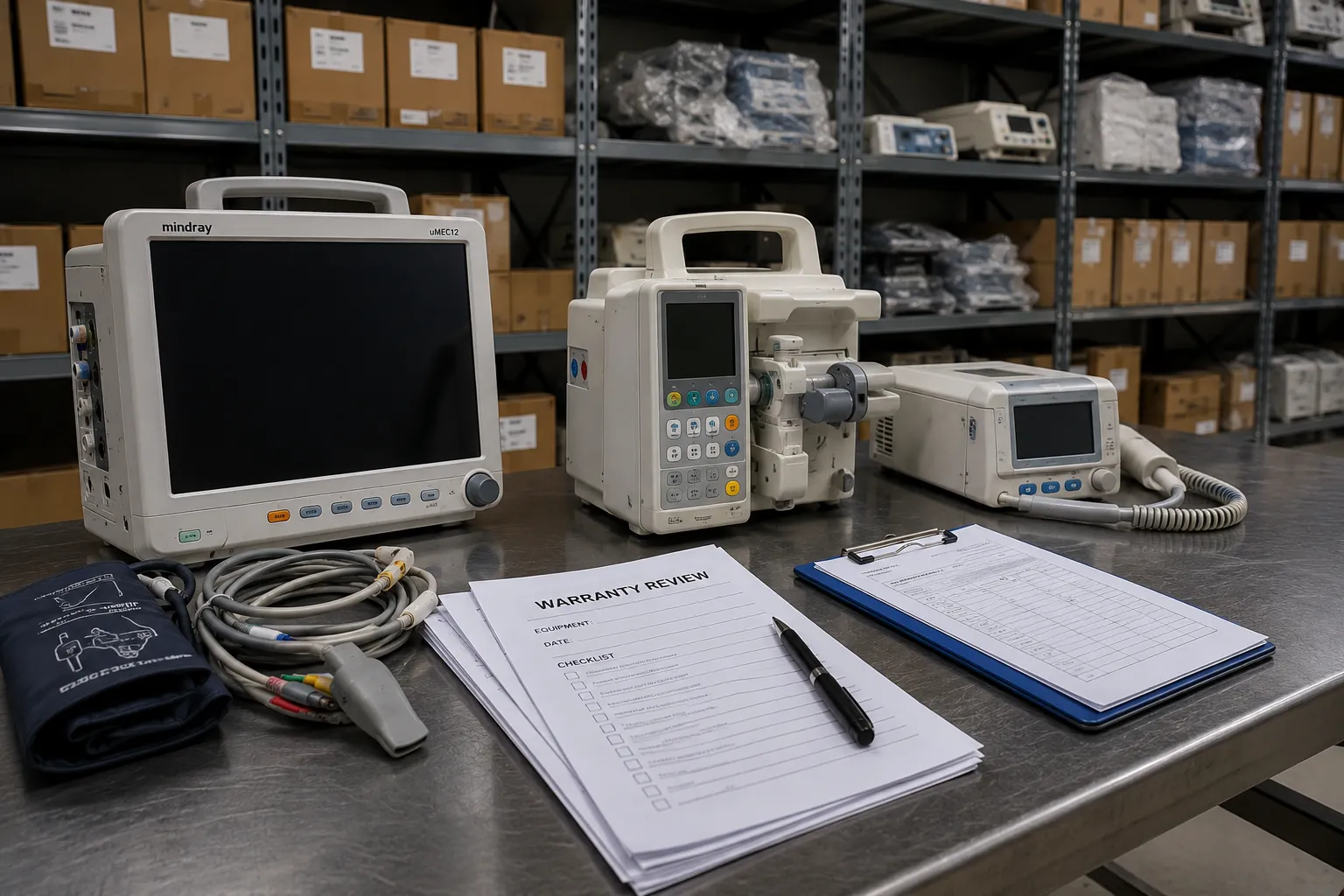

A healthcare supply chain must deliver the right equipment and supplies to the right location without creating avoidable delays, shortages, or operational costs. Hospitals, laboratories, clinics, distributors, and home care providers depend on this network for everything from diagnostic systems and patient monitors to replacement parts and essential consumables.
Reliability does not come from holding excessive stock or choosing the lowest-cost supplier. It comes from accurate demand planning, qualified sourcing, clear communication, controlled logistics, strong inventory visibility, and realistic contingency plans.
A dependable supply chain supports routine healthcare operations while giving organisations the flexibility to respond when demand, transport conditions, or product availability suddenly change.
Where Healthcare Supply Chains Commonly Become Vulnerable
Healthcare products often pass through manufacturers, exporters, freight providers, customs authorities, regional warehouses, distributors, and local delivery teams before reaching the end user. A disruption at any stage can affect the entire procurement schedule.
Common points of weakness include:
-
Dependence on a single supplier
-
Poor demand forecasting
-
Limited stock visibility
-
Incomplete shipping documents
-
Delayed customs clearance
-
Inadequate storage conditions
-
Shortages of spare parts
-
Weak communication between stakeholders
-
Unplanned equipment replacement
-
Limited alternative transport routes
Recognising these risks early gives procurement teams time to prepare practical alternatives.
Start With Clear Procurement Requirements
Supply chain reliability begins before a quotation is requested. Buyers need a clear description of what is required, where it will be used, and when it must be available.
The procurement brief should cover:
-
Equipment category and intended use
-
Required specifications
-
Expected order quantity
-
Installation location
-
Delivery deadline
-
Utility and infrastructure requirements
-
Accessories and consumables
-
Training expectations
-
Warranty and service support
-
Future expansion needs
Unclear specifications often lead to unsuitable quotations, order changes, duplicated communication, and delivery delays.
Healthcare organisations planning equipment purchases can use buyer services to explore international sourcing options.
Build a Diversified Supplier Network
Relying on one manufacturer, distributor, or geographic region can expose healthcare organisations to significant risk. Production delays, regulatory changes, transport disruptions, or component shortages may suddenly affect availability.
A stronger sourcing strategy includes:
Primary suppliers – Preferred companies used for routine purchasing.
Approved alternatives – Pre-evaluated suppliers that can provide equivalent equipment if the primary source is unavailable.
Regional options – Suppliers or warehouses closer to the delivery market.
Emergency contacts – Businesses capable of responding to urgent requirements.
Supplier diversification should not mean lowering quality standards. Every approved source should be assessed for product documentation, reliability, communication, logistics capability, and after-sales support.
Medical equipment companies seeking broader market access can learn about business suppliers.
Evaluate Suppliers Beyond Purchase Price
A low quotation can become expensive when it includes weak documentation, unreliable delivery, unavailable spare parts, or limited technical assistance.
A structured supplier review should consider:
-
Product quality and consistency
-
Relevant documentation
-
Previous delivery performance
-
Response time
-
Order accuracy
-
Packaging quality
-
Warranty terms
-
Maintenance support
-
Spare parts availability
-
International shipping experience
Procurement teams should evaluate total value rather than comparing unit prices alone.
A supplier that provides accurate documents, predictable communication, secure packaging, and dependable support may offer better long-term value than a lower-priced alternative.
Improve Demand Forecasting
Poor forecasting creates two costly problems: shortages and overstocking.
Shortages may interrupt healthcare operations or force urgent purchases at higher prices. Overstocking ties up capital, occupies warehouse space, and increases the risk of ageing or obsolete inventory.
Demand planning should consider:
-
Historical equipment usage
-
Department expansion
-
Patient volume
-
Seasonal demand
-
Planned healthcare projects
-
Equipment replacement schedules
-
Maintenance requirements
-
Current stock levels
-
Supplier lead times
-
Market availability
Forecasts should be reviewed regularly rather than treated as fixed annual documents.
Create Practical Inventory Policies
Inventory policies should reflect the importance, cost, availability, and lead time of each product.
Critical items may require safety stock because a shortage would significantly affect operations.
High-value equipment may be purchased against confirmed demand rather than held in large quantities.
Frequently used consumables may need automatic reorder points.
Replacement parts should be stocked according to equipment age, maintenance history, and supplier lead times.
A useful inventory policy defines the minimum and maximum stock levels, the reorder level, the responsible personnel, and the review frequency.
Increase Visibility Across the Supply Chain
Procurement teams cannot manage risks they cannot see. Digital visibility helps organisations understand what has been ordered, what is in transit, what is stored, and what needs attention.
Useful tools include:
-
Inventory management software
-
Barcode or RFID tracking
-
Digital purchase records
-
Shipment tracking platforms
-
Warehouse management systems
-
Maintenance databases
-
Supplier performance dashboards
-
Cloud-based asset management
Real-time information enables faster decision-making and reduces reliance on manual spreadsheets or disconnected records.
Strengthen International Logistics Planning
Medical equipment logistics must account for product size, weight, fragility, urgency, and installation requirements.
A logistics plan should confirm:
-
Suitable freight method
-
Packaging requirements
-
Export documentation
-
Import responsibilities
-
Insurance coverage
-
Customs classification
-
Delivery route
-
Unloading arrangements
-
Site access
-
Installation schedule
Air freight may suit urgent or compact equipment, while sea freight may be more economical for heavy systems, furniture, or bulk orders. The decision should reflect the complete landed cost, not only the freight quotation.
Prepare Customs and Regulatory Documents Early
Documentation errors can delay otherwise well-planned shipments.
Common documents may include:
-
Commercial invoice
-
Packing list
-
Airway bill or bill of lading
-
Certificate of origin, where applicable
-
Product specifications
-
Serial number records
-
Import permit where required
-
Insurance documents
-
Regulatory or conformity records
Descriptions, quantities, values, and consignee information should remain consistent across every document.
Country-specific import and regulatory requirements should be reviewed before dispatch. Resolving compliance questions after the shipment has arrived can result in storage charges, return costs, or rejection.
Protect Equipment During Storage and Transport
Medical devices may contain calibrated components, electronics, sensors, optical systems, or delicate mechanical assemblies. Packaging and storage should match the product’s actual risk profile.
Protection may include:
-
Reinforced export crates
-
Shock-absorbing materials
-
Internal restraints
-
Moisture barriers
-
Desiccants
-
Temperature monitoring
-
Anti-static protection
-
Tilt and shock indicators
-
Marked lifting points
Warehouses should also monitor cleanliness, security, humidity, temperature, and handling practices where relevant.
Include Spare Parts and Maintenance in Supply Planning
A healthcare supply chain is incomplete if it delivers equipment but cannot support it afterwards.
Buyers should confirm:
-
Recommended spare parts
-
Expected replacement intervals
-
Consumable availability
-
Service response arrangements
-
Preventive maintenance schedules
-
Software support, where applicable
-
Technical documentation
-
Training requirements
Including maintenance needs in the original procurement plan reduces the risk of avoidable downtime later.
Coordinate Everyone Involved
Healthcare supply chains often involve departments and companies with different priorities.
Stakeholders may include:
-
Procurement teams
-
Finance departments
-
Biomedical engineers
-
Clinical users
-
Suppliers
-
Freight forwarders
-
Customs brokers
-
Warehouse staff
-
Installation engineers
-
Facility managers
Each party should understand its responsibilities, deadlines, and escalation process.
A shared delivery plan can clarify who prepares documents, books freight, arranges insurance, handles customs, receives the shipment, inspects the equipment, and coordinates installation.
Organisations seeking long-term commercial cooperation can explore business partners.
Develop Contingency Plans Before Disruptions Occur
Emergency planning is most effective when completed before a shortage or logistics failure.
A practical contingency plan may include:
-
Alternative approved suppliers
-
Substitute equipment specifications
-
Secondary freight routes
-
Emergency stock levels
-
Backup warehouses
-
Priority product lists
-
Escalation contacts
-
Temporary equipment options
-
Approved emergency budgets
The plan should be tested and updated as suppliers, equipment, regulations, and delivery routes change.
Measure Supplier and Supply Chain Performance
Performance data helps procurement teams identify recurring problems rather than treating each delay as an isolated event.
Useful measures include:
-
On-time delivery rate
-
Order accuracy
-
Product damage rate
-
Customs clearance time
-
Supplier response time
-
Stockout frequency
-
Emergency purchase frequency
-
Equipment downtime
-
Warranty claim resolution
-
Total landed cost
Regular reviews create evidence for supplier discussions and future purchasing decisions.
Make Cybersecurity Part of Supply Chain Resilience
Healthcare supply chains increasingly depend on digital procurement, inventory, tracking, and equipment management platforms. Cyber incidents can interrupt orders, block access to records, or affect warehouse operations.
Organisations should protect these systems through:
-
Controlled user access
-
Strong authentication
-
Regular software updates
-
Secure supplier communication
-
Data backups
-
Staff awareness training
-
Incident response planning
-
Vendor security reviews
Cybersecurity should be treated as an operational supply chain requirement rather than only an IT issue.
Use Collaboration to Improve Market Reach
Reliable supply chains benefit from communication between manufacturers, distributors, logistics providers, and healthcare buyers. Collaboration can improve regional availability, technical support, spare parts planning, and demand forecasting.
Businesses offering relevant healthcare products or services can explore business Advertise to reach a wider professional audience.
Future Developments in Healthcare Supply Chains
Healthcare logistics is becoming more predictive, connected, and automated.
Artificial intelligence forecasting can help estimate future demand and identify likely shortages.
Predictive logistics tools may detect delivery risks before they affect hospital schedules.
Automated warehouses can improve picking accuracy and inventory control.
Cloud-based platforms can connect procurement, stock, maintenance, and shipping records.
Product traceability technologies can provide clearer visibility from manufacturing to final delivery.
Sustainable logistics planning can reduce packaging waste, unnecessary journeys, and inefficient storage.
Technology can improve reliability, but it cannot replace clear responsibilities, qualified suppliers, or careful planning.
Final Thoughts
Building a reliable healthcare supply chain requires more than securing products at an acceptable price. It depends on accurate requirements, qualified suppliers, diversified sourcing, realistic forecasts, controlled inventory, efficient logistics, complete documentation, and dependable after-sales support.
The strongest supply chains are designed to handle change. They give healthcare organisations visibility into current operations while providing practical alternatives when a supplier, route, warehouse, or product becomes unavailable.
For equipment sourcing, procurement enquiries, or supply-related assistance, organisations can Contact Team
Disclaimer
Medigear.uk is a medical equipment supplier and distributor. We do not provide legal, regulatory, logistics, financial, or supply chain consulting services. This article is intended for general educational and product-awareness purposes only. Healthcare organisations should assess their operational requirements and consult qualified procurement professionals, logistics providers, manufacturers, and relevant authorities when developing supply chain strategies.