Medical equipment is used in healthcare environments where reliability, safety, and performance are essential. To help ensure these expectations are met, manufacturers develop medical devices in accordance with internationally recognised standards and regulatory requirements. These standards guide product design, manufacturing processes, quality management, risk management, testing, labelling, and post-market activities.
For hospitals, clinics, laboratories, distributors, and procurement teams, understanding global medical equipment standards supports informed purchasing decisions and builds confidence in product quality and regulatory compliance.
This guide explains the purpose of global medical equipment standards, the most widely recognised international frameworks, and why they are important throughout the healthcare supply chain.
What Are Medical Equipment Standards?
Medical equipment standards are internationally recognised technical guidelines that establish requirements for the design, manufacture, testing, performance, labelling, and quality management of medical devices.
These standards help manufacturers develop products that meet consistent expectations for:
-
Safety.
-
Quality.
-
Performance.
-
Reliability.
-
Risk management.
-
Manufacturing processes.
-
Documentation.
-
Product traceability.
Although standards provide valuable guidance, healthcare organisations should always verify the regulatory requirements applicable in the country where the equipment will be marketed or used.
Why Global Standards Matter
International standards support consistency across the medical device industry.
Key benefits include:
Improved Product Quality – Standardised manufacturing processes promote consistent product performance.
Enhanced Patient Safety – Standards encourage manufacturers to identify and reduce potential risks during product development.
International Market Access – Many healthcare markets recognise internationally accepted quality management systems and technical standards.
Greater Procurement Confidence – Buyers can more effectively evaluate suppliers that adhere to recognised industry practices.
ISO 13485 Quality Management Systems
One of the most widely recognised international standards for medical device manufacturers is ISO 13485.
ISO 13485 focuses on quality management systems specifically developed for the medical device industry.
It addresses areas such as:
-
Design controls.
-
Manufacturing processes.
-
Risk management.
-
Supplier management.
-
Product traceability.
-
Documentation.
-
Corrective actions.
-
Continuous improvement.
Many medical device manufacturers implement ISO 13485 as part of their quality management framework.
Healthcare organisations sourcing medical equipment can explore trusted suppliers through the buyer's services.
ISO 14971 Risk Management
Risk management plays an important role throughout the medical device lifecycle.
ISO 14971 guides the identification, evaluation, control, and monitoring of risks associated with medical devices.
Manufacturers may use this framework to:
-
Identify potential hazards.
-
Evaluate possible risks.
-
Implement risk control measures.
-
Monitor product safety throughout the lifecycle.
A structured risk management process supports safer product development and continuous quality improvement.
IEC Standards for Electrical Medical Equipment
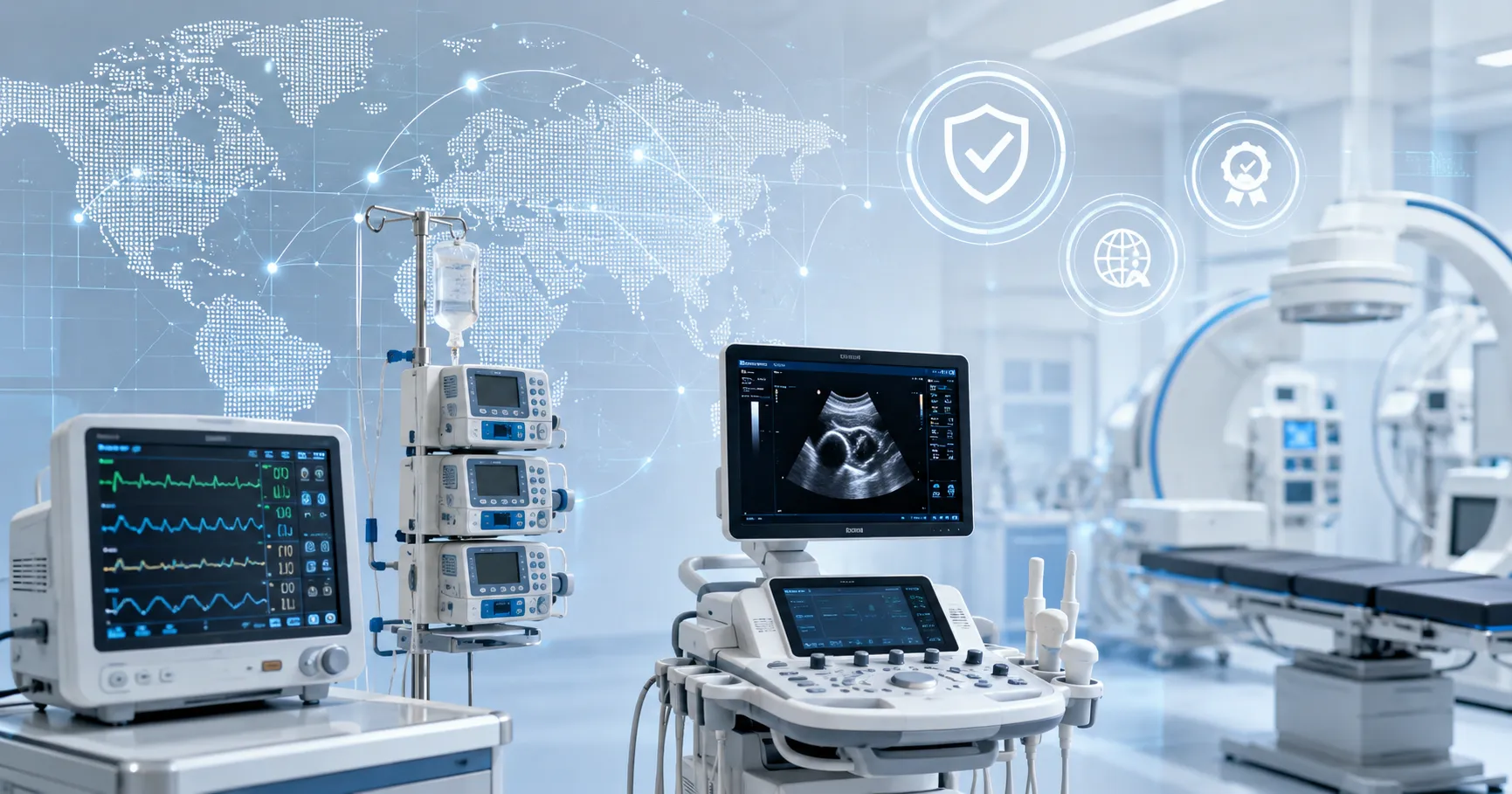
Many electrically powered medical devices follow standards developed by the International Electrotechnical Commission (IEC).
These standards address areas such as:
-
Electrical safety.
-
Electromagnetic compatibility.
-
Equipment performance.
-
Essential safety requirements.
Examples of equipment commonly evaluated under IEC standards include:
-
Patient monitors.
-
Ventilators.
-
Infaging systems.
-
Infusion pumps.
-
Laboratory analysers.
-
Surgical equipment.
CE Marking
Medical devices marketed in many European markets may require CE Marking to demonstrate conformity with applicable regulatory requirements.
CE Marking generally indicates that the manufacturer has completed the required conformity assessment process under the relevant legislation before placing the device on the market.
Healthcare buyers should understand that CE Marking is part of a regulatory framework rather than a standalone quality standard.
FDA Clearance and Authorization
Certain medical devices intended for the United States market may be subject to review by the U.S. Food and Drug Administration (FDA).
Depending on the product classification, manufacturers may follow different regulatory pathways before marketing their devices.
Healthcare organisations should verify the regulatory status of products according to the destination market rather than assuming approvals automatically apply worldwide.
Healthcare suppliers interested in expanding internationally can learn more through business suppliers.
Product Testing and Verification
Medical equipment often undergoes testing during development and manufacturing.
Testing may evaluate:
-
Mechanical performance.
-
Electrical safety.
-
Functional performance.
-
Environmental resistance.
-
Software verification, where applicable.
-
Packaging integrity.
Testing helps manufacturers confirm that products perform according to their design specifications.
Product Traceability
Traceability supports quality management throughout the supply chain.
Manufacturers commonly maintain records relating to:
-
Serial numbers.
-
Batch or lot numbers.
-
Manufacturing dates.
-
Production records.
-
Distribution history.
Traceability helps support product identification, inventory management, and post-market activities.
Labeling Requirements
Medical equipment labelling provides important product information.
Labels may include:
-
Product identification.
-
Manufacturer information.
-
Model number.
-
Serial number.
-
Handling instructions.
-
Safety warnings.
-
Storage conditions.
-
Intended use.
Labelling requirements vary according to applicable regulations in each market.
Documentation Supporting Compliance
Manufacturers maintain documentation throughout the product lifecycle.
Common documents include:
-
Technical documentation.
-
Product specifications.
-
User manuals.
-
Quality records.
-
Manufacturing procedures.
-
Test reports.
-
Risk management records.
Proper documentation supports quality assurance and regulatory compliance.
Post-Market Activities
Medical device quality management continues after products enter the market.
Manufacturers may monitor:
-
Customer feedback.
-
Product performance.
-
Service reports.
-
Complaint investigations.
-
Corrective actions.
-
Continuous improvement opportunities.
These activities help support ongoing product quality.
Healthcare organisations interested in strategic partnerships can explore: business partners.
Choosing Medical Equipment Suppliers
Healthcare buyers should evaluate suppliers using multiple criteria.
Important considerations include:
-
Quality management systems.
-
Product documentation.
-
Technical support.
-
After-sales service.
-
Equipment availability.
-
Spare parts support.
-
Supplier reputation.
-
Long-term reliability.
Purchasing decisions should balance quality, compliance, technical support, and total value rather than focusing solely on purchase price.
Future Trends in Medical Equipment Standards
The medical device industry continues evolving alongside new technologies.
Emerging trends include:
-
Artificial intelligence governance.
-
Cybersecurity requirements.
-
Connected medical device standards.
-
Digital health interoperability.
-
Cloud-connected healthcare technologies.
-
Software lifecycle management.
-
Sustainability considerations.
As healthcare technology advances, standards will continue to adapt to support innovation while maintaining safety and quality.
Businesses looking to increase visibility within the healthcare sector can discover opportunities through business advertise.
For sourcing assistance, procurement guidance, and product enquiries, support is available through the Contact Team.
Conclusion
Global medical equipment standards provide an important foundation for quality, safety, and consistency throughout the healthcare industry. Standards covering quality management, risk management, electrical safety, product testing, documentation, and post-market activities help manufacturers develop reliable medical devices and support healthcare organisations in procurement.
Although standards and regulations differ across countries, understanding internationally recognised frameworks helps buyers, suppliers, and manufacturers navigate global healthcare markets with greater confidence and make informed decisions.
Disclaimer
Medigear.uk is a medical equipment supplier and distributor. We do not provide legal, regulatory, certification, or compliance consulting services. This article is for general educational and informational purposes only. Medical device standards, certification requirements, and regulatory obligations vary by country and product classification. Healthcare organisations should consult manufacturers, regulatory authorities, and qualified compliance professionals before making procurement or market access decisions.