Medical equipment plays a critical role in the daily operations of hospitals, diagnostic centres, laboratories, and healthcare facilities. To maintain equipment reliability, minimise downtime, and ensure consistent performance, healthcare organisations often invest in Annual Maintenance Contracts (AMCs). These agreements help facilities manage maintenance activities systematically while improving equipment lifespan and operational efficiency.
As healthcare technology becomes more advanced and interconnected, maintenance management has become increasingly important. Annual Maintenance Contracts provide structured support for equipment servicing, inspections, preventive maintenance, troubleshooting, and technical assistance throughout the year.
Healthcare organisations seeking to improve equipment management and lifecycle planning often explore operational support resources offered by Medigear's buyers.
What Is an Annual Maintenance Contract?
An Annual Maintenance Contract is a formal agreement between a healthcare organization and a service provider to maintain medical equipment for a specified period, typically 1 year.
The contract may cover:
-
Preventive maintenance
-
Equipment inspections
-
Technical support
-
Troubleshooting
-
Performance verification
-
Safety testing
-
Calibration support
-
Repair services
The purpose of an AMC is to ensure equipment remains operational, reliable, and properly maintained throughout its lifecycle.
Why Annual Maintenance Contracts Are Important
Medical equipment requires ongoing attention to maintain performance and reliability.
AMCs help healthcare facilities:
-
Reduce unexpected downtime
-
Improve equipment lifespan
-
Support preventive maintenance
-
Enhance operational efficiency
-
Improve budgeting predictability
-
Strengthen equipment management
-
Reduce emergency repair costs
Proactive maintenance helps prevent major failures.
Routine servicing often identifies issues before they become serious operational problems.
Structured maintenance supports equipment reliability.
Regular attention helps equipment perform consistently over time.
Facilities reviewing broader lifecycle management strategies may also benefit from Medigear.uk's article titled "Managing Ageing Medical Equipment".
Types of Annual Maintenance Contracts
Healthcare organisations may choose different AMC structures depending on equipment type and operational requirements.
Comprehensive AMC
A comprehensive contract typically includes:
-
Preventive maintenance
-
Repairs
-
Replacement parts
-
Technical labor
-
Service visits
This type of agreement often provides broader coverage.
Non-Comprehensive AMC
A non-comprehensive contract generally includes:
-
Preventive maintenance
-
Inspection services
-
Technical support
-
Labor charges
Replacement parts may be billed separately.
Customized AMC
Some healthcare organisations negotiate customised agreements that align with specific operational needs and equipment categories.
Key Components of an AMC
A well-designed maintenance contract often includes several important elements.-
Preventive Maintenance- Scheduled servicing activities are designed to maintain equipment condition.
Equipment Inspections- Routine evaluations of equipment performance and safety.
Technical Support- Access to trained service personnel.
Emergency Service Response- Support for unexpected equipment failures.
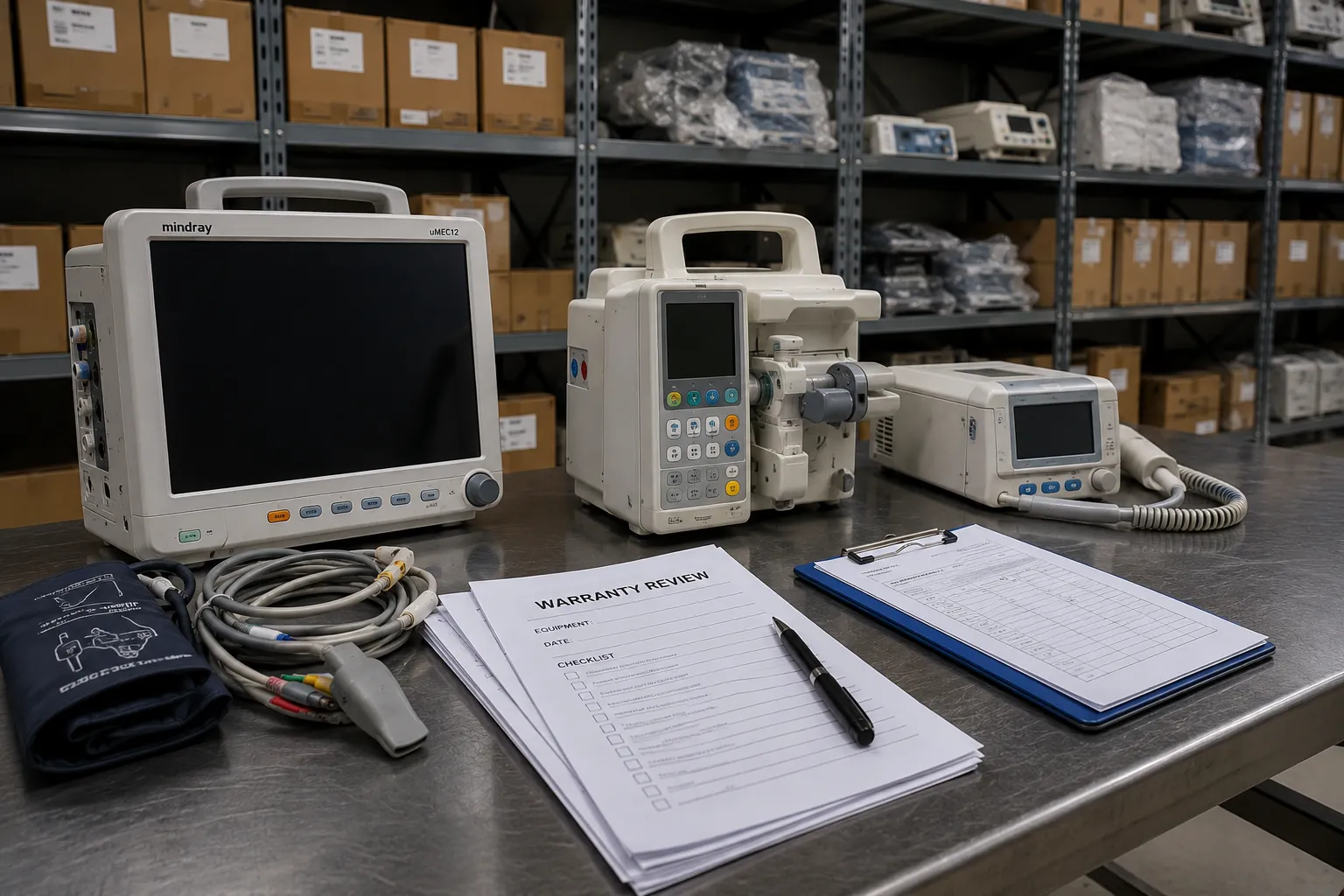
Documentation- Maintenance reports, service records, and inspection logs.
Performance Verification- Verification that equipment continues to operate within expected parameters.
Healthcare suppliers supporting maintenance programs often collaborate through Medigear Suppliers.
Benefits of Annual Maintenance Contracts
Healthcare organisations often experience several operational advantages through structured maintenance agreements.
Improved Equipment Reliability- Routine servicing helps maintain equipment performance.
Reduced Downtime- Regular maintenance may reduce unexpected failures.
Better Budget Planning- Predictable maintenance expenses improve financial planning.
Extended Equipment Lifespan- Proper maintenance can support long-term equipment utilisation.
Enhanced Documentation- Service records help support equipment management activities.
Operational Continuity- Reliable equipment supports consistent healthcare workflows.
What Should Be Included in an AMC?
Healthcare organisations should carefully review maintenance agreements before implementation.
Common considerations include:
-
Service frequency
-
Response times
-
Coverage scope
-
Spare parts policy
-
Technical support availability
-
Documentation requirements
-
Contract duration
-
Escalation procedures
Clearly defined expectations help improve service effectiveness.
Response Time Expectations
Service response times can significantly affect healthcare operations.
Organisations often evaluate:
-
Emergency response commitments
-
Routine service scheduling
-
Remote support availability
-
Escalation procedures
Faster response capabilities may help reduce operational disruptions.
Documentation and Record Keeping
Accurate documentation supports effective maintenance management.
Healthcare organisations commonly maintain:
-
Service reports
-
Maintenance logs
-
Inspection records
-
Calibration certificates
-
Repair history
-
Performance verification reports
Documentation helps improve lifecycle management and operational planning.
Healthcare organisations exploring procurement partnerships and operational collaboration opportunities can connect through Medigear.uk's Partners can advertise through Medigear.uk advertises.
AMCs and Preventive Maintenance
Preventive maintenance is often the foundation of an effective AMC.
Activities may include:
-
Cleaning
-
Calibration checks
-
Functional testing
-
Safety inspections
-
Component evaluation
-
Software reviews
Preventive maintenance helps identify developing issues before equipment failures occur.
Evaluating AMC Providers
Healthcare organisations should assess service providers carefully.
Evaluation criteria may include:
-
Technical expertise
-
Industry experience
-
Service infrastructure
-
Response capability
-
Documentation practices
-
Customer support
-
Spare parts availability
Vendor evaluation supports effective maintenance management.
Technology Is Improving AMC Management
Modern healthcare organisations increasingly use digital tools to support maintenance programs.
Emerging technologies include:
-
Digital asset management
-
Predictive maintenance
-
Remote diagnostics
-
Cloud-based reporting
-
Automated service scheduling
-
Performance analytics
Technology improves visibility into equipment condition and maintenance activities.
Building an Effective AMC Strategy
Healthcare organisations often develop structured maintenance programs that include:
Equipment Inventory Management- Maintain complete asset records.
Risk-Based Prioritisation- Focus on critical equipment categories.
Service Scheduling- Establish routine maintenance intervals.
Documentation Standards- Create consistent reporting procedures.
Performance Monitoring- Track equipment reliability and service history.
Continuous Improvement- Review maintenance outcomes regularly.
A structured approach helps improve equipment management and operational continuity. Organisations needing maintenance management guidance can contact the Medigear.uk support team through the Contact page.
Disclaimer
Medigear.uk is a medical equipment supplier and distributor. We do not provide medical advice, diagnosis, or treatment recommendations. All information is for educational and product awareness purposes only. Qualified medical professionals should always make healthcare decisions.