
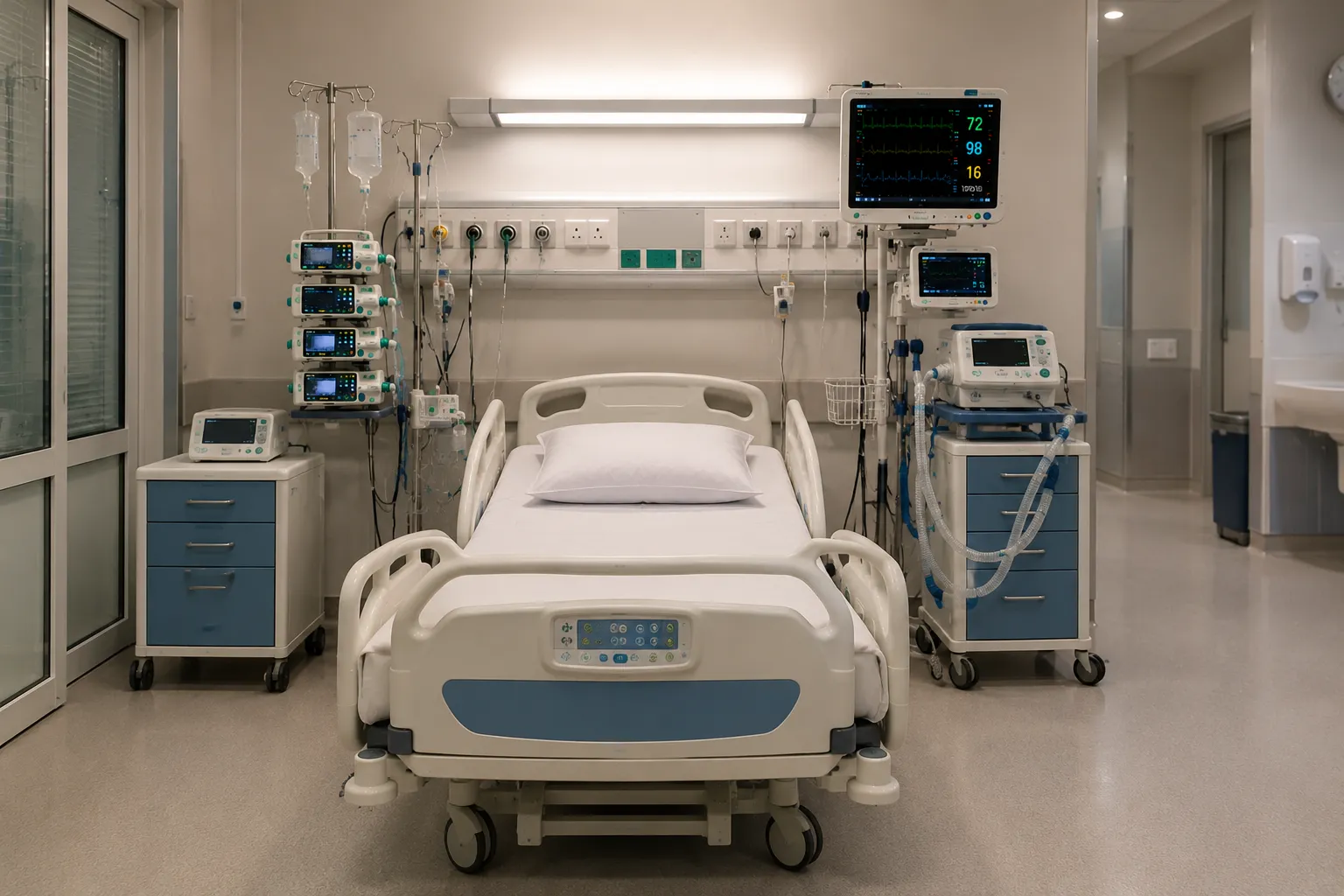
Introduction
Most of a hospital is not intensive care. It is the ordinary ward: rows of beds, a handful of staff covering many patients, and a steady rhythm of rounds and observations. It is also where smart equipment can most change daily life, precisely because the ward has always run on the thin margins of time and attention. This article looks at what smart medical equipment offers to a modern hospital ward and how to consider bringing it in without disruption.
The ward's particular challenge
A ward is a balancing act. Fewer staff cover more patients than in critical care, yet those patients can still deteriorate, and the signs are easy to miss when everyone is stretched. Traditionally the ward has coped with intermittent observation rounds — good, but with gaps. Smart equipment is attractive here because it fills exactly those gaps: it keeps watching between rounds, surfaces the patients who need attention, and quietly handles the record-keeping that eats into a nurse's day.
What smart equipment brings to the ward
-
Watching between rounds. Connected monitors keep an eye on patients during the hours no one is at the bedside.
-
Attention where it's needed. The ward can see at a glance which patients are stable and which are slipping.
-
Less paperwork. Readings flow into the record automatically, freeing staff from copying.
-
Smoother handovers. A clear, current picture makes shift changes safer and quicker.
Joining the ward to the rest of the hospital
Smart ward equipment is most valuable when it does not stop at the ward door. A reading taken by a bedside monitor should be recorded in the record that follows the patient everywhere, so that a move to theatre, imaging or discharge carries the full picture with it. This is why connection matters as much as the device itself: as NHS England describes connected digital systems, the aim is for information to flow between settings rather than pool in one place. For that flow to work across mixed equipment, shared standards such as HL7 FHIR let different systems exchange data in a common language.
A traditional ward versus a connected ward
|
Traditional ward |
Connected ward |
|---|---|
|
Watched only on rounds |
Watched between rounds too |
|
Deterioration found late |
Deterioration flagged early |
|
Observations written by hand |
Observations recorded for you |
|
Picture lost at the ward door |
Picture follows the patient |
Bringing it in without disruption
A ward cannot pause while new equipment arrives, so the way smart devices are introduced matters as much as the devices themselves. The safest additions fit the way staff already work, need little retraining and prove reliable from day one, so people trust them rather than keeping a manual backup running in parallel. All of it must also be safe and properly regulated: any equipment on a UK ward has to meet the UK medical device regulations, and connected devices add security and interoperability to the usual clinical checks. Chosen and introduced with care, smart equipment quietly strengthens a ward; forced in badly, it becomes one more thing to work around.
What to weigh before you fit out a ward
-
Does it fit the workflow? Ward equipment should ease the round, not complicate it.
-
Does it connect onward? Data should follow the patient beyond the ward, in line with recognised standards.
-
Is it robust and simple? Busy wards need dependable, easy-to-use equipment, not fragile complexity.
-
Is it secure and approved? Connected ward devices must be regulated, protected and kept up to date.
The bottom line
Smart medical equipment suits the modern ward because it answers the ward's oldest problem: too many patients, too little time, and gaps between the moments anyone can watch. Continuous monitoring fills the gaps, automatic records lighten the load, and connection lets the patient's picture travel with them. The trick is to choose equipment that is robust, simple and properly connected, and to introduce it in a way that fits how the ward already runs. Do that, and the everyday heart of the hospital becomes safer and calmer — not through a single flashy device, but through sound equipment that shares what it sees.
More from Business
-
Buyers — source approved, well-documented equipment.
-
Suppliers — list your equipment and reach buyers worldwide.
-
Advertise — promote your products and services to a clinical audience.
-
Business overview — explore everything MediGear offers healthcare organisations.
Disclaimer
This article is for general information only and does not constitute clinical, procurement, regulatory, security or legal advice. Smart medical equipment for hospital wards and the standards and rules that govern them are evolving, and requirements vary by market and change over time. Cybersecurity and interoperability requirements should always be confirmed with the relevant authorities. Always consult qualified clinical, biomedical engineering, information governance and security professionals for decisions specific to your organisation. medigear.uk accepts no liability for actions taken based on this content.
Equip the connected ward.
Genuine, approved, fully documented medical equipment — the reliable hardware a smart, connected hospital is built on, wherever you work.
Frequently Asked Questions
It fills the gaps a busy ward has always lived with. Connected monitors keep watching patients between rounds; the ward can see at a glance who is stable and who is slipping; readings flow into the record without manual copying; and handovers become safer because the picture is up to date. In short, it eases the ward's oldest problem of too many patients and too little time.
On a traditional ward, patients are monitored mainly during intermittent observation rounds; deterioration can be detected late, and observations are written by hand and lost at the ward door. On a connected ward, monitoring continues between rounds, worrying changes are flagged early, records fill themselves, and the patient's picture follows them to wherever they go next.
Because a patient's care rarely stays in one place. When a bedside reading reaches the record that follows the patient, a move to theatre, imaging or discharge carries the full picture along. That requires devices to connect over recognised standards, so mixed equipment can exchange data in a common language rather than pooling it in one place.
It should not, if it is introduced well. A ward cannot pause for new technology, so the safest additions fit existing workflows, require little retraining, and prove reliable from day one, so staff trust them rather than keeping a manual backup. Chosen and introduced with care, smart equipment strengthens a ward quietly rather than adding something to work around.
Yes. Any equipment on a ward must comply with medical device regulations, and connected devices add security and interoperability to the usual clinical safety checks. A ward device that streams patient data must be protected and kept up to date, like connected equipment elsewhere in the hospital.
Confirm that the equipment fits the workflow and eases the round rather than complicating it; that its data connects onward in line with recognised standards; that it is robust and simple enough for a busy setting; and that it is properly regulated, secure, and kept up to date. Robust, simple, and well-connected beats fragile and clever on a ward every time.