
Introduction
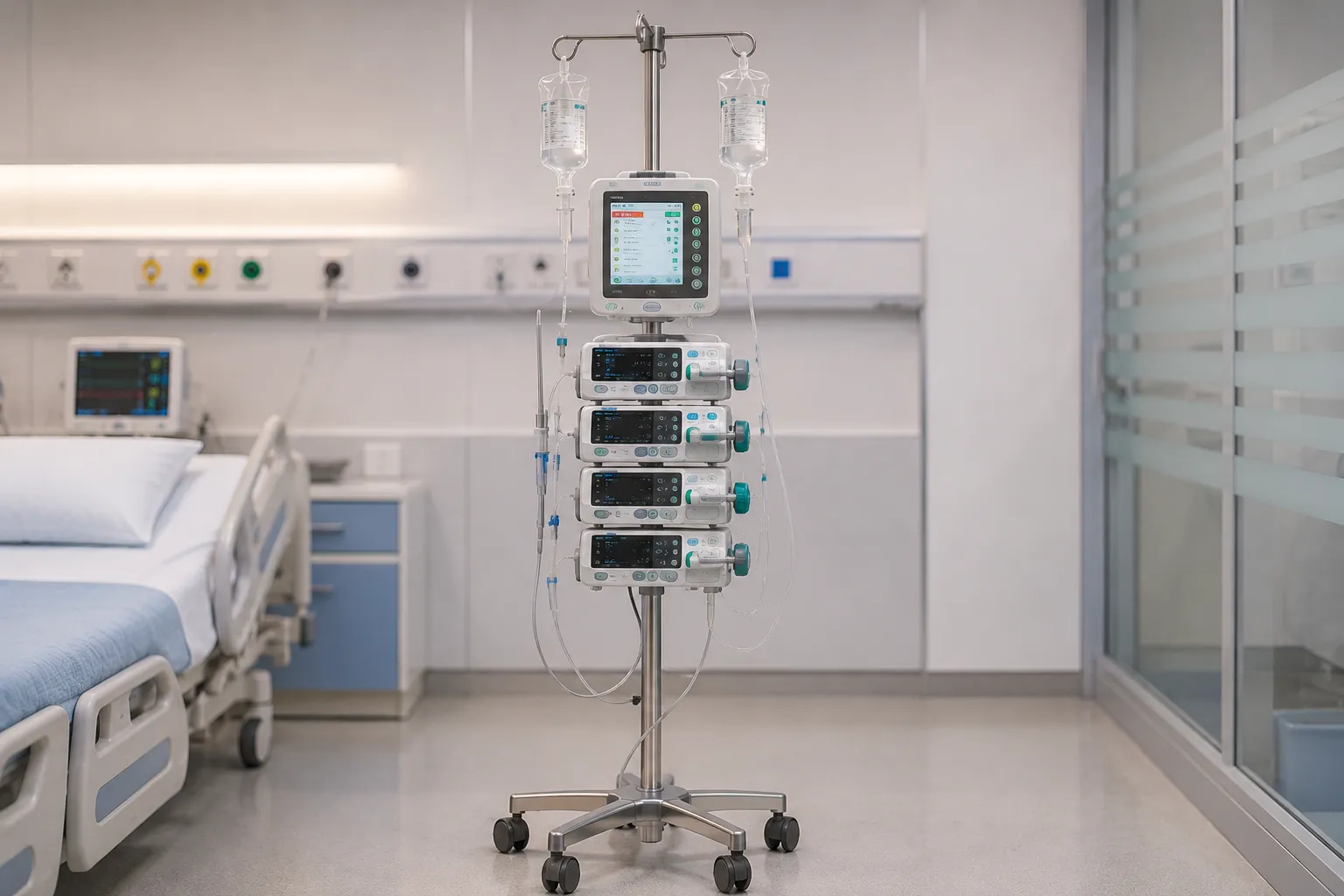
Few devices in a hospital carry as much quiet risk as the infusion pump. It delivers medication directly and continuously, often powerful drugs where the margin between a helping dose and a harmful one is small. For decades, the safeguards around it were mostly human: careful calculation, double-checking, vigilance. Smart infusion systems add a layer of protection the machine itself provides. This article examines how connected, intelligent infusion improves patient safety and what a hospital should look for.
The problem smart pumps were built to solve
A traditional pump does exactly what it is told, even when what it is told is wrong. If a dose is mis-keyed or a rate set too high, the pump delivers it faithfully. Infusion errors have long been recognised as a serious source of avoidable harm, which is why regulators have paid them such close attention; the FDA's infusion pump improvement initiative was created specifically to reduce these risks. Smart infusion systems respond by giving the pump a sense of what is reasonable, so an obvious mistake is questioned before it reaches the patient.
How smart infusion adds safety
-
Dose limits. Built-in drug libraries flag or block doses outside safe ranges before they run.
-
A second check. The pump questions an out-of-range setting, adding a safeguard that never tires.
-
A clear record. Connected pumps confirm what was given and when, straight into the record.
-
Fewer manual steps. Linking the pump to the prescription reduces the re-keying where errors creep in.
A vigilant machine, not a replacement for vigilance
It is important to be clear about what a smart pump does. It does not decide treatment, and it does not remove the need for skilled clinical judgement. What it adds is a tireless second layer that catches the kinds of slips anyone can make on a long shift — the transposed digit, the wrong units, the rate that is an order of magnitude out. Theoffinician still leads; the pump refuses to be the silent accomplice to an obvious error. This is exactly the sort of built-in safeguard the FDA's guidance on infusion pumps encourages.
Traditional pump versus smart infusion
|
Traditional pump |
Smart infusion system |
|---|---|
|
Delivers any dose entered |
Flags doses outside safe limits |
|
No independent check |
A tireless second check |
|
Record written by hand |
Delivery confirmed to the record |
|
Isolated from the prescription |
Linked, reducing re-keying |
Why the wider gains matter
Beyond the individual catch, connected infusion produces something valuable at scale: a clear, trustworthy record of what was actually delivered across a whole hospital. That reduces the guesswork in reviews, supports safer handovers, and helps a hospital learn where risks cluster. Reducing avoidable harm of this kind is precisely the goal the World Health Organisation's patient safety work sets out. The value, as always, depends on the data being reliable, which is why the underlying pump must be sound and properly maintained.
What to weigh before you buy
-
Is the drug library usable? Safety limits only help if they are kept up to date and easy to maintain.
-
Does it link to your systems? The biggest gains come when the pump connects to the prescription and record.
-
Is it secure? A connected pump that handles medication data must be protected and kept up to date.
-
Is the hardware dependable? A safety device has to be reliable first; sound engineering underpins everything.
The bottom line
Smart infusion systems improve patient safety by turning the pump from a faithful servant into a watchful one. Together, dose limits, an independent check, an automatic record, and fewer manual steps catch the errors that vigilance alone cannot always prevent. None of it replaces the clinician; it supports them, adding a layer that never tires. The gains are real, but they rest on fundamentals — a well-maintained drug library, clean links to your systems, sound security and reliable hardware. Get those right, and one of the highest-risk tasks in a hospital becomes measurably safer.
More from Business
-
Buyers — source approved, well-documented equipment.
-
Suppliers — list your equipment and reach buyers worldwide.
-
Advertise — promote your products and services to a clinical audience.
-
Business overview — explore everything MediGear offers healthcare organisations.
Disclaimer
This article is for general information only and does not constitute clinical, procurement, regulatory, security or legal advice. Smart infusion systemssd medicationsafetyt,y and the standards and rules that govern them are evolving, and requirements vary by market and change over time. Cybersecurity and interoperability requirements should always be confirmed with the relevant authorities. Always consult qualified clinical, biomedical engineering, information governance and security professionals for decisions specific to your organisation. medigear.uk accepts no liability for actions taken based on this content.
Equip safer infusion.
Genuine, approved, fully documented medical equipment — the reliable hardware a smart, connected hospital is built on, wherever you work.
Frequently Asked Questions
A smart infusion system is an infusion pump with built-in safety intelligence — typically a drug library that knows safe dose ranges — and, usually, a network connection to the hospital's systems. Unlike a traditional pump, which delivers whatever dose is entered, a smart pump can flag or block settings that fall outside safe limits, adding an independent check before medication reaches the patient.
They add safeguards the machine itself provides: dose limits that catch out-of-range settings, a tireless second check on human entry, an automatic record of what was delivered and when, and fewer manual re-keying steps where errors creep in. Together these catch the kind of slip — a transposed digit or wrong units — that vigilance alone cannot always prevent.
No. A smart pump does not decide treatment or remove the need for clinical judgement. It adds a second layer that never tires, catching obvious errors, while the clinician still leads. The pump refuses to be the silent accomplice to a clear mistake, complementing human vigilance rather than substituting for it.
A drug library is the set of medications and their safe dose ranges programmed into a smart pump. When a clinician sets up an infusion, the pump checks the entry against this library and warns if it falls outside safe limits. The library only helps if it is kept up to date and easy to maintain, which is an important consideration when choosing a system.
The biggest safety gains come when the pump links to the prescription and the patient record. That reduces manual re-keying, confirms delivery straight into the record, and produces a trustworthy account of what was actually given across the hospital — supporting safer handovers, clearer reviews and learning about where risks cluster.
Check that the drug library is practical to keep current, that the pump links cleanly to your prescription and record systems, that it is secure and kept up to date as a connected device handling medication data, and that the underlying hardware is dependable. A safety device must be reliable first, so sound engineering and maintenance underpin every other benefit.